The KJ-3000—the invisible battle conductor. How China’s newest AEW&C aircraft directs battles from the air

It’s amazing, but way back in 2013, our website already featured a story about an aircraft with that name. Admittedly, it was purely a conceptual military transport aircraft with a futuristic design, created by Chinese aviation enthusiasts. And now, nearly 13 years later, an aircraft with the same name has taken to the skies. Of course, it’s not quite as futuristic, and it’s not a transport aircraft, but its capabilities are impressive. This is no longer a standard AEW&C aircraft. But let’s take it one step at a time.
May 2025 — A Breakthrough in the Skies
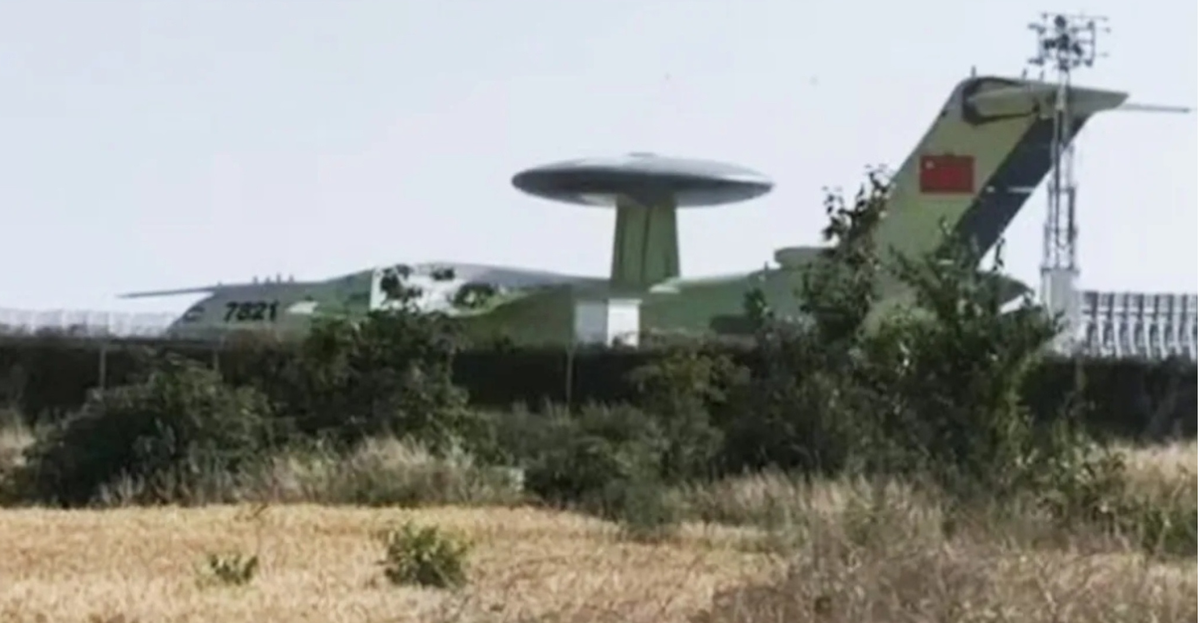
In May 2025, the world got its first look at detailed images of China’s new airborne early warning and control (AEW&C) aircraft: the KJ-3000. Developed for the People’s Liberation Army (PLA), this flying command post represents a logical yet powerful response to the challenges of modern warfare. Based on the domestically produced Y-20B heavy military transport aircraft, the KJ-3000 is intended to replace the aging KJ-2000—an aircraft whose operation has long been hampered by a shortage of airframes and dependence on Russian supplies.
History and Background: When Addiction Became a Threat
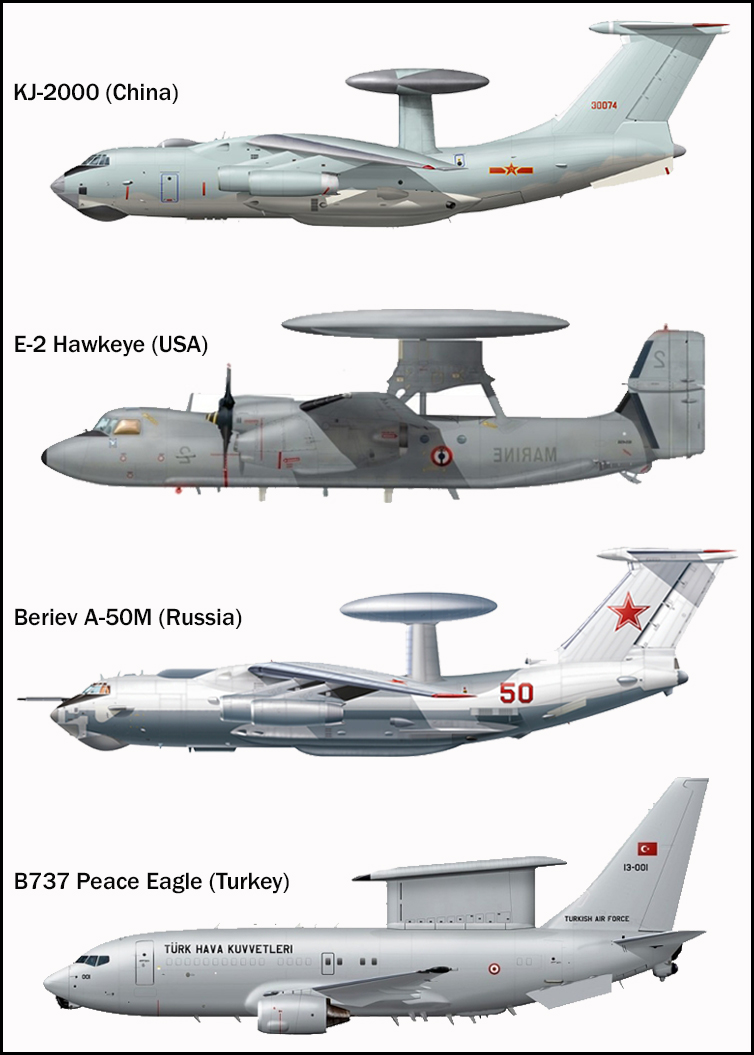
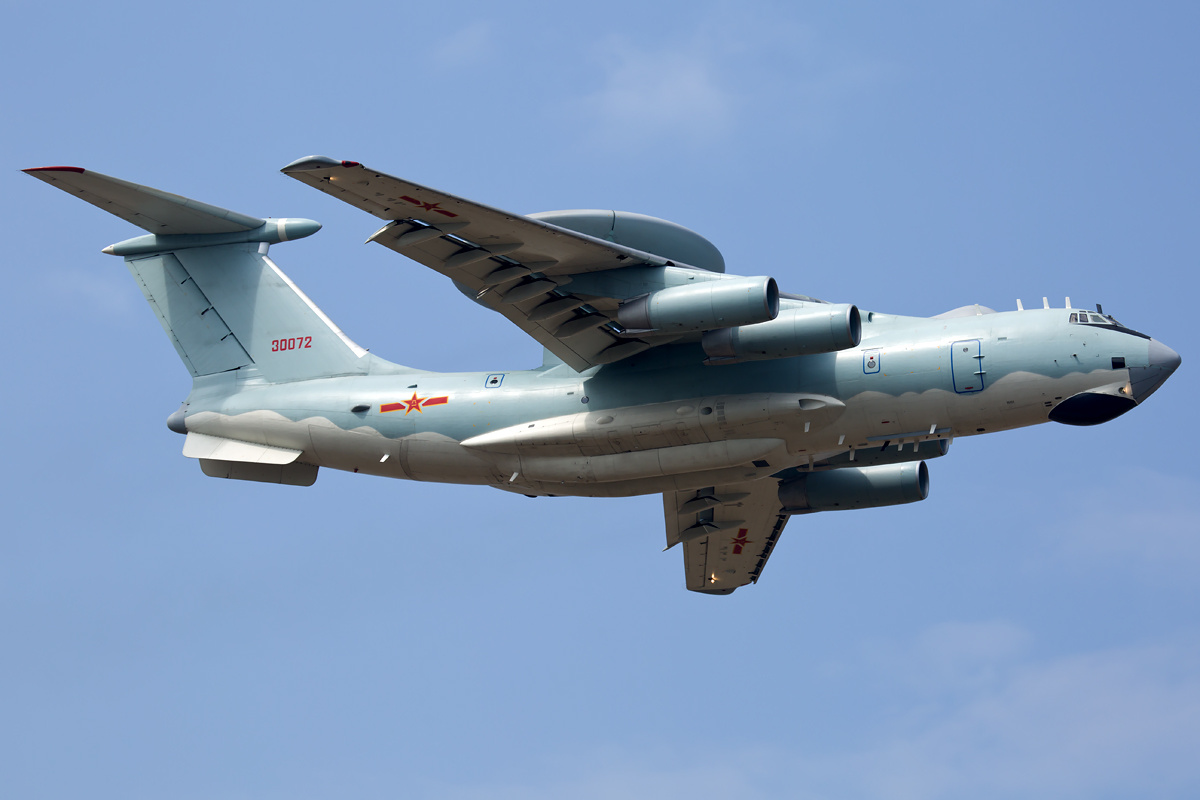
China’s first new-generation AEW&C aircraft—the KJ-2000—entered service in 2007. Based on the Russian Il-76MD, it became a symbol of a breakthrough: For the first time, China gained the capability to conduct large-scale aerial surveillance and real-time command and control. However, only four such aircraft were built—and all are still based in Jiangsu Province, within the zone of direct responsibility for operations against Taiwan and Japan.
KJ-2000
The problem is that, despite its friendly declarations, Russia was in no hurry to expand deliveries of the Il-76, especially after 2014. This put China in a vulnerable position: even routine maintenance of the KJ-2000 became a complex logistical challenge. There was only one solution—to nationalize the platform.
This is how the Y-20 came to be—the “Chinese ‘Global Strategic’**,” capable not only of transporting troops and equipment but also of serving as the basis for a wide range of specialized variants. Its upgraded version, the Y-20B, equipped with domestically produced WS-20 engines, eliminated the last remaining dependence on foreign components. It was on this very platform that the KJ-3000 was born—a vehicle that will not merely replace the KJ-2000 but will far exceed its capabilities.
Technical Specifications: “The Brain” with Wings
Although official data on the KJ-3000 is still limited, visual analysis and indirect sources provide some insight into its capabilities.
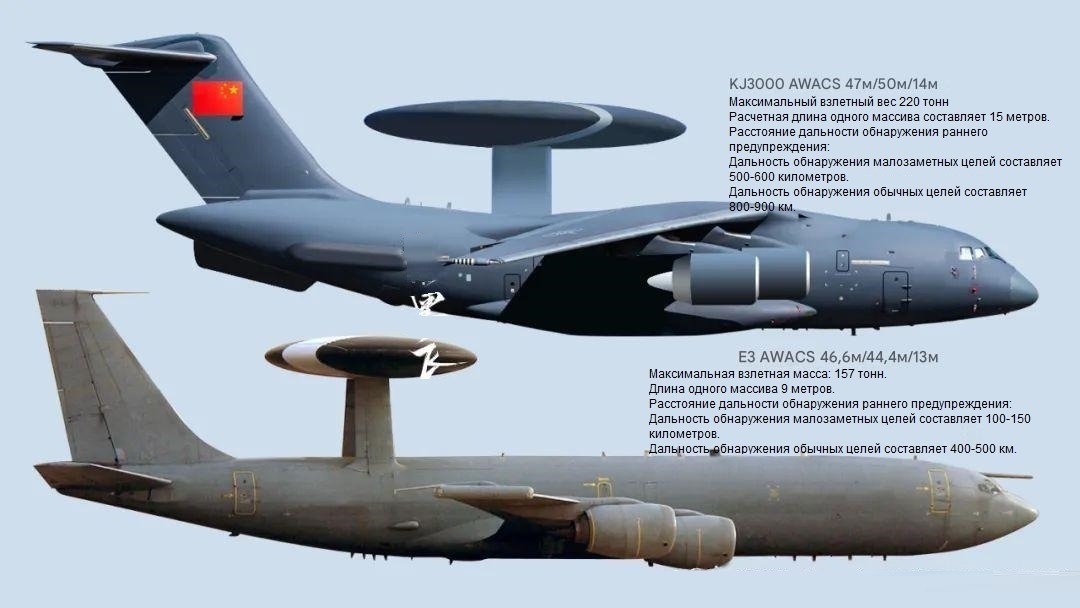
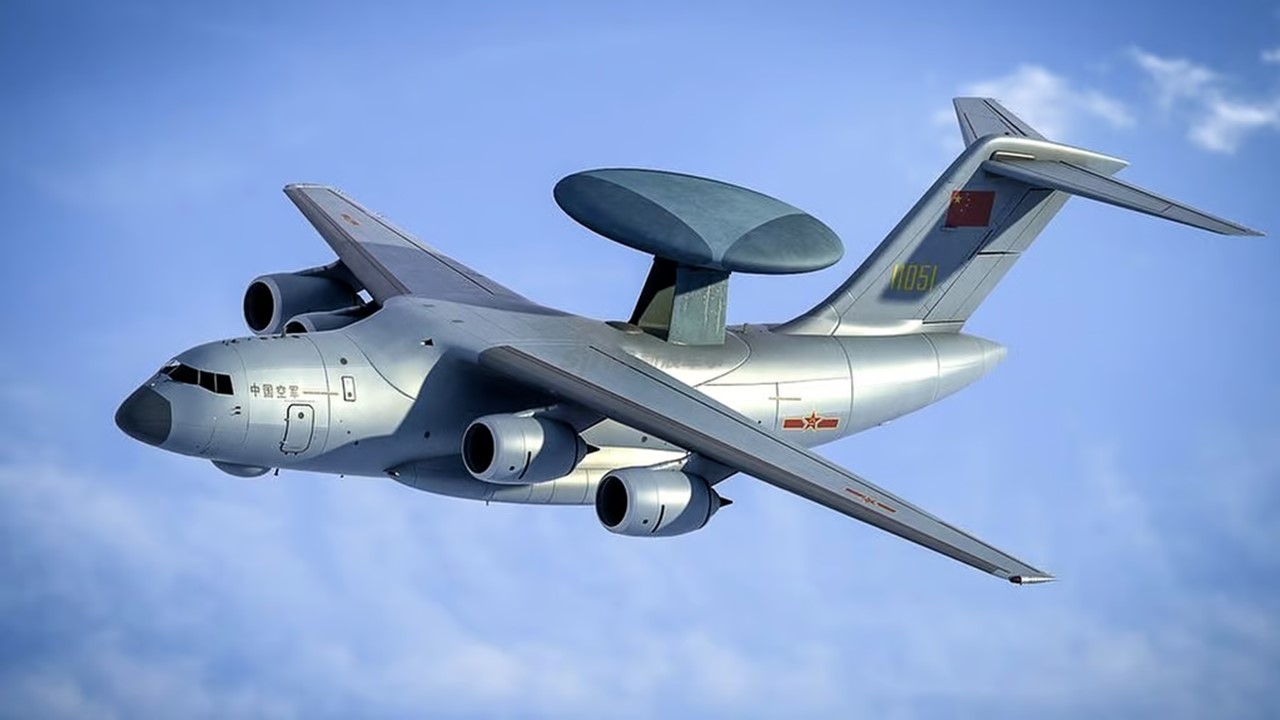
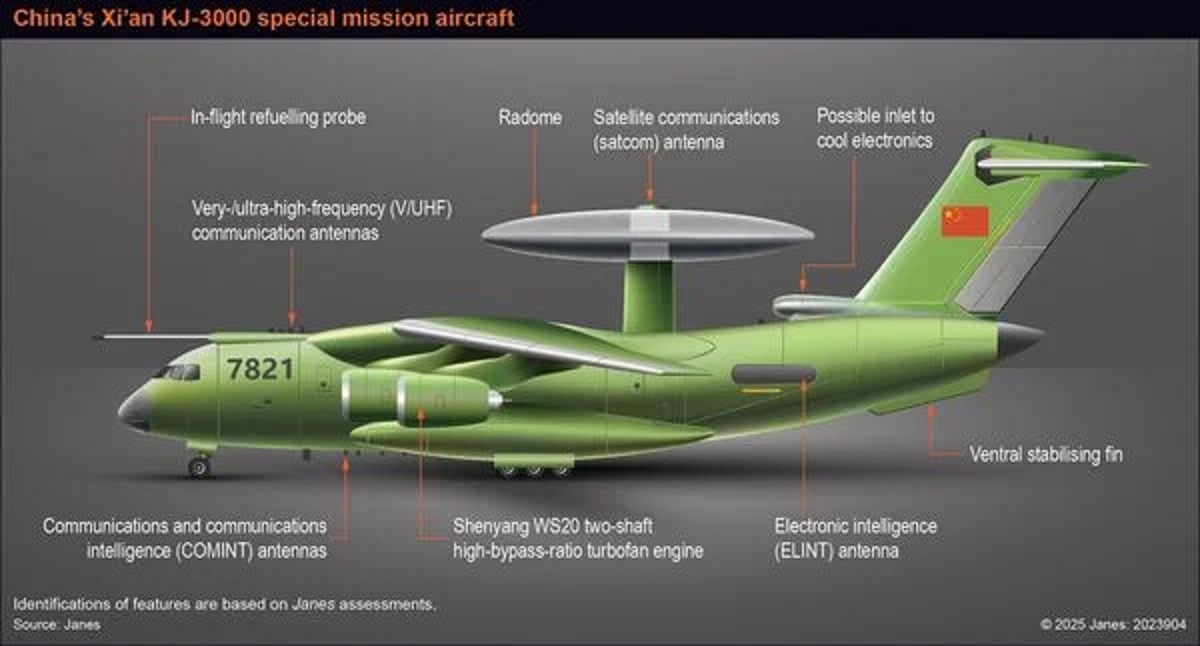
The aircraft retains the classic appearance of an AEW&C aircraft: a huge radar dish mounted on top of the fuselage. However, unlike the KJ-2000 with its three-section AESA (active phased array) antenna, the KJ-3000, according to available data, uses a more compact but technologically advanced two-section system that improves coverage of the forward hemisphere—which is critically important when conducting combat operations deep behind enemy lines.
Key Features of the KJ-3000:
- The air intake at the base of the keel is evidence of a heavy computational and electronic load. It appears that the system requires intensive cooling.
- The refueling probe above the cockpit is a sign that the aircraft is designed for long-range missions without returning to base.
- Integration with the PLA’s network-centric architecture—the KJ-3000 doesn’t just “detect” targets; it instantly transmits data to fighter jets, air defense systems, and ships, transforming the entire battlefield into a single, integrated system.
The KJ-2000 was capable of detecting targets at ranges of up to 500 km and tracking more than 100 aerial objects simultaneously. Judging by the scale of its modernization, the KJ-3000 is capable of surpassing these figures—especially with the use of AI for filtering and prioritizing threats.
The Significance for the PLA: From Replacement to Dominance
The KJ-3000 is not merely a “replacement” for an obsolete aircraft. It is a key element of a new doctrine of warfare, in which the initiative is determined not by the number of fighter jets, but by the quality of intelligence and the speed of decision-making.
China already has a fleet of about 40 AEW&C aircraft of various types (KJ-500, KJ-200, and others), and this fleet outnumbers the equivalent U.S. Air Force forces in the Asia-Pacific region. The KJ-3000 will serve as the “heavy artillery” of this system—a platform capable of monitoring the area stretching from the East China Sea to the South China Sea.
In addition, the KJ-3000 has enormous export potential. Pakistan, which already operates the Chinese KJ-500 and ZDK-03, could become the first foreign operator. Given the escalating tensions with India, such an aircraft is not merely a surveillance tool but a strategic asset that allows Pakistan to seize the initiative in its airspace.

Geopolitical Implications: China as the Architect of Air Warfare
The debut of the KJ-3000 is more than just a technical achievement. It is a political signal: China is no longer dependent on foreign suppliers when it comes to strategic aviation. It has created its own ecosystem—from engines to radars—and is ready to share it with its allies.
Amid growing tensions around Taiwan, in the South China Sea, and along the border with India, the KJ-3000 becomes the invisible conductor of battle—the one who decides where, when, and how a strike will be launched. Its presence in the sky shifts the balance of power: even an enemy air force with superior technology loses its advantage if it cannot see what is happening around it.

Conclusion: The Dawn of a New Era
The first production KJ-3000, with tail number 7821, is currently undergoing testing, but its mass production is already scheduled. It is expected that by 2030, the KJ-3000 fleet will consist of at least 8–10 aircraft, completely replacing the KJ-2000 in active service.
The KJ-3000 is more than just an aircraft. It is a symbol of China’s technological maturity, strategic independence, and ambitions as a global military power. In an era when wars are decided not in the trenches but in the air and on radar screens, it is precisely these machines that will become the true masters of the battlefield.
And perhaps it is the KJ-3000 that will one day become that very “invisible conductor,” whose will will determine the outcome of the conflict—without firing a single shot, but seeing everything.