When people talk about business aviation, what often comes to mind are expensive, complex, and temperamental jets reserved for the elite. But it was the Cessna Citation family that changed that perception. These aircraft made jet travel accessible not only to corporations and billionaires, but also to regional companies, private owners, and even government agencies.

The Citation became more than just an airplane—it set the standard for business jets, a standard that is still emulated today.
How Citation Came to Be

In the late 1960s, Cessna identified an untapped market niche. On one hand, there were expensive and complex business jets; on the other, there were reliable but slow turboprop aircraft. The idea was simple but bold: to create a jet aircraft with the characteristics of a piston-engine Cessna—easy to fly, fuel-efficient, and capable of operating from small airfields.
That is how the project—which would later be named the Citation—came to be. The first flight took place in 1969, and by the early 1970s, the aircraft had entered the market.
The core philosophy remained unchanged:
- simplicity,
- reliability,
- a moderate speed instead of an extreme one,
- low cost of ownership.
Why the Citation Was a Revolution
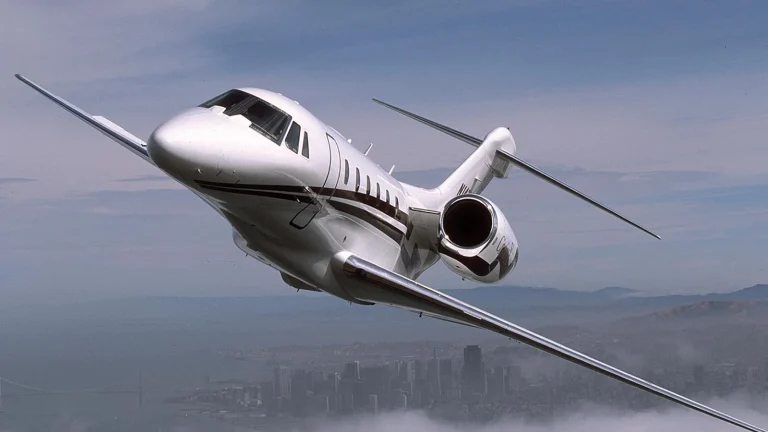
Unlike its competitors, Cessna deliberately did not prioritize maximum speed. The Citation flew slower than many business jets, but it had an advantage in another area:
- could use short runways;
- did not require complex ground-based infrastructure;
- was forgiving for the pilots;
- was cheaper to operate.
In fact, the Citation was designed as a jet aircraft for pilots accustomed to flying standard Cessnas, rather than for elite crews with military training.
The Evolution of the Citation Family
Over time, the Citation has evolved into a vast family of aircraft covering nearly every segment of business aviation:
Citation Light
Compact aircraft designed for short routes and small groups of passengers. They are used by private owners, air taxi companies, and corporate clients.
Average Citation
The perfect balance: greater range, enhanced comfort, and a fully equipped cabin for work and relaxation.
Quote: Longitude and Latitude
The current flagship models in the lineup:
- spacious interiors,
- low noise level,
- modern avionics,
- intercontinental options for business travel.
Despite their differences, they all retain the Citation’s DNA—practicality and versatility.
Technical Philosophy
Citation has always relied on:
- moderate-thrust turbofan engines;
- a high-mounted wing for stability;
- T-shaped tail;
- a simple and reliable design.
Over time, the lineup came to include:
- glass cabins;
- digital control systems;
- modern autopilots;
- improved sound insulation.
But the key point remains the same—the aircraft must be easy to operate, not a “flying spaceship.”
Cabin and Comfort
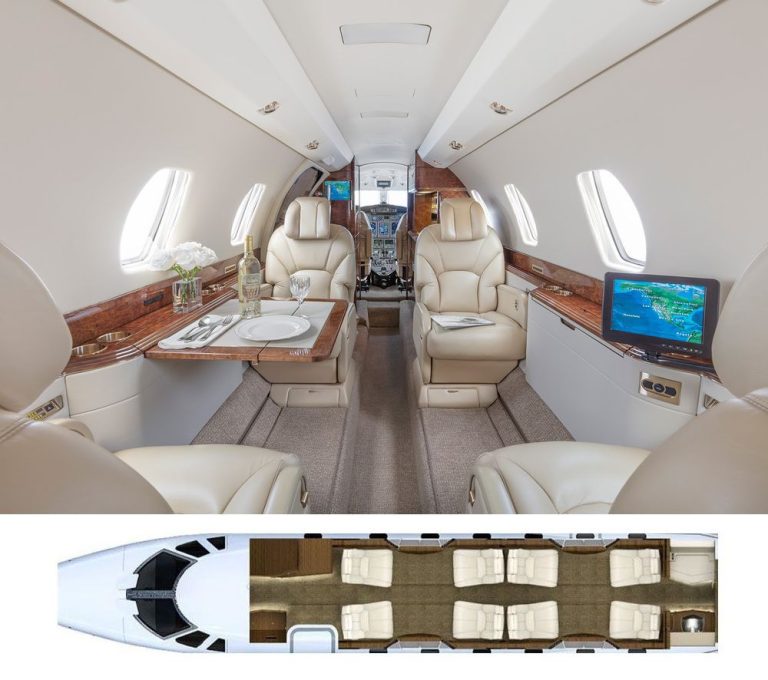
Inside, the Citation is a classic business jet:
- convertible chairs;
- workbenches;
- full climate control;
- overhead bins available during the flight.
In the new versions, special attention has been given to:
- noise level;
- air quality;
- interior ergonomics.
For business travel, this means being able to work while in the air, rather than just flying.
Where is Citation used?
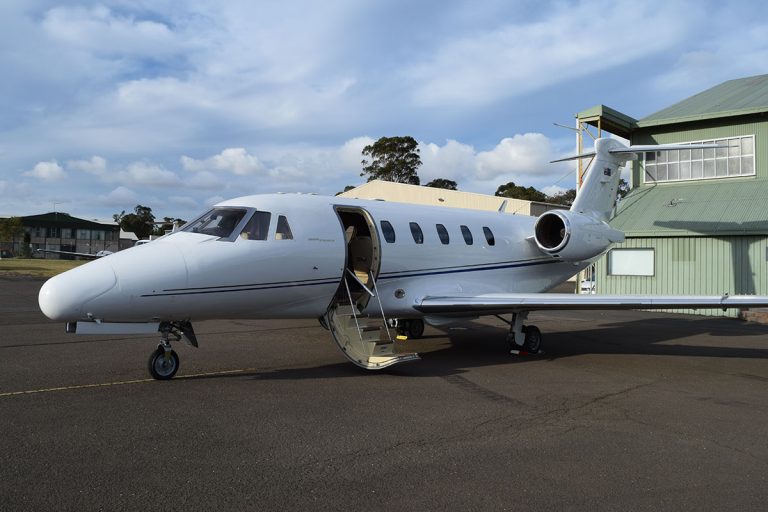
Citation has proven to be so versatile that it is used:
- private owners;
- corporations;
- air ambulance services;
- government agencies;
- military (as training and transport aircraft);
- airline and air taxi companies.
In many countries, the Citation was the first jet aircraft operated by local business aviation operators.
Why Did the Citation Become the Best-Selling Model?

Over the decades, more than 8,000 aircraft in the Citation family have been produced, making it the most widely produced business jet in history.
Reasons for Success:
- a well-thought-out concept;
- trust in the Cessna brand;
- scalability of the product line;
- ongoing modernization;
- A reasonable balance between price and features.
The Citation didn’t set out to be the fastest or the most luxurious—it became the most essential.
Conclusion

The Cessna Citation is an example of how engineering pragmatism trumps the race for performance. This aircraft isn’t about breaking records; it’s about day-to-day operations: flights, business, logistics, and comfort.
It transformed the business aviation market by proving that a jet aircraft could be mass-produced, reliable, and affordable. That is precisely why the Citation has remained relevant for more than half a century—and shows no signs of fading from the scene.