When Survival Meant Cutting a Helicopter in Half: The Story of the U.S. Navy’s Innovative Emergency System

Helicopters are an incredibly versatile aviation platform, but they are also among the most dangerous aircraft in terms of accident rates. This was especially true in the early years of their widespread use, when safety standards and technology were still in a phase of rapid development. As part of efforts to combat the high fatality rate in aviation accidents, the U.S. Navy developed one of the most unusual crew rescue systems in history in the 1960s — an emergency module designed to literally sever the helicopter’s fuselage and rescue the crew via parachute.
Where did the idea come from?
By the early 1960s, helicopters had already become an integral part of U.S. naval aviation. However, an analysis of accidents revealed that many crew fatalities occurred at altitudes where conventional rescue methods were largely ineffective. According to statistics compiled in 1961, the majority of injuries and fatalities in helicopter accidents occurred at altitudes between 30 and 180 meters—that is, within a range where ejection was ineffective and reaching the ground safely was difficult.
Understanding this data led to the idea of a radical solution: if the crew cannot exit the helicopter in the usual way, why not detach an entire section of the aircraft and lower it to the ground like a capsule?
How the system worked
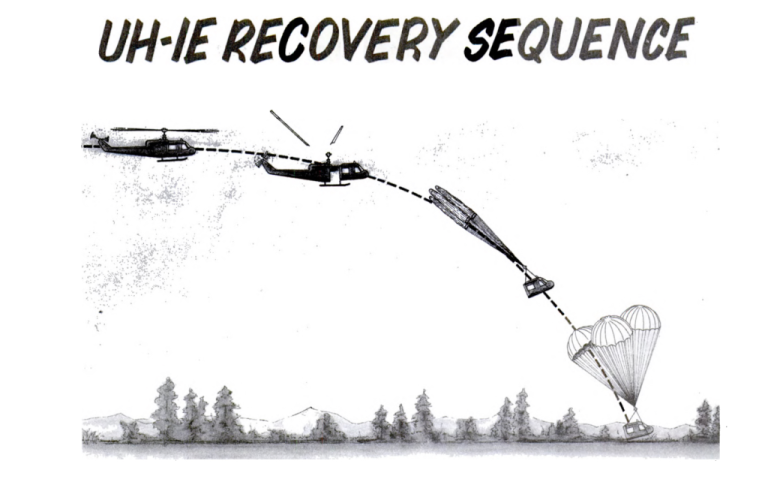
The project was launched under the auspices of the Naval Air Systems Command (NAVAIR) in 1964. Its purpose was as follows:
Combat “Split” System
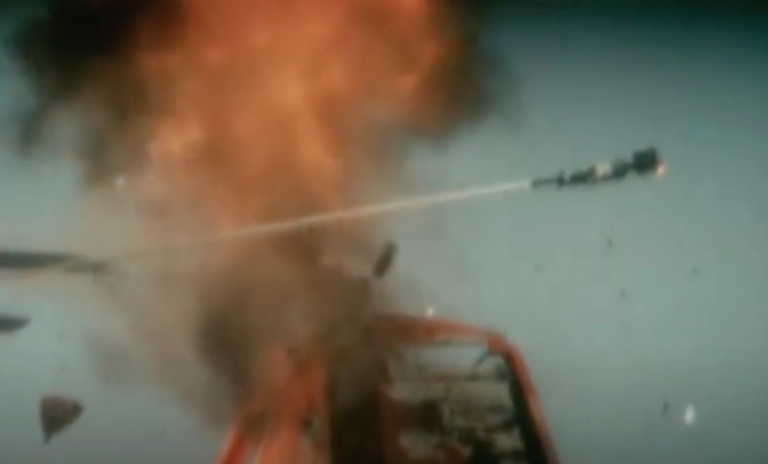
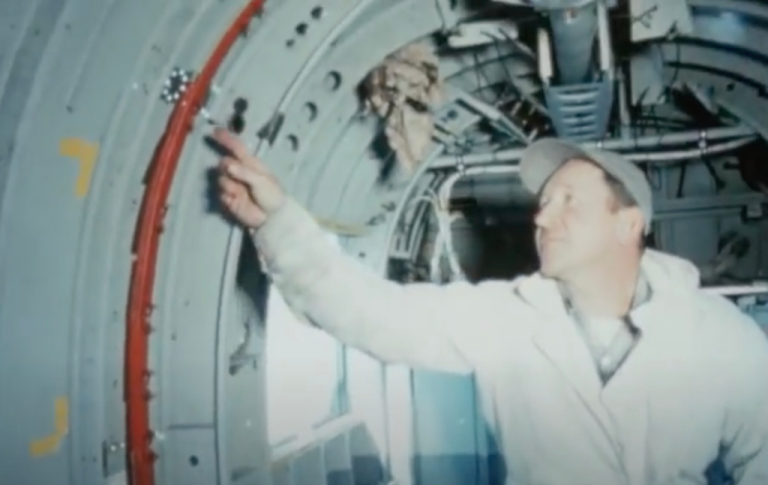
- Inside the fuselage, around the intended emergency module, an explosive line was laid—a strip of linear charge capable of cutting through the fuselage in a circular pattern.
- Two modified side-mounted rocket launchers provided additional thrust to separate the module from the rest of the fuselage.
- The helicopter blades could have interfered with the evacuation, so to prevent this, the system included detonators designed to destroy the rotors, which instantly separated them from the craft before the module was launched.
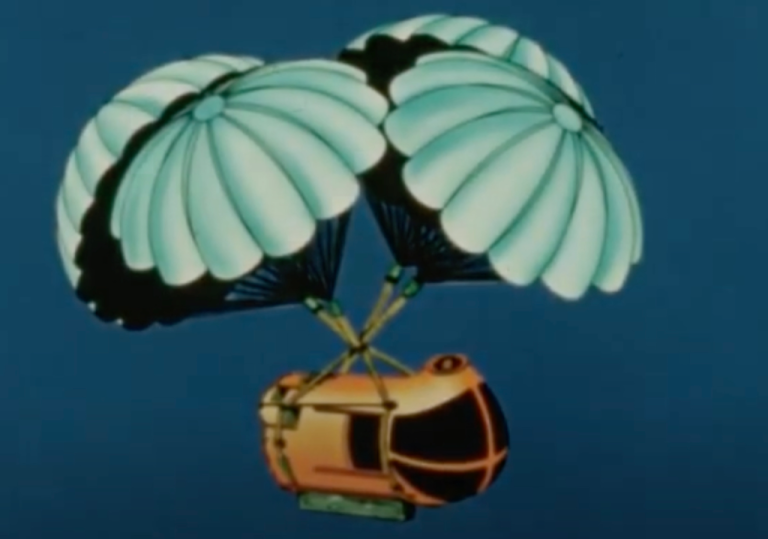
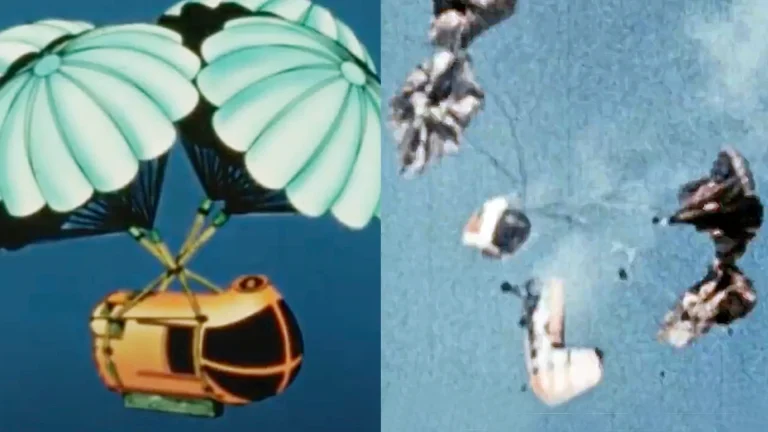
- The detached module was equipped with parachutes and could descend to the ground or water, allowing the crew to safely exit it as soon as it landed.
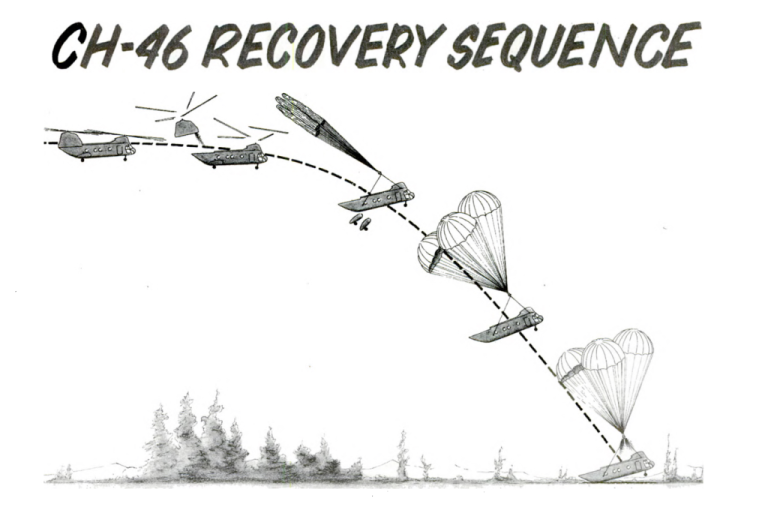
Simply put, the entire fuselage of the helicopter would transform into a sort of escape pod that could detach autonomously and descend to the ground or the sea using a parachute.
Tests and Trials
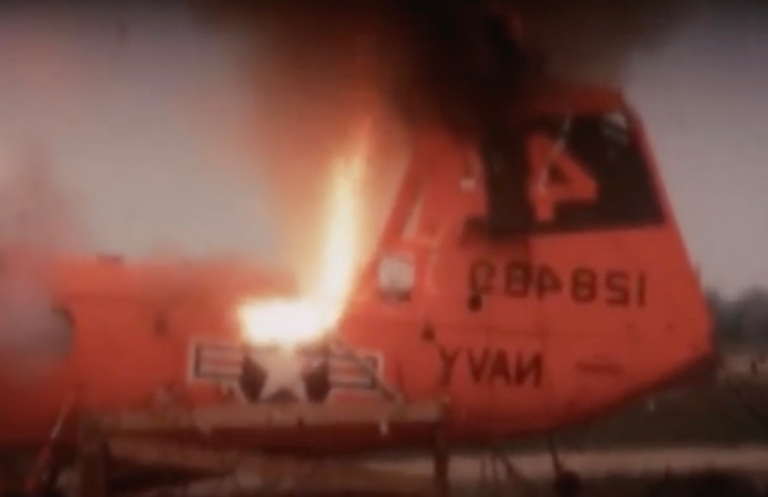
The system underwent testing from 1964 to 1968 on various types of helicopters, including the Boeing Vertol CH-46 Sea Knight, the Bell UH-1E Huey, and the Piasecki UH-25B Retrievers.
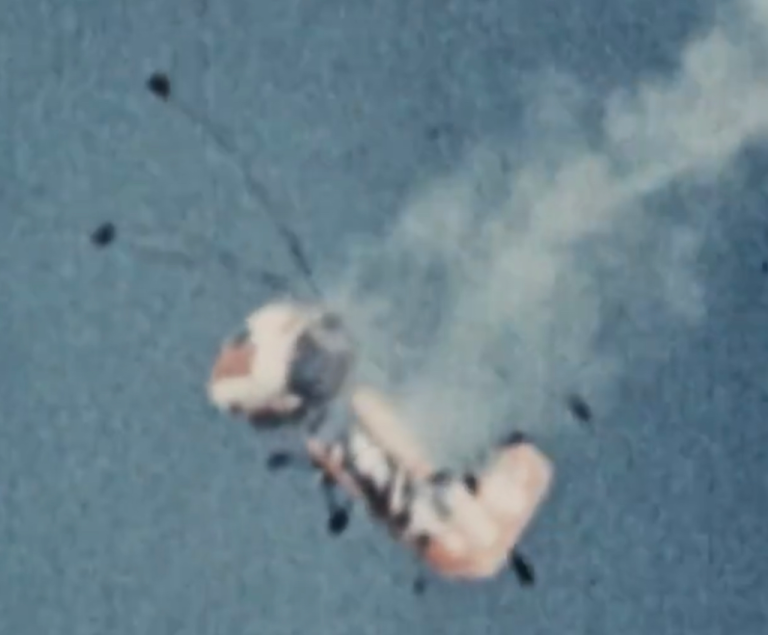
Particularly noteworthy were five full-scale flight tests in 1966, during which the module was jettisoned from altitudes of approximately 74, 143, and 187 feet. In each case, the system functioned as intended and completely separated the module, after which it successfully descended under a parachute. This was considered critically important, since most accidents occurred at altitudes where traditional rescue methods were ineffective.
Plans and Prospects
Based on successful tests in 1967, the Navy assessed the system’s adaptability to a wide range of helicopter types. A total of 14 models were considered, four of which were deemed potentially suitable for the installation of the emergency module. Among them were the CH-46 and UH-1E, which were widely used at that time.
The system included not only the module itself, but also additional survival components:
- landing impact protection system,
- floating devices for launching into the water,
- Passive safety features inside the capsule.
Why the project didn’t go into production
Despite the concept’s obvious effectiveness, the program was never rolled out into mass production. The main reasons were as follows:
Complexity and mass
Installing the system significantly increased the helicopter’s weight, reducing its payload and range—factors that are critical for combat aircraft.
High costs
Initial estimates projected development and implementation costs in the millions, and subsequent expansion plans drove those costs even higher.
Security Priorities
By the early 1970s, the Navy had shifted its focus to individual escape systems, such as ejection seats or individual ejection methods, which were more practical for modern aircraft.
In 1972, the project was effectively deemed a low priority, and development was halted as efforts shifted to other approaches to rescuing the crew.
Alternatives and Legacy
Although the emergency module for helicopters was never implemented, the idea of rescuing the crew in flight did not disappear. A similar concept—individual ejection systems—was also studied for combat vehicles, such as attack helicopters. However, they did not see widespread use.
In modern aviation, the only exceptions are certain specialized systems, such as the Russian system installed on the Ka-52 attack helicopter, which allows the rotor blades to be jettisoned and the crew to be ejected before they land by parachute.
It is worth noting separately that emergency escape concepts—in which an entire section of the aircraft descends toward the ground under a parachute—have become widespread in light civil aircraft (for example, the widely available CAPS system), but helicopters remained a difficult challenge due to their rotating systems.
Conclusion
The history of emergency rescues of U.S. Navy helicopter crews is an example of radical engineering thinking driven by the need to save as many lives as possible. As extravagant as the idea of “cutting a helicopter in half” to save people may sound, it reflects the spirit of experimental aeronautical engineering that dominated the golden age of aerospace innovation.