Electric steering screws for the Bell 429 helicopter. Is the EDAT system a breakthrough in aviation?

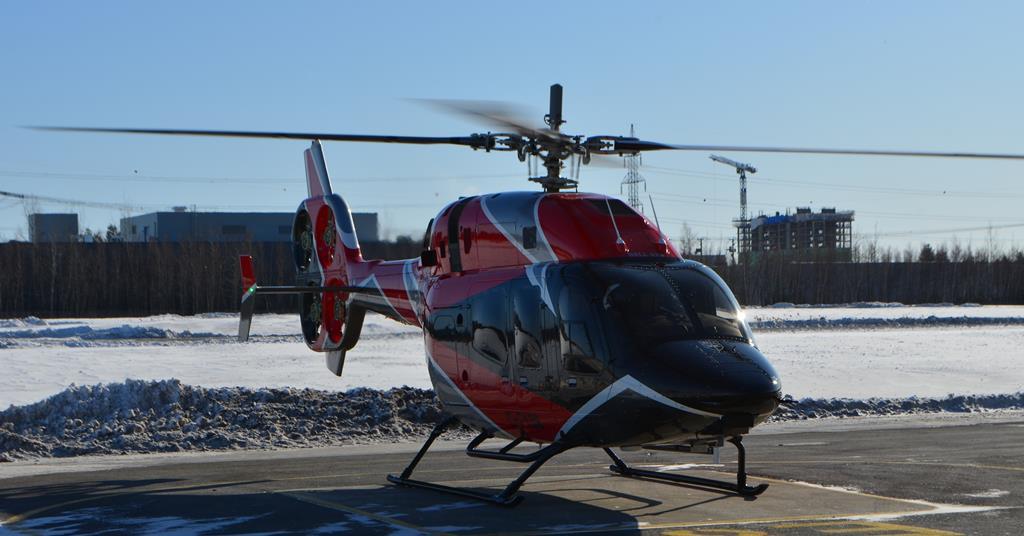
On May 23, 2019, at Bell’s plant in Mirabel (Quebec, Canada), the Bell 429 EDAT (Electrically Distributed Anti-Torque) experimental helicopter made its maiden flight. Its debut generated significant interest in the aviation community—not only because of its distinctive appearance, but primarily because of its radically new approach to counteracting the anti-torque generated by the rotor’s rotation.

Contents:
What is EDAT, and why is it unusual?
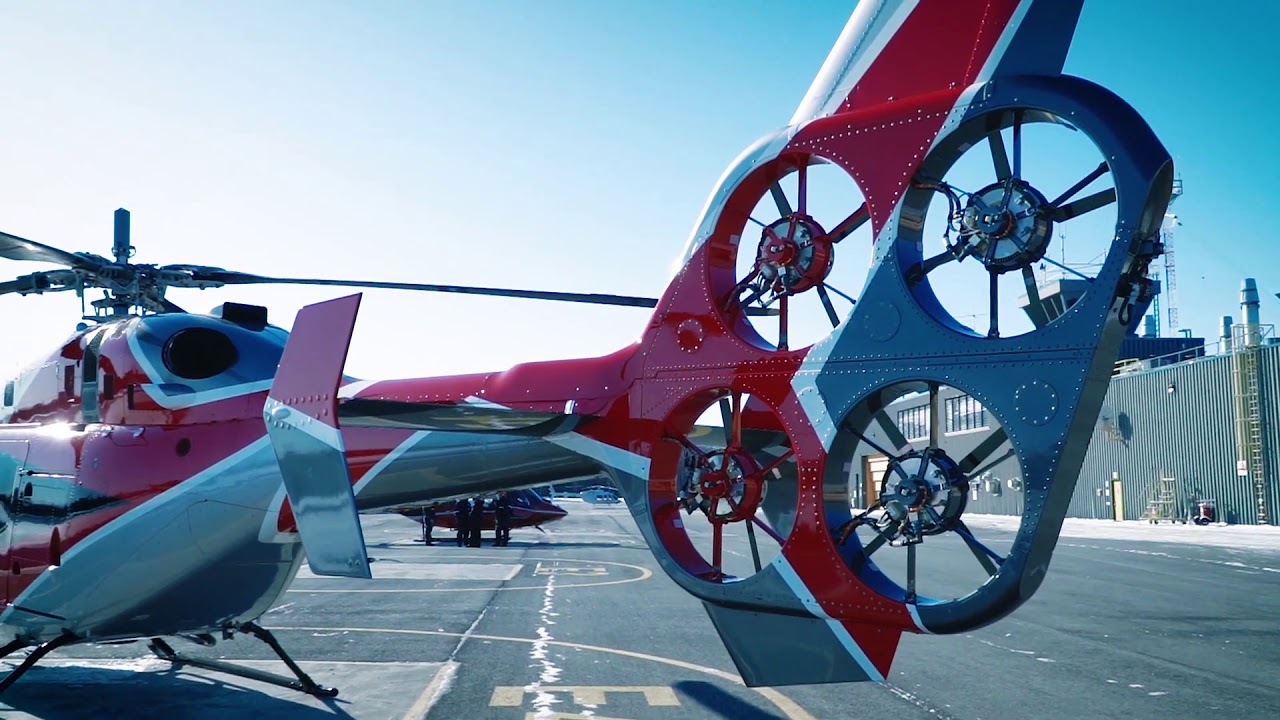
Traditional single-rotor helicopters counteract the reaction torque using a tail rotor—either an open-rotor design or one enclosed within a ring (fenestron). The Bell 429 EDAT, however, has completely abandoned this mechanical design. Instead of a single tail rotor, it is equipped with four electric fans with fixed-pitch propellers, arranged in pairs on either side of the tail boom. Thrust direction and magnitude are controlled by adjusting the speed of each electric motor—a principle well known to drone users. The entire system is controlled by digital electronics, making it fully “fly-by-wire.”
Why is this necessary? The Benefits of EDAT
At first glance, replacing a single, tried-and-true mechanism with an entire system of motors and electronics might seem unnecessary. However, EDAT offers a number of significant advantages.
Improved precision and control stability
Fully electronic control allows for highly precise adjustment of the thrust of each fan. This is particularly valuable during hover and when maneuvering at low speeds, when even minor deviations can lead to instability. Thanks to EDAT, the helicopter demonstrates remarkable stability even during side-slip flight—a mode previously considered the exclusive domain of coaxial configurations (such as Kamov helicopters).

Security and Fault Tolerance
One of the main drawbacks of a conventional tail rotor is its vulnerability. It can easily be damaged when approaching obstacles, leading to a loss of control. In the EDAT, this problem has been solved: the propellers are located in protected compartments, and even if three of the four fans fail, the helicopter remains controllable and capable of making a normal landing. The electronic control systems are easily redundant, and installing additional cables is both inexpensive and technically straightforward.
Noise Reduction
Electric fans operate much more quietly than traditional tail propellers or even fenestrons. This is particularly important during medical, police, or VIP missions, where minimal noise is not a luxury but a requirement for operational efficiency and comfort.
Simplified design and reduced operating costs
Although EDAT may seem like a complex system at first glance, it actually simplifies power transmission: there are no propeller shafts, gearboxes, or mechanical linkages. Power to the fans is supplied by a generator connected to the main Pratt & Whitney Canada PW207D1 engine. This reduces the number of moving parts, minimizes wear and tear, and, consequently, lowers maintenance costs.
The Path to Simplicity
Interestingly, Bell did not immediately arrive at the final, streamlined EDAT configuration. In the early stages of design, more complex and even exotic layouts for the tail fans were considered. Fortunately, the engineers realized in time that the simpler the design, the more reliable it is. The final design strikes a balance between innovation and practicality.
Current Status and Outlook
By the time the first public reports were released (in 2025–2026), the Bell 429 EDAT helicopter had logged just over 25 flight hours—not much, but enough for an initial assessment. And although it is still a technology demonstrator rather than a production model, it has already confirmed its claimed characteristics: stability, quiet operation, safety, and maneuverability.
Conclusion: A Breakthrough or an Evolution?
The EDAT system is not just “another upgrade.” It is a fundamental rethinking of the approach to counteracting reaction torque in single-rotor helicopters. It combines the safety of drones, the precision of digital control, and the reliability of traditional aviation.
It’s still hard to say whether EDAT will become the standard for future helicopters. But one thing is clear: Bell has taken an important step forward, demonstrating that even in an industry as conservative as helicopter manufacturing, there is room for bold engineering solutions. And if the technology continues to develop, we may see a new generation of helicopters in which the “tail” is electronic rather than mechanical.
Perhaps this is exactly how the next chapter in the history of rotary-wing aviation will begin.