What Will Replace the Il-76? Military Transport Aircraft of the Near Future: Vertical Takeoff and Landing, and Low Observability

As far back as the 1970s, in the USSR and other countries around the world—such as West Germany—work was actively underway on military transport VTOL aircraft. Although the designs were quite well-developed—and in West Germany, the Dornier Do-3 even reached the flight test stage—20th-century technology did not allow for achieving acceptable performance metrics to put the aircraft into mass production.
However, technology has advanced significantly in the meantime, and the use of next-generation electric motors in aviation makes it entirely possible to revisit these projects; in the future, they may well turn out exactly as described in this article.
Vertical Takeoff and Landing: Freedom from Airfields
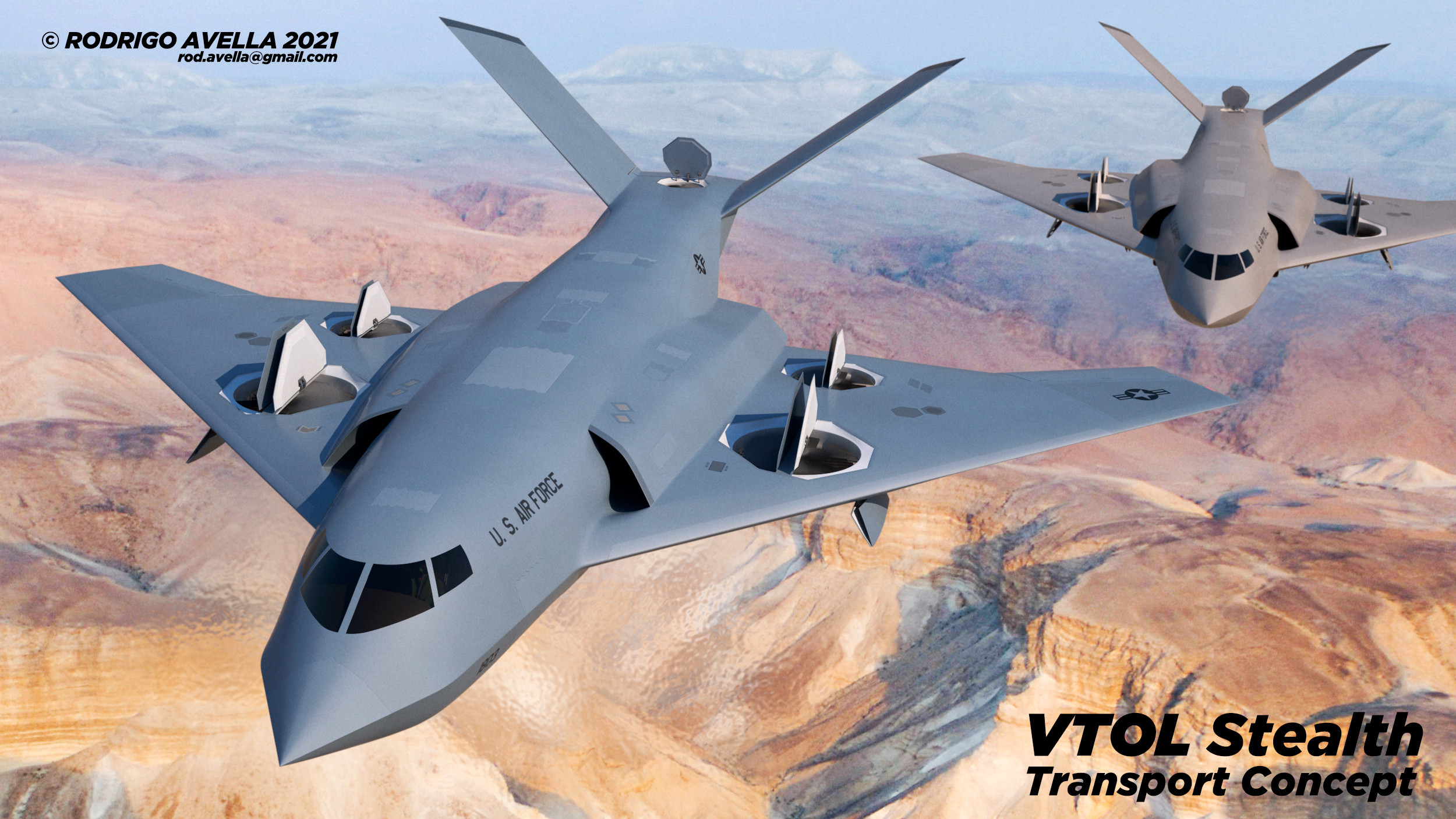
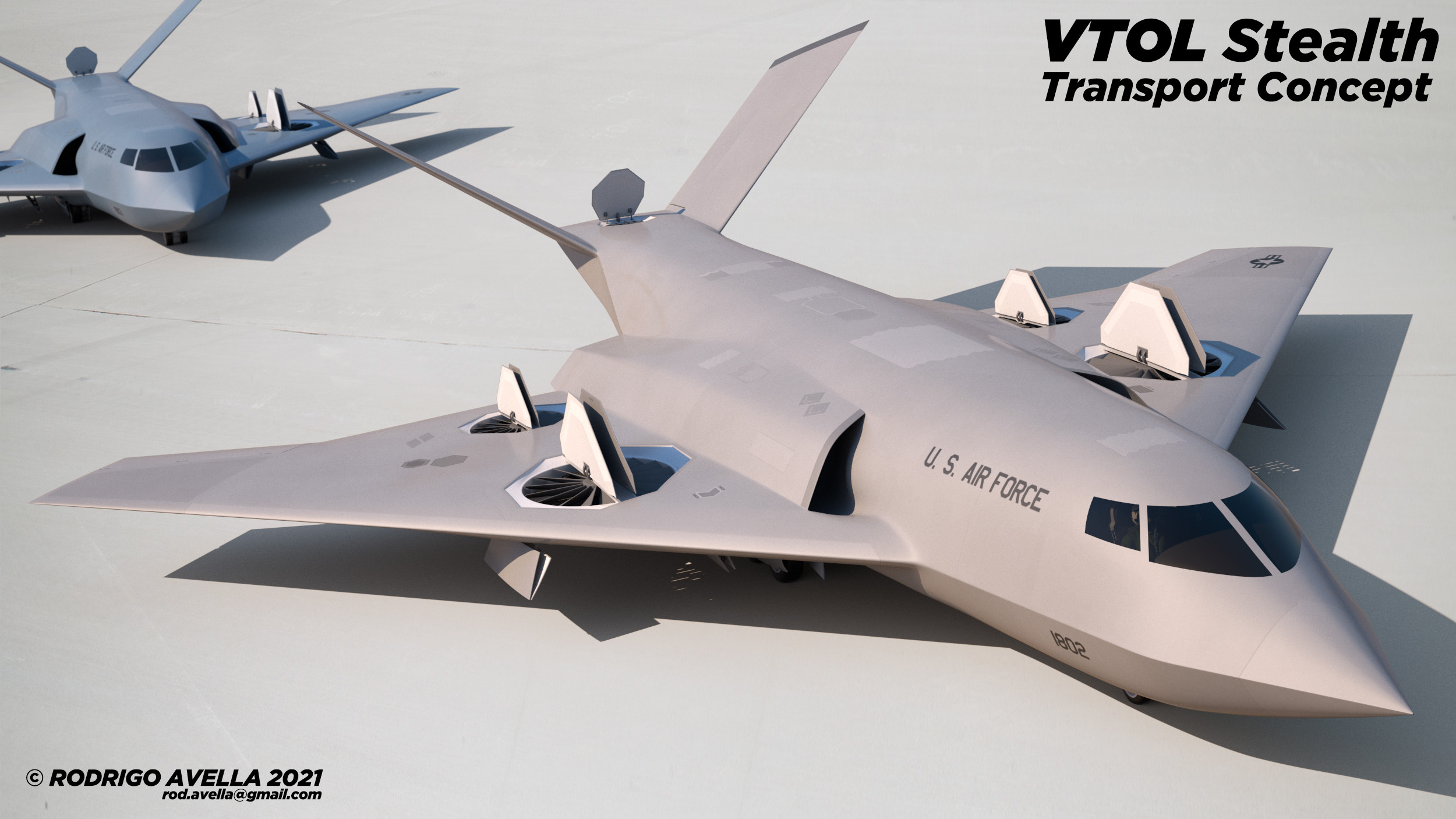
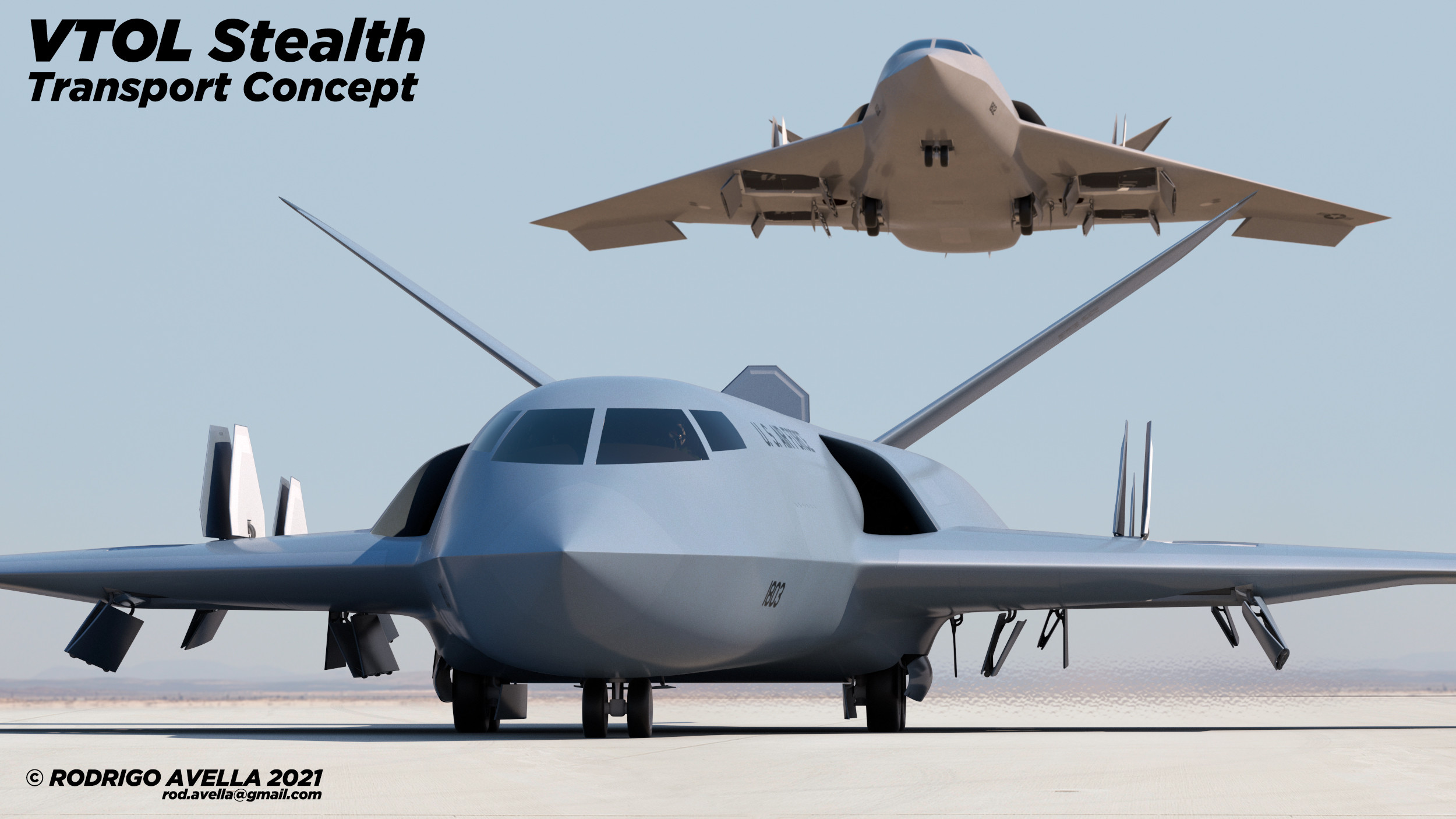
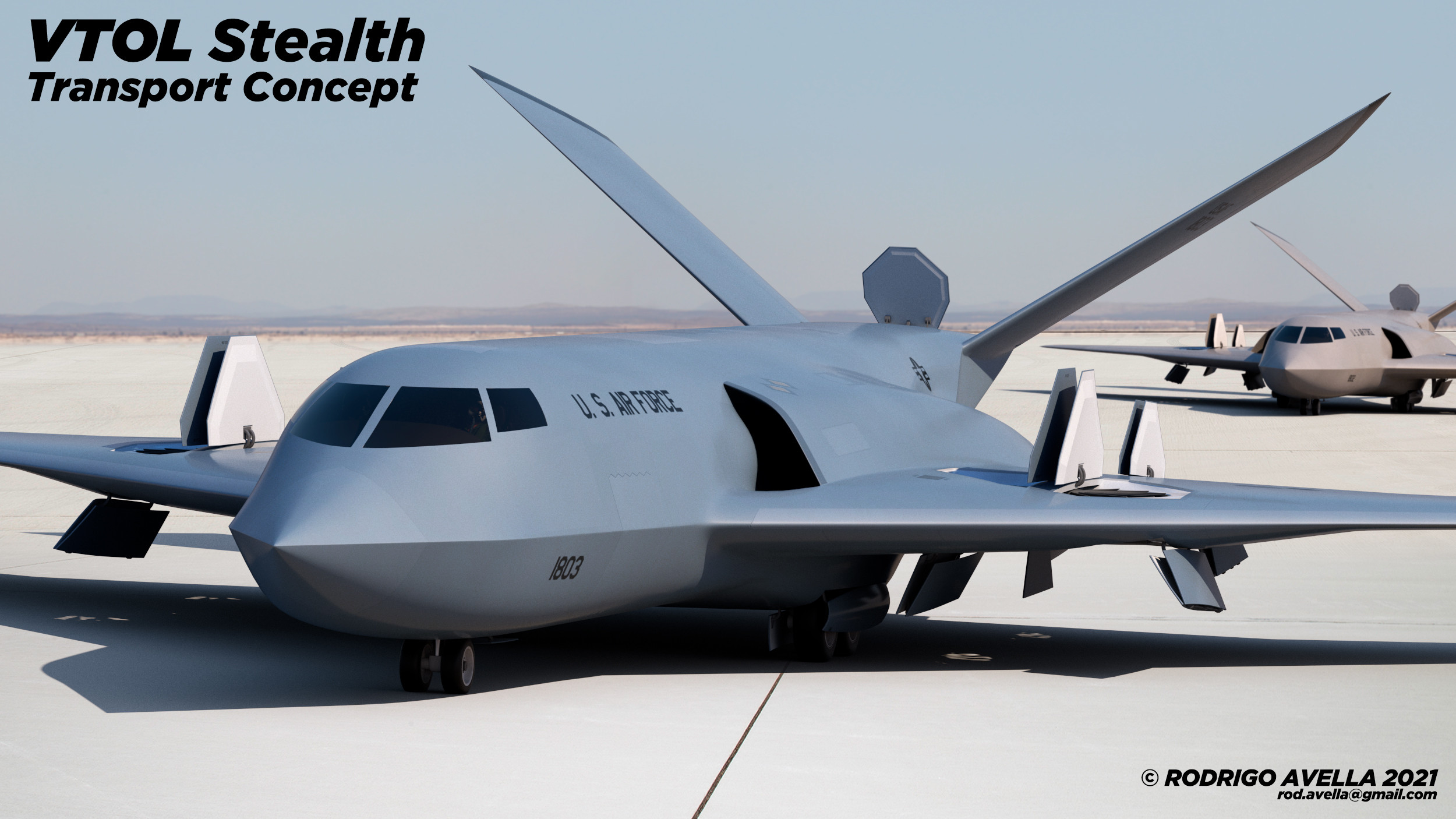
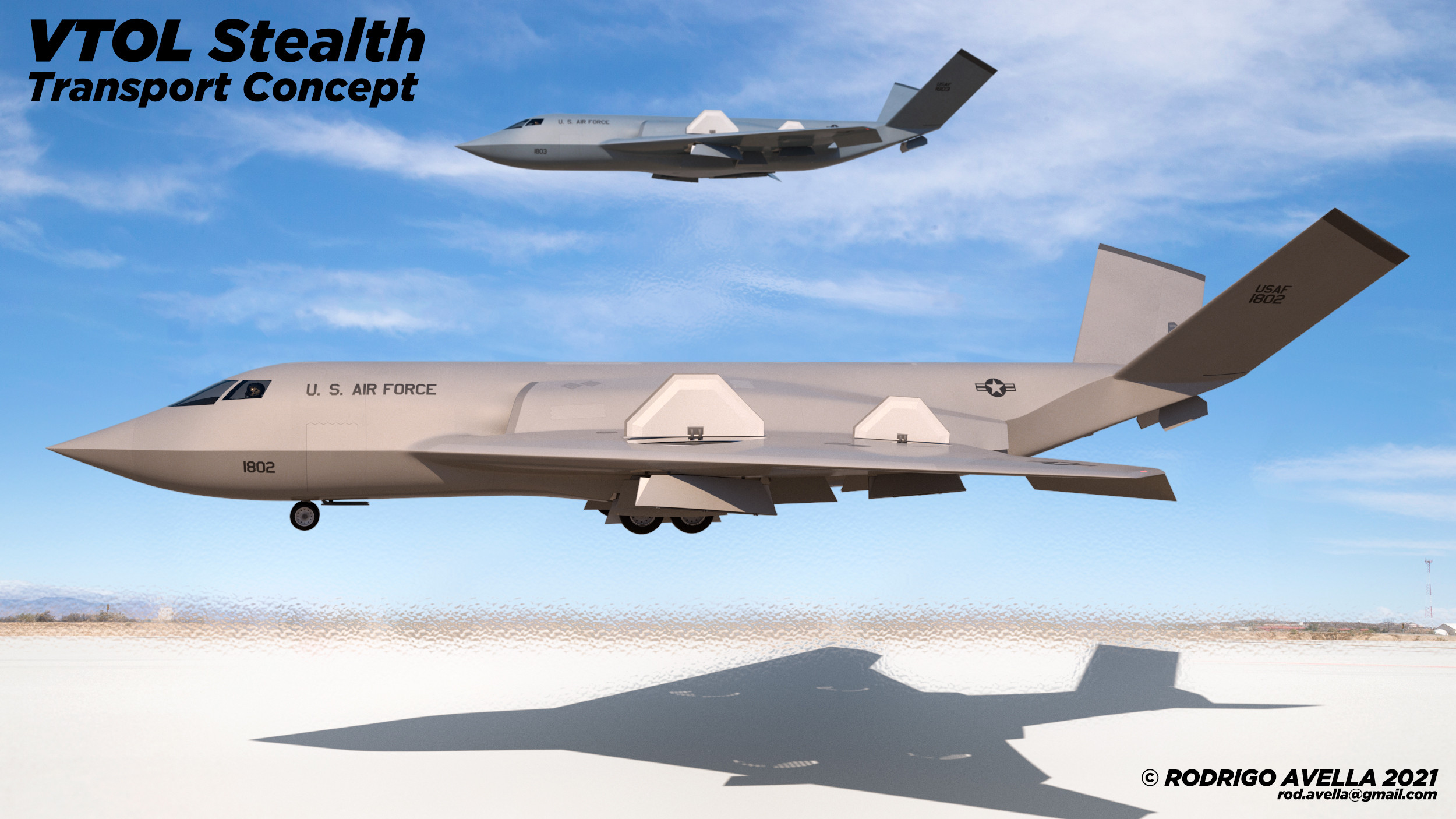
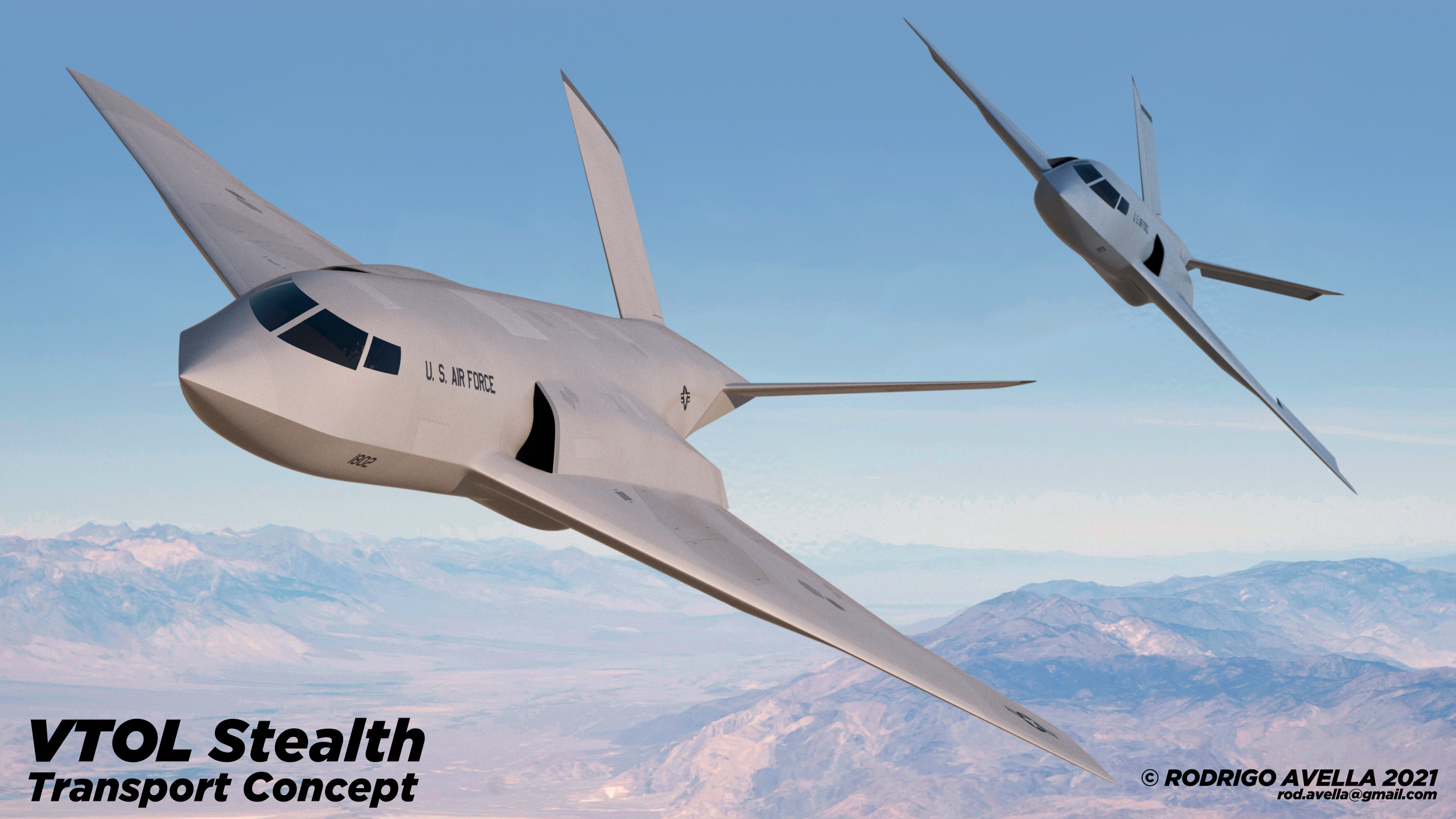
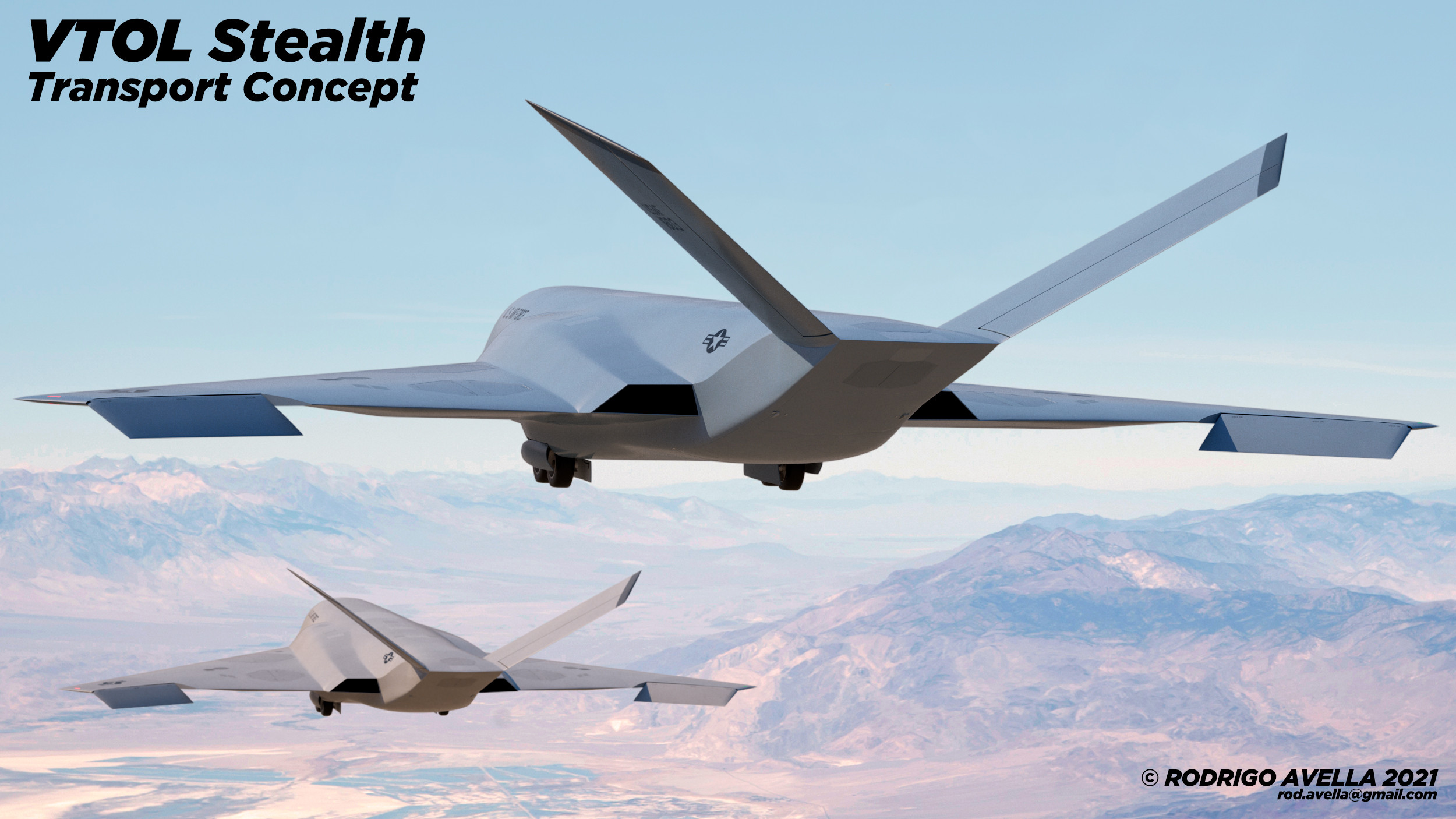
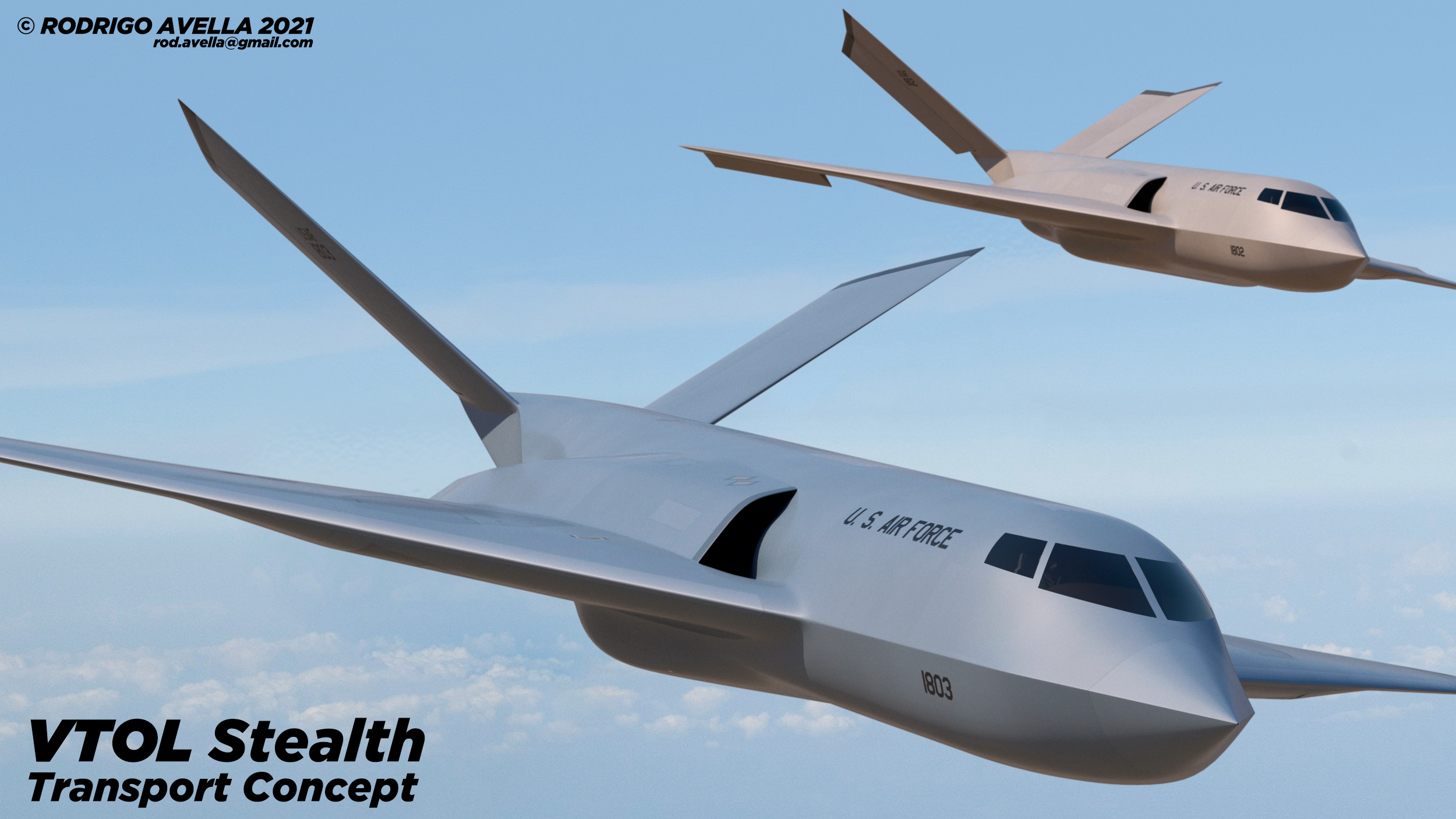
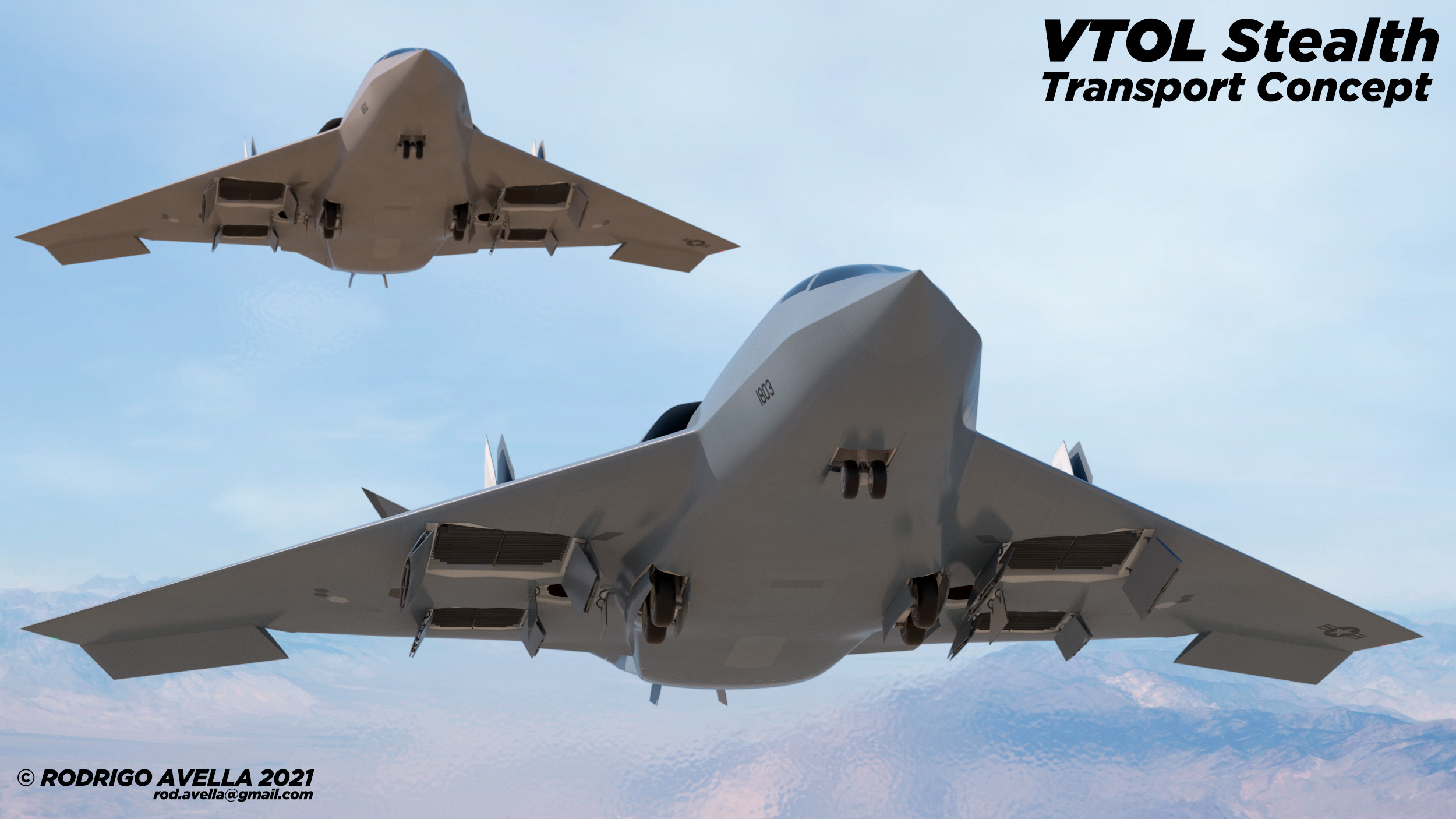
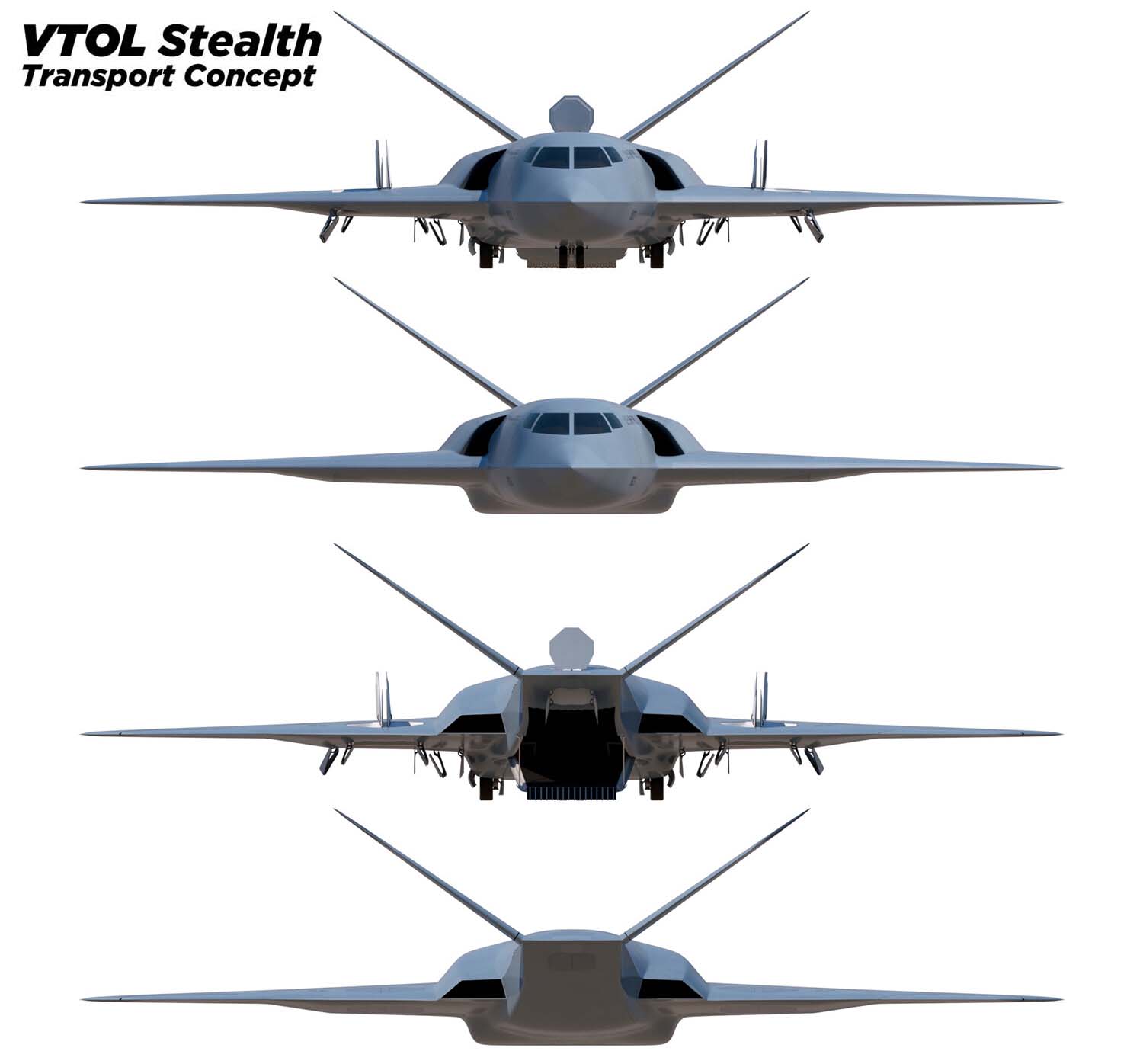
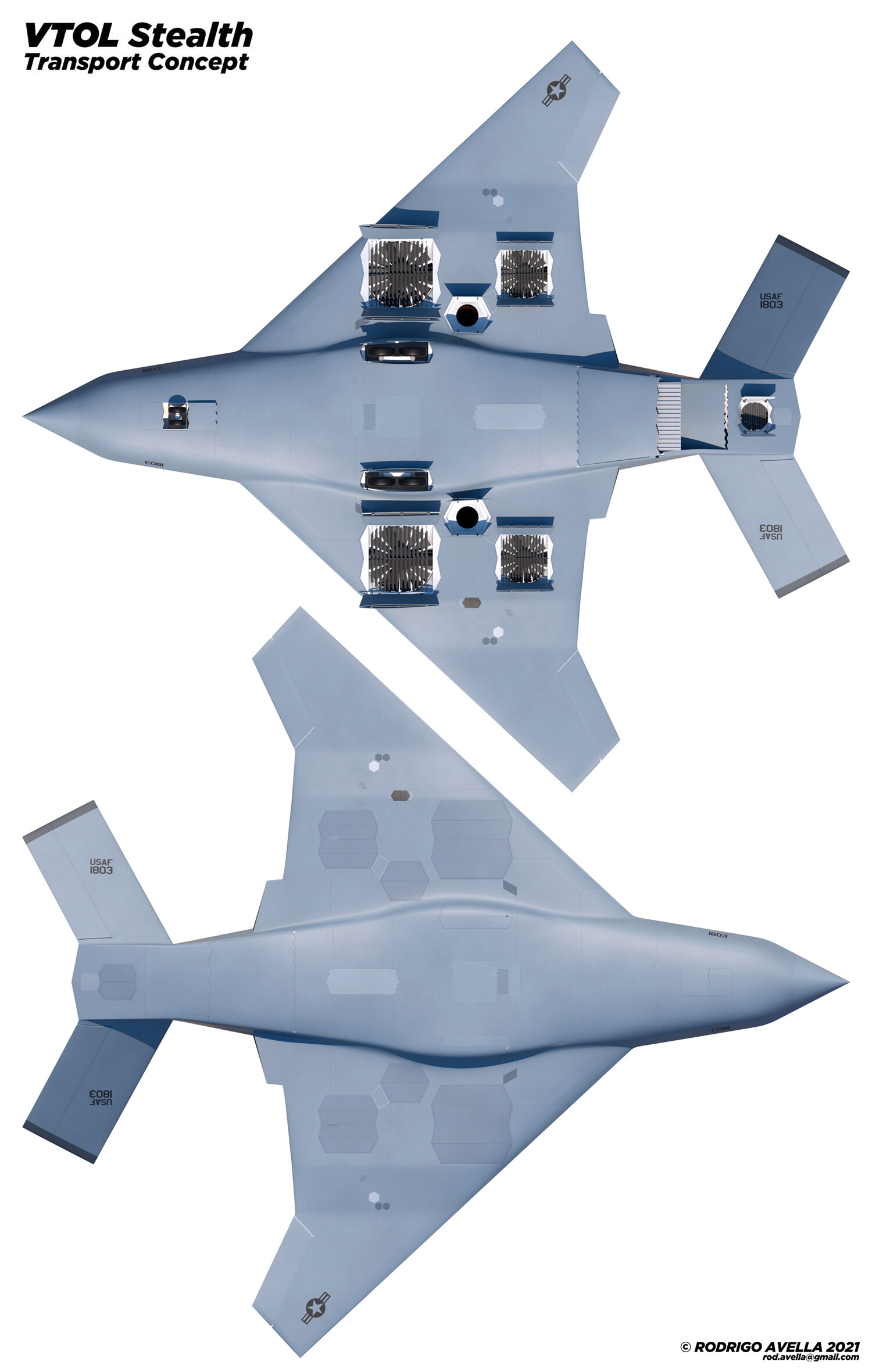
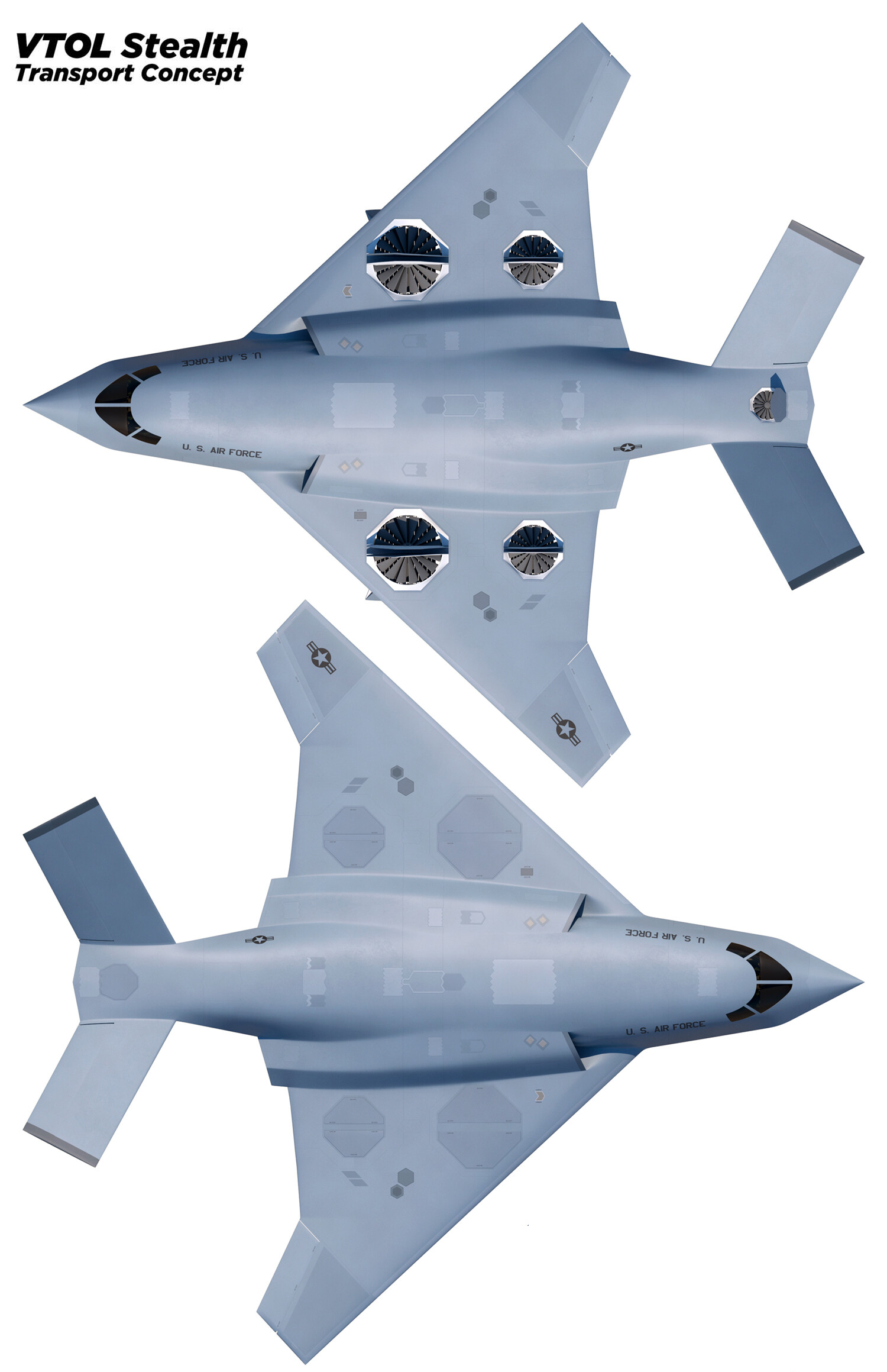
A key feature of the project is VTOL (Vertical Take-Off and Landing) technology. This means that the new transport aircraft will be able to take off and land vertically, like a helicopter, while retaining the advantages of a jet aircraft: high speed, long range, and payload capacity.
This technology will be made possible by the introduction of a new generation of electric motors, which are currently undergoing active testing. Such an aircraft will take off and land vertically using electric motors, while horizontal flight will be powered by traditional jet engines.
Today, this technology has already been implemented on small and medium-sized UAVs; all that remains is to scale it up and implement it, so to speak, on a larger scale—on full-fledged, large-capacity aircraft. This will require new high-power electric motors, which are expected to become available no later than the 2030s—or perhaps even as early as the 2020s.
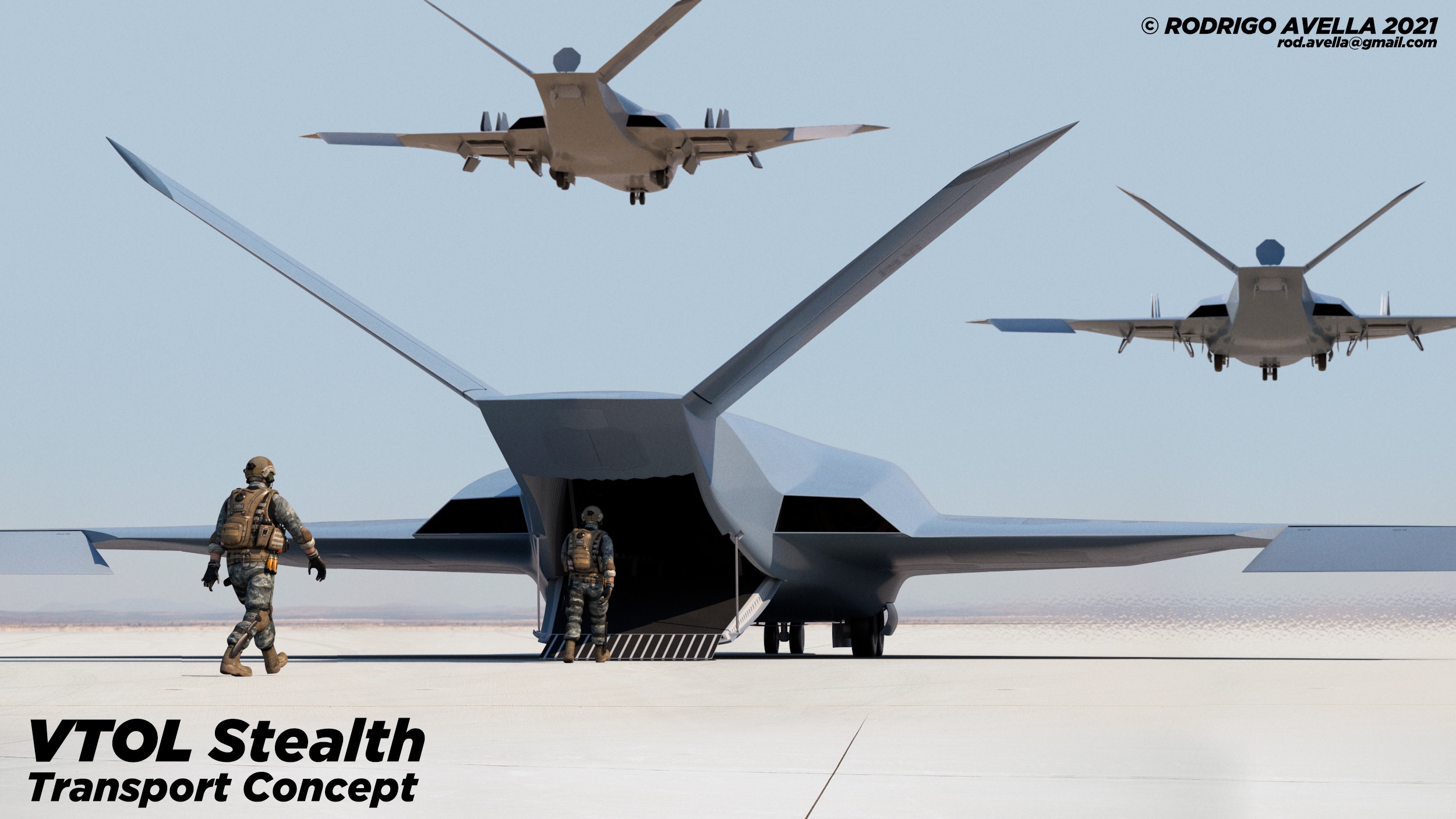
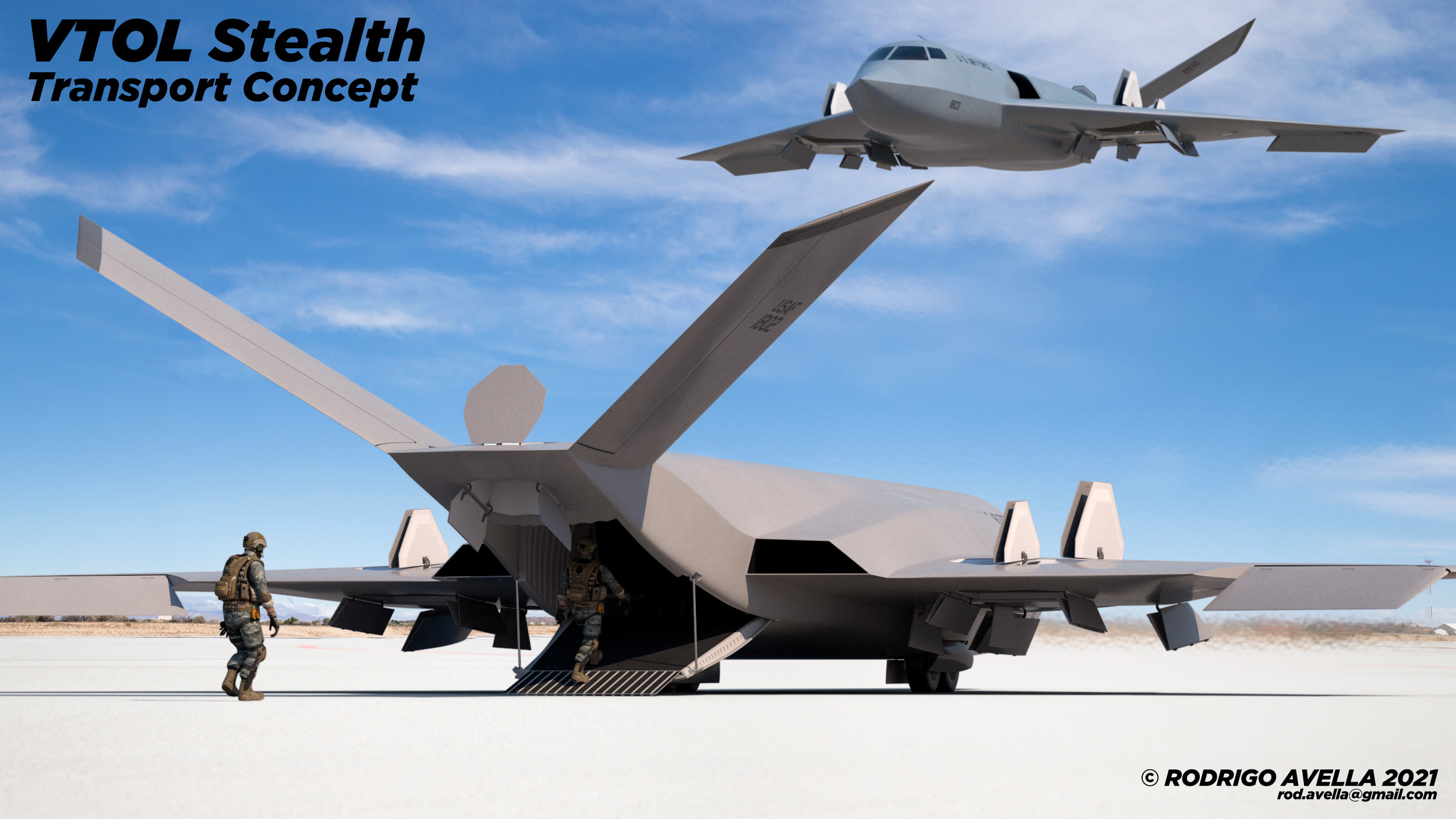
This approach radically changes operational tactics. In modern combat, where airfields are prime targets for the enemy, the ability to operate from unprepared sites—or even from ship decks—makes the VTOL transport a strategic asset. It can deliver troops, equipment, or humanitarian aid directly to the epicenter of the conflict—regardless of the condition of the infrastructure.
Stealth: Invisibility in the Age of Radar
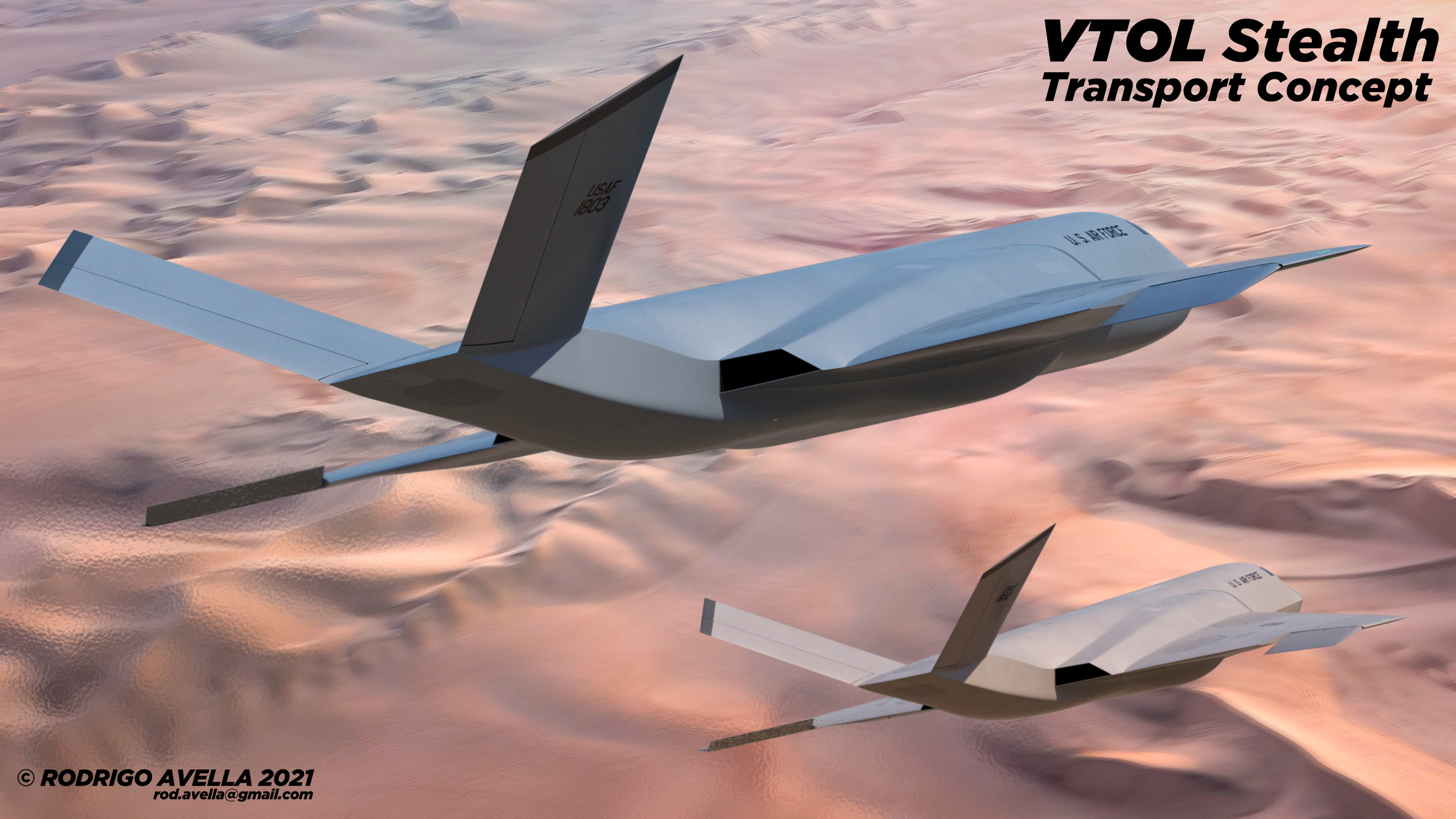
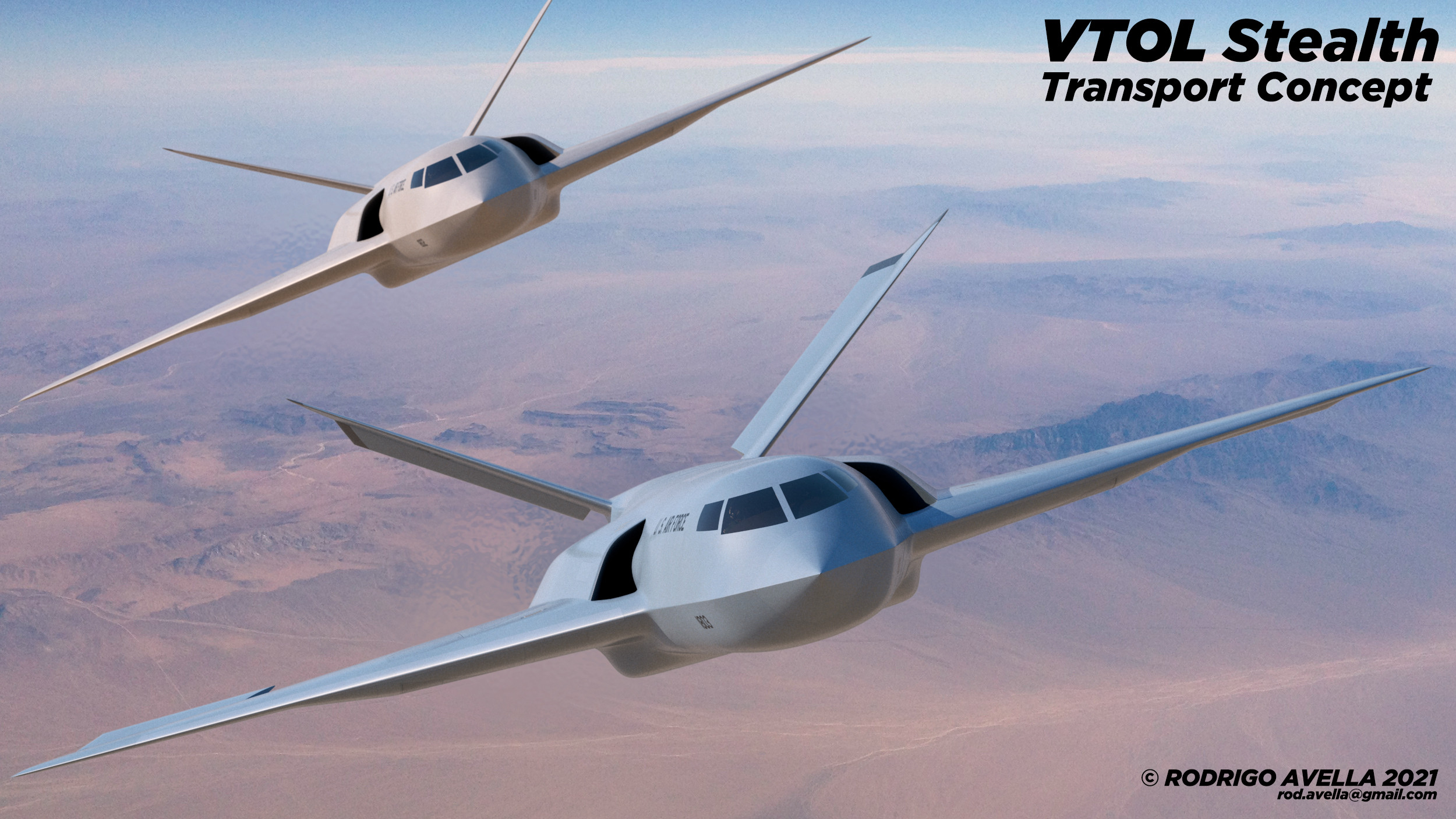
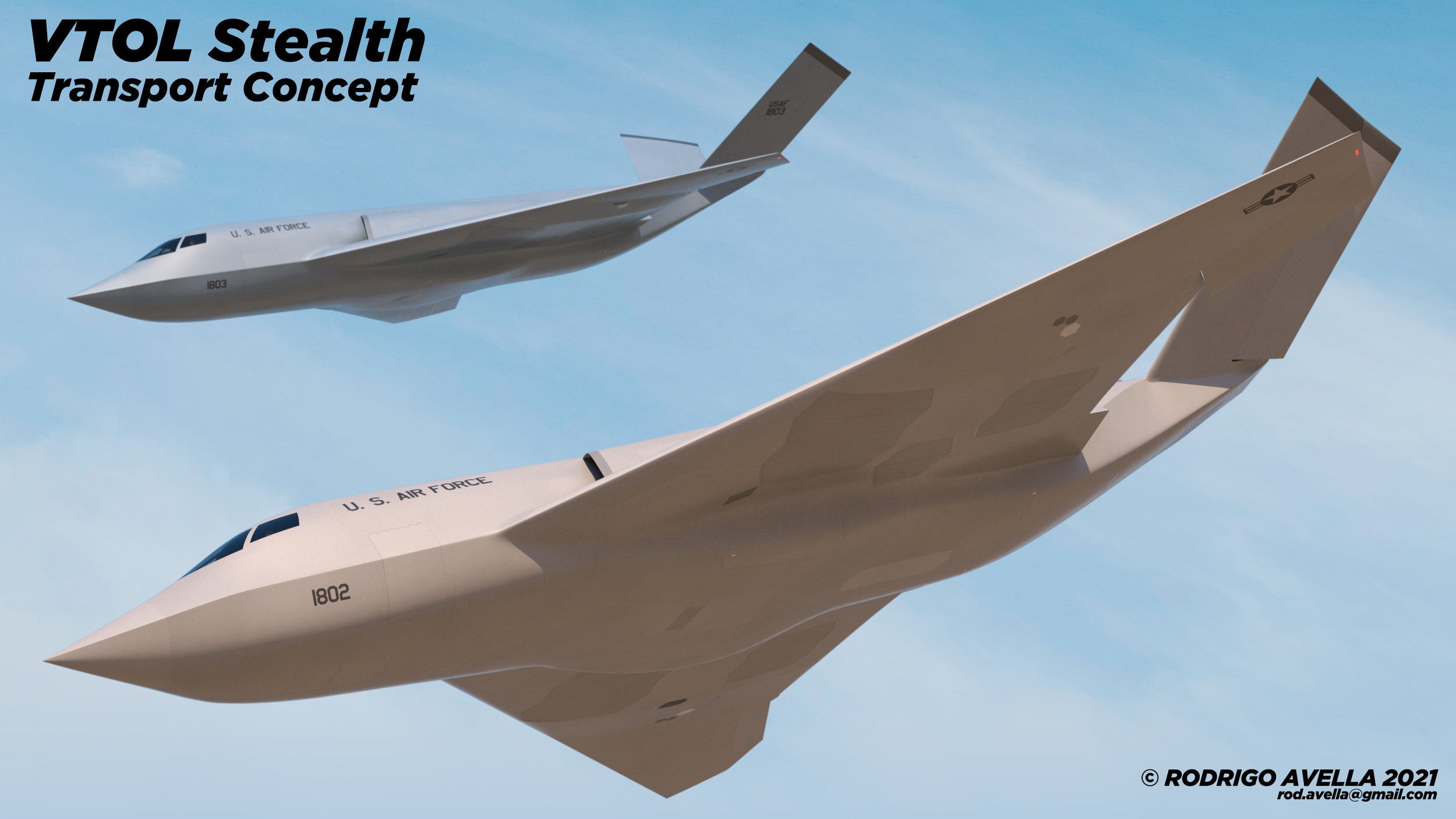
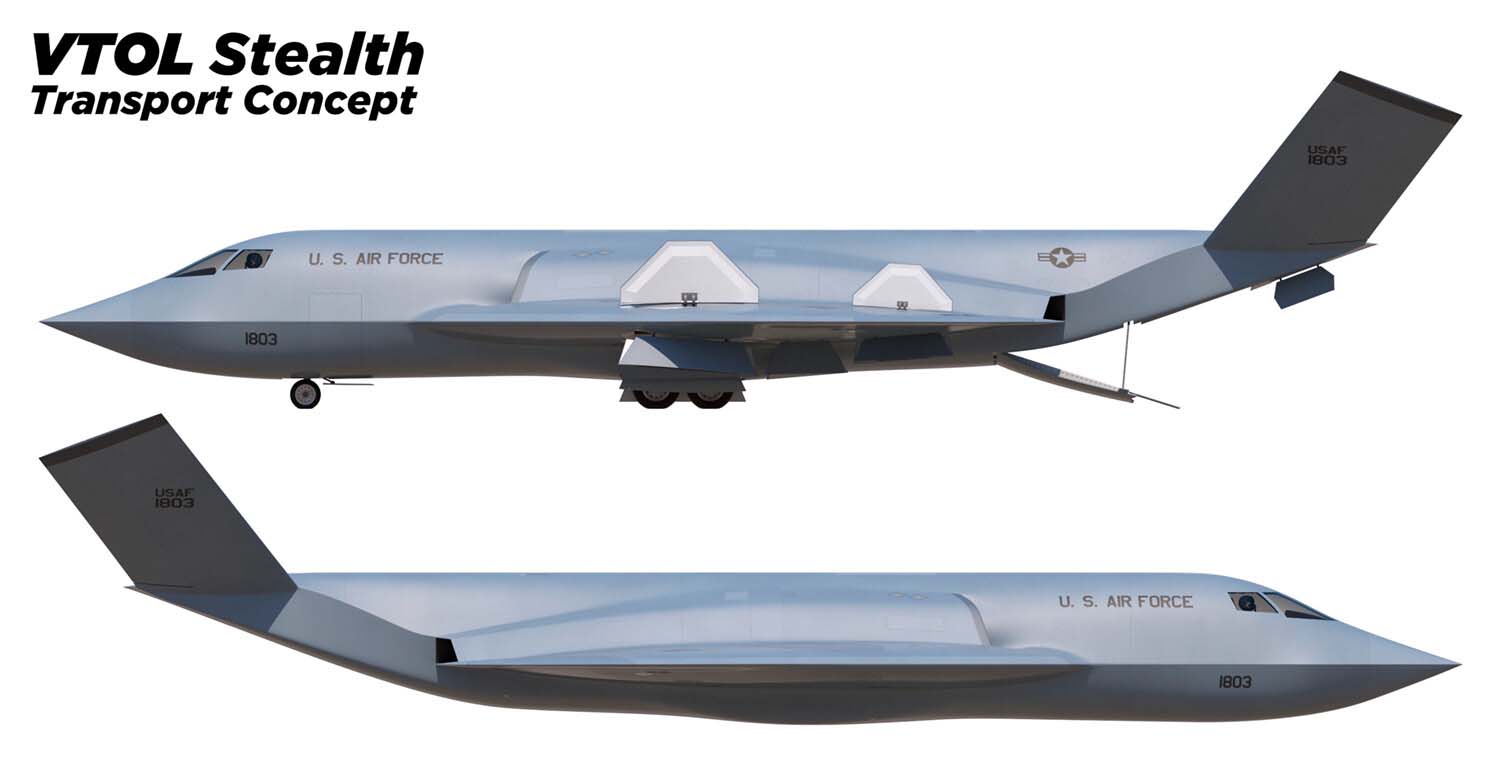
Another revolutionary feature of the concept is its stealth technology. The aircraft’s fuselage is designed with radar stealth principles in mind: sloped surfaces, the absence of right angles, and the use of composite materials and special coatings. This significantly reduces the cross-sectional area (RCS), making the aircraft virtually “invisible” to radar.
This is particularly important for military transport aviation. Traditional transport aircraft, such as the Il-76 or the C-17 Globemaster, are easily detected at long ranges and become easy targets for advanced long-range air defense systems. The new approach, however, involves not only transporting cargo but also penetrating areas with active air defense—without fighter escort or electronic warfare suppression.
Architecture and Features
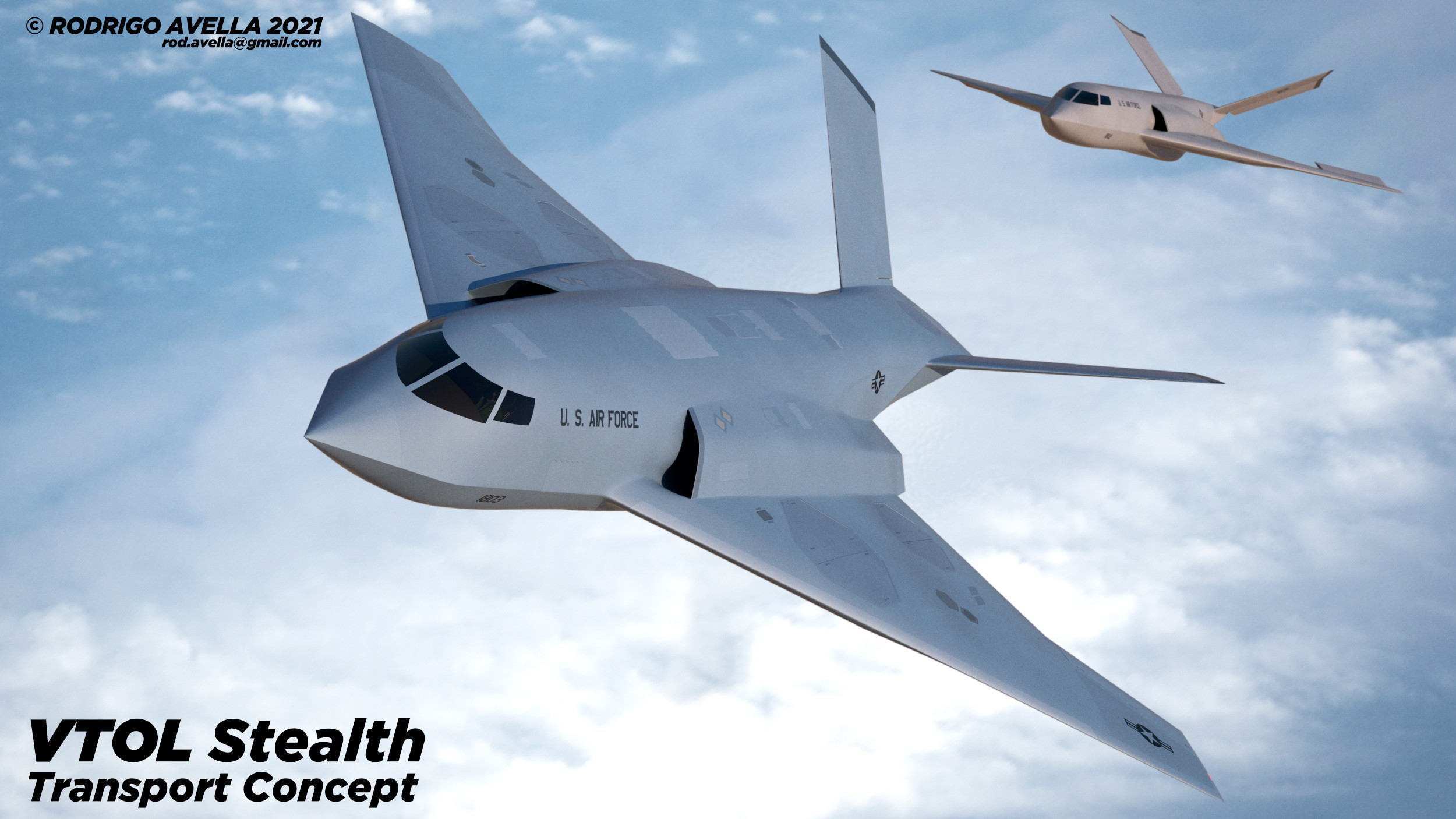
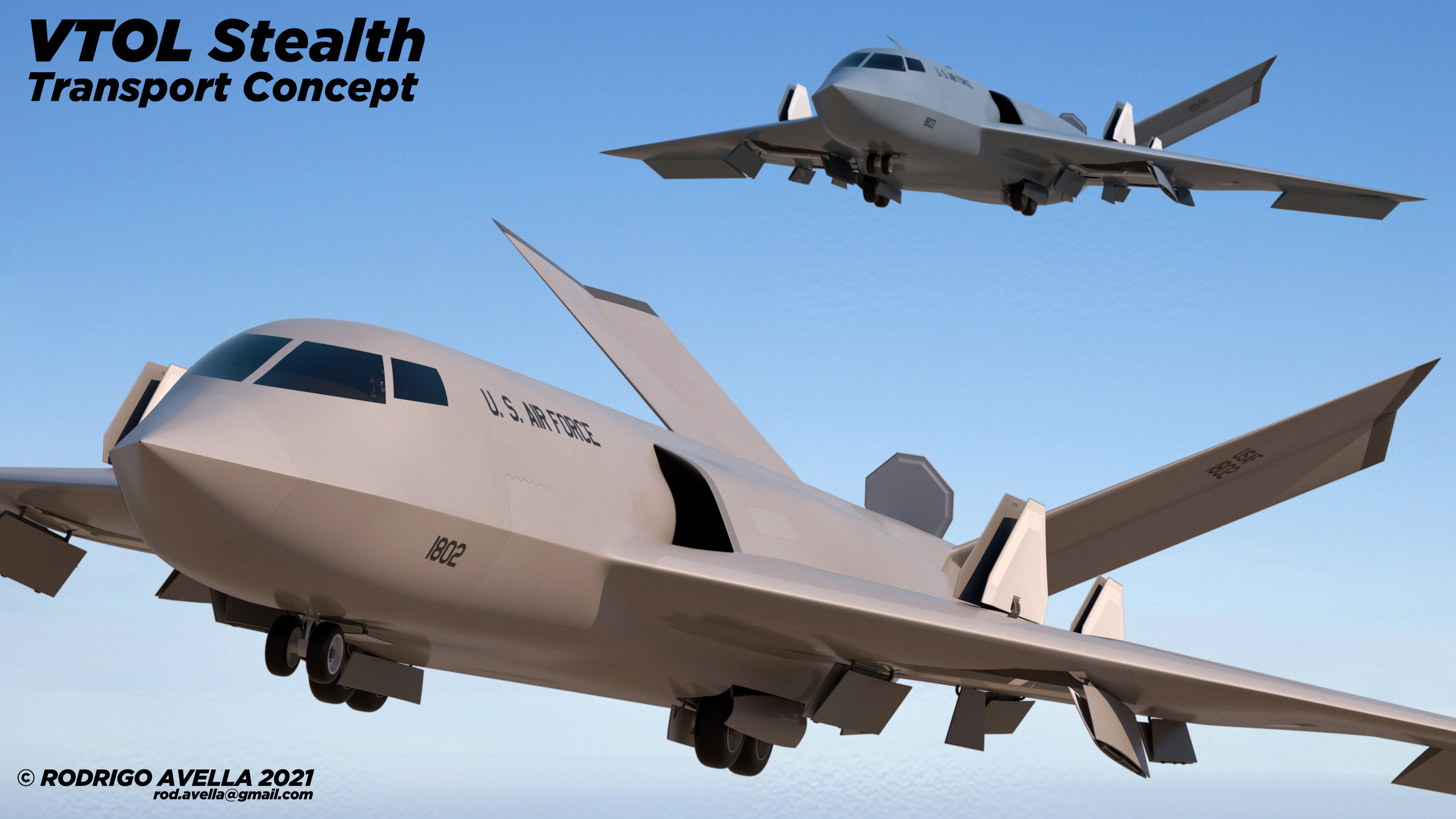
The VTOL Stealth Transport project combines elements of science fiction with realistic engineering:
- Hybrid power plant: a combination of turbojet engines and swiveling electric fans that enable both horizontal and vertical flight.
- Modular cargo compartment: allows for quick reconfiguration of the interior space to accommodate troops, equipment, medical modules, or humanitarian aid.
- Digital Cockpit and AI Assistant: Reducing the workload on the crew through automation and intelligent control systems.
- Low infrared signature: the engines are concealed inside the fuselage, and the exhaust is cooled and dispersed, making it difficult for infrared homing heads to detect the aircraft.
Although the project is still in the conceptual stage, it demonstrates the direction in which global aviation is heading. Similar research is being conducted in the United States (for example, DARPA and Northrop Grumman are working on programs such as Transformer and Tern), China, and Europe.
There is no precise information on whether such work is underway in Russia, which is not surprising, as such projects are usually classified. However, the appearance of the promising PAK TA suggests that the future Russian military transport aircraft will, at the very least, share some of this aircraft’s features.
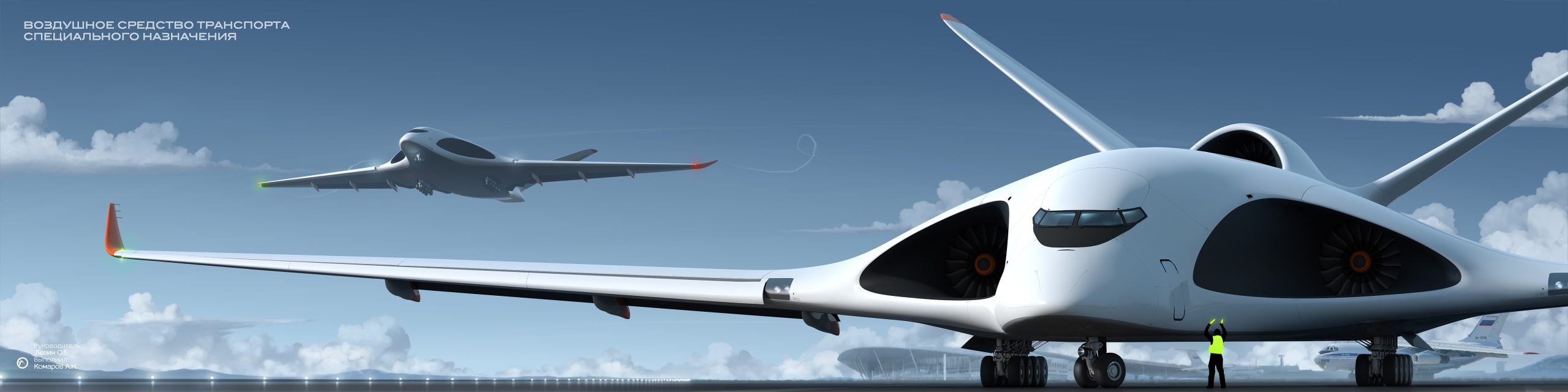
One possible design for the future PAK TA
The Future of the Il-76: Evolution or Revolution?
The Russian defense industry is also moving forward. The Il-276 project (formerly Il-214) was conceived as the successor to the Il-76, but it remains a classic short takeoff and landing (STOL) transport aircraft, without VTOL or stealth capabilities. At the same time, the Russian Ministry of Defense is increasingly emphasizing the need to develop “smart,” multifunctional, and hard-to-detect platforms.
The VTOL Stealth Transport concept is not so much a specific technical solution as it is a visionary look at the future. It reminds us that in an era of hypersonic weapons, drones, and network-centric warfare, even transport aircraft must be fast, stealthy, and autonomous.
Conclusion
The Il-76 has served faithfully for more than half a century. But the future calls for new solutions. Vertical takeoff, stealth, digital integration, and flexibility—these are the qualities that will define military transport aircraft over the next 20 to 30 years. This project on Behance may still be a long way from becoming a reality, but it points us in the right direction: the future belongs to those who can arrive unnoticed—and leave before they’re spotted.
Source of illustrations: https://www.artstation.com/artwork/lxAyoO