How Syrian Air Defense Systems Contributed to the Development of the F-22A Raptor Fighter Jet

Although at first glance it may seem that there is no direct connection between Syrian air defense systems and one of the most advanced Western fighter jets—the F-22A Raptor— history shows that it was precisely the experience of fighting dense air defense systems during the conflict that became one of the key factors influencing the requirements for a new generation of U.S. combat aircraft.
Syrian Air Defense: A Complex Challenge
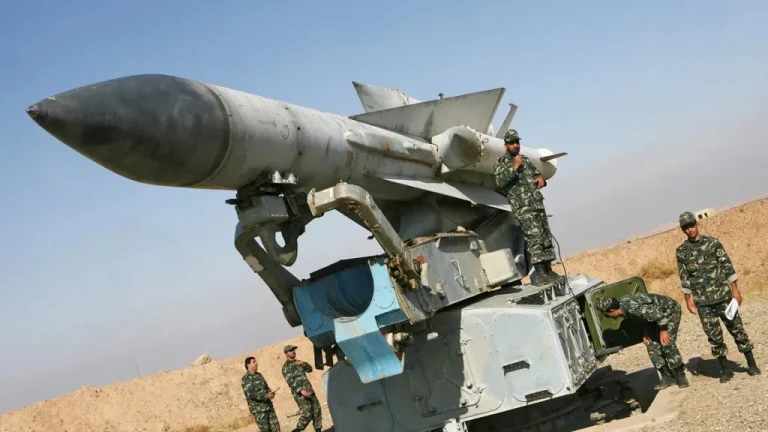
In the 1980s and 1990s, Syria had one of the densest and most sophisticated air defense systems in the Middle East. It included:
- the Soviet-made S-75, S-125, and S-200 anti-aircraft missile systems, which were large and state-of-the-art at the time;
- mobile medium-range air defense systems;
- a multi-tiered network of radar systems.
This system was designed primarily to protect strategic targets and major cities, but it soon became a serious obstacle to Western air operations. Dense radar “networks” made it difficult to approach targets, keep fighter jets in the air for extended periods, and navigate through the airspace.
Lessons for the U.S. Air Force
While analyzing the lessons of the wars and conflicts of the late 20th century, including the Gulf War, U.S. allies took note of the effectiveness of air defense systems similar to Syria’s. Although the coalition’s air forces were largely dominant, dense radar networks demonstrated that conventional fighter jets are not always capable of reliably carrying out missions when enemy radar activity is high.
This served as an impetus for the development of the next generation of aircraft, in which performance in the electronic warfare environment, stealth, and the ability to withstand powerful air defense systems and severe electronic jamming took center stage.
How did this affect the requirements for the F-22A Raptor?
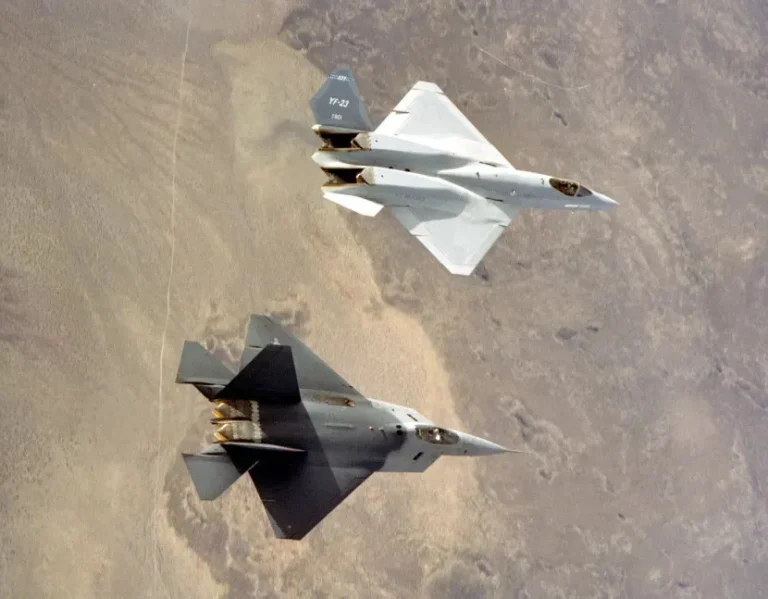
Work on the Advanced Tactical Fighter (ATF) program—which later evolved into the **F-22** project—took place in the 1980s and 1990s. The main requirements for the new aircraft, in addition to high maneuverability and speed, were:
1. Low radar visibility (stealth)
Finding ways to “slip through” dense layers of air defense systems required the development of a design that minimizes the reflection of radio waves. This formed the basis for the Raptor’s stealth design.
2. A high degree of autonomy and sensor integration
To operate in a complex air defense environment, it was necessary not only to evade radar detection but also to accurately assess the situation, maintain communication with allies, and avoid revealing one’s own coordinates. This was achieved thanks to an integrated sensor and communications architecture.
3. The ability to work “in networks”
Modern air defense networks require real-time data exchange. The new aircraft had to detect, process, and transmit information faster than traditional platforms. The F-22 was equipped with a data-sharing system that allowed it to operate in a shared “domain” with other platforms.

4. Electronic Warfare and Resistance to Interference
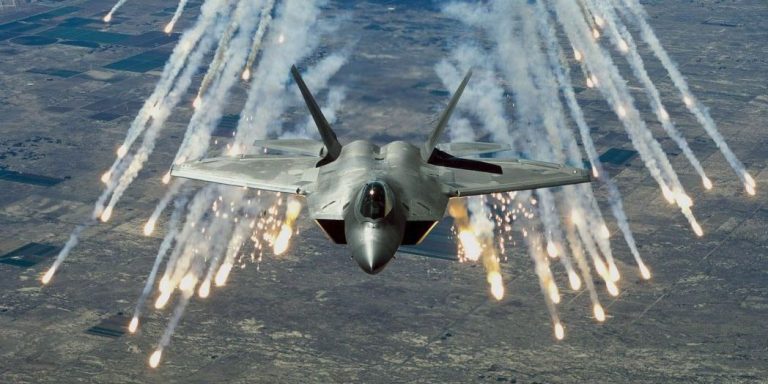
Experience with encounters involving air defense systems similar to those in Syria has demonstrated the need to actively counter enemy jamming and electronic warfare systems. This was also included in the requirements for the Raptor.
What Is the F-22A Raptor?
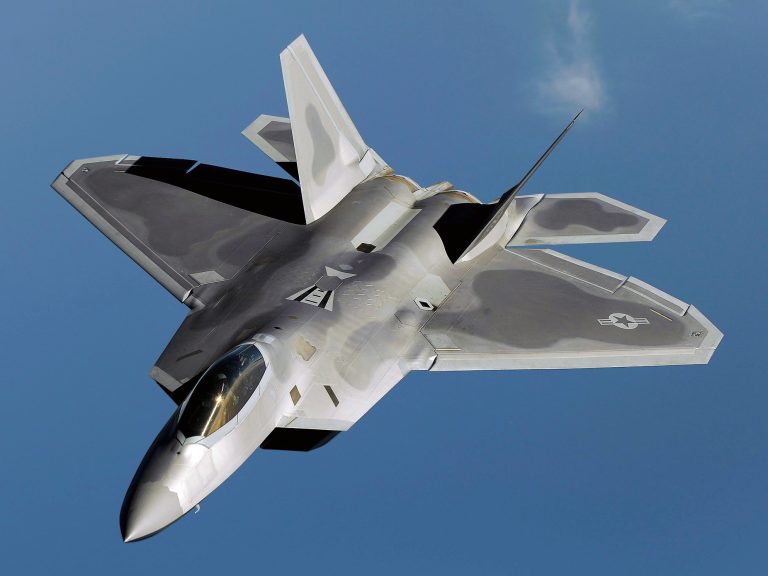
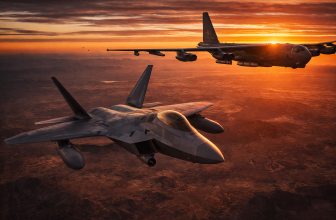
The F-22A Raptor is an American fifth-generation multi-role heavy fighter developed by Lockheed Martin under the ATF program. The aircraft combines:
- “stealth technologies”;
- integrated sensor systems;
- supersonic cruising capability without afterburner;
- high maneuverability;
- networked interaction with other combat platforms.
The Raptor was designed as a weapon for air superiority, capable of operating in challenging conditions with dense air defense systems, breaking through enemy defenses, and maintaining superiority across the entire depth of the airspace.
Why Has Syria’s Air Defense Become So Important?
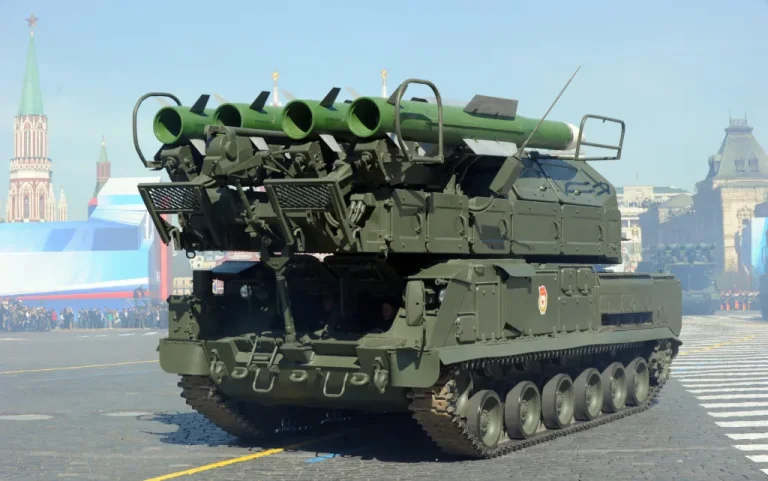
Throughout the 1970s–1990s, Syria modernized its air defense systems, making them denser and more difficult to evade. Radar stations distributed across various locations formed a “grid” that, in the event of an attack, could detect and track targets at long ranges.
Western military experts have noted that successful air operations under such conditions require not only powerful radars, but also aircraft equipped with stealth capabilities, “smart” electronic countermeasures, and advanced sensor architecture.
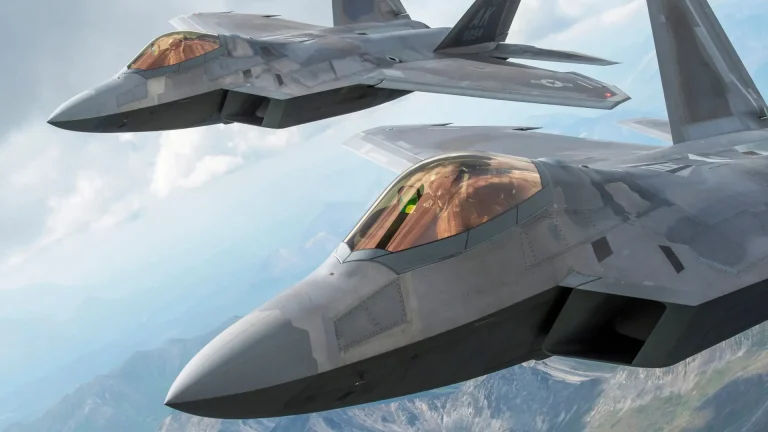
These requirements were partially taken into account specifically when the technical specifications for the ATF—the program that subsequently led to the development of the F-22A Raptor—were formalized.
Conclusion
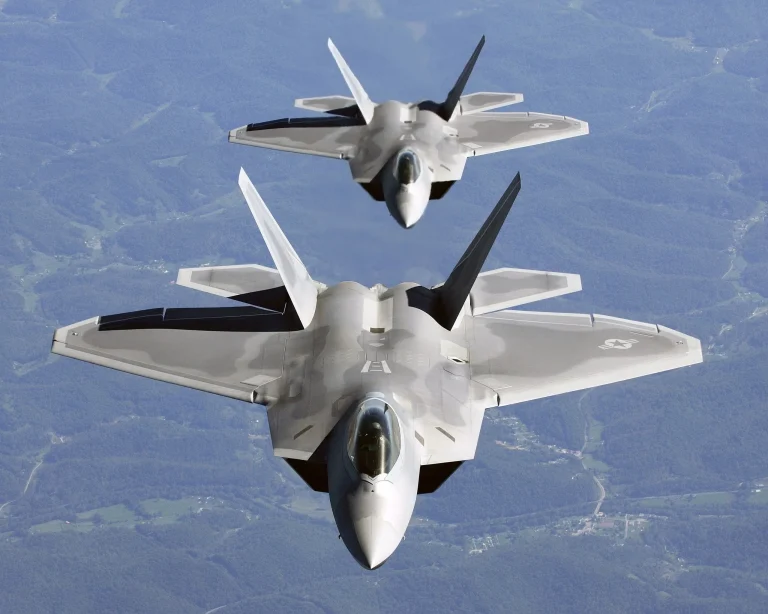
The connection between Syria’s air defense systems and the development of the F-22A Raptor illustrates the extent to which experience gained from conflicts influences the development of military technology. Although the Raptor was designed as a response to a wide range of threats, lessons learned from analyzing dense, sophisticated air defense systems like Syria’s helped define key requirements for a new generation of fighter jets—primarily in terms of stealth technology, sensor integration, and countering electronic warfare threats.
This historical context underscores that even systems considered obsolete or regional in nature can influence global decisions on defense and armaments, shaping approaches to future military equipment.
based on https://www.twz.com/air/syrias-air-defenses-helped-make-the-f-22a-raptor-a-reality