This reconnaissance aircraft can be either manned or unmanned: what's behind the H03 Firebird?

The new H03 Firebird reconnaissance aircraft, developed by Northrop Grumman’s subsidiary Scaled Composites, continues to attract the attention of aviation experts and enthusiasts. This unusual platform combines the capabilities of both manned and unmanned flight, and the latest available images and videos from the tests provide an even clearer picture of its design and equipment.
What kind of plane is this?
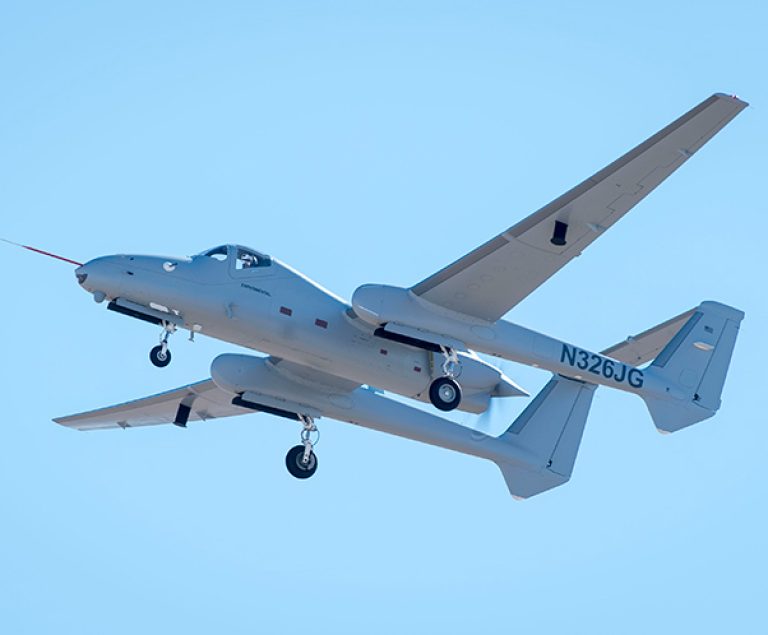
The Firebird is a medium-altitude, long-endurance (MALE) reconnaissance and surveillance aircraft capable of performing missions involving intelligence gathering, surveillance, photography, and data transmission. The design provides for optional control: the aircraft can fly with a pilot in the cockpit or without one, controlled from the ground, depending on the mission and conditions.
The aircraft belongs to a family of models developed by Scaled Composites—a legendary company specializing in aerodynamic and experimental aircraft, now part of Northrop Grumman.
Design Details and Layout
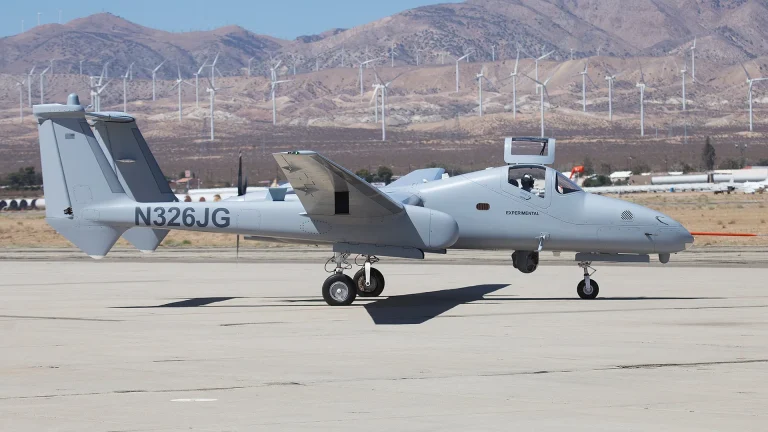
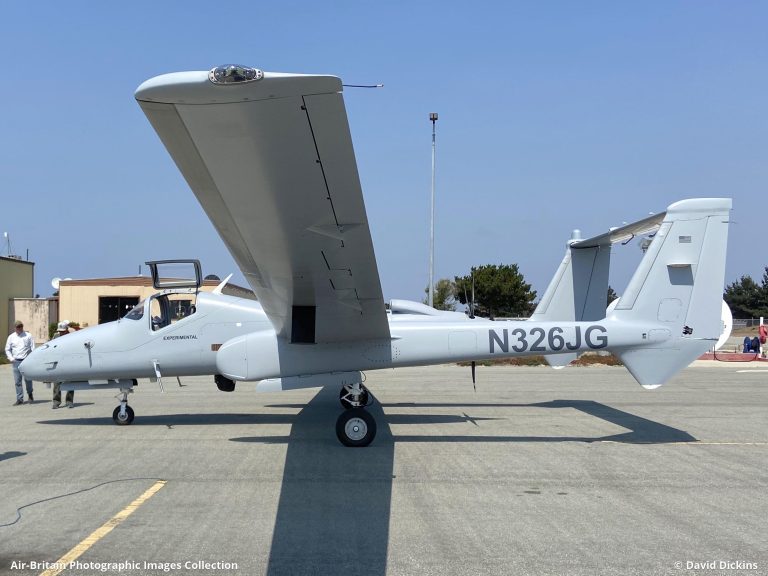
From the available materials and photos, it is clear that the H03 Firebird retains the distinctive features of previous Firebird models, but with a number of differences:
Fuselage and wings:
- The aircraft has a notably high wing aspect ratio, which is characteristic of platforms designed for long flight durations. This helps reduce fuel consumption and maintain altitude for a specified period.
Configuration:
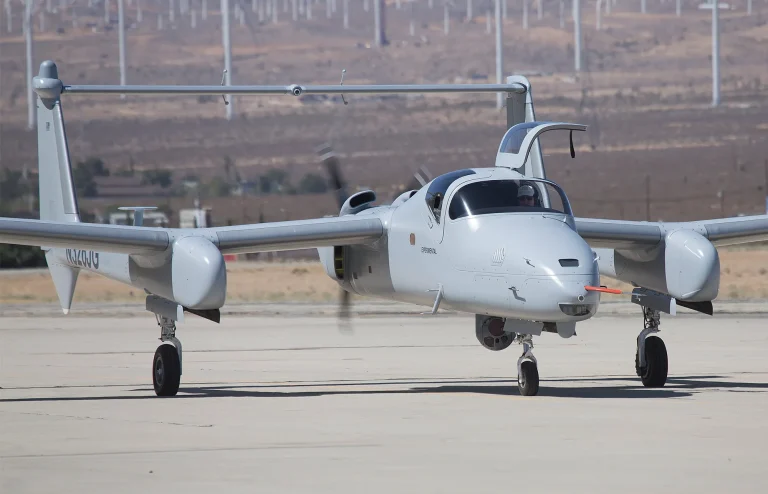
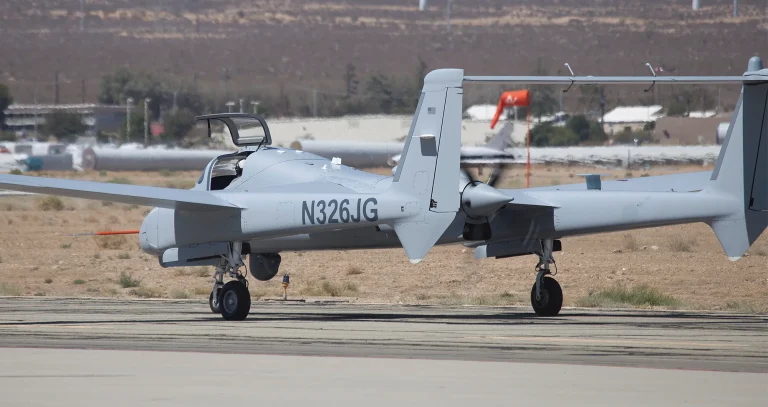
- The design features a twin-beam tail structure with a central stabilizer and a “nosestrike” landing gear configuration, and the engine is mounted in a “push-prop” configuration at the rear of the fuselage.
Cab:
- The H03 features a side-by-side two-seat cockpit for the pilot and the second crew member (sensor operator). This configuration allows the aircraft to be operated manually for specific tasks and then quickly switched to unmanned mode when necessary.
Antennas and Sensors:
- The hull is equipped with numerous communication antennas, UHF sensors, and satellite systems that enable data exchange and control of the vehicle in both autonomous and remote modes.
Equipment and Sensor Systems
Mounted beneath the aircraft’s fuselage is the main sensor turret, equipped with a high-tech optoelectronic system—specifically, a system such as the FLIR Star SAFIRE 380, which enables HD-quality multispectral video recording, thermal imaging, and laser target designation over long distances. This equipment is ideal for aerial reconnaissance and monitoring.
In addition, the platform was originally designed to accommodate the modular installation of various types of equipment—ranging from radar systems and electronic reconnaissance to sophisticated aerial reconnaissance sensors, geolocation stations, and radio communication systems.
How it flies and what it was designed for
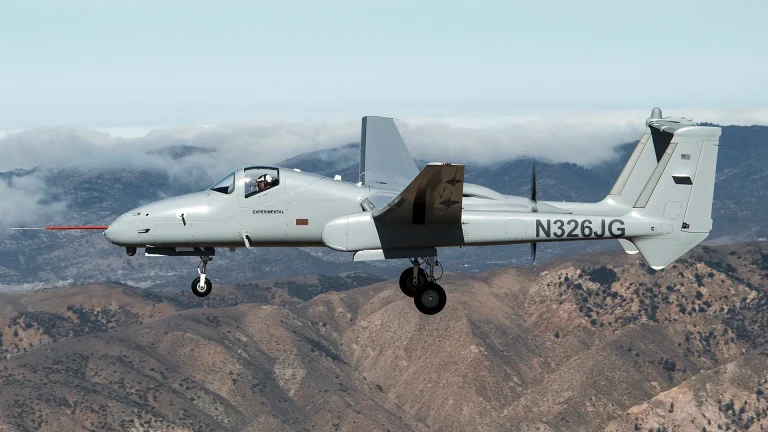
The H03 is capable of carrying out missions at medium altitudes—likely up to 9–11 km—with long flight durations, remaining airborne for hours, which is characteristic of MALE platforms. Previous versions of the Firebird have demonstrated the ability to maintain flight for up to 40 hours, making them similar to large unmanned reconnaissance aircraft.
An interesting feature is the aircraft’s low acoustic signature, which is achieved in part through its five-bladed propeller and aerodynamic design. This is important for reconnaissance missions, when the aircraft must remain as inconspicuous as possible to the targets it is observing.
Optional piloting and combat capabilities
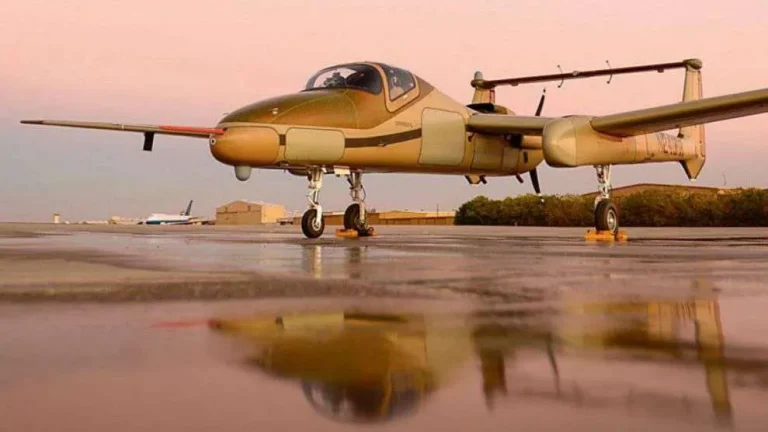
The main feature of the Firebird is its optionally piloted architecture: the aircraft can fly either with a pilot in the cockpit or without one, controlled remotely. This offers a significant advantage over traditional UAV platforms, as it allows the aircraft to be rapidly deployed to the theater of operations and then transition to an autonomous mission.
This approach makes the platform versatile and attractive for export, especially for customers who want to combine manned and unmanned capabilities in a single vehicle.
Customers, Export Prospects, and Competition
At this point, it is not yet known who exactly will be the first customer for the production version of the H03 Firebird, but there are indications of interest from potential foreign customers. The potential customer base consists of countries that need versatile reconnaissance aircraft capable of long-duration missions but cannot afford to purchase several specialized platforms at once.
The platform has the potential to compete with modern MALE reconnaissance aircraft, such as the MQ-9 Reaper or RQ-4 Global Hawk, in terms of flight duration and payload capacity, but it is unique due to its piloted flight capability and more flexible architecture.
Conclusion
The H03 Firebird is a promising reconnaissance platform that combines:
- the capability for both manned and unmanned flight;
- a wide range of sensor and reconnaissance systems;
- low acoustic signature and long endurance;
- a flexible, modular architecture suitable for a variety of tasks.
The latest photos and videos of the Taxi-run demonstrate that the aircraft appears to be nearly ready for mass production, and its modern design and multi-role capabilities make it an attractive option for armed forces and intelligence agencies seeking versatile aerial ISR solutions.