A Revolution in Aviation. The Helix hybrid aircraft will be able to fly while consuming 90% less fuel than traditional aircraft

Today, plug-in hybrid vehicles are taking the world by storm. What is the essence of this system? As before, the primary power source remains an internal combustion engine (ICE), but the vehicle is equipped with lithium-ion batteries that help save fuel. At the same time, for short distances—from 50 to 100 kilometers, which account for about 90% of all trips—you can drive exclusively on electric power, achieving tremendous savings. The main difference between these vehicles and classic hybrids is the ability to charge the batteries from an external power source. This means that drivers making daily commutes to and from work can go months without using the ICE and avoid visiting gas stations altogether. And when the need arises for a long-distance trip, the hybrid system’s full power kicks in.
Now this concept is taking a decisive step into the sky. The British company Helix has decided to adapt the “plug-in” principle for aviation, proposing a revolutionary hybrid architecture capable of reducing fuel consumption on short routes by up to 90%. How is this possible—and why might it change the future of regional flights?
A New Architecture for Aviation
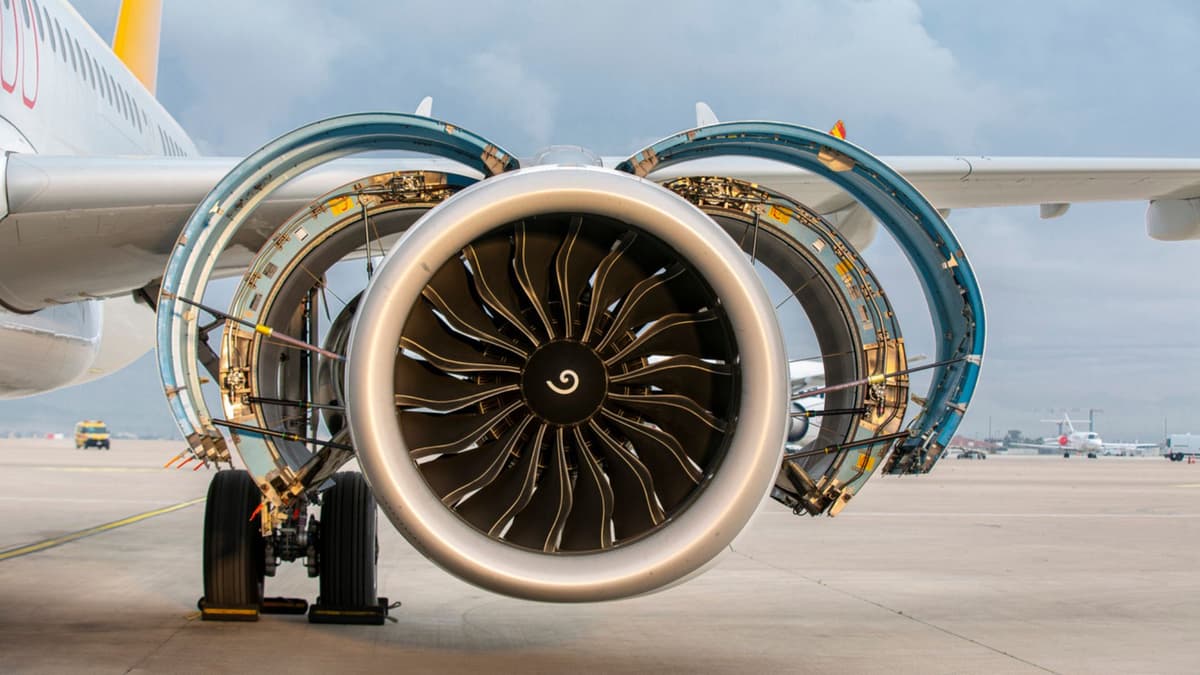
Helix, a company known for its developments in the field of high-performance electric motors, has unveiled a hybrid aircraft concept based on a three-phase approach to modernizing regional and private aircraft. This system, described in the analytical report “A New Architecture for Aviation,” utilizes existing technologies but combines them with exceptional efficiency.
The core of this innovation is a series hybrid electric powertrain, in which a compact fuel cell works in tandem with high-capacity batteries. On short routes (up to 465 km)—which account for more than 26% of global air traffic—the aircraft can operate almost entirely without burning fuel, especially during takeoff and landing, when emissions and noise are most problematic.
Economy and Ecology: Two Wings of the Same Plane
For airlines, fuel accounts for nearly 30% of operating expenses, and on short routes, this share is even higher. Given that regulators are increasingly requiring a transition to sustainable aviation fuel (SAF)—which remains significantly more expensive than conventional fuel—fuel savings are becoming not just profitable, but vital.
Helix offers a solution that not only reduces costs but also lowers the carbon footprint. On a typical 465-km route, their hybrid aircraft consumes just 50.2 kg of fuel, compared to 231 kg for a traditional aircraft. That’s a 78.3% reduction, and in the optimized version, it drops to 90%.
How is this level of efficiency achieved?
The key to success lies in the comprehensive optimization of the entire power plant:
- Lightweight and powerful engines:
The new
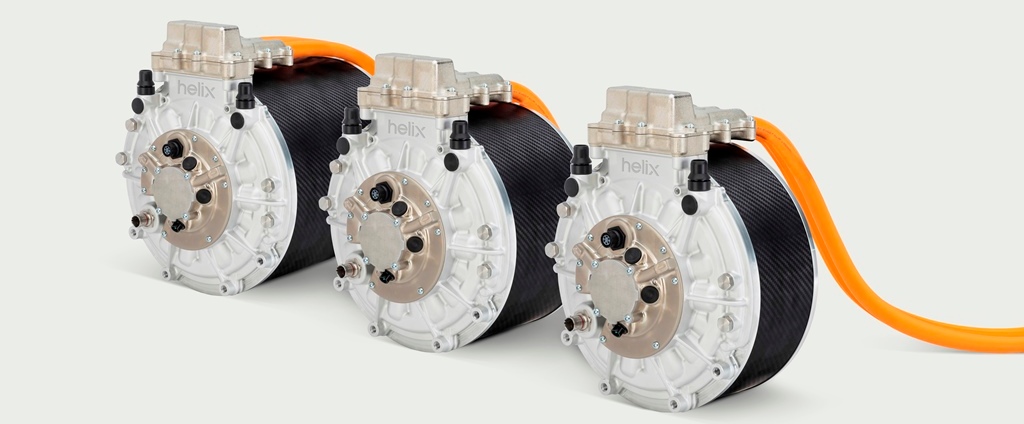
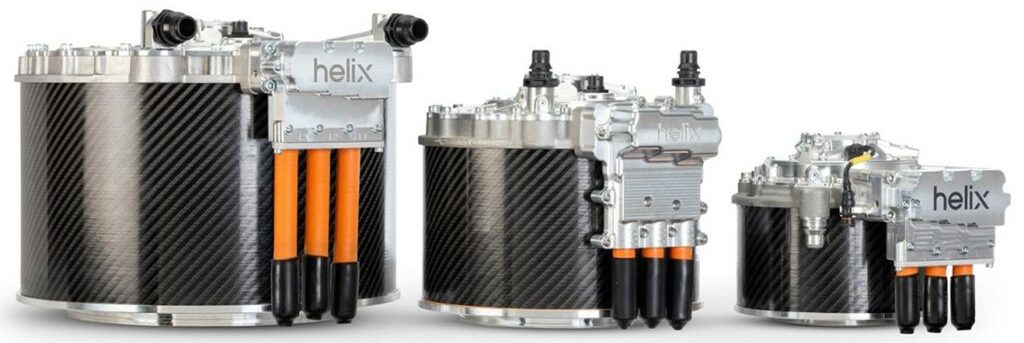
Helix SPX417-200engine delivers 568 kW while weighing just 90 kg—half as much as comparable models. Together with the lightweight inverter, the entire electrical system weighs 124 kg, resulting in a weight savings of 162 kg compared to standard solutions. - Motor-gearbox configuration:
This allows for an additional
222 kgreduction in the power unit’s weight, which makes it possible to increase battery capacity and further reduce fuel consumption.
- Ducted fans:
Unlike open propellers, these propulsion systems are enclosed in a cylindrical housing, which reduces tip losses and increases static thrust. This results in
a 25% reduction in shaft power, despite a slight increase in weight and aerodynamic drag. - Electric Mode During Critical Phases:
Takeoff and landing are the most energy-intensive and noisiest phases of flight. The Helix hybrid performs these maneuvers exclusively on electric power, which reduces noise, engine wear, and emissions.
Practical implementation is just around the corner
It is important to note that Helix is not building a futuristic aircraft from the distant future. All of the technologies are real, accessible, and compatible with existing infrastructure. This is not science fiction, but a practical path toward the decarbonization of regional aviation.
According to forecasts, the market for short-haul flights (up to 500 km) is expected to reach $115 billion by 2035. However, these flights are often unprofitable today due to high fixed costs and low load factors. The Helix hybrid aircraft could be the very solution that makes these flights economically viable and environmentally responsible.
Conclusion: The sky is getting clearer
The hybrid revolution, which began on the roads, is now taking off in earnest. Helix is demonstrating that even with current technology, it’s possible to achieve incredible fuel efficiency—without compromising on range, safety, or comfort.
A 90% reduction in fuel consumption, a drastic cut in emissions, lower noise levels, and reduced operating costs—these are not just dreams, but real figures backed by calculations and engineering solutions.
If this concept is implemented in mass production, we will witness the most significant breakthrough in civil aviation in recent decades. And perhaps very soon, short flights will become not only fast but also truly green.
based on — https://aeronaut.media/news-en/aviation-news-en/en-helix-reveals-radical-aircraft-design/