Australia has acquired one of the most interesting aircraft in its history—the MC-55A Peregrine

Australia has taken an important step toward modernizing its air force: the first production MC-55A Peregrine aircraft—a specialized platform for reconnaissance, surveillance, electronic countermeasures, and data exchange—has arrived at RAAF Edinburgh Air Base in South Australia. This is one of the most technologically advanced types of equipment ever acquired by the Royal Australian Air Force, and it will be a key element of the AIR 555 program.

What is the MC-55A Peregrine?
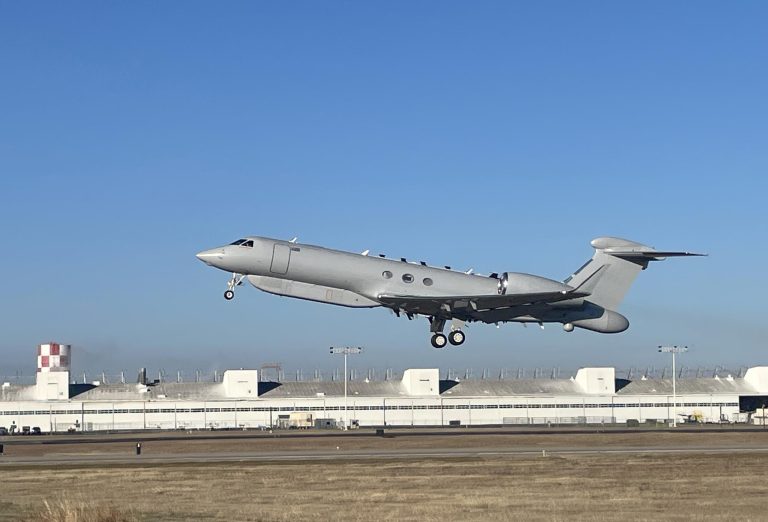
The MC-55A Peregrine is a specialized long-range aircraft designed to perform a range of tasks, including:
- intelligence, surveillance, and reconnaissance (ISR);
- electronic warfare and the suppression of enemy systems (EW — Electronic Warfare);
- the collection and analysis of communications signals and radar emissions (SIGINT);
- remote transmission of intelligence and coordination with allies.
This is a modified Gulfstream G550 business jet that has been adapted for military missions. It is based on a sturdy and reliable airframe that provides long range, high altitude, and good stability in flight, while specialized onboard sensor and electronic systems transform it into a multifunctional combat asset.
Developer and History of the Program
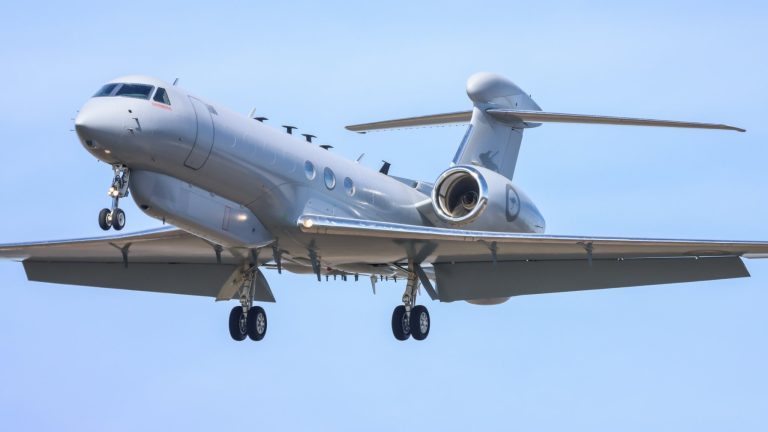
The MC-55A was developed based on the Gulfstream G550—a commercial business jet manufactured by the American company Gulfstream Aerospace. Variants for reconnaissance and electronic warfare missions are being developed under the leadership of L3Harris Technologies, which is integrating specialized equipment and systems.
The project, known as AIR 555, was launched after the U.S. Security Service approved the delivery of up to five such aircraft, fully equipped, to Australia. The Royal Australian Air Force ordered four MC-55A aircraft with the aim of establishing a modern ISR/EW hub as part of its aviation infrastructure.
Key Features and Specifications of the MC-55A
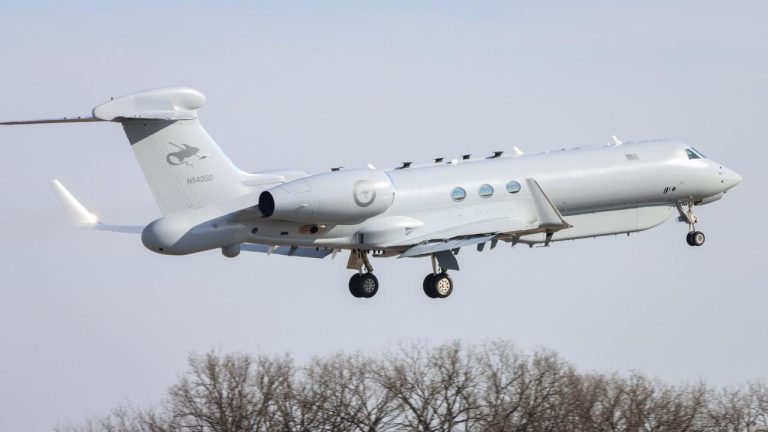
The MC-55A Peregrine combines a business jet platform with an expanded suite of combat and reconnaissance capabilities. Key technical and functional features:
Powertrain and Aerodynamics
- Engines: The G550’s characteristic power-to-weight ratio ensures long-range flight at high altitudes and excellent fuel efficiency;
- Practical ceiling: approximately 51,000 feet (≈15,500 m);
- Flight duration: approximately 15 hours without refueling, which allows for extended missions.
Sensory and Electronic Load
Numerous antennas, a “rear boom,” an under-fuselage “canoe,” and large radio-transparent domes are visible on the fuselage—these are all components of the ISR/EW/SIGINT system, including:
- radio reception and transmission arrays;
- satellite communication systems;
- radar reconnaissance sensors;
- electronic data collection systems.
This configuration allows the MC-55A not only to gather intelligence, but also to interact with other combat systems, a wide variety of data sources, and command networks.
Communication and Integration
The MC-55A will serve as a digital communications hub within the integrated system of the Australian Armed Forces and their allies:
- receives and transmits data to and from F-35A Lightning II aircraft, the E-7A Wedgetail multi-mission radar aircraft, EA-18G Growler electronic warfare aircraft, sailors, and ground units;
- It functions as a “data exchange” node within a unified networked combat control architecture.
This transforms it from a simple reconnaissance device into a central element of network warfare and communications.
What is its tactical role?
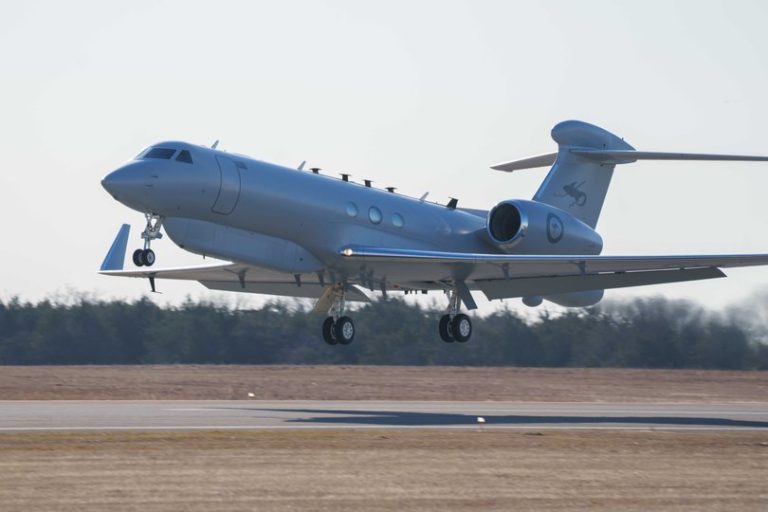
The MC-55A Peregrine is not a fighter or attack aircraft in the traditional sense, but its role in modern aerial conflict is critically important. It combines:
- long battery life;
- a wide range of ISR/EW missions;
- the ability to enhance situational awareness among allied forces;
- Strengthening networked coordination among all elements of the aircraft industry, the navy, and the army.
In other words, the MC-55A serves as the eyes, ears, and “nervous system” of the Australian Armed Forces in the air.
Significance for the Royal Australian Air Force
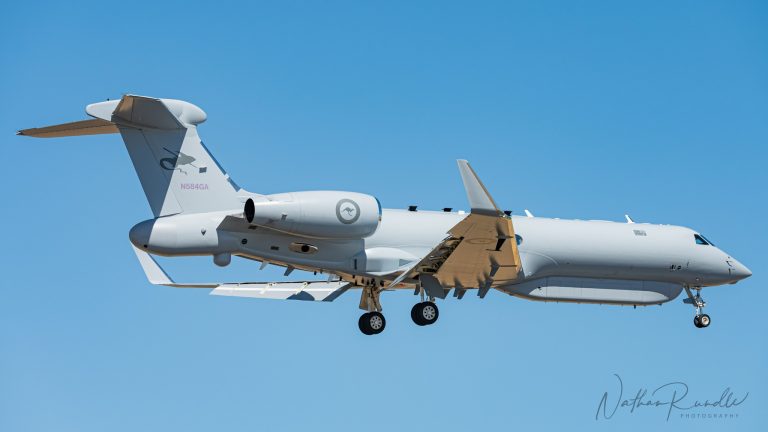
The delivery of the first aircraft marks a significant step toward the implementation of the RAAF’s (Royal Australian Air Force) ambitious modernization program. This strengthens:
- strategic capabilities in surveillance and electronic warfare;
- the ability to quickly adapt to new threats posed by drones, cyberattacks, and missile threats;
- integration with high-tech, multi-purpose platforms.
In addition to its military applications, the MC-55A will play a role in surveillance and reconnaissance over large bodies of water, including the Indo-Pacific region, where Australia is actively strengthening its military and geopolitical positions.
Conclusion
The acquisition of the MC-55A Peregrine is one of the most significant steps in the development of Australia’s aviation capabilities in recent years. This platform is not merely a reconnaissance aircraft, but a versatile ISR/EW/SIGINT system capable of supporting the operations of both Australian forces and allied units, serving as a linchpin in modern networked defense and battle management.
based on https://www.twz.com/air/australia-just-took-delivery-of-one-of-its-most-powerful-weapons