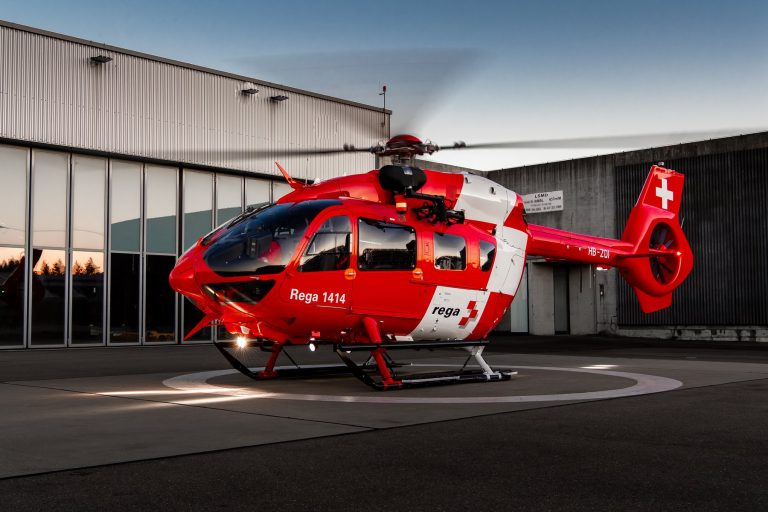
The Airbus H145 is a helicopter that performs rescue and patrol missions and operates in situations where every minute counts

Helicopters aren’t always used for military missions or VIP transport. In the 21st century, one of their primary roles is saving lives. And this is precisely where the Airbus H145, developed by Airbus Helicopters, has truly excelled.
Today, the H145 is one of the most widely used light twin-engine helicopters in the emergency services sector. It is used by air ambulance services, police, rescue services, and even special operations units around the world.
Contents:
Why the H145 Has Become the “Workhorse” of Emergency Services
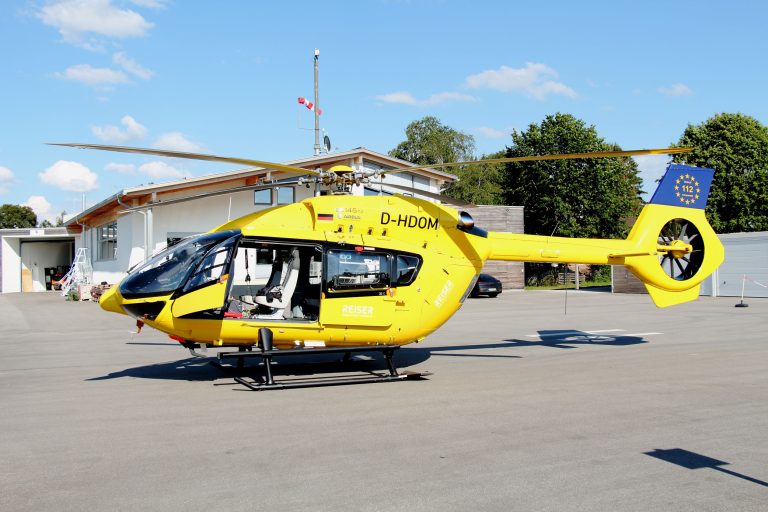
The H145’s versatility stems from a combination of three factors:
- Compact design — it can land on hospital rooftops and in dense urban areas.
- A twin-engine configuration provides enhanced safety when flying over the city.
- A flexible, modular cabin—the ability to quickly reconfigure it for different tasks.
The helicopter performs equally well:
- as a helicopter emergency medical service (HEMS),
- as a police surveillance platform,
- as a rescue helicopter in the mountains and on the water,
- as a service vehicle for border guards.
Medical Aviation: Mobile Intensive Care Unit
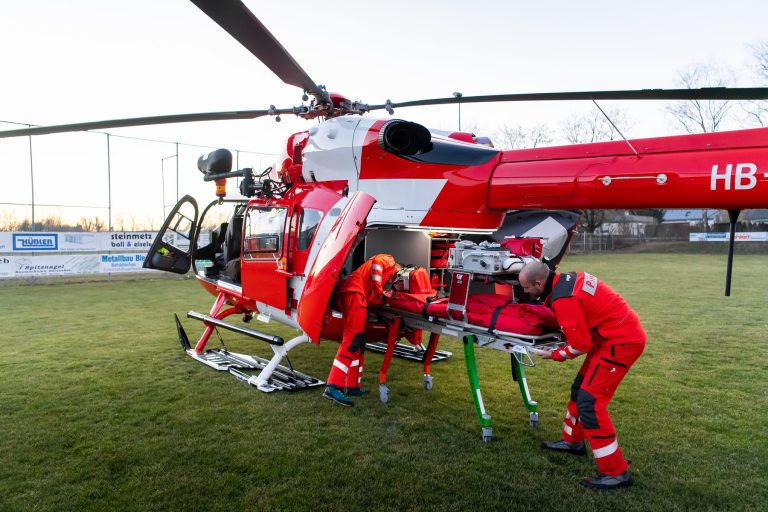
The H145 is particularly popular in medical evacuation services in Europe and the United States.
The spacious cabin can accommodate:
- one or two patients,
- medical team,
- A complete set of resuscitation equipment.
Thanks to rear loading through large swing doors, access to the patient is maintained from all sides—which is critically important during in-flight intensive care.
The five-bladed main rotor (in the new version) reduces vibrations and improves smoothness—which makes doctors’ work easier.
Police and Patrol Services
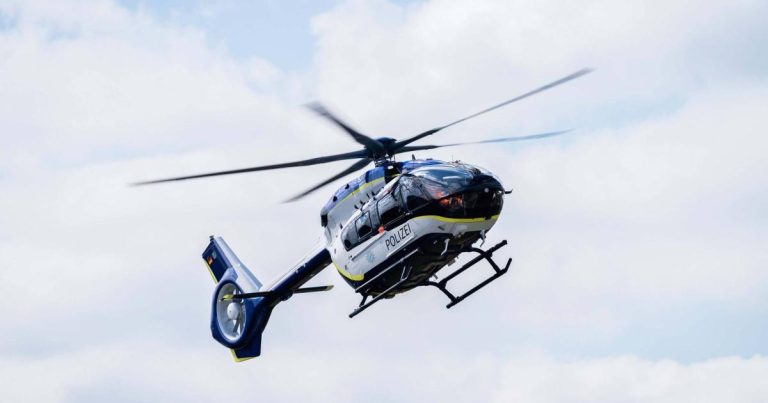
For the police, the H145 is a flying surveillance center.
It can be equipped with:
- thermal imaging systems,
- high-powered spotlights,
- a real-time video transmission system,
- loudspeakers,
- search radars.
Thanks to its high maneuverability and low noise level, the helicopter is well-suited for operation in urban environments.
Rescue Operations
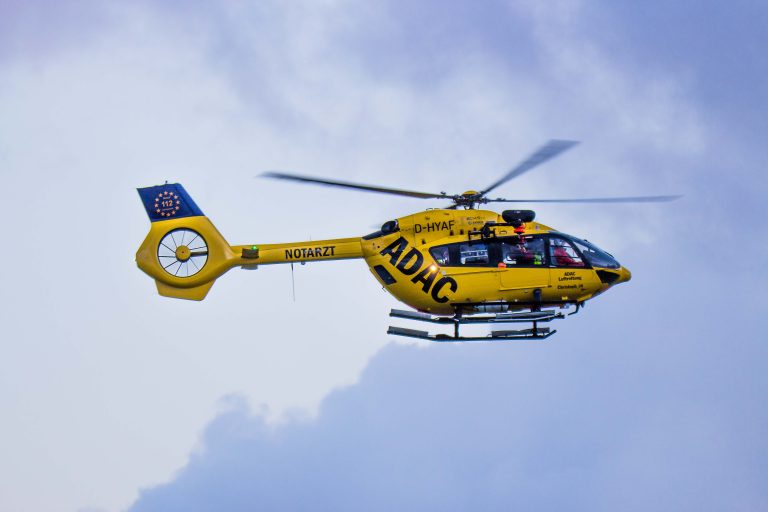
Mountain rescue teams value the H145 for:
- high traction capacity,
- the ability to work at high altitudes,
- the option to install a winch,
- Stability during a hang.
In the Alps and Scandinavia, these helicopters regularly operate in the most challenging weather conditions.
Airbus H145 Technical Specifications
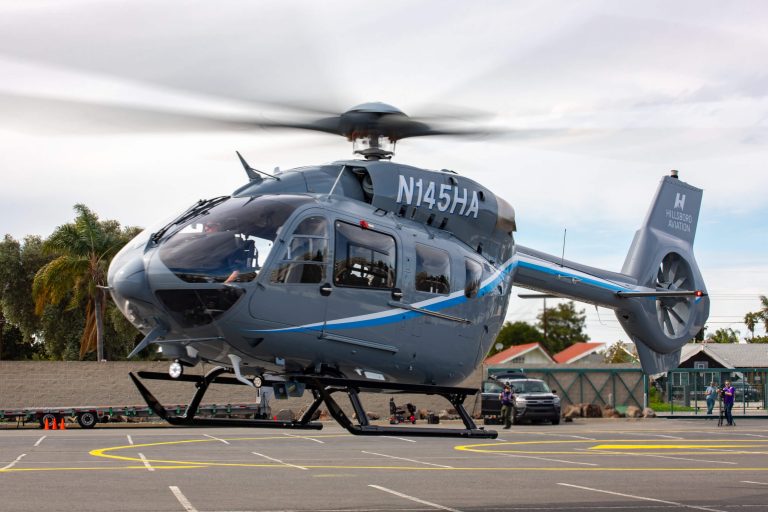
| Type | Light twin-engine helicopter |
| Engines | 2 × Safran Arriel 2E |
| Maximum takeoff weight | up to 3,800 kg (in the 5-blade version) |
| Cruising speed | ~240 km/h |
| Maximum speed | ~265 km/h |
| Flight range | up to 650 km |
| A Practical Ceiling | ~5,000 m |
| Capacity | up to 10 people (including pilots) |
| Avionics | Helionix (glass cabin) |
The Helionix system is a digital system with an autopilot that enhances safety and reduces the workload on the crew.
What makes it particularly modern
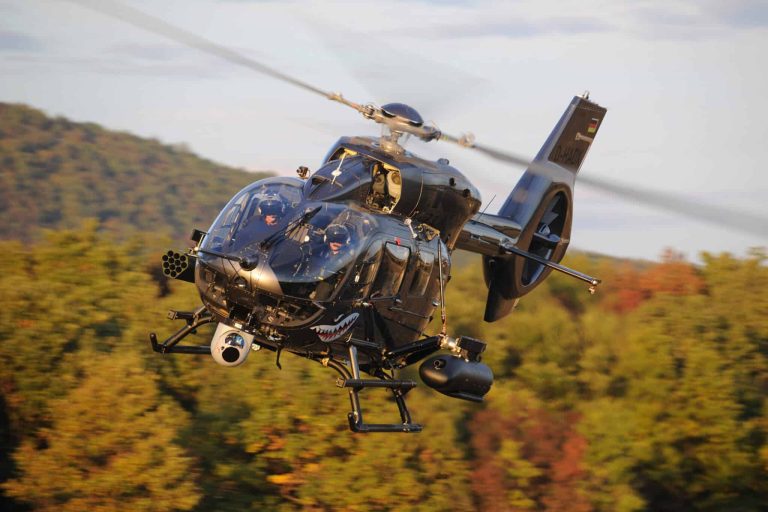
In its new configuration, the H145 features:
- a five-bladed main rotor without a tail rotor, of the open-type (Fenestron) design,
- reduced vibration levels,
- increased payload,
- Improved sustainability metrics.
Fenestron (enclosed tail rotor) improves safety when operating in urban environments and reduces noise.
Geography of Operations
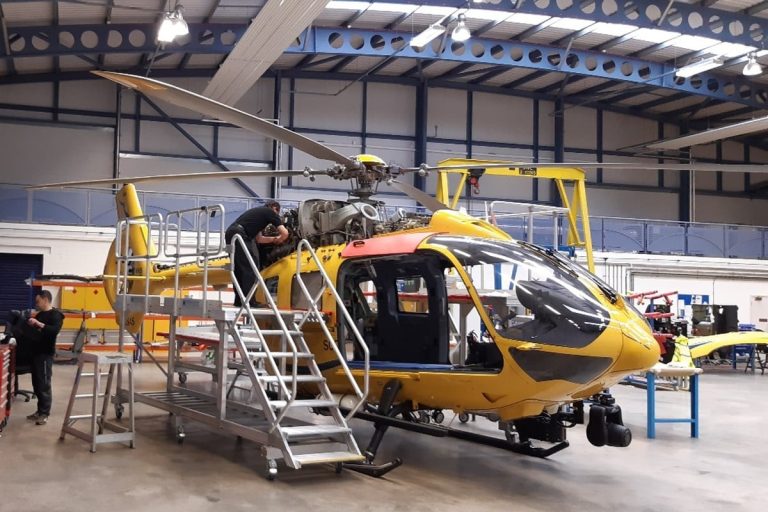
The H145 is in use in more than 50 countries. Its operators include emergency medical services in Germany, France, the United Kingdom, the United States, Canada, Australia, and countries in Asia.
It has become something of a benchmark in the segment of light, multipurpose emergency response helicopters.
Why is he called “irreplaceable”?
The H145 isn’t the largest or fastest helicopter in the world. But it turned out to be perfectly balanced:
- sufficient load capacity,
- high reliability,
- modern avionics,
- configuration flexibility,
- moderate operating costs.
That is precisely why it has become more than just a model in the Airbus catalog—it has become a working tool for those who save lives every day.