English Tower on a French Tank: How the French Could Quickly Solve the Problem of the Single-Seat Turret

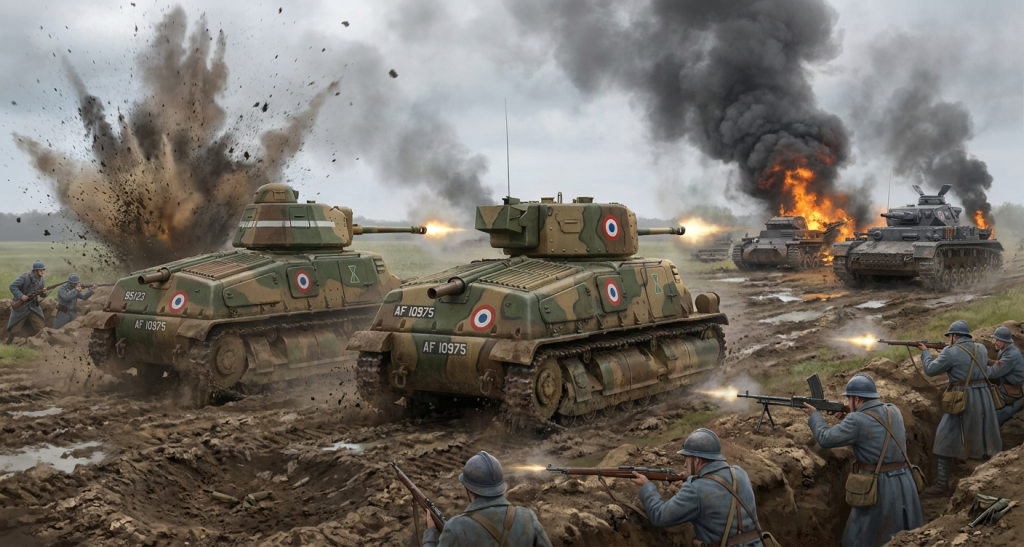
In this world, the French did not surrender 46 days after the war began. Straining their resources to the limit, they continued to fight. And the reason for this was a minor modernization of their Somua S35 medium tanks. It is this very modernization that will be discussed below.
The 1938 Exercises: Diagnosing the Illness
By 1938, the military and political situation in Europe left no room for illusions. France and Britain conducted joint maneuvers utilizing their entire arsenal of equipment, striving to test in practice how ready their armored forces were to face the Wehrmacht. It was during these exercises that a problem surfaced—one that seemed insignificant on paper but turned into a veritable catastrophe in practice.
It turned out that practically all French tanks were largely combat-ineffective due to the one-man turrets installed on them. Formally, the specifications of the Somua S35—armor, speed, and gun—matched and sometimes even surpassed those of German and British machines. But in combat, all this power rested on the shoulders of a single man who had to simultaneously command the tank, observe the battlefield, aim the gun, load it, and fire. Observers on both sides noted the exact same picture: French tanks lost momentum, missed targets, and reacted to threats with catastrophic delays. The crew simply could not keep up with the pace of modern mobile warfare.
The problem was well known to French designers long before, and next-generation machines where this flaw was accounted for and eliminated were already in development. However, putting these tanks into serial production required time, and no small amount of it—at least a year or a year and a half, which France, as subsequent events showed, simply did not have.
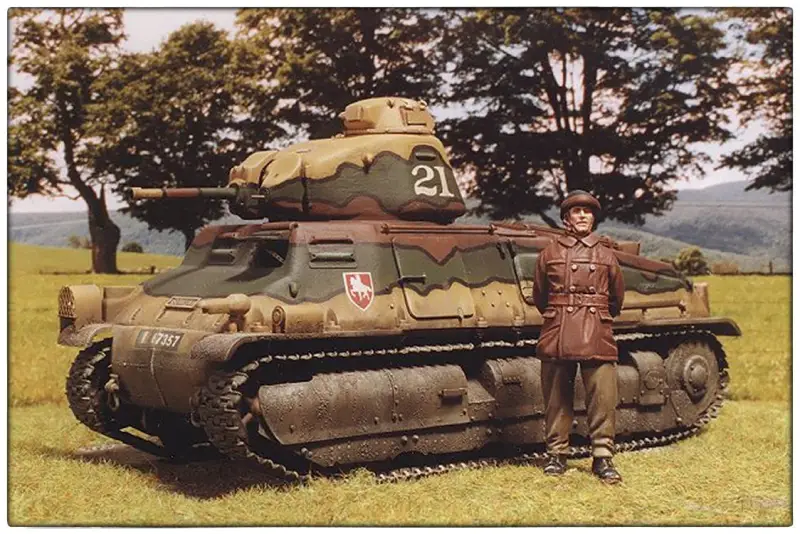
A real Somua S35 in a museum
Birth of an Idea: The Vincennes Meeting
In the autumn of 1938, shortly after the maneuvers concluded, representatives of the French General Staff of Armored Forces met with a British military mission at the Château de Vincennes near Paris. The atmosphere of the meeting was tense: the French perfectly understood that they had no time reserves for a full-scale rearmament of the army with new tanks, and Britain, having only just begun its own rearmament program, could not offer ready-made machines in sufficient quantities.
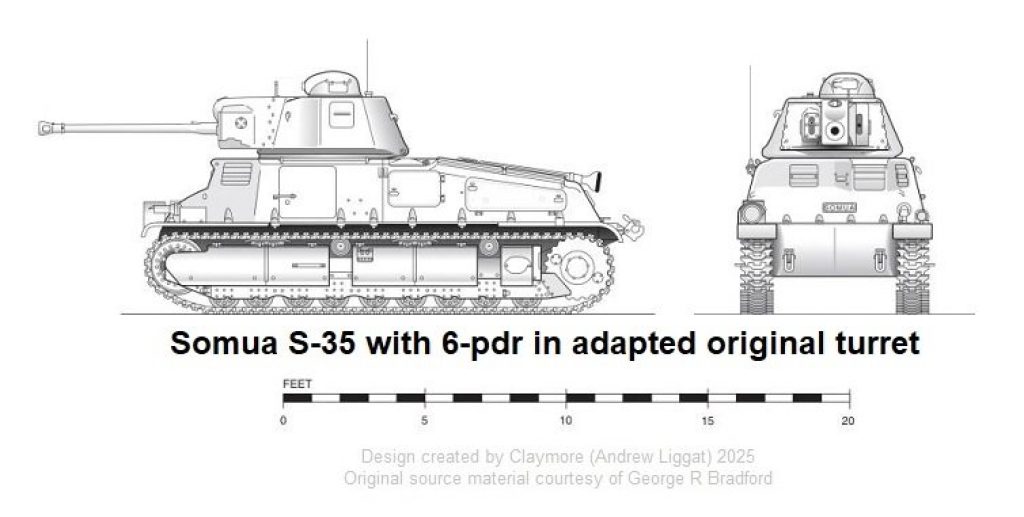
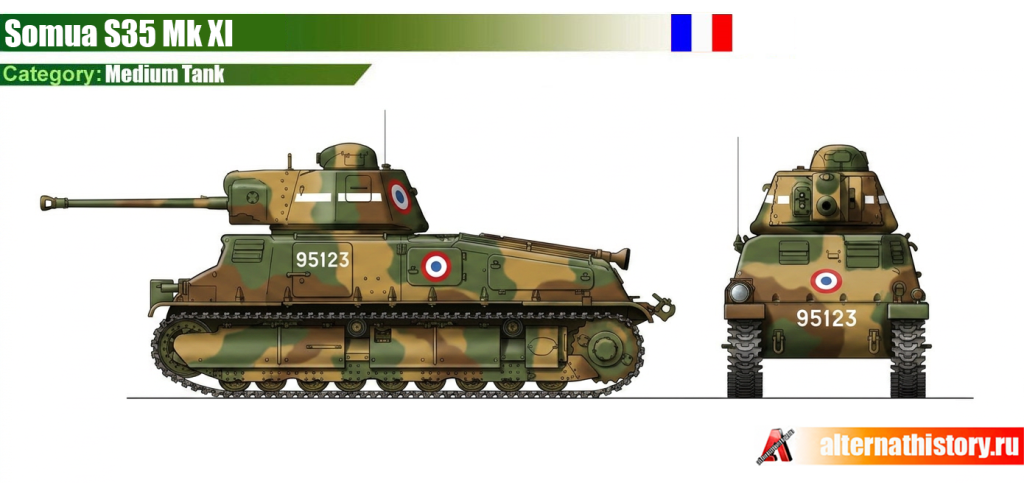
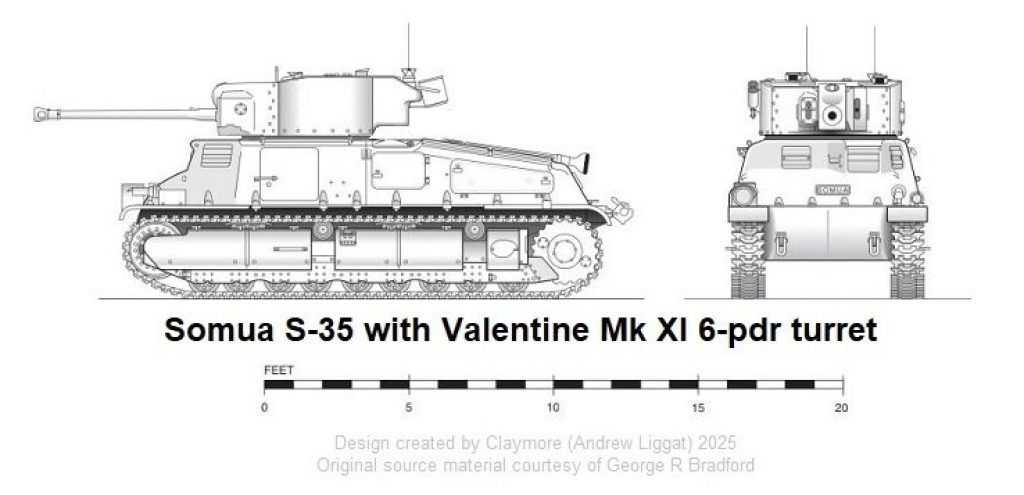
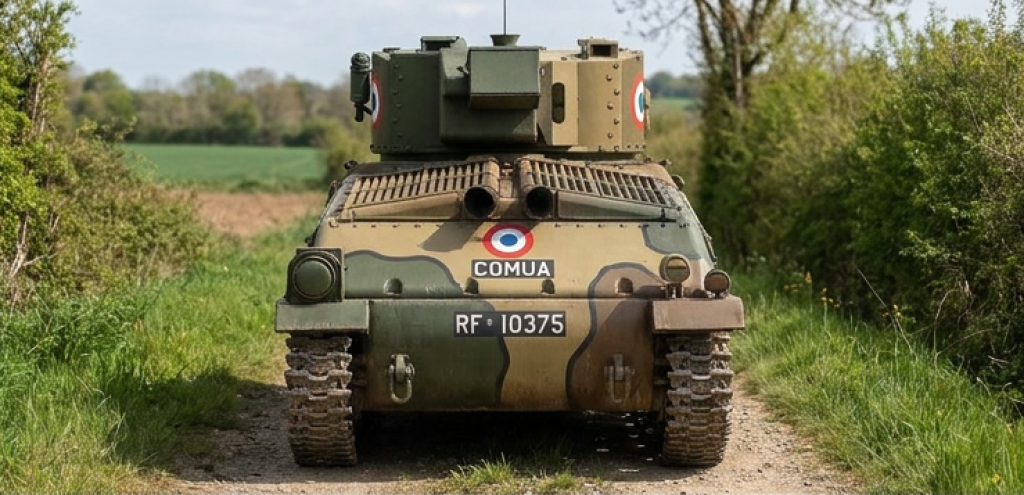
It was during these negotiations that an idea was born, which seemed to many of the generals present almost absurd in its simplicity: not to develop a new turret from scratch, but to take the existing British two-man turret from the Valentine tank and adapt it to the French Somua S35 chassis. The Valentine turret was cramped by British standards, but it provided the crucial thing—a separation of functions between the commander and the gunner, which radically solved the problem of combat effectiveness.
The British side agreed to make certain sacrifices. Their own Valentines were also needed by the British, and giving away finished turrets to an ally meant directly slowing down their own rearmament program. However, a strategic decision was made: to sacrifice the production rates of complete tanks in favor of ramping up the production of exclusively turrets and guns for French chassis. The calculation was simple and elegant in its own way: while Vickers and other British enterprises were scaling up the production of additional turret modules, French factories like Somua and Renault could produce hulls and chassis without interruption, and ultimately the allies would receive not just a few, but hundreds of fully combat-capable tanks in the shortest possible time—much faster than if each country tried to solve the problem on its own.
An Engineering Puzzle: The Turret Ring
The idea, which looked beautiful on paper, ran into a serious technical obstacle as soon as the engineers began its practical implementation. The turret ring of the Somua S35 was designed for a diameter of only 1130 mm—this was quite enough for a one-man turret, but categorically insufficient for installing a full-fledged two-man turret of the British design.
Engineers from the Somua company, together with British technical specialists, had to practically redesign the upper part of the tank’s hull. The turret ring was expanded from 1130 to 1466 mm—an increase of more than 300 mm, which required a serious reworking of the turret basket design. The cast hull of the Somua S35, originally considered one of the main technological advantages of the machine due to its monolithic nature and high shell resistance, had to be modified: the turret ring had to be widened, the annular turret support reinforced, and the internal layout of the fighting compartment revised to free up space for a second crew member.
The work was complicated by the fact that the cast hull parts of the Somua S35 were manufactured using a technology different from the British riveted and welded construction. An adapter mounting node had to be developed—a kind of adapter that allowed the British turret with its standard turret ring to be installed on the French cast hull without critically weakening the structure. It was this very detail that became the main technical innovation of the entire program and required several months of refinement at the Satory proving ground.
Trials: From Skepticism to Recognition
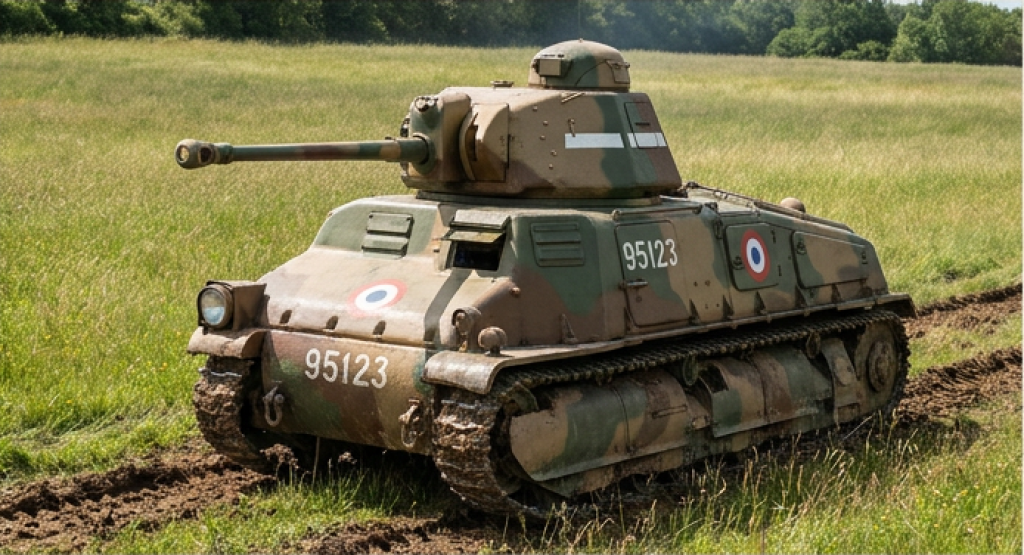
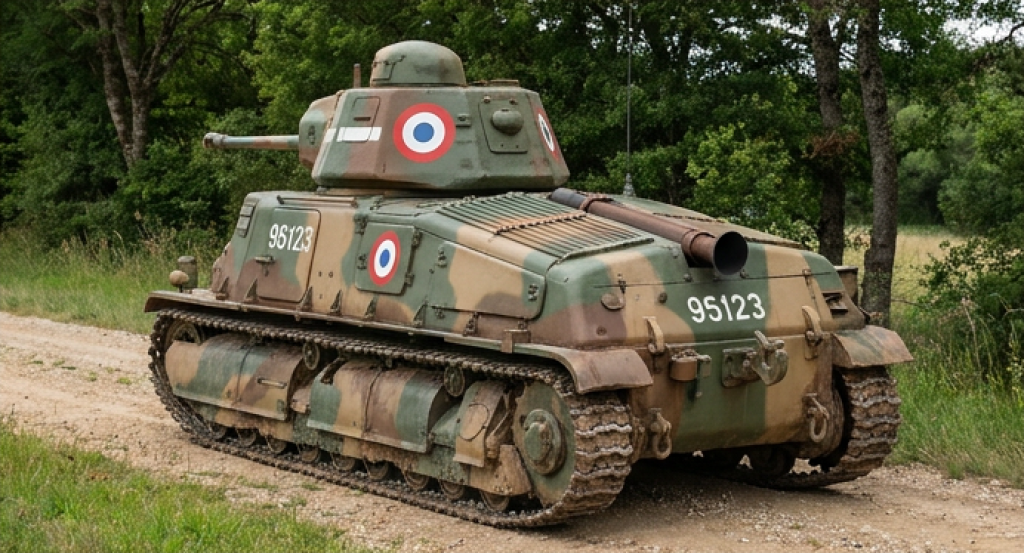
The first prototype, designated Somua S35 Mk XI, was assembled in early 1939 and submitted for proving ground trials. Initially, the project was treated with a fair amount of skepticism: many French officers considered the very idea of installing a “foreign” turret on a national tank to be almost insulting, and engineers feared that the reinforced turret ring and the increased weight of the turret would negatively affect the machine’s mobility.
The very first mobility trials dispelled some of these fears. The British turret turned out to be heavier than the standard French APX 1 turret, which led to a slight shift in the center of gravity and a minor reduction in maximum speed—by about 3-4 km/h compared to the base model. However, this reduction was deemed an absolutely acceptable price to pay for the colossal increase in combat effectiveness.
The decisive factor was the training battles at the proving ground, where the modernized machines were compared with standard Somua S35s with one-man turrets. The results exceeded the wildest expectations of the project’s supporters. The division of duties between the commander, who could now fully concentrate on battle management and battlefield observation, and the gunner, who was responsible solely for aiming and firing, increased the rate of fire of the modernized tanks by more than half, and the reaction speed to suddenly appearing threats increased manifold. Crews, who had previously expressed dissatisfaction with the cramped British turret, quickly appreciated the convenience of the separated functions and overwhelmingly voted in favor of adopting the machine for service.
Based on the results of the trials in May 1939, a decision was made to launch a serial modernization program, and over the summer of 1939, the first serial Somua S35 Mk XIs began arriving in the cavalry divisions of France.
Armament and Protection of the Updated Machine
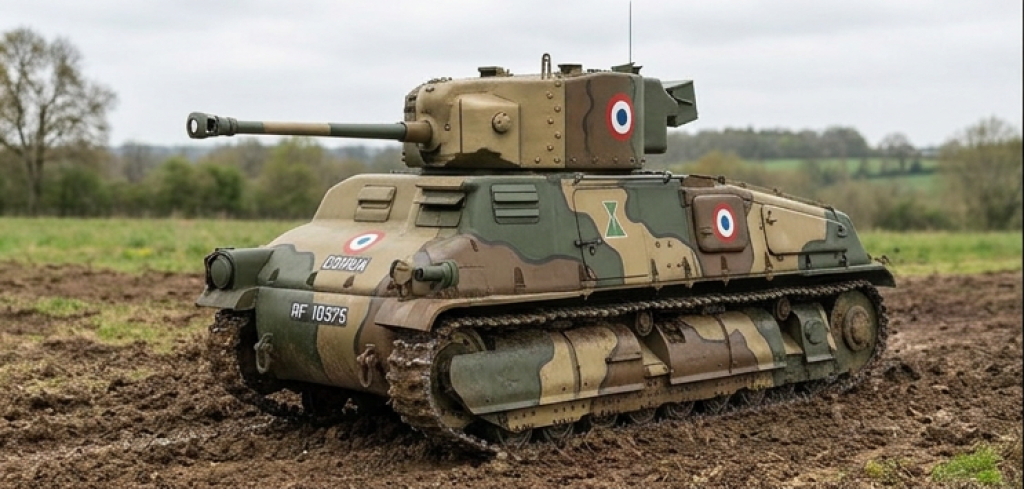
The British turret brought with it not only extra space for a gunner but also some changes in the armament composition. The main gun remained the French 47 mm SA 35, which had proven itself excellently against German armored vehicles, but the increased internal space of the turret allowed for an expanded ammunition load and the placement of a more convenient shell feeding system, which, combined with the division of crew duties, sharply increased the practical rate of fire.
The armor of the turret, inherited from the Valentine, turned out to be even thicker in places than that of the original French APX 1, which additionally increased the overall protection of the machine, albeit at the cost of a slight increase in weight.
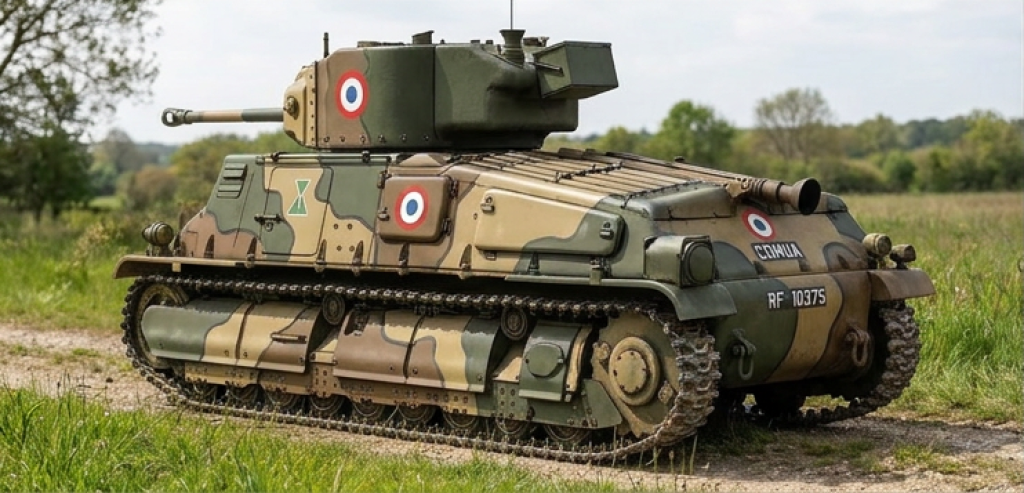
Tactical and Technical Specifications of the Somua S35 Mk XI:
- Crew: 3 men (driver, gunner, commander)
- Combat weight: about 20.5 tons
- Hull length: 5.38 m
- Width: 2.12 m
- Height: about 2.7 m
- Turret ring diameter: 1466 mm (increased from 1130 mm)
- Hull armor (front): 36–47 mm
- Turret armor: 45–60 mm (British Valentine armor)
- Main armament: 47 mm SA 35 gun
- Ammunition load: about 130 rounds
- Secondary armament: 7.5 mm machine gun, coaxial with the gun
- Engine: SOMUA V-8, carburetor, 190 hp
- Maximum speed: about 34–37 km/h
- Operational range: about 230 km
- Trench crossing: 2.13 m
- Vertical obstacle crossing: 0.76 m
Role in the 1940 Campaign
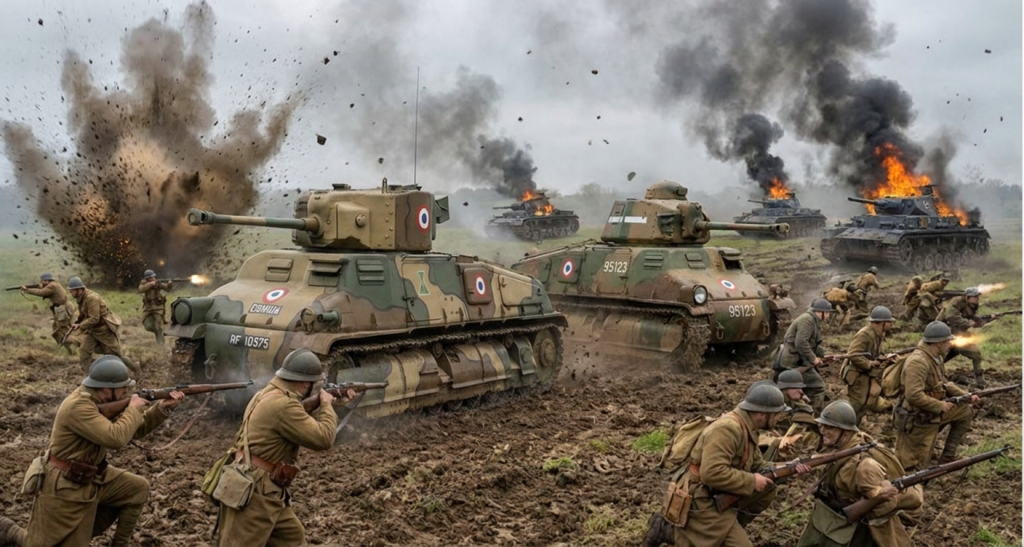
It was these machines—the Somua S35 Mk XI—that formed the backbone of the French armored divisions that met the German offensive in May 1940 not as scattered, poorly controlled units, but as a fully-fledged combat force. Unlike the history we know, the commanders of the modernized tanks could react to the maneuvers of the German Panzerwaffe in near real-time, without being distracted by loading the gun.
It was these tanks, according to later assessments by military historians, that played a key role in slowing down the pace of the German Blitzkrieg at Gembloux and in other sectors, giving the French command precious time to organize a more orderly resistance and redeploy reserves. Although the fate of the entire 1940 campaign in this alternate reality turned out differently than in actual history—France did not capitulate after forty-six days of resistance—this was largely made possible precisely thanks to the modest but extremely effective modernization that united a French chassis and a British turret into a single combat vehicle.
1941: The Birth of the Somua S35 M — The French Response
By the beginning of 1941, France was still fighting. The front line had stabilized, the country’s industrial centers, evacuated to the southern and southwestern regions, were gradually ramping up military production, and the Franco-British military-technical cooperation had reached a qualitatively new level. However, the dependence on the supply of British turrets for the “Mk XI”, however justified it was in 1939, had become a burden for French industry and command by 1941.
There were several reasons for this. First, the British, finding themselves under increasingly serious pressure on their own fronts—in North Africa, the Mediterranean, and the Battle of Britain—could no longer supply turrets in the volumes required by the rapidly expanding French tank fleet. Second, transport logistics across the English Channel in the conditions of active operations by the Kriegsmarine and the Luftwaffe was becoming increasingly risky and expensive: every batch of turrets lost at sea resulted in dozens of incomplete tanks on the continent. Third, the French themselves had accumulated enough experience in operating the British design to understand its weaknesses and create something better.
The development of their own two-man turret began back in late 1939 at the APX design bureau, but the work was truly accelerated only after the war began, when it became clear that the expectation of rapidly rearming the army with next-generation tanks would not be fulfilled—the factories were busy producing already mastered machines, and engineering resources were diverted to dozens of other priority programs. Nevertheless, by the spring of 1941, the first prototypes of the new French two-man turret, designated APX 5, arrived for proving ground trials.
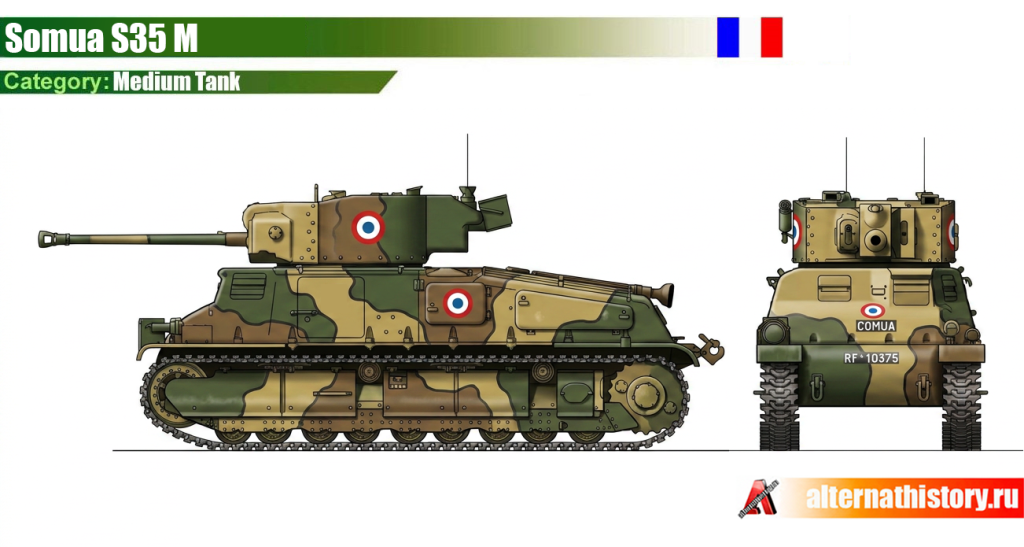
Outwardly, the APX 5 turret retained the characteristic features of the French tank-building school: a cast construction providing better shell resistance compared to the riveted British one, rounded contours, and a characteristic commander’s cupola on the roof. Inside, however, a classic two-man layout was implemented with the commander on the left and the gunner on the right of the gun. The turret ring remained the same—1466 mm, inherited from the “Mk XI”, which allowed the new turret to be installed on existing modernized hulls without additional modifications. This turned out to be one of the key advantages of the project: factories could gradually switch from British to French turrets without halting production or retooling the lines.
The tank with the new turret was designated Somua S35 M—where the letter “M” stood for “Modifié” (modified). The first serial machines began leaving the assembly shops in June 1941 and immediately went to the freshly formed armored divisions participating in counter-offensive operations on the country’s eastern borders.
Compared to the “Mk XI”, the new modification had a number of noticeable advantages. The cast APX 5 turret was about 400 kilograms lighter than the riveted British Valentine turret, which had a positive effect on mobility—the maximum speed returned to the original figures of the base S35, and the load on the transmission and suspension was reduced. The internal volume of the fighting compartment turned out to be somewhat more spacious than in the cramped British turret—French designers, taught by the experience of operating the “Mk XI”, paid special attention to the ergonomics of the workstations. Finally, the commander’s cupola with all-round vision through prismatic observation devices radically improved the situational awareness of the tank commander—a shortcoming complained about by “Mk XI” crews, whose vision from the British turret was frankly mediocre.
The armament composition also changed. The main gun became the modernized 47 mm SA 37 gun with an elongated barrel and improved ballistics, providing confident destruction of any German tanks of that period, including the newest modifications of the Panzer III and Panzer IV. The coaxial machine gun remained the same—7.5 mm MAC 31, but in the rear turret bustle it was possible to place additional ammunition and an intercom for communicating with accompanying infantry.
By the end of 1941, the Somua S35 M had become the main medium tank of the French army, gradually pushing the “Mk XI” into training units and secondary sectors. The older machines with British turrets, however, continued to fight actively—they simply now stood alongside their more advanced brethren, and together these tanks formed the armored fist that allowed France not only to continue the war but also to gradually seize the initiative on individual sectors of the front.