Brief Sketches from the Life of the 2nd Battlecruiser Squadron. Part 1. The Sinking of the *Scharnhorst*

In this section—if it proves to be of interest—there will be short stories about the everyday combat life and exploits of British battlecruisers during World War I. The crux of the matter is that the Washington Naval Treaty was interpreted in such a way that the British managed to retain these ships, which survived into World War II, when they were organized into the 2nd Battlecruiser Squadron. The squadron consists of the “magnificent cats” (the *Lion* and the *Princess Royal*), two surviving “Indomitable”-class ships (the *HMS New Zealand* and the *HMS Australia*), and the *HMS Tiger*.
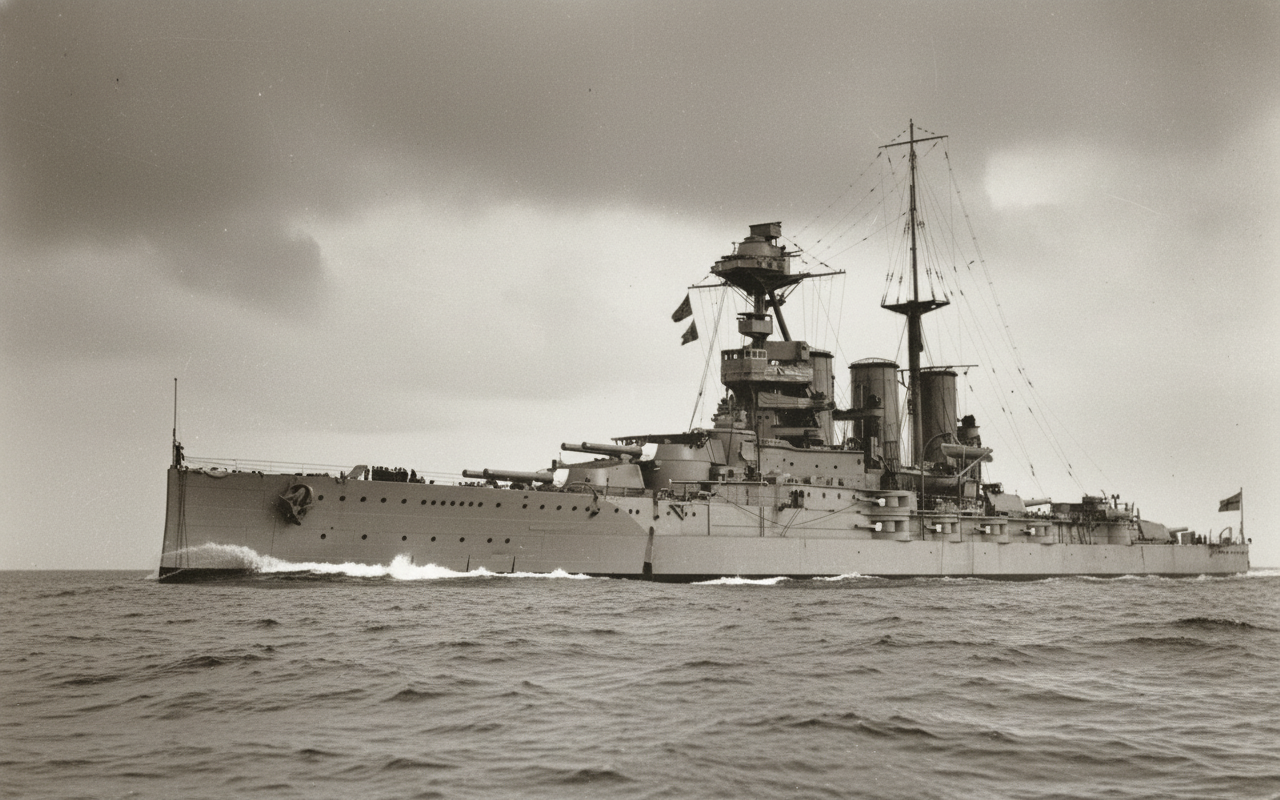
HMS Tiger
Captain Ernest Russell Archer watched with a somber gaze as the furious waves of the Norwegian Sea crashed with a roar against the bow of his ship. The green, foamy water and the raging storm reduced visibility to almost zero. And yet HMS Tiger, the last of the “Magnificent Cats” and flagship of the 2nd Battlecruiser Squadron, conquered the raging elements with majestic calm, looking damn impressive in the process. A major modernization, similar to that carried out on the Warspite, had effectively reborn her as a new ship. Somewhere ahead, on the port side, the current flagship of the 1st Battlecruiser Squadron (and Admiral Whitworth’s flagship)—the magnificent HMS Renown—was hidden in the fog. Supporting the two battlecruisers were nine destroyers—a motley fleet of interwar-era ships of the E, H, and G classes.
Somewhere in that impenetrable fog, amid the spray and storm-driven squalls, lay hidden the two most powerful battleships of the Kriegsmarine—the *Scharnhorst* and its sister ship, the *Gneisenau*. The British squadron had spotted the enemy about half an hour earlier and had rushed to intercept them. Captain Archer silently admitted to himself that he was feeling slightly tired. Of course, the *Tiger* (and its near-sister ship, the *Princess Royal*) had significantly improved its defenses compared to its original configuration: vital mechanisms and ammunition magazines had been fitted with additional armor, which, at least in theory, should have reduced the risk of a catastrophic explosion. However, the shadow of Jutland still loomed over the fleet—the loss of three such ships (including the “Tiger’s” near-sister ship, the *Queen Mary*) in that battle weighed heavily on everyone and seemed to have permanently tarnished the reputation of battlecruisers in the eyes of certain Admiralty lords.
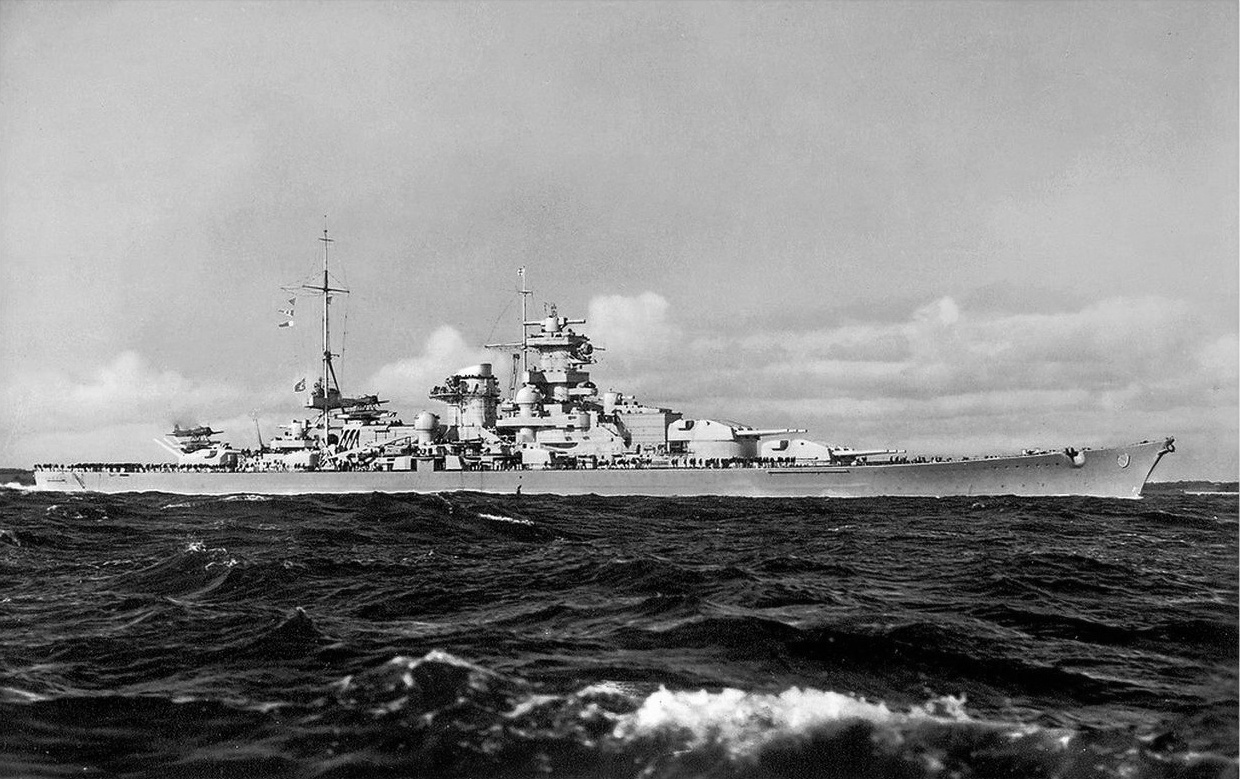
«Scharnhorst»
A signal from the *Rinaun* snapped Archer out of his reverie. Whitworth was preparing to open fire on one of the German battleships; the *Tiger* was to engage the other (at least initially), while the destroyers were to act according to the situation, constrained by the fury of the elements. In less than a minute, the *Rinaun’s* six 15-inch guns spewed their first burst of fire—it was 4:05 a.m. Following this, after receiving permission from Archer, the *Tiger*’s eight 13.5-inch guns unleashed their thunder upon the second German ship, barely visible through the storm-swept mist. The first salvos fell short, after which the British began methodically shelling the waters around the two silhouettes. At 4:09 a.m., success struck: a shell from the *Tiger* struck the *Scharnhorst* near the hangar and catapult, causing a fire—the aviation fuel reserves ignited. The *Gneisenau* and *Scharnhorst* returned fire at 4:11. Two 11-inch shells from the *Gneisenau* struck the *Rinaun*, but the damage was minor: one, unfortunately, hit the foremast, while the other passed right through without exploding. Immediately, the *Rinaun* fired three counter-shots at the *Gneisenau*, putting its bow rangefinders out of action, immobilizing the “Caesar” turret, and destroying the anti-aircraft gun. Meanwhile, the *Tiger* scored two more hits on the *Scharnhorst*: one put the “Anton” turret out of action (which was already suffering from breaking waves), and the second, striking the midship section, destroyed two auxiliary artillery mounts and the anti-aircraft platform.
As a result, both German battleships lost nearly a third of their firepower (not to mention the intermittent electrical failures in the remaining turrets caused by the raging storm), and the *Scharnhorst* was also experiencing radar problems. Lütjens, desperately trying to save the Kriegsmarine’s only two combat-ready battleships, decided that prudence was the better part of valor and ordered a retreat, covering the damaged *Gneisenau* with a smoke screen. This, however, meant that all the fire from the *Rinaun* and the *Tiger* was now concentrated on him, while the Germans turned into the storm, hoping to slip away.
Two British battlecruisers set off in pursuit, but attacking in a storm proved to be grueling work. The firing soon ceased—around 5:00 a.m., squall waves began to wash over the turrets of the *Tiger* and the *Rinaun*, and the escorting destroyers were forced to retreat. Brief exchanges of fire resumed at 5:20, but the storm rendered accuracy impossible: the British could only futilely send up fountains of water around the German silhouettes. Until, finally, luck smiled on the *Tiger*—a 13.5-inch shell struck the stern of the *Scharnhorst* and, exploding among the steering mechanisms, jammed the rudder solidly in place. The *Scharnhorst*, which was turning at that moment, was helplessly turned broadside to Whitworth’s squadron. Two British cruisers, sensing their prey, immediately opened a barrage of fire on the damaged giant, and soon dozens of 15- and 13-inch shells began methodically shattering it as the distance closed. Lütjens, seeing the inevitable doom of the “Scharnhorst,” ordered the “Gneisenau” to withdraw on its own.
The situation became catastrophic when a 15-inch shell pierced the lower armored deck and exploded in the boiler room. Immediately afterward, a 13-inch shell struck the bridge, killing Lütens, Captain Kurt-Caesar Hoffmann, and nearly all the senior officers. Realizing that the end was near, Whitworth ordered the destroyers *Hotspur*, *Havoc*, *Icarus*, and *Greyhound* to finish off the crippled battleship. By 6:45 a.m., the *Scharnhorst* had gone underwater. Although many survivors initially remained on the surface, the icy water, the storm, and the huge swells took their toll—only forty-nine people were rescued. Whitworth left the *Icarus*, *Greyhound*, and *Esk* behind to search for possible survivors, while he led the rest of his forces on a brief but unsuccessful attempt to catch up with the *Gneisenau*. However, the weather and storm damage to the *Rinaun* soon forced him to abandon the pursuit.
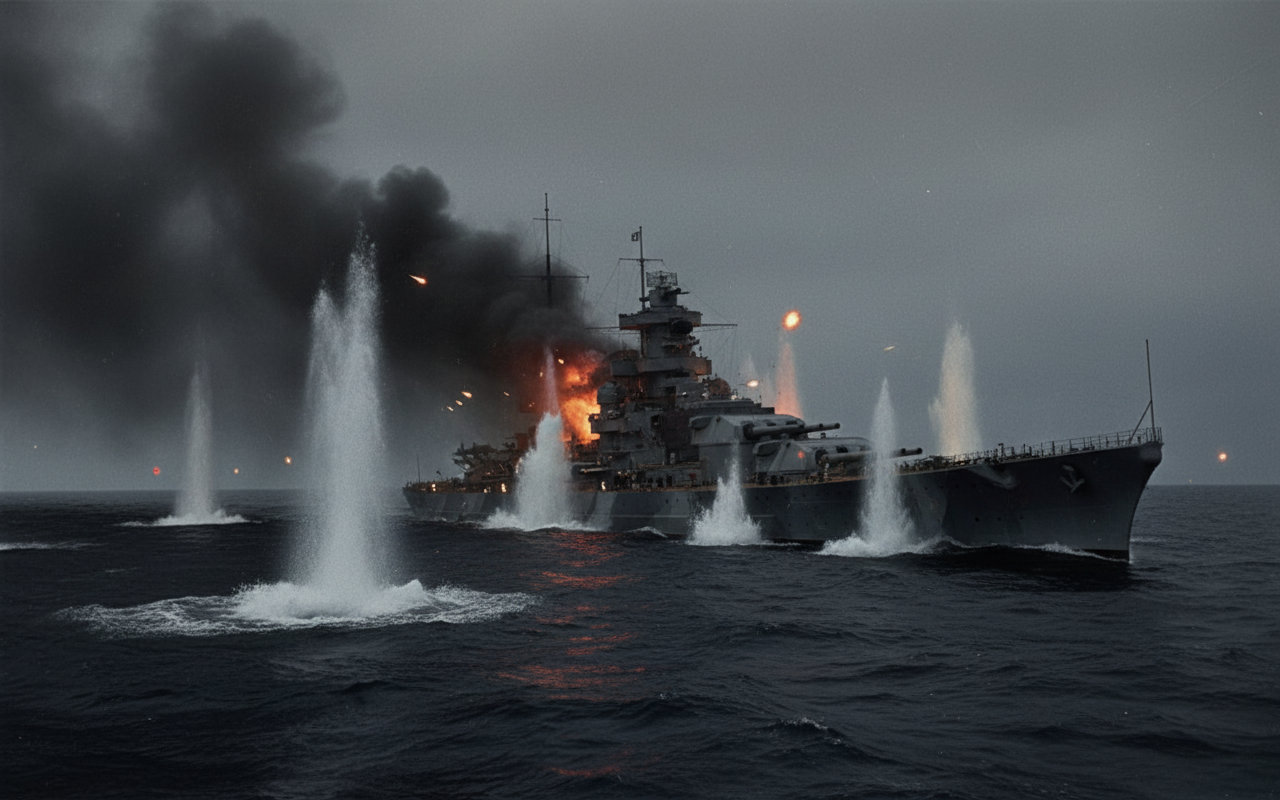
The
«Scharnhorst» shortly before its sinking
Nevertheless, it was a stunning tactical victory for the Royal Navy—only the *Rinaun* sustained minor damage from enemy fire and the storm, while the *Tiger*, surprisingly, emerged virtually unscathed. For the Kriegsmarine, however, the defeat was humiliating. Combined with the loss of the Graf Spee just four months earlier, the German fleet found itself in a critical situation, having lost nearly all of its major warships.
Источник — https://www.alternatehistory.com/forum/threads/vignettes-of-the-2nd-battlecrusier-squadron.563540/
P.S. And as a bonus—especially for my colleague SEZ, since he loves this kind of thing—here’s an alternative “Tiger” (it just happened to turn out this way while I was drawing in AI).
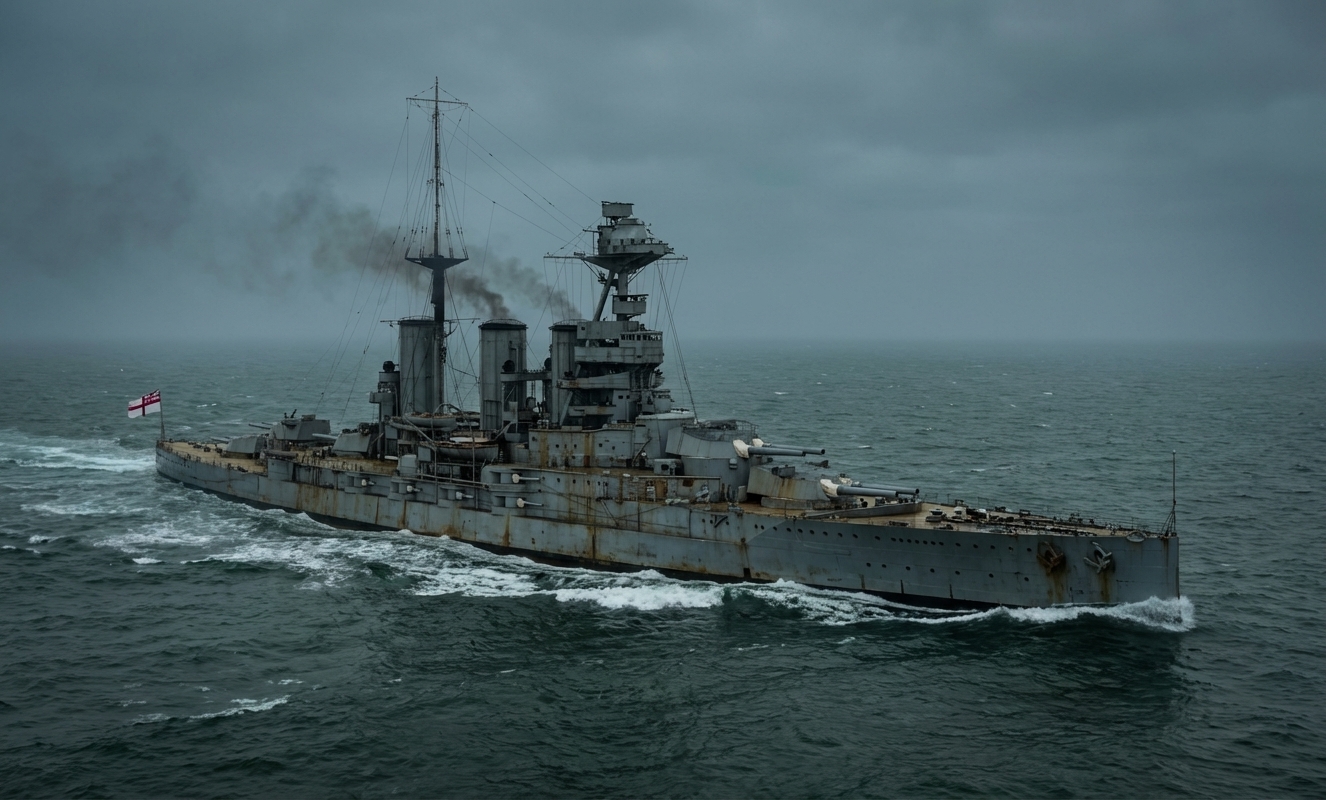
If you didn’t notice right away, he has 5 GC towers instead of 4, as there were in RI.