Editor choice

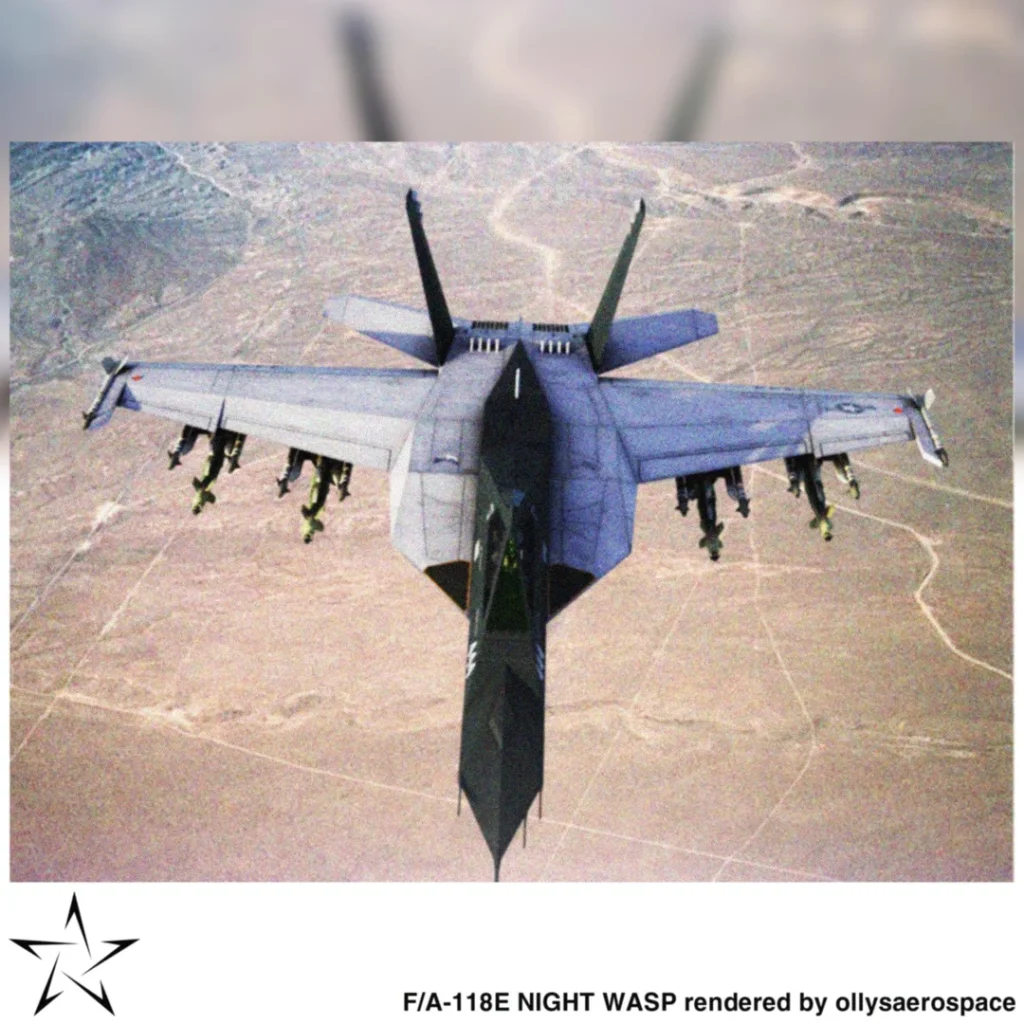
What if the F-117A Nighthawk had a successor? The F/A-118E Night Wasp stealth strike fighter
Historically, the world’s first true stealth aircraft, the F-117A Nighthawk, was a machine of compromises. In pursuit of revolutionary radar invisibility, its designers had to sacrifice virtually every aspect of its flight performance. The Nighthawk was strictly subsonic, aerodynamically unstable, offered a notoriously poor view from the cockpit, and lacked an onboard radar entirely to avoid giving away its position with its own emissions.
The aura of invincibility surrounding this aircraft was shattered on March 27, 1999, when Serbian anti-aircraft gunners managed to shoot down an F-117A with an old Soviet S-125 system during the war in Yugoslavia. This incident proved that the faceted design approach did not guarantee absolute invisibility. Soon after, the U.S. military decided the game wasn’t worth the candle, transitioned to smoother airframe shapes—as seen on the F-22 and F-35—and the F-117 program was shuttered, sending the aircraft into retirement.
But now, let us imagine an alternate timeline. For one reason or another, the Serbs did not shoot down the aircraft in 1999. The Balkan campaign concluded for the Nighthawk with zero losses, much like Operation Desert Storm. The Pentagon draws an unequivocal conclusion: the concept of achieving extreme stealth through angular, faceted shaping is absolutely viable, flawless, and has no equal. Instead of abandoning it, the military decides to build on this success.
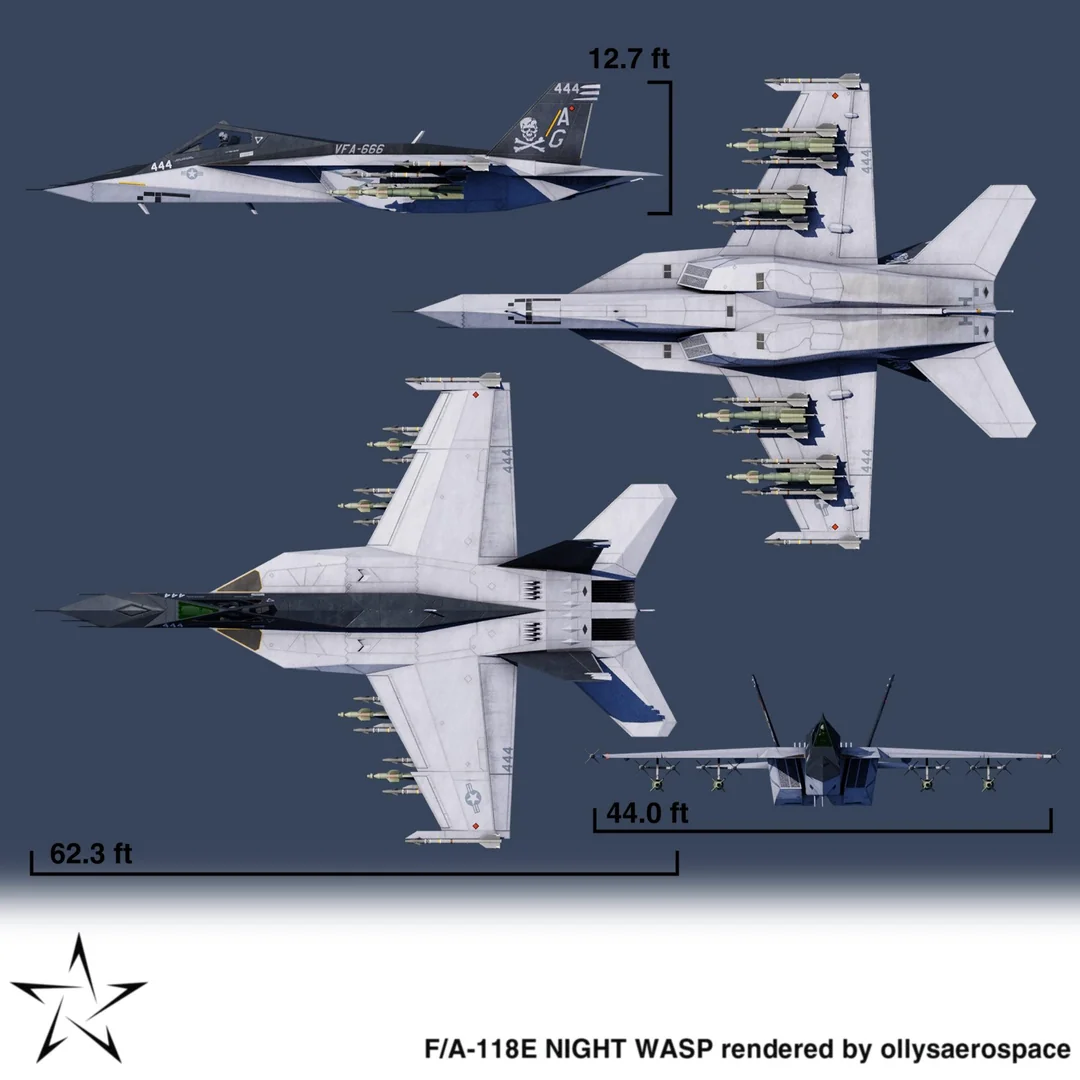
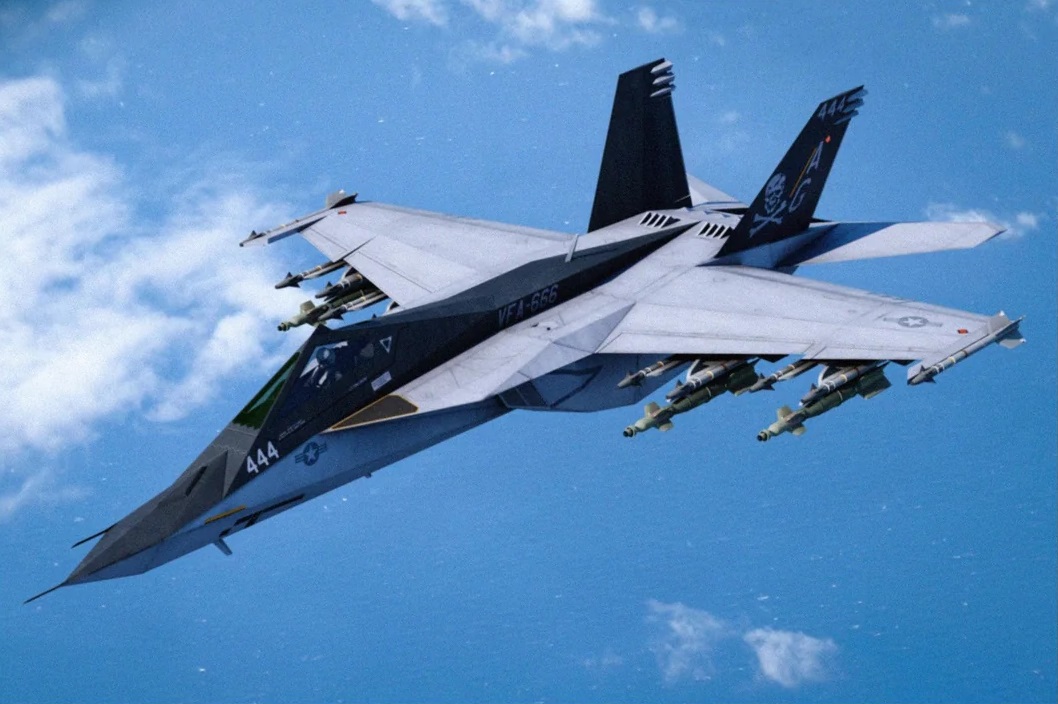
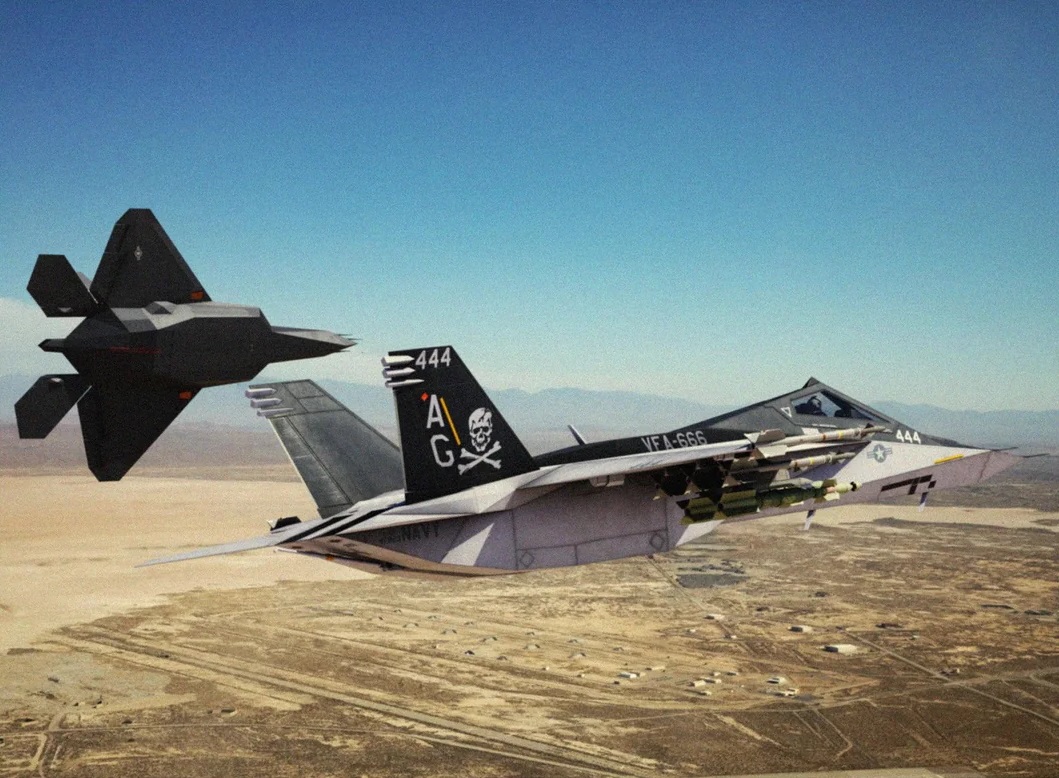
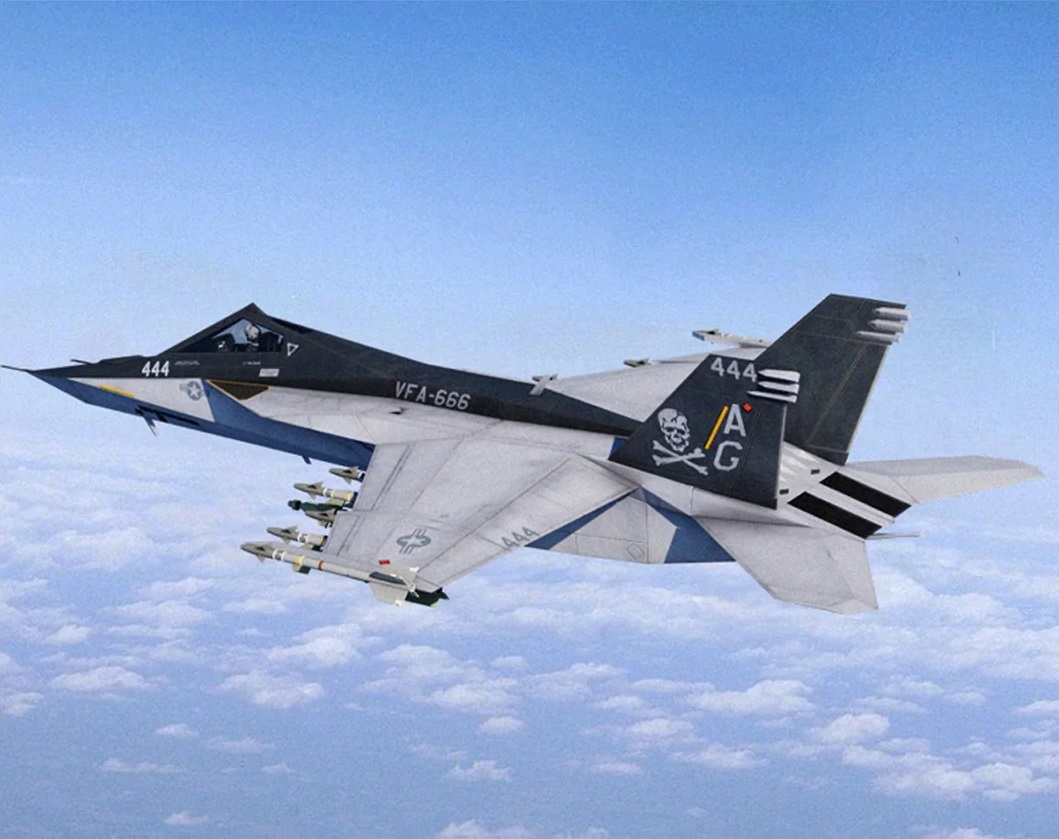
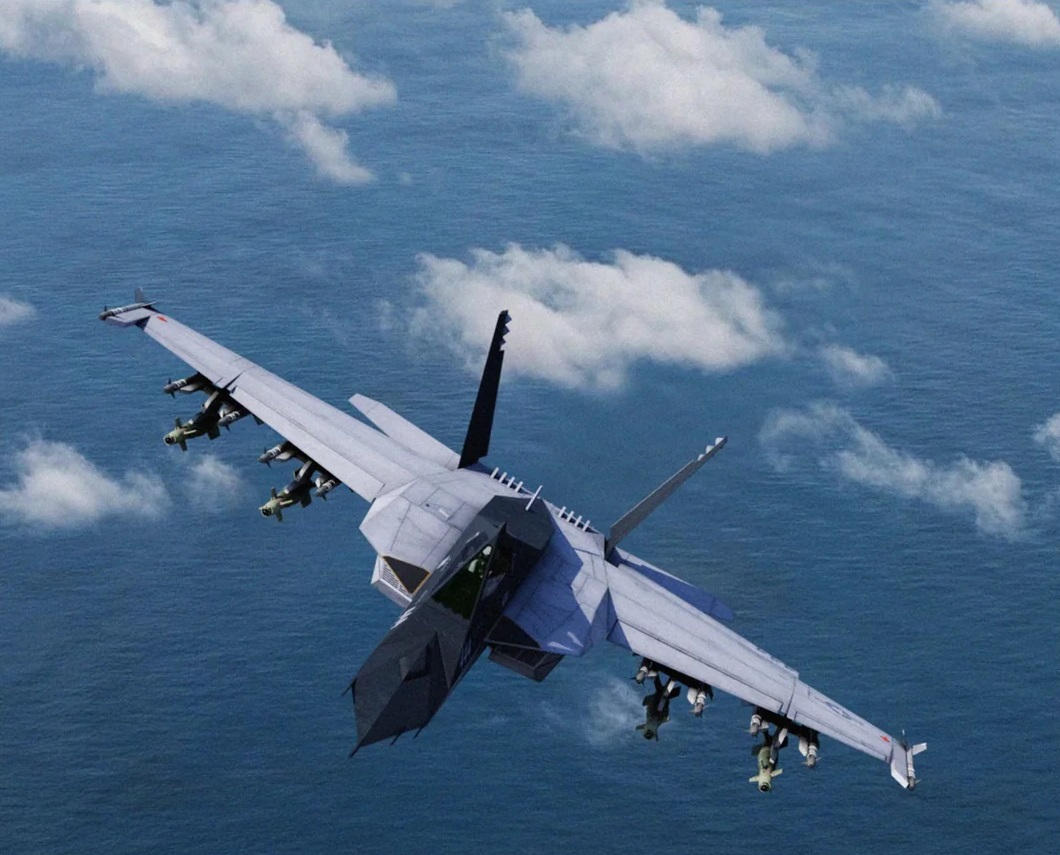
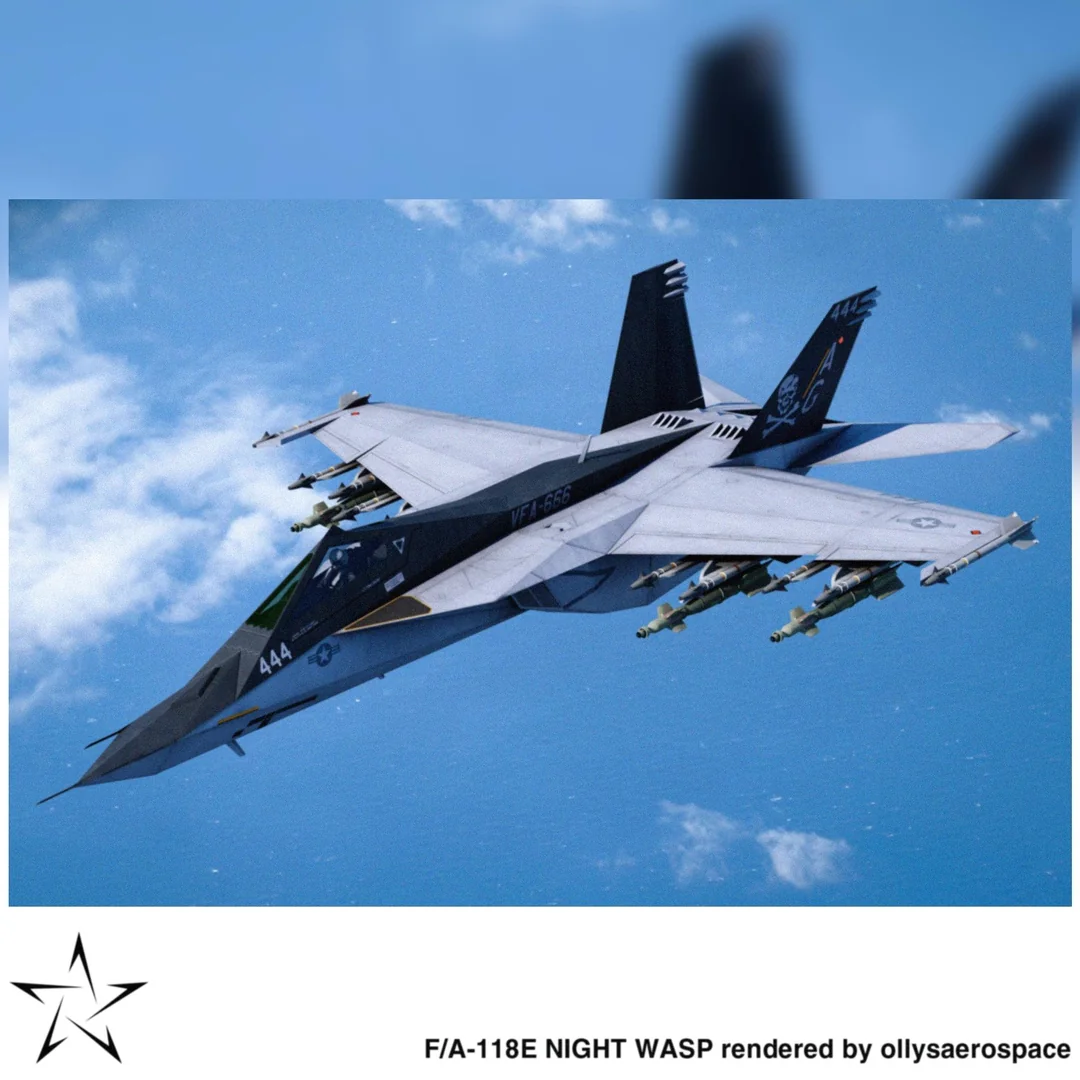
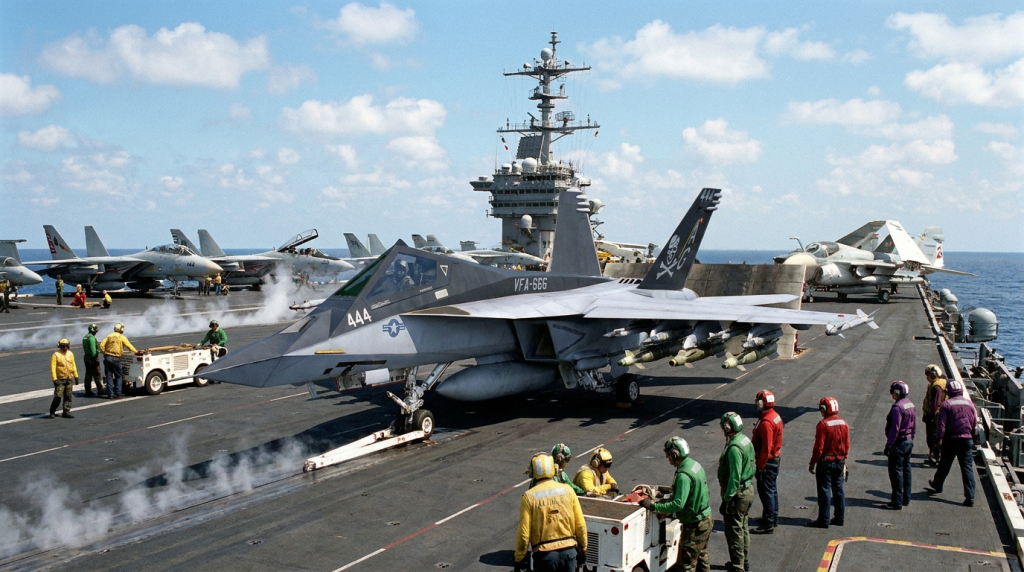
Our Western colleague, digital artist MrGatsby1984, decided to envision what the direct successor to the Nighthawk might look like in this alternate world. He has created a concept for a supersonic carrier-based fighter-bomber designated the F/A-118E Night Wasp. Let us take a closer look at what this machine entails.
The Birth of the Night Wasp: An Order from the Navy
In our alternate reality, emboldened by the absolute success of the F-117A, U.S. admirals demanded a similar aircraft for the United States Navy. Following the cancellation of the ill-fated A-12 Avenger II carrier-based attack aircraft project, the Navy was in critical need of a stealth strike aircraft capable of launching from an aircraft carrier and penetrating dense enemy air defenses.
Thus, the F/A-118E concept was born. The F/A (Fighter/Attack) designation indicated that the new aircraft was to be not just a narrow-purpose, radarless bomber like its predecessor, but a fully-fledged multirole fighter. The ‘E’ suffix in the designation signified that the aircraft was designed from the outset as an evolution of existing carrier-based technologies.
To save time and money, the developers decided to marry an innovative faceted stealth airframe with the proven architecture of the F/A-18 Hornet carrier-based fighter. From the Hornet, the new aircraft inherited a general twin-engine layout—a vital standard for naval aviation when flying over vast ocean expanses—as well as reinforced landing gear struts and an arresting hook. The fuselage, however, was designed using next-generation computer software that allowed for the creation of a faceted shape capable not only of scattering radar beams but also of breaking the sound barrier.
Taming the Flying Iron: Fly-By-Wire and Aerodynamics
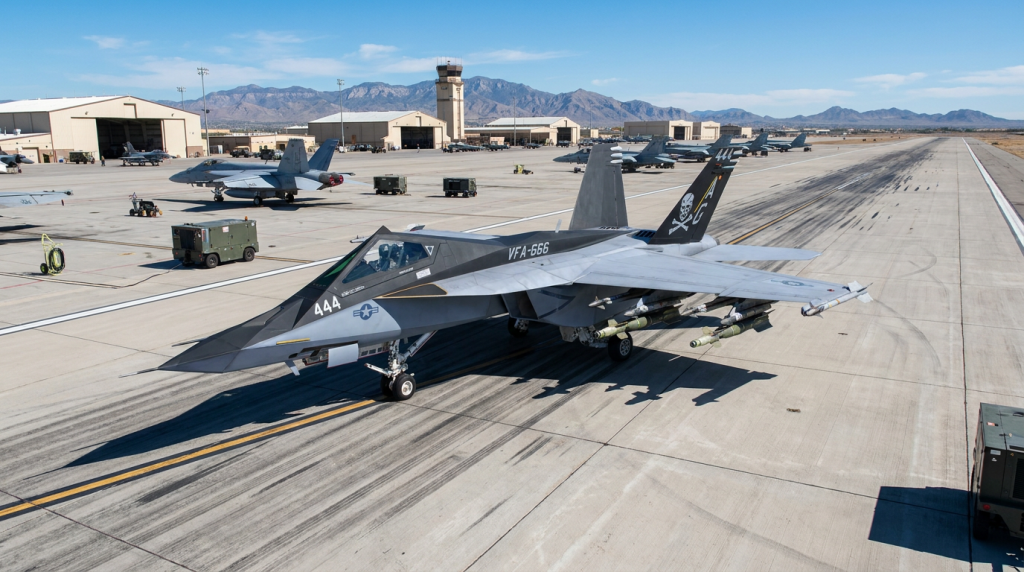
Creating a faceted aircraft capable of supersonic flight while also being able to land on the pitching deck of an aircraft carrier is a task that pushes the very limits of physics. The sharp angles and flat panels of the F/A-118E Night Wasp generate colossal aerodynamic drag and render the aircraft inherently unstable in all three axes. Had a pilot attempted to control such a machine directly via mechanical linkages, the aircraft would have entered an unrecoverable spin within the first few seconds of flight.
The problem was solved through total computerization. The Night Wasp is controlled via an advanced digital fly-by-wire flight control system with quadruple redundancy. The pilot in the cockpit merely dictates the desired direction, while powerful onboard computers calculate dozens of times per second exactly how much the control surfaces need to be deflected to keep this “flying iron” in the air. Thanks to this, the aircraft became not only controllable but also achieved acceptable takeoff and landing characteristics for carrier operations.
Speed and Powerplant
To push an angular airframe past the sound barrier required brute force. The F/A-118E’s powerplant consists of two afterburning turbofan engines, the General Electric F414-GE-400. In the real world, these very same engines power the F/A-18E/F Super Hornet.
The engines are deeply embedded within the fuselage to reduce the radar cross-section of the turbines. Their main feature is the use of flat nozzles, which serve a dual purpose: they disperse the exhaust jet, drastically reducing the aircraft’s infrared signature (providing protection against heat-seeking missiles), and shape the flow to minimize the radar return from the rear hemisphere.
Although the flat facets severely degrade aerodynamics, the powerful engines and the fly-by-wire system allow the F/A-118E to reach a maximum speed of around Mach 1.1–1.2. This is what is known as limited supersonic capability. The Night Wasp is not designed for high-speed Mach 2 dogfights; its supersonic dash is used solely for quickly traversing dangerous SAM threat zones or outrunning pursuit after dropping its payload.
The Wasp’s Sting: Armament and Combat Radius
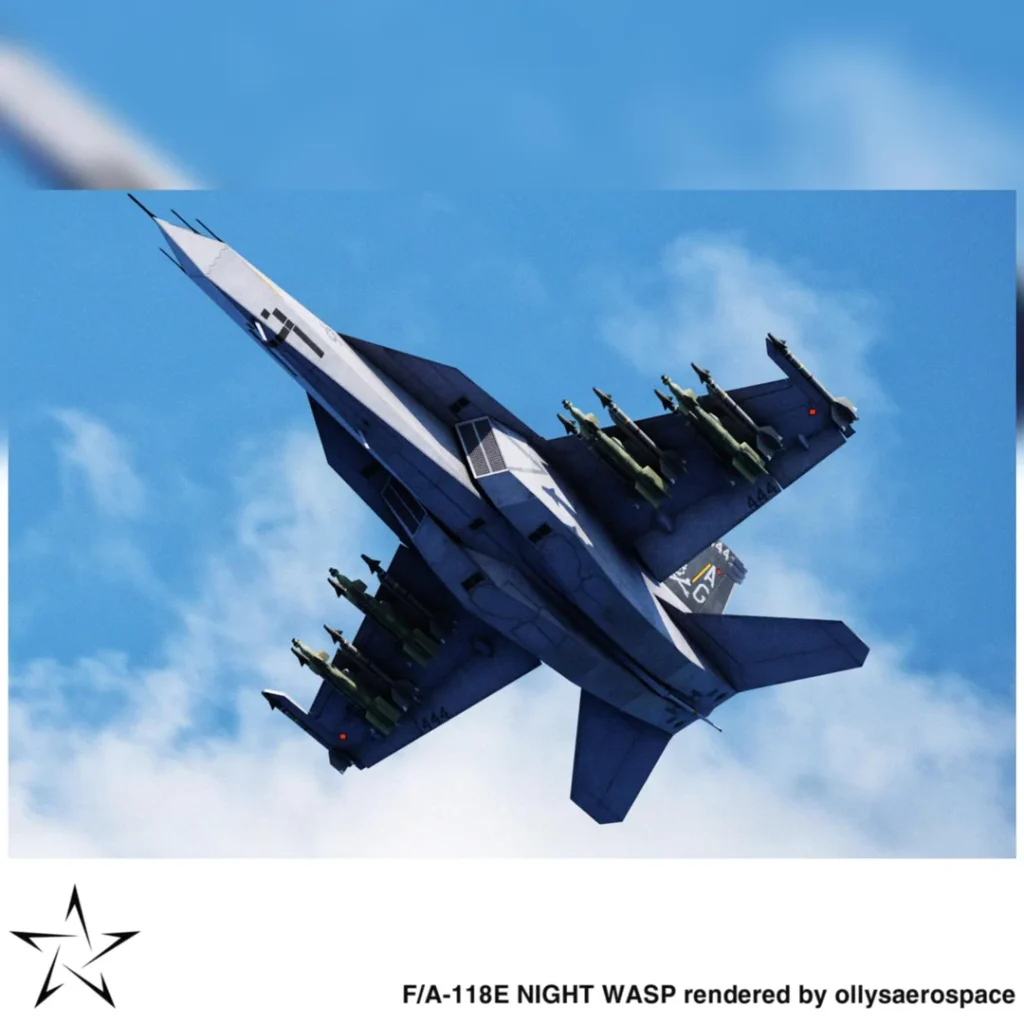
Unlike the defenseless-in-air-combat F-117, the carrier-based F/A-118E must be able to hold its own. To maintain perfect stealth, all armament is hidden internally within the airframe. The aircraft is equipped with spacious internal bays capable of housing JDAM guided bombs for striking ground targets and AIM-120 AMRAAM air-to-air missiles for beyond-visual-range dogfights.
If a mission does not require absolute stealth but calls for the suppression of enemy air defenses, the aircraft can utilize special stealthy external pods mounted under the wings. These pods feature a faceted shape that does not significantly degrade the radar signature and allow for the carriage of additional missiles. The aircraft’s radar is hidden behind a specially designed radar-transparent faceted radome, which emits beams only in specific spectra, avoiding giving away the fighter’s position.
The aircraft is optimized for long-range strikes launched from an aircraft carrier deck. Its combat radius is an impressive 850 to 1,000 kilometers without refueling. This allows the carrier strike group to remain far out at sea, safely out of range of enemy coastal anti-ship missiles, while the Night Wasps covertly penetrate deep inland, deliver surgical strikes, and return to base.