An American Dream. The SC-10 Jupiter Heavy Military Transport Aircraft. United States

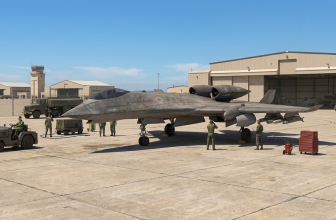
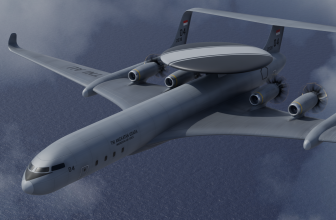
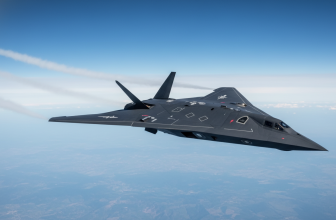
I’m sorry to disappoint anyone who thinks this is going to be about yet another American startup developing a new super-heavy aircraft. That’s not the case at all. This is a completely alternative machine that has absolutely nothing to do with reality. It’s simply a creation by 3D modeler Amx40pleb on the theme of alternative aviation. An alternative, in fact.

The SC-10 Jupiter aircraft was the result of international collaboration among young aviation engineers. The project was conceived at a conference where leading figures in the aviation industry discussed the need to develop a unified cargo aircraft. The main objectives set for the engineering team were to increase payload capacity, improve aerodynamics, and minimize environmental impact. The SC-10 Jupiter is the result of their efforts, reflecting a commitment to high-tech progress.
The SC-10 Jupiter’s technical specifications are truly impressive. The aircraft is capable of carrying over 300 metric tons of cargo, which significantly exceeds the capabilities of its predecessors. The designers used the most advanced composite materials, which not only increase the fuselage’s strength and wear resistance but also make it lighter. Powerful, latest-generation engines provide incredible maneuverability and impressive acceleration, despite the aircraft’s massive size. Huge cargo ramps allow for loading and unloading cargo in record time, which is especially important in today’s logistics environment.
It wasn’t just engineers and technical specialists who were impressed by the new model. Business leaders and government agencies are also showing interest in the SC-10 Jupiter. The aircraft has already demonstrated its unique capabilities by transporting critical cargo to hard-to-reach regions where delivery by water or land is impossible. This versatility makes it an ideal asset for humanitarian missions, emergency response, and scientific expeditions.

However, the SC-10 Jupiter’s path to success was not an easy one. During the development phase, the team faced numerous challenges, ranging from technical issues to a lack of funding. Every achievement was made possible by the painstaking work of dozens of specialists who labored tirelessly on the project. They faced criticism and skepticism, but their belief in the importance of their work helped them overcome all obstacles.
Ultimately, the SC-10 Jupiter became more than just an airplane; it became a symbol of a new era in aviation. It brought together the efforts of countries and experts from around the world, serving as a reminder of how cooperation and a drive for innovation can push the boundaries of what is possible. As people gaze upon the majestic form of this aerial giant, they sense the grandeur of the human spirit and are convinced that, despite all obstacles, the future belongs to those who dare to dream and are ready to turn those dreams into reality.