What if Germany had become a republic in 1848? The History of the United Kingdom of Germany That Never Was

The revolutions of 1848 in Europe, also known as the “Spring of Nations,” essentially conceal a vast array of alternatives. Most European states, united by the concept of liberal democracies, emerged precisely during this period. The alternatives involving Germany are particularly interesting. At that time, Germany stood at a crossroads, with several paths of development open to it. It could have become an empire at that time without waiting for Bismarck to emerge; it could have been unified by someone else, ranging from Austria to Bavaria or Saxony. This article will examine the scenario in which Germany forms a republic. But not a classical one. Overall, I’m sure this historical fork will be of interest to many, as will the views of the author who created this AI.
Prologue to the Revolution: How 1848 Changed the Course of History
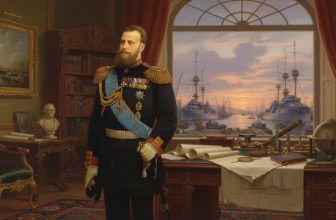
In this alternative history, the United Kingdoms of Germany emerge as the most successful outcome of the European revolutions of 1848. In this scenario, a liberal uprising, a military alliance, and a compromise among the ruling elites coalesce into a stable state, avoiding the fate of the Frankfurt Parliament’s historic failure. The turning point was the March events in Berlin, which quickly evolved from spontaneous civil unrest into a coordinated military-political crisis. Reform-minded officers, city militias, and elements of the royal guard—exhausted by absolutist practices and increasingly sympathetic to constitutional demands—rose up against the old system. King Frederick William IV was removed from actual power, either through a forced abdication or through political isolation. He was succeeded by a regency under the young Prince Frederick William, dominated by moderate liberals, professional bureaucrats, and military reformers. This institution proved to be critically important: instead of forcibly imposing radical changes, the regents gradually institutionalized constitutional government, raising the future monarch to be a ruler sincerely devoted to the rule of law.
At the same time, the Frankfurt Parliament transformed from a symbolic debating club into a functional provisional government. Its authority ceased to be merely theoretical thanks to the support of revolutionary armies and administrative upheavals in key German states, including the Rhineland, Hanover, Saxony, and part of Bavaria. The Customs Union became the economic backbone of the unification, ensuring the operational coordination of budgetary expenditures and strengthening the legitimacy of a unified political structure long before the formal proclamation of the state.
The Constitutional Compromise and the Birth of the Triarchy
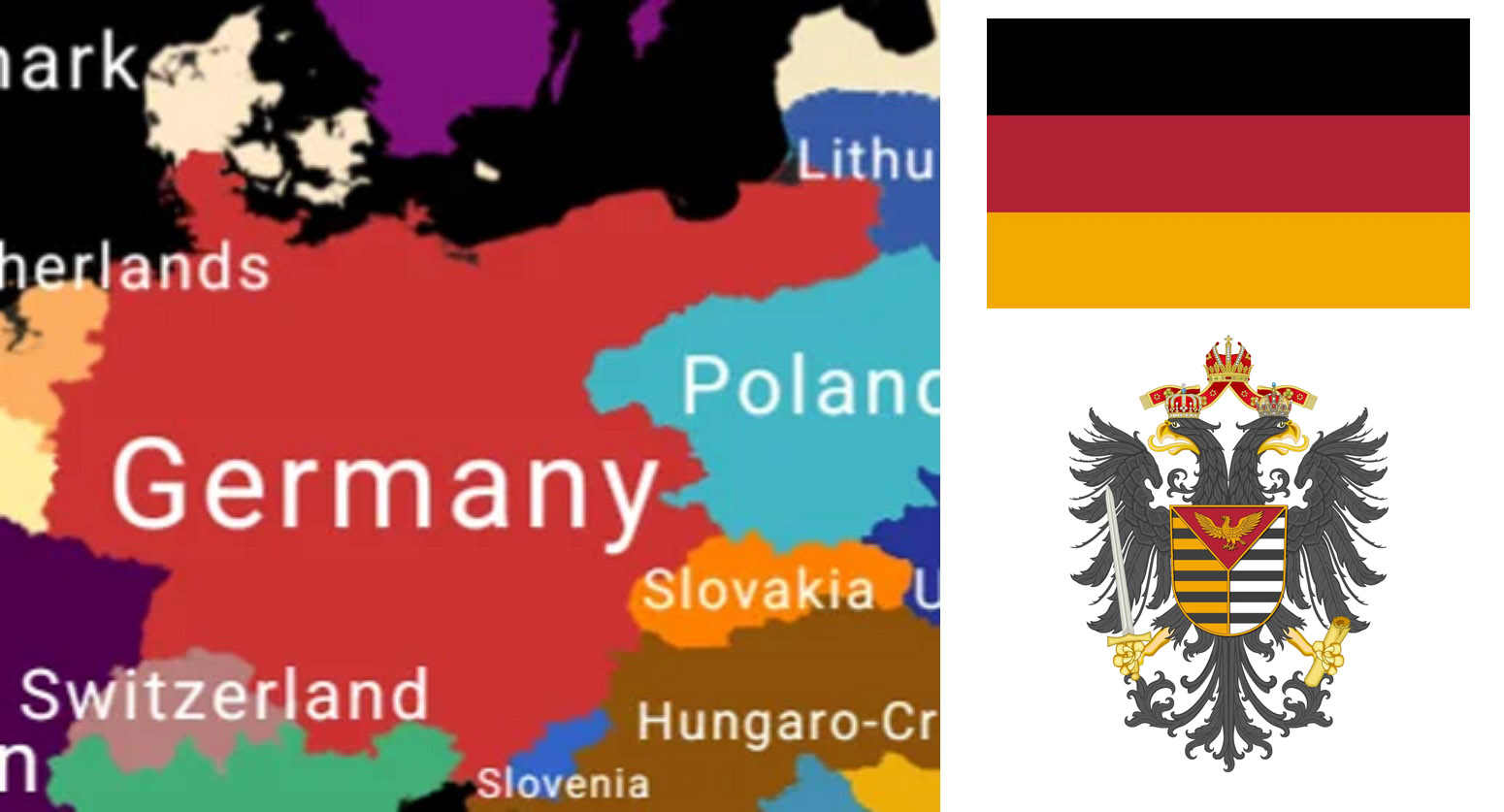
The basis of the state structure was an adapted version of the Frankfurt Parliament’s constitution, known as the Paulskirchenverfassung. The historical model of a single hereditary emperor was replaced by a unique triarchic system designed to counterbalance the Prussian military aristocracy and the consequences of the partition of Austria. The three crowns, representing Prussia, the Central German Kingdom, and Cisleithania, exist as equal symbolic authorities within the Imperial Council; however, real sovereignty functionally resides with the federal parliament. This structure deliberately strikes a balance between legitimacy and adaptability: monarchical institutions ensure historical continuity and conservative support, while the parliament is responsible for day-to-day governance and the implementation of reforms. In essence, Germany has become not a classical republic but a unique symbiosis of a republic and a constitutional monarchy.
At the federal level, legislative power is vested in a bicameral parliament that meets in Berlin. The lower house, the People’s Assembly, is elected every four years under a mixed proportional-majority system, granting the right to vote to every adult citizen, including residents of the associated territories. The upper house, the House of States, is composed of delegates appointed by the governments of the federal states, with representation strictly proportional to the status of the territory: the Crown Kingdoms receive eight seats, the Principal Kingdoms four, the Grand Duchies two, and the Free Cities one seat each. Any bill requires the approval of both chambers. Parliament elects the federal chancellor, who forms the cabinet and bears full political responsibility before the members of parliament, including the possibility of being removed through a vote of no confidence. The three monarchs, who meet in Vienna, ratify international treaties, approve the appointment of the chancellor upon the recommendation of Parliament, and serve as the symbolic heads of the armed forces; however, they have no veto power over domestic laws and no authority to dissolve the legislature.
The Geography of Power and a Multilevel Federation
A unique feature of the state was the functional division of institutions among the three capitals. Berlin established itself as the legislative center, Vienna assumed executive and diplomatic functions, and Frankfurt became the judicial and financial capital. This decentralization prevented political monopolization and mirrored the distributed models of governance observed in other major federations. The constitution itself enshrined a mechanism for flexibly amending its text by a qualified majority, which ensured the system’s long-term stability in the face of evolving challenges.
A multi-tiered federal structure emerged within the country. The crown land united Prussia, the western German heartland, and Cisleithania, which had been formed following the collapse of the Austro-Hungarian Empire. Faced with simultaneous uprisings in Vienna, Hungary, Bohemia, and Northern Italy, the Habsburg government abandoned the idea of a total reconquista and agreed to a structured partition. The German-speaking core was reorganized into the Kingdom of Cisleithania, which included Salzburg, Tyrol, Bohemia, Moravia, southern Austrian Silesia, and the port of Trieste, after which it joined the German Federation on equal terms. Hungary gained full independence but entered into a system of mandatory defensive alliances with Germany, acting as a strategic partner. Galicia and the adjacent territories were transferred to the newly created Polish state, which was deliberately structured as a buffer against the Russian Empire. This model of shifting border tensions into allied buffer zones became the hallmark of the new Berlin’s foreign strategy.
Below the imperial level were the major kingdoms, which included Bavaria, Saxony, Hanover, Württemberg, Bohemia, and Austria. They retained their own parliaments, governments, and limited autonomy in matters of education, culture, and local law enforcement. Further down the administrative hierarchy were the grand duchies, duchies, and historical regions, each with its own assemblies and governors. Rounding out the system were the free cities of Berlin, Vienna, Trieste, Frankfurt, Hamburg, Bremen, and Lübeck, which were governed by city senates and were full-fledged members of the federation. The military, foreign policy, and macroeconomic spheres were fully federalized, while the unified army retained regional command structures to prevent excessive centralization and maintain operational flexibility.
Economic Leap Forward and Cultural Pluralism
By the 1870s, the United Kingdom of Germany had established itself as the continent’s dominant industrial and financial power. Territorial integration provided simultaneous access to the resources of the Ruhr, Silesia, Saxony, and Bohemia, creating an economic concentration unparalleled among rival states. The absence of major continental wars, such as the historical conflicts of 1866 and 1870, allowed for uninterrupted capital growth. The railroad network, heavy industry, and banking institutions were organically woven into the continental system, with its financial center in Frankfurt.
The state’s cultural policy was based on a multi-layered identity. German federal citizenship coexisted with strong regional traditions without any attempt to suppress them. Language policy, legal diversity, and cultural autonomy were protected at the constitutional level, which prevented the homogenizing pressures that destabilized many imperial formations. This model reflected a broader trend in which large states relied on structured diversity rather than enforced unity.
Foreign Policy and Global Integration
In the early stages, foreign policy remained conservative and focused on maintaining the status quo. Diplomatic agreements with Great Britain and France recognized the new Central European order in exchange for territorial restraint in disputed regions, such as Alsace-Lorraine. Russia, weakened by internal upheavals and strategically contained by the Polish buffer zone, avoided direct confrontation. The result was a prolonged period of relative continental stability. At the same time, Germany provided decisive support for the unification of Italy, accelerating the military consolidation of the peninsula and diplomatically preventing French intervention. Italy emerged from this process as a unified power, joining the Central European liberal bloc alongside Germany, the Polish-Lithuanian Federation, and Hungary.
However, this long-term stability gave rise to structural vulnerabilities. By the early 20th century, the system had become deeply integrated into global financial flows, colonial investments, and industrial speculation. The Second Colonial War of 1907, which ended in a technical victory, entailed enormous costs. War debt, risky investments in overseas territories, and the excessive expansion of economic obligations created a fragile financial architecture that was critically dependent on constant growth.
The Crisis Test: The Frankfurt Collapse and Systemic Resilience
Frankfurt’s financial system became the epicenter of mounting instability. Postwar optimism fueled large-scale speculation in colonial enterprises, railroad projects, and industrial conglomerates. Banks aggressively expanded lending, and a significant portion of the population invested directly in the market through securities. The turning point came with the natural disaster in Japan in 1912, which disrupted global trade chains. The assets of German companies in East Asia rapidly depreciated, triggering a cascade effect. Institutional panic escalated into mass sell-offs, the bankruptcies of credit institutions, and a liquidity crisis that instantly spread from Frankfurt throughout the global economy.
The Frankfurt Collapse became the defining systemic crisis of the early 20th century. Empires already under internal pressure—including Great Britain, Qing China, Russia, and the colonial administrations of Southeast Asia—began to disintegrate under the combined financial and political blow. The German Empire itself plunged into a protracted depression: industrial production contracted, colonial networks weakened, and political debates intensified. Nevertheless, unlike more centralized or authoritarian regimes, the federal triarchic system successfully cushioned the blow. The regional distribution of institutions prevented a complete institutional collapse, and constitutional flexibility allowed for the rapid implementation of emergency reforms, including strict financial regulation, the expansion of social protection, and measures for macroeconomic stabilization.
Key Differences from the Historical German Empire
A comparison with the actual German Empire of 1871 reveals fundamental differences in the nature of power, methods of unification, and long-term stability. The historical empire emerged through a series of victorious wars under the leadership of Prussia and Bismarck, which laid the foundation for militarism, Prussian hegemony, and semi-authoritarian constitutionalism, where real power was concentrated in the hands of the Kaiser and the Executive Chancellery, while parliament played a secondary role. The United Kingdom of Germany, by contrast, emerged from the successful liberal compromise of 1848, in which parliamentary sovereignty became an axiom and the monarchy was transformed into a collective ceremonial institution.
Instead of Berlin-centered centralization, an alternative model introduced a functional division of capitals, preventing any single region from gaining absolute dominance. Federalism here proved to be deeper and more genuine: the states retained not only administrative but also cultural and legal autonomy, and the army decentralized its command structures to curb potential praetorianism. While the historical empire sought homogenization and relied on coercive methods of assimilation, the United Kingdom institutionalized diversity, recognizing the linguistic and legal distinctiveness of the regions as a stabilizing factor. Finally, the crisis mechanisms of the alternative state relied on constitutional flexibility and interregional solidarity, whereas the historical model, in times of upheaval, tended toward rigid centralized control and military rule.
Conclusion
The United Kingdom of Germany represents a unique experiment in state-building, proving that a liberal revolution and an elite compromise can give rise to a stable federal system capable of weathering economic storms and geopolitical shifts. By rejecting imperial centralization and militaristic unification in favor of a decentralized triarchy, parliamentarism, and structured cultural pluralism, this state built an architecture in which stability was achieved not through suppression but through an institutionalized balance of interests. Its historical journey, which began with the March barricades of 1848 and continued through the financial storms of the 20th century, remains compelling evidence of how alternative constitutional solutions can alter the trajectory of an entire continent’s development.