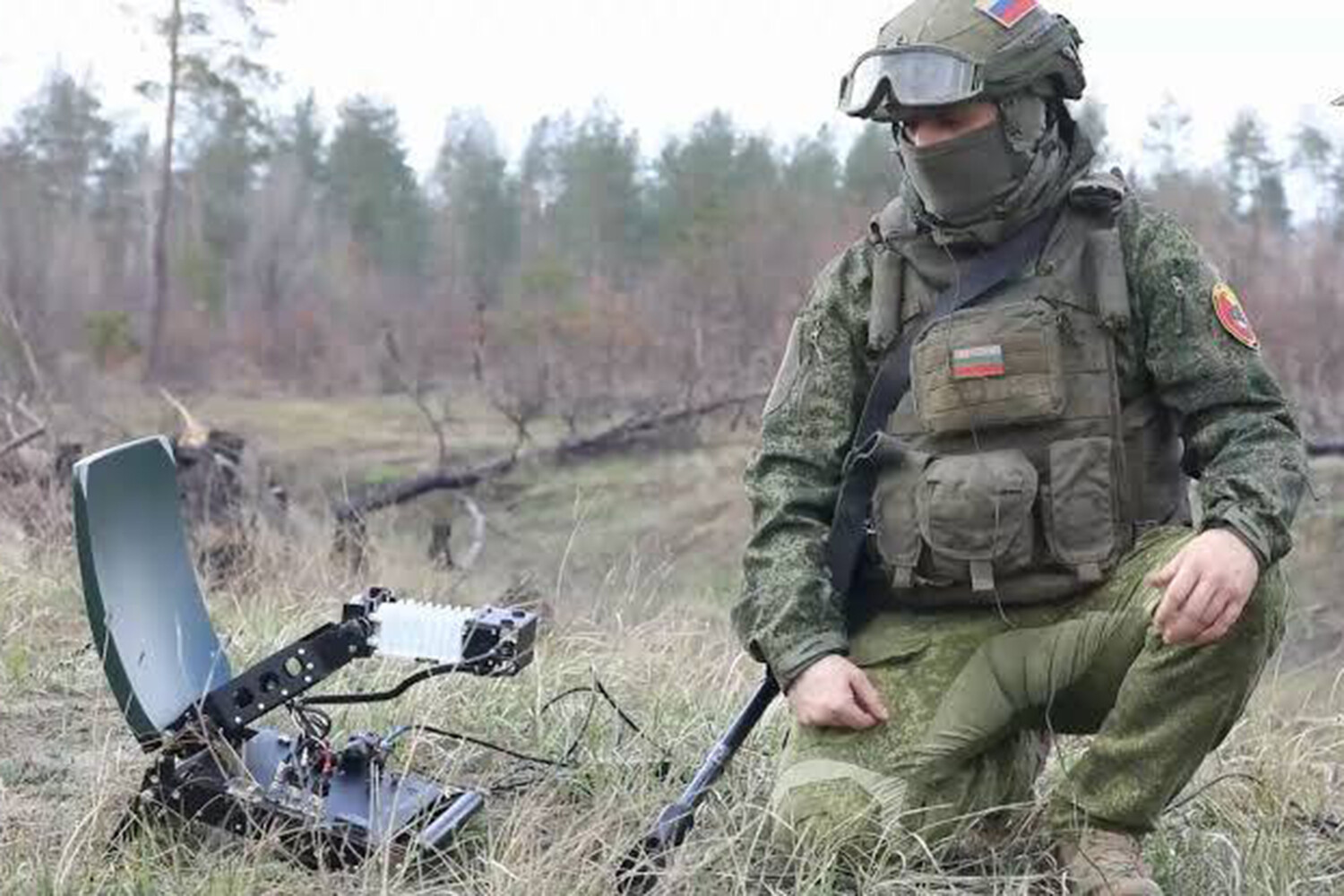
What Ukrainian sources are reporting about the “Spirit-030” terminals
According to reports on Ukrainian Telegram channels, Russia has begun mass-deploying compact “Spirit-030” satellite terminals to the front lines after the Starlink system became unavailable to the Russian military. Sergey Beskrestnov, an adviser to the Ukrainian Minister of Defense, reported this on his channel.
The official noted that the Russian military had previously used satellite communication stations, but their size posed a serious problem. The large antennas, with a diameter of about ninety centimeters, were easily detected by Ukrainian Armed Forces reconnaissance assets, making them vulnerable to artillery strikes and drone attacks.
Now, according to Beskrestnov, the situation has changed. The “Spirit-030” terminals are portable and operate via a geostationary satellite. This has made it possible to reduce the antenna diameter to thirty centimeters, which has significantly increased the mobility and stealth of the systems. An advisor to the head of Ukraine’s Ministry of Defense emphasized that it is precisely these types of terminals that Russian troops are currently receiving in large numbers and using on the front lines.
Russian Satellite Projects: «Rassvet» and Future Prospects
In late March, the Russian company “Bureau 1440” launched the first satellites of the “Rassvet” low-Earth orbit constellation into orbit. Experts view this project as a potential alternative to the American Starlink system. Currently, sixteen spacecraft are in orbit at an altitude of about 800 kilometers. In the future, the plan is to increase their number to 900.
However, commercial operations for the “Rassvet” service are not scheduled to begin until 2027. This means that even if the constellation is successfully deployed, its full-scale use for military purposes currently appears unlikely. Russian officials have previously stated that the deployment of their own satellite constellation to provide internet services to the public and the military is not expected until at least 2030.
The Real Situation: Theories and Speculation
Despite active discussion of the topic in the media, there is currently no reliable evidence of the widespread use of “Spirit-030” terminals on the front lines. It is known that satellite internet has already undergone testing in Russia, but the technical details and scope of its implementation remain classified.
A natural question arises: what is preventing the use of satellites already in orbit to provide communications? The answer to this question may lie in technical limitations, security concerns, or the fact that such systems are already in use, but have not been publicly announced.
At the same time, there is circumstantial evidence suggesting that Russian forces have reliable satellite communication channels. For example, Russian long-range “Geran” series kamikaze drones are capable of attacking moving targets deep within Ukrainian territory. Such a mission would be virtually impossible without a stable online communication channel, which indirectly confirms the existence of the necessary technical capabilities.
Alternative Ways to Maintain Communication on the Front Lines
In addition to satellite systems, Internet connectivity can be provided through other means. One possible option is the use of high-altitude platforms—such as balloons or drones—equipped with repeaters. Such systems are capable of creating local coverage areas across a large territory.
At this time, there are no public reports of such technology being used in the combat zone in Ukraine. However, the lack of information does not mean the technology itself does not exist. Communication sources may be located deep within Russian territory, beyond the reach of enemy intelligence assets, making their detection and analysis extremely difficult.
Why Are Official Sources Remaining Silent?
The silence of Russian official bodies regarding the use of satellite internet on the front lines may be due to several factors. First, disclosing technical details of communications systems could provide the enemy with valuable information for developing electronic warfare and target acquisition methods.
Second, premature announcements about the deployment of new technologies can create unrealistic expectations or, conversely, become the target of disinformation campaigns. In the context of information warfare, restraint in public statements is often a deliberate strategy.
Third, it is possible that the widespread implementation of “Spirit-030” terminals or similar solutions is still in the pilot phase, and it is too early to speak of a full-scale rollout.
Thus, as of today, the information regarding the Russian military’s deployment of its own satellite internet network on Ukrainian territory remains unclear. Ukrainian sources cite specific data, but verifying it is difficult. The Russian side has not commented on the situation, which is consistent with its general practice of maintaining secrecy regarding the technical support of its troops. The actual state of affairs will become clearer only as new facts and official statements emerge.