Bergepanzer 3 Buffel: the tank recovery vehicle that no Leopard can do without

When it comes to armored vehicles, the spotlight usually falls on tanks, self-propelled howitzers, or infantry fighting vehicles. However, every army is well aware of a simple truth: a destroyed tank can be replaced, but a tank abandoned on the battlefield is a problem. That is precisely why, alongside every modern tank, there is a lesser-known but no less important vehicle—the armored recovery and evacuation tractor.
The German Ministry of Defense recently announced plans to purchase an additional 23 Bergepanzer 3 Buffel recovery and evacuation vehicles in the latest A2 version from Rheinmetall. At first glance, the news seems insignificant. However, behind it lies a far more interesting story about one of NATO’s most sought-after engineering vehicles. The Buffel is currently considered one of the best tank recovery vehicles in the world. It is used not only in Germany but also in many countries that operate the Leopard 2.
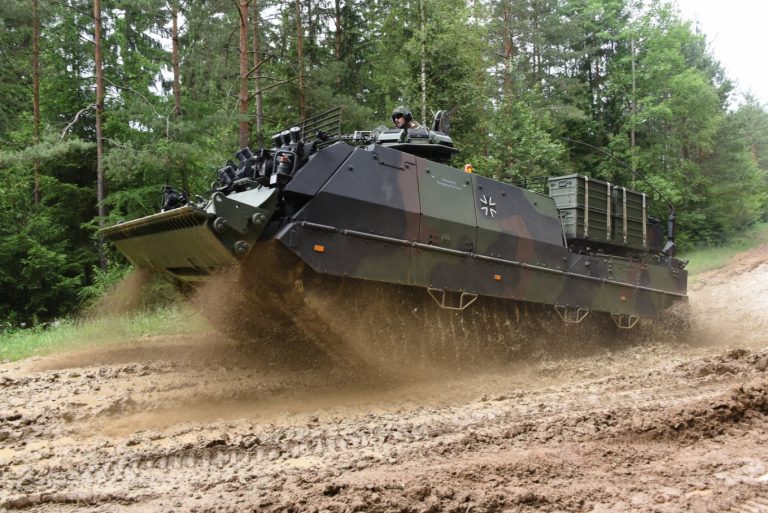
Why Do Tanks Need Their Own Rescue Teams?
A modern main battle tank weighs between 60 and 70 metric tons. The Leopard 2A7, for example, weighs nearly 67 metric tons. If such a vehicle gets stuck, suffers damage to its undercarriage, or is disabled on the battlefield, a standard truck or recovery vehicle will be unable to help.
During World War II, such tasks were often carried out by several tanks at the same time. However, as the weight of armored vehicles increased, this approach became ineffective.
That is why, even during the development of the Leopard 2, German engineers concluded that the new tank would require a specialized support vehicle capable not only of evacuating damaged equipment but also of performing field repairs directly in the combat zone. This is how the Bergepanzer 3 Buffel came into being; the name translates from German as “Buffalo.”
Based on the Leopard 2
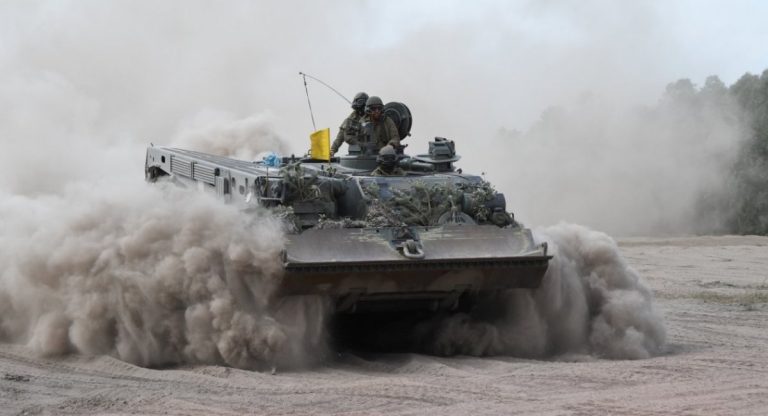
The Buffel’s main advantage is its maximum standardization with the Leopard 2.
In fact, this is essentially the same tank, except that instead of a turret, the chassis is equipped with a powerful crane, winches, and specialized engineering equipment. This design allows for the use of common spare parts, engines, transmissions, and running gear components.
For the military, this means a significant simplification of logistics.
Under the armor is an MTU diesel engine with a power output of about 1,500 horsepower—the same engine used in many versions of the Leopard 2. Thanks to this, the recovery vehicle is capable of moving in formation with tank units and operating directly in the combat zone.
A vehicle capable of pulling a tank out of any situation
Buffel’s primary mission is to evacuate damaged equipment.
To this end, the vehicle is equipped with a powerful main winch with a pulling force of approximately 350 kN, which can be increased to more than 1,000 kN using pulley blocks. In practice, this is sufficient to pull a stuck or damaged Leopard 2 out of virtually any situation.
But the evacuation is only part of the job.
A hydraulic crane with a lifting capacity of up to 30 metric tons is mounted on the vehicle’s roof. It allows for the replacement of the engine, transmission, suspension components, or other heavy tank assemblies in the field.
In fact, the Buffel crew is capable of performing many repair tasks right near the front lines, without having to send the vehicle to a factory or a rear-area repair center.
Where is the Bergepanzer 3 used?
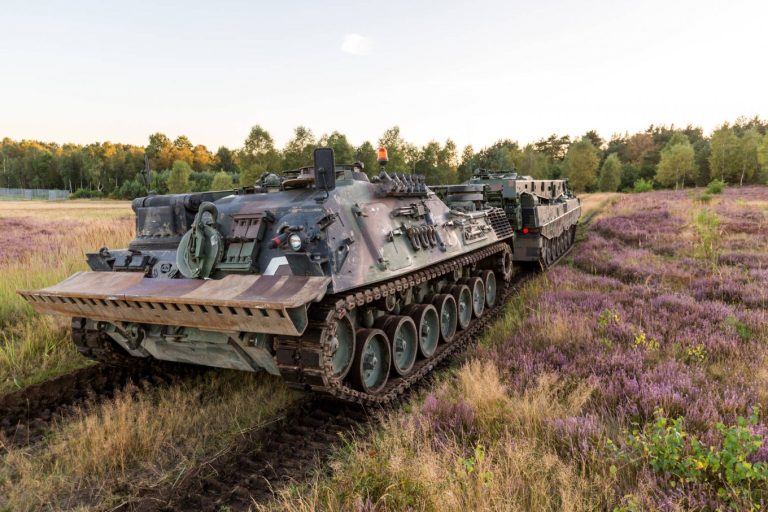
Today, the Buffel has become the standard recovery vehicle for most Leopard 2 operators.
In addition to Germany, the tank is in service with the Netherlands, Switzerland, Sweden, Spain, Austria, Canada, and a number of other countries. Since deliveries of the Leopard 2 to Ukraine began, interest in these tanks has also grown significantly, as any modern tank requires the appropriate technical support infrastructure.
It’s interesting that recovery vehicles are often just as important as the tanks themselves.
Experience from modern conflicts shows that the ability to quickly evacuate a damaged vehicle and return it to service is often more important than manufacturing new tanks.
That is precisely why NATO countries continue to purchase new Buffels even decades after the original design was introduced.
What’s New in Version A2
Details about the new A2 configuration have not yet been fully disclosed, but it is known that the upgrade is designed to accommodate the heavier versions of the latest Leopard 2 models.
The weight of modern tanks is constantly increasing. Additional armor, active protection systems, and new equipment make these vehicles heavier than their predecessors.
Therefore, repair and recovery vehicles must also be upgraded. The new version of the Buffel features advanced control systems, improved engineering equipment, and the capability to service future variants of the Leopard 2 and other heavy Bundeswehr vehicles.
The Unsung Hero of the Armored Forces
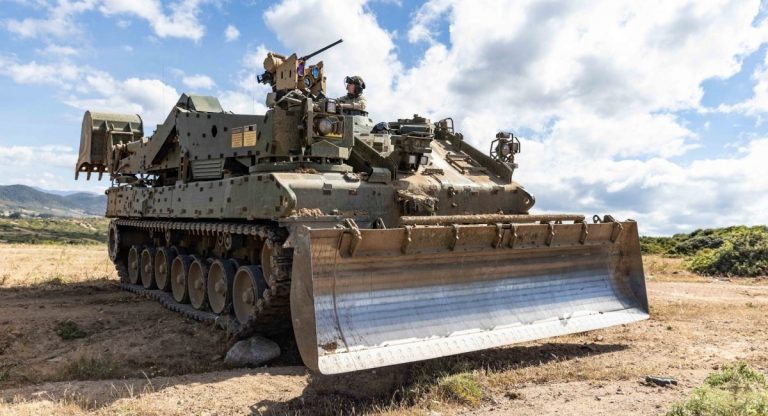
At parades, the Buffel doesn’t look as impressive as a tank or a self-propelled howitzer. It doesn’t have a powerful gun, and it rarely appears in arms manufacturers’ commercials.
But it is precisely these vehicles that determine the true survivability of armored units in combat.
You can build the best tank in the world, but if it can’t be quickly recovered and repaired after being damaged, its effectiveness drops dramatically. The Bergepanzer 3 Buffel is designed to address precisely this challenge. For more than thirty years, it has remained one of the most important elements of the Leopard 2 ecosystem, and, judging by Germany’s new orders, it will remain so for many years to come.
Technical Specifications: Bergepanzer 3 Buffel
Type: Armored Repair and Recovery Vehicle (ARRV)
Country of origin: Germany
Manufacturer: Rheinmetall Land Systems
Base Chassis: Leopard 2
Crew: 3 people
Combat weight: approximately 54–55 metric tons
Engine: MTU MB 873 Ka-501
Power: 1,500 l.s.
Maximum speed: up to 68 km/h
Range: about 500 km
Main winch: up to 350 kN (over 1,000 kN with a block-and-tackle system)
Crane lifting capacity: up to 30 metric tons
Main objectives:
- evacuation of damaged tanks;
- replacement of power units;
- suspension repair;
- engineering support for armored units;
- Towing of heavy equipment.