The story of Harry Knox, an American automobile manufacturer who was, in fact, a key figure in the development of American tanks
If there’s one thing domestic tank builders certainly can’t complain about, it’s a lack of fame. In this regard, the Soviet Union was ahead of the rest of the world; there were dozens of famous Soviet tank builders. The same goes for Russian ones. Abroad, however, things are a bit different. If you try to name even a dozen American tank designers, you’ll find the task nearly impossible. You’d struggle to even come up with five, even if you’re well-versed in the subject. Why this is the case is an interesting question; it’s likely related to the fact that American tank development was concentrated in the hands of the military.
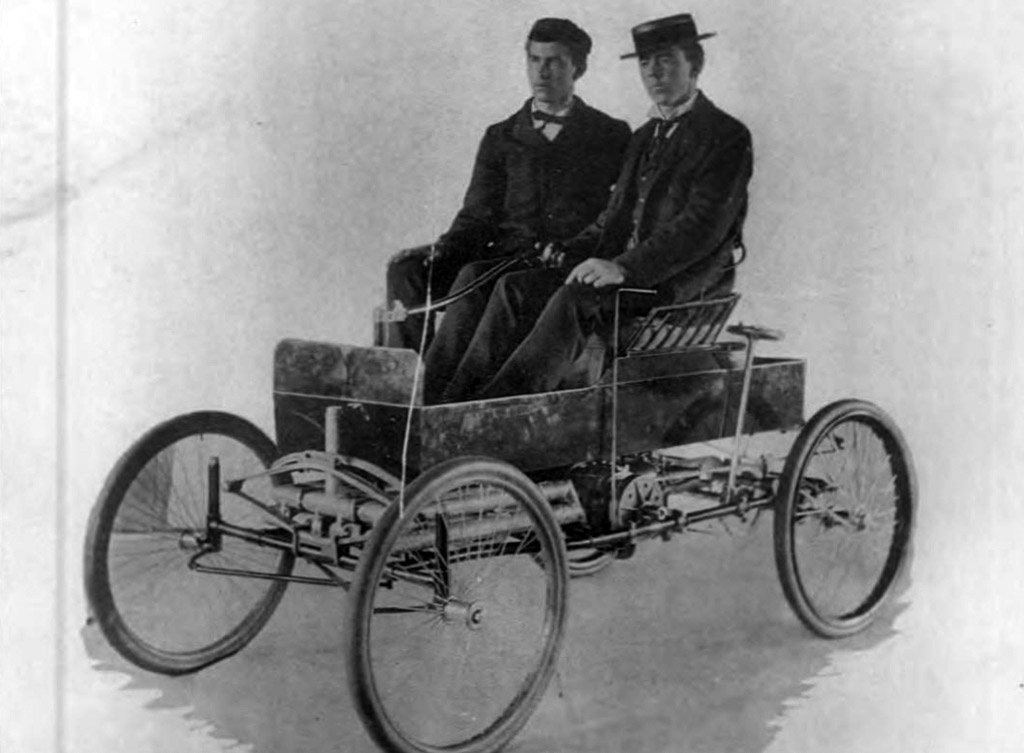
Harry Knox (at the wheel) in one of the first Knox cars
At the same time, there is one indicator that provides a fairly good way to assess the contributions of certain individuals—and even bring some of them out of the shadows. So, in the history of American tank manufacturing, there is a man who could be called the local “gray cardinal.” I’m talking about Harry Austin Knox, who is better known as an automobile manufacturer. His star as a carmaker began to fade in the first half of the 1920s. But at that very moment, his star began to rise as a tank designer. In fact, Knox’s influence was arguably even greater than that of Heinrich Knipkamp on German tank design.
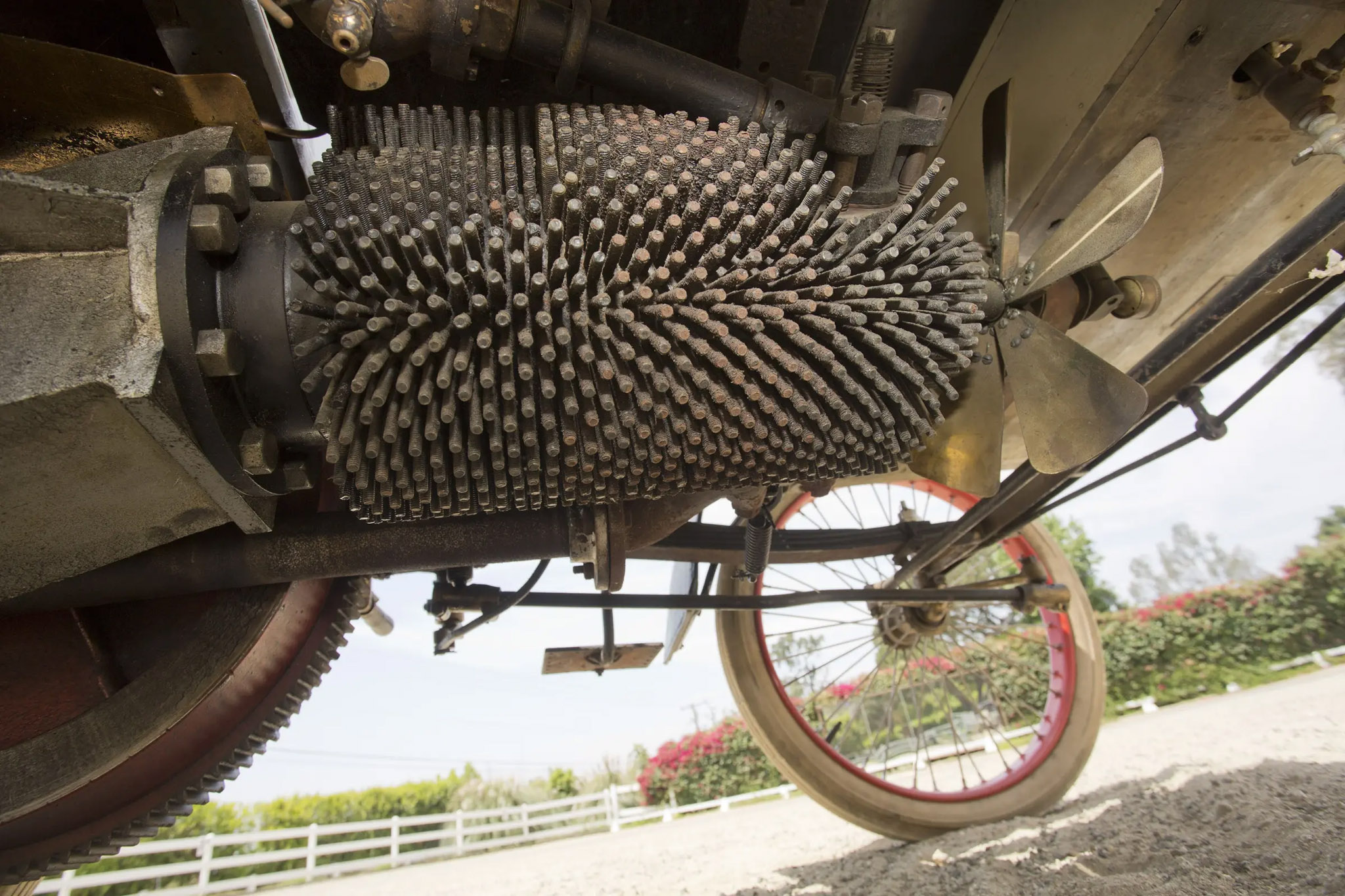
It’s obvious why this engine was called the «porcupine»
Harry Knox was born on January 19, 1875, near Westfield, Massachusetts. Like John Walter Christie, he showed an aptitude for engineering from an early age. The difference was that Christie initially went into shipbuilding, while Knox became fascinated with automobiles. He originally planned to build engines, and Knox built his first one in 1894. It was installed on a three-wheeled bicycle made by the Overman Wheel Company. And in 1898, the Knox Automobile Company was founded in Springfield.
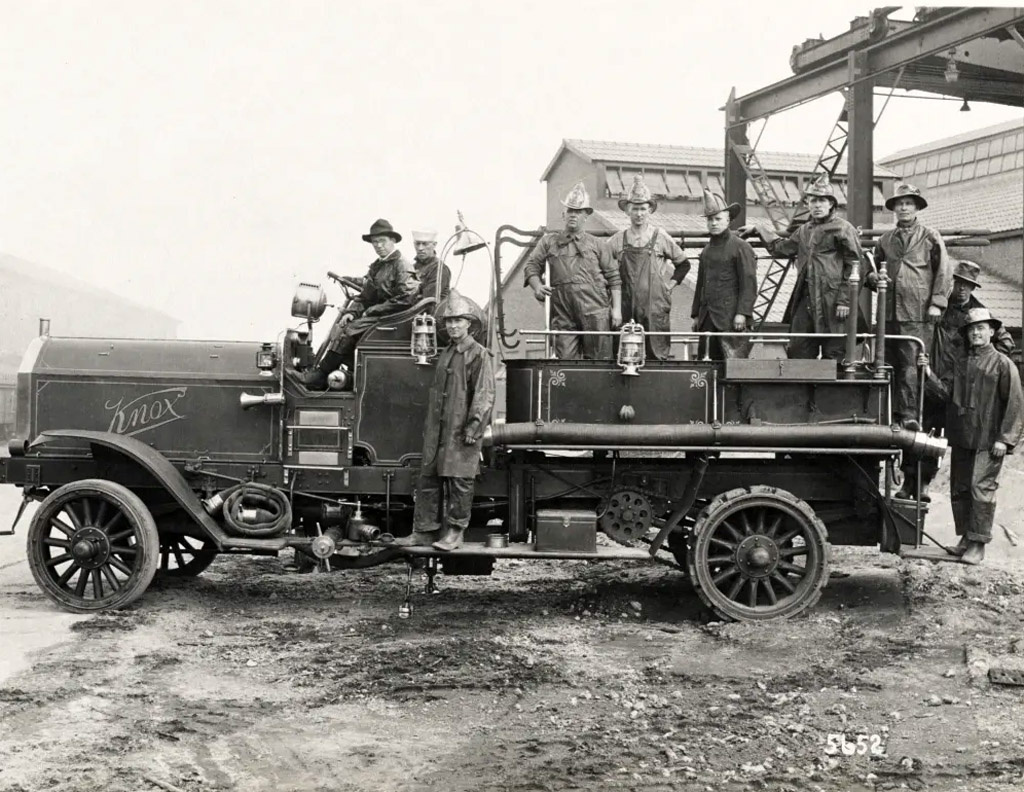
Пожарная машина Knox Motor Truck Company
At that time, Harry Knox’s specialty was engines. The unique feature was the cooling system: rows of rods were screwed into the block, which served as radiators. The single-cylinder engine, located under the floor, earned the nickname “porcupine.” Initially, Knox cars were produced as three-wheelers, and later as four-wheelers. In 1902, the first commercial vehicle was introduced, and that same year, Knox won the New York–Boston–New York race in a Knox Model R. The “Waterless Knox,” as his cars were called, gradually gained popularity, but in 1904, Harry left the Knox Automobile Company.
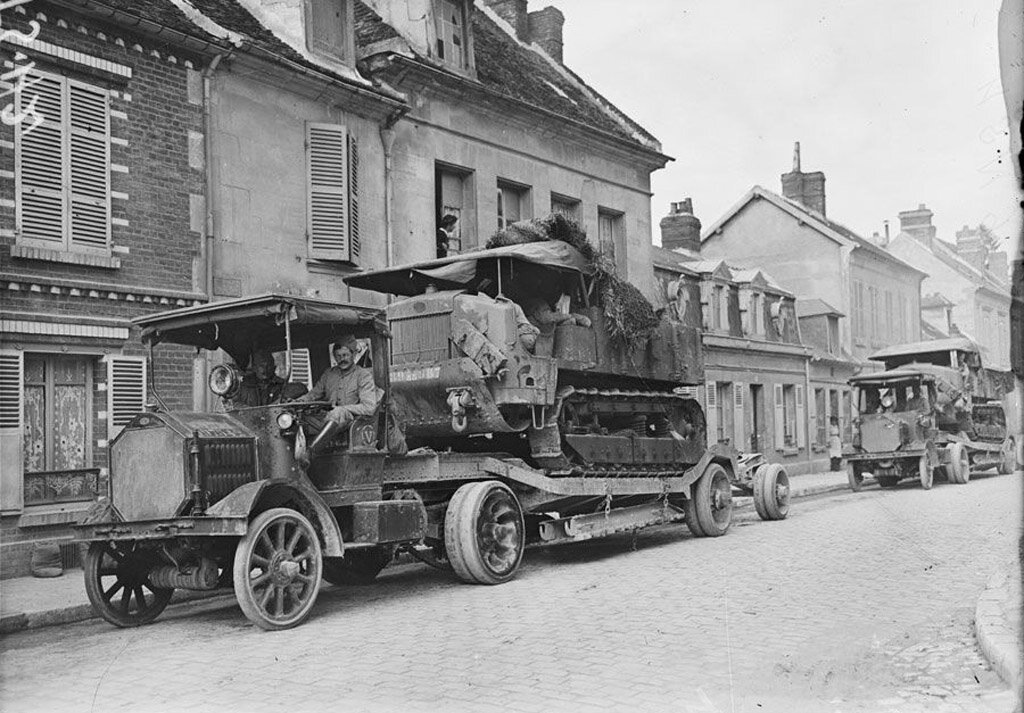
The Knox Model 35 was used as a tractor truck
The reason was the founding of the Knox Motor Truck Company. Commercial vehicles became the new company’s specialty, and Harry’s decision paid off. The Knox Automobile Company closed in 1914, unable to withstand the competition, but Knox’s second company thrived. At one point, it even began to compete with the products of the Front Drive Motor Company. While Christie manufactured motorized units that were hitched to fire wagons, Knox built complete fire trucks. The most famous products were the Knox Martin Tractor Model 31 and the Knox Model 35. The latter became Knox’s first design to be used in combat.
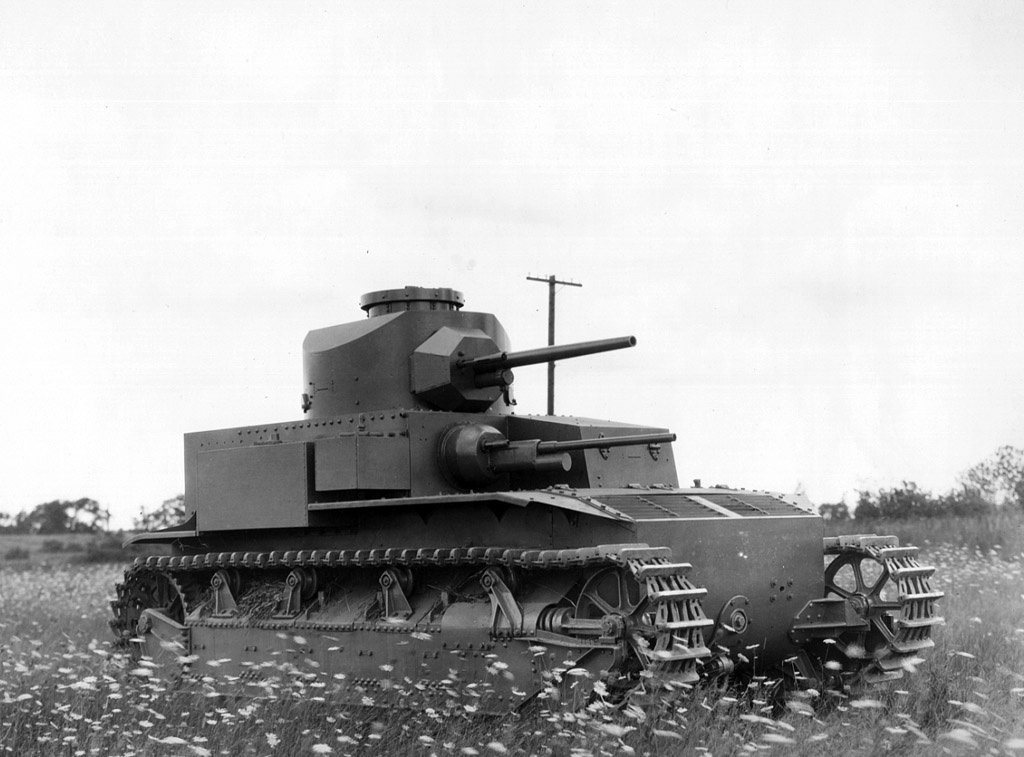
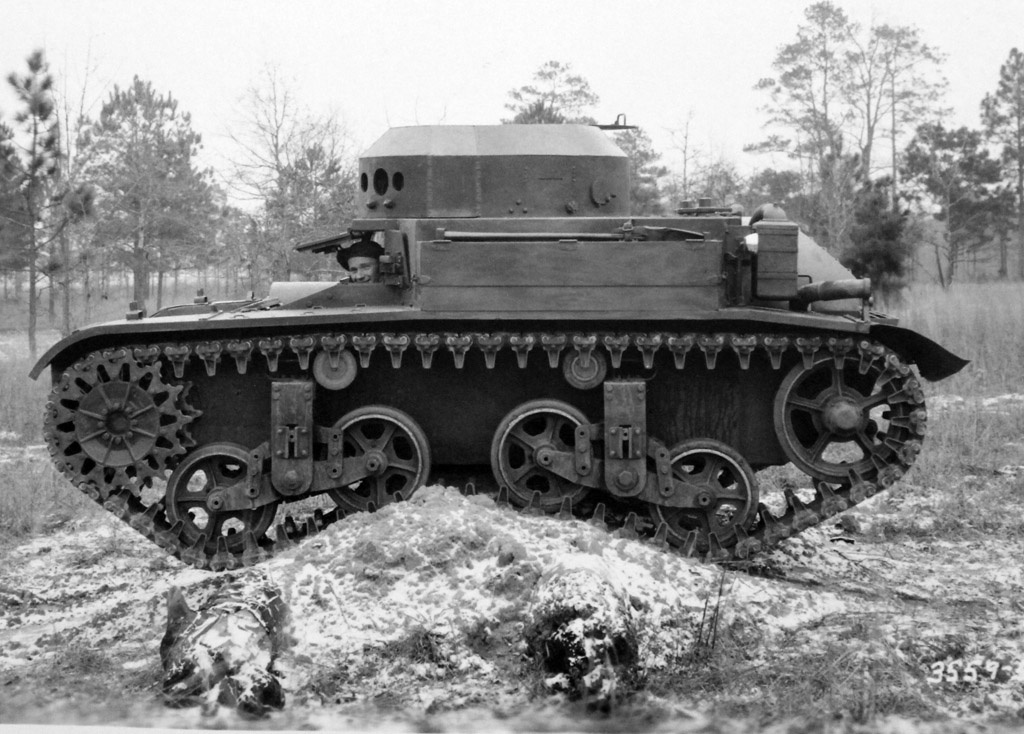
Medium Tank T2, one of Knox’s early creations
World War I radically changed Harry Knox’s life. In 1918, he enlisted in the military, leaving the Knox Motor Truck Company. In the mid-1920s, the company went out of business. But for Harry Knox, who was 43 at the time, it was just the beginning. He was assigned to the War Department. At first, he worked on automobile manufacturing, but by the mid-1920s, under pressure from the auto giants, that project was shelved. So in 1924, Knox turned his attention to tank manufacturing, taking over the position from Christie. From that point on, their tacit rivalry began, proceeding with mixed success.
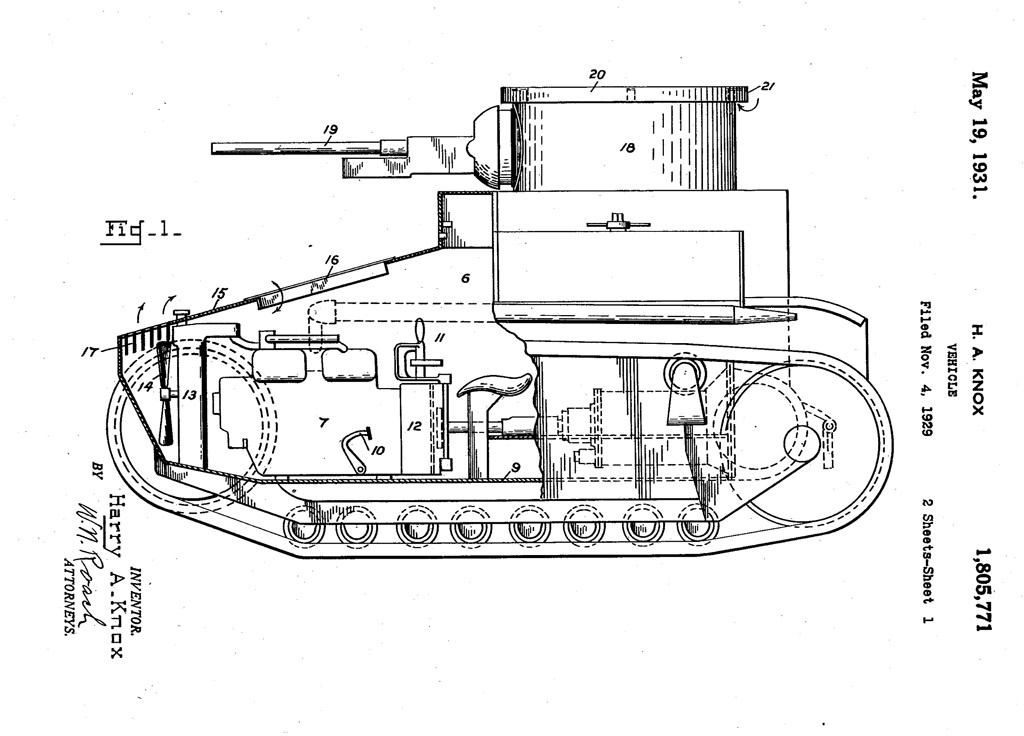
A patent for a tank filed in 1929
The second half of the 1920s was an extremely challenging time for tank development. This was especially true for the Americans, as it was a collaborative effort. Knox’s first design, which was never actually built, was the Medium Tank M1924. According to the specifications, the M1924 had a combat weight of 13.6 metric tons, with its main armament located in the front of the hull and a machine gun in the turret. In 1926, the Advisory Committee on Armaments, part of the SOE (Society of Automotive Engineers), recommended redesigning the tank’s layout. At the same time, the light tank design underwent similar changes. Both vehicles now had the fighting compartment located at the rear.
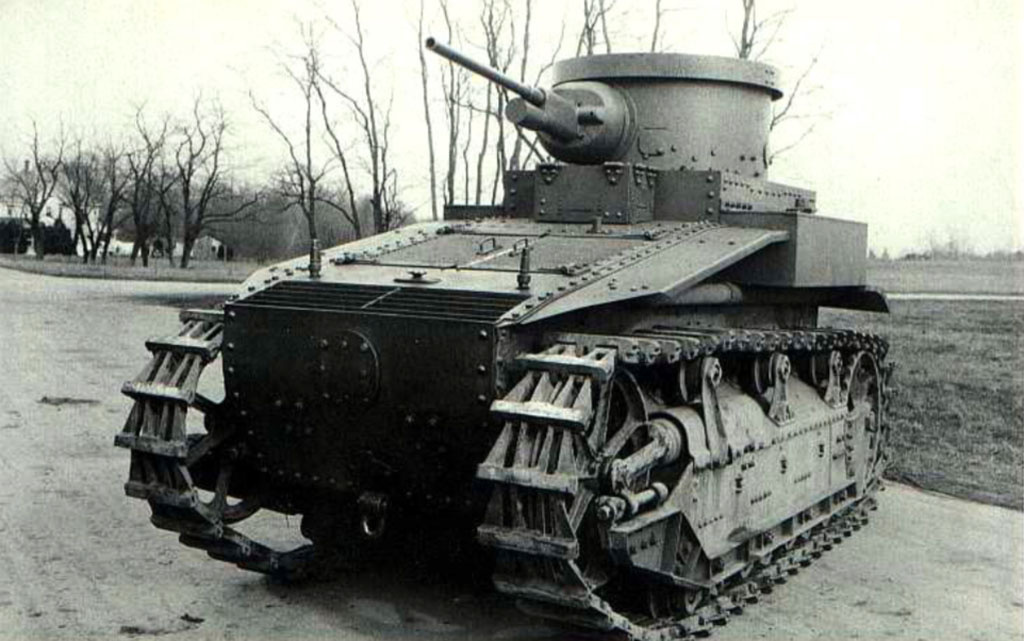
And this is the T1E2 Light Tank—it’s obvious who designed it
Let’s be honest: both the T1 Light Tank and the T2 Medium Tank (which evolved from the M1924) were unsuccessful tanks. The SOE’s decision to move the fighting compartment to the rear turned out to be a bad idea. But these tanks’ chassis were also rather lackluster. The running gear was more like that of a tractor; compared to what Christie had rolled out at the time, Knox’s designs looked lackluster. Christie’s problem was that he won the skirmish but not the war. Most importantly, his tank ended up falling somewhere between the medium and light classes. Christie rejected the military’s attempts to reason with him and build a proper medium tank. And then what was bound to happen happened—Christie was sidelined.
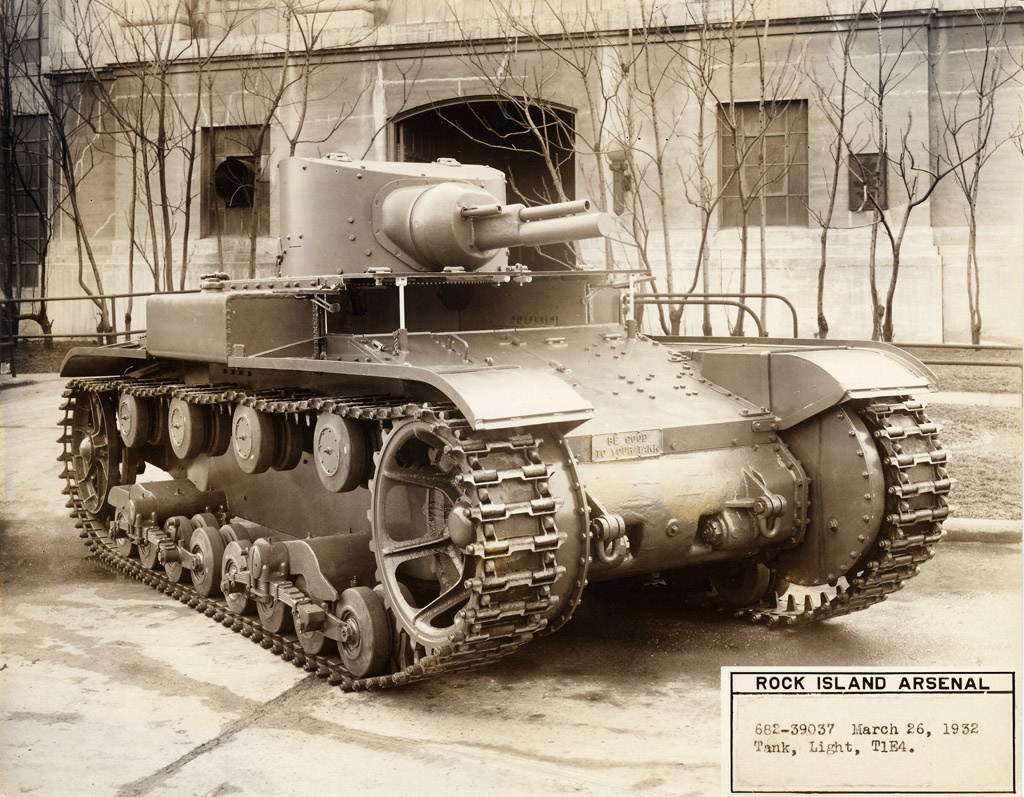
Light Tank T1E4: An Attempt to Improve a Hopeless Tank
Knox didn’t have much luck either. In the fall of 1931, one of the Light Tank T1E1s was sent to the Rock Island Arsenal, where it was converted into a Light Tank T1E4. The attempt to create an American counterpart to the Vickers Mk.E proved unsuccessful, as did the blatant plagiarism of that tank’s suspension. In September 1931, a strange vehicle, initially designated the Armored Car T5, underwent testing. However, it was soon renamed the Combat Car T2. The result was a frankly unsuccessful combat vehicle. But Harry Knox was gradually moving toward his goal.
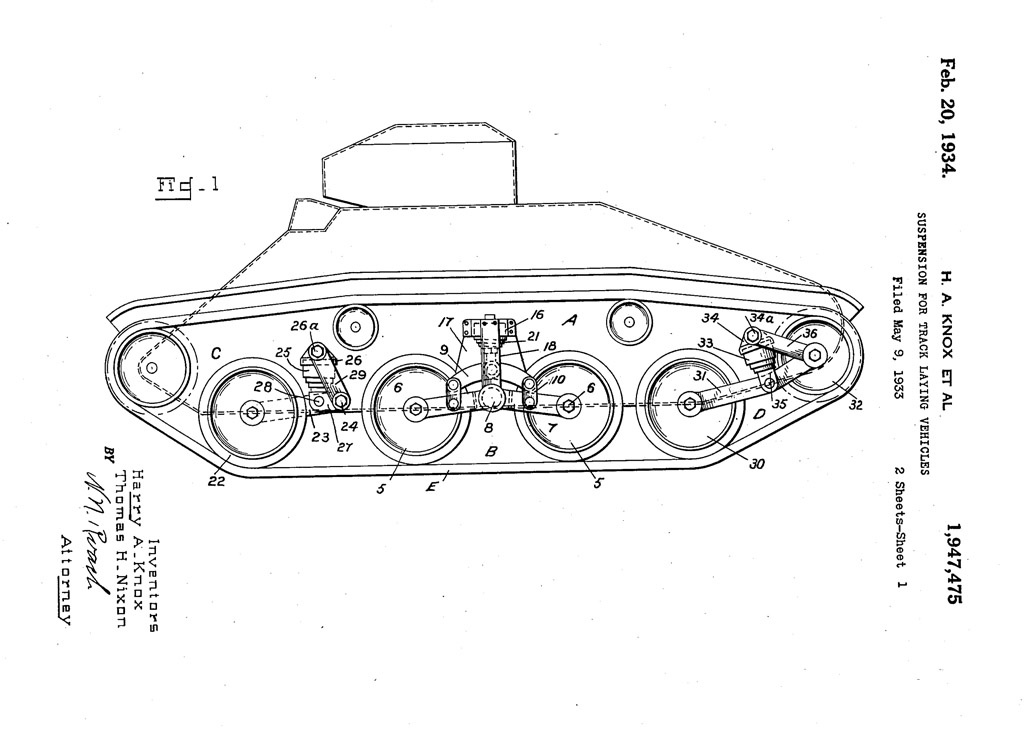
The VVSS suspension system helped break the deadlock in the tank’s development
On June 3, 1933, specifications were drawn up for a new light tank. Its combat weight was 6,300 kg, with a crew of 4, a maximum speed of 48 km/h, armor protection against rifle-caliber bullets, and armament consisting of two Browning M1919 machine guns, plus one large-caliber Browning M2HB. At the same time, a light tank for the infantry and an “armored car” for the cavalry were being developed. The infantry tank, designated the Light Tank T2, was designed to be more conservative, meaning it featured a suspension system similar to that of the Light Tank T1E4/T1E6. The Combat Car T5, however, was more interesting. It was equipped with a VVSS (Vertical Volute Spring Suspension) system, designed by Harry Knox. The support rollers, which were of fairly large diameter, were grouped in pairs on each bogie, with a buffer spring serving as the elastic element.
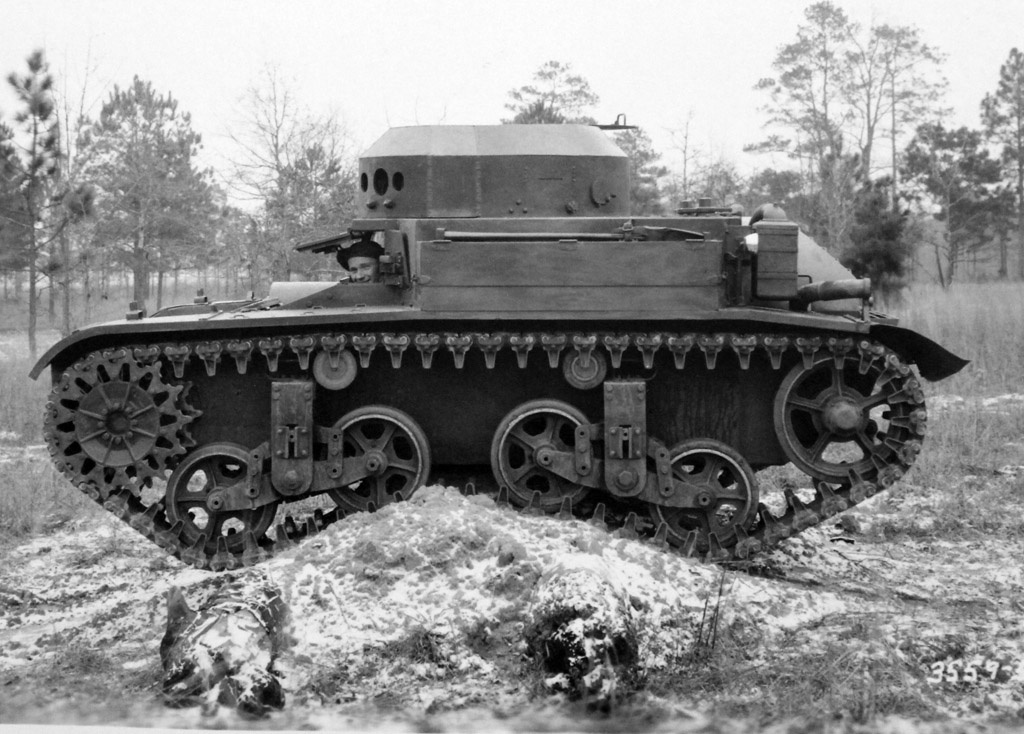
A Visual Demonstration of How the Suspension Works
The VVSS design was compact; the suspension had a long travel, and the road wheels also had a high degree of freedom. Most importantly, it allowed the vehicle to move at high speeds. The Combat Car T5 and Light Tank T2E1 (with a modified suspension) could reach speeds of up to 72 km/h—meaning they could travel on tracks at the same speed as wheeled-tracked tanks when operating on their wheels. At the same time, the armor protection and armament were the same, while the price was half as much. The vehicles used lightweight and inexpensive air-cooled radial engines. Thus, in 1935, the U.S. Army acquired a platform that could be mass-produced. The Combat Car T5 became the progenitor of the M1 Combat Car family, while the Light Tank T2E1 gave rise to the M2 Light Tank family.
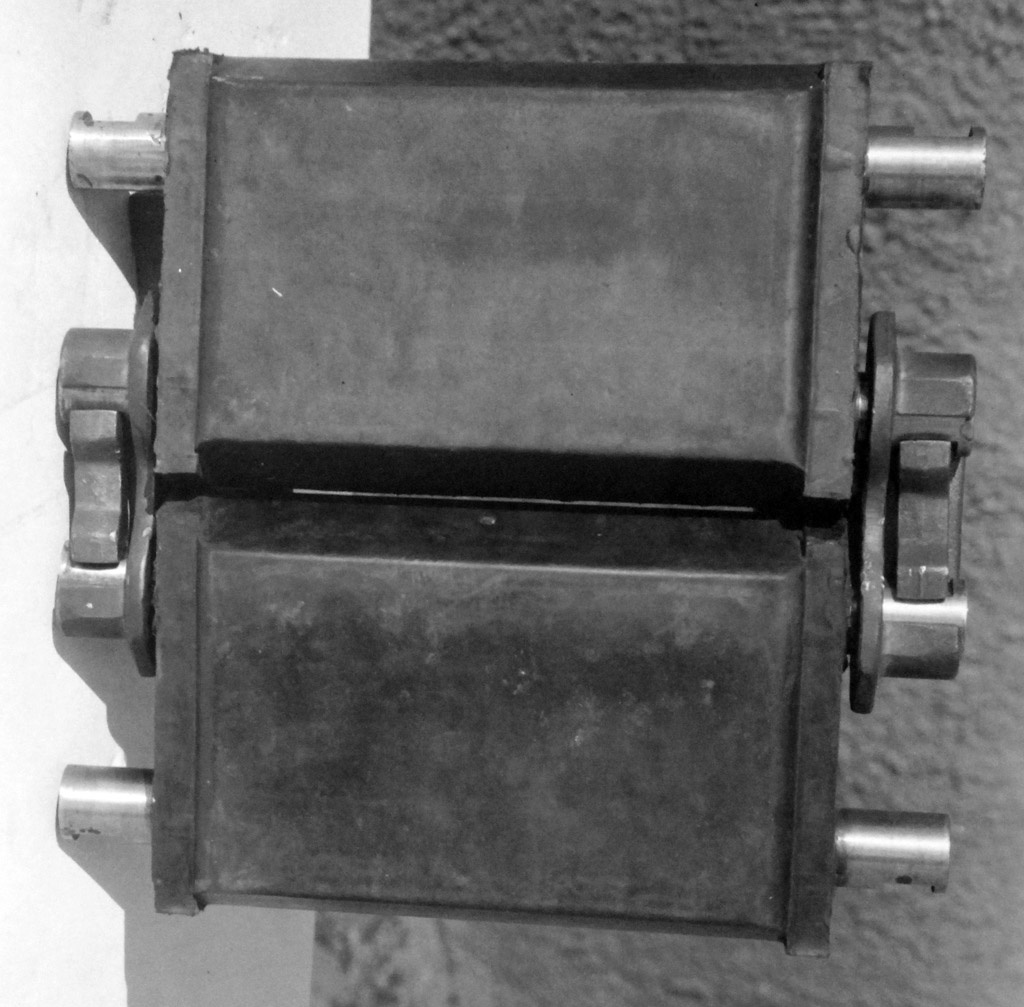
At the same time, a rubber-metal track appeared
It wasn’t just about the suspension. Harry Knox conceived the overall chassis layout, with the engine in the rear and the transmission in the front. The original concept was British, but the implementation was his own. This chassis was later transformed into the T5 medium tank, which became the production Medium Tank M2. Equally important was the fact that Knox developed a whole range of track links and track belts. The rubber-metal track with side connectors instead of the classic pins was also his idea. Thanks to this combination, American tanks were able to reach high speeds without damaging the idler rollers’ tires.
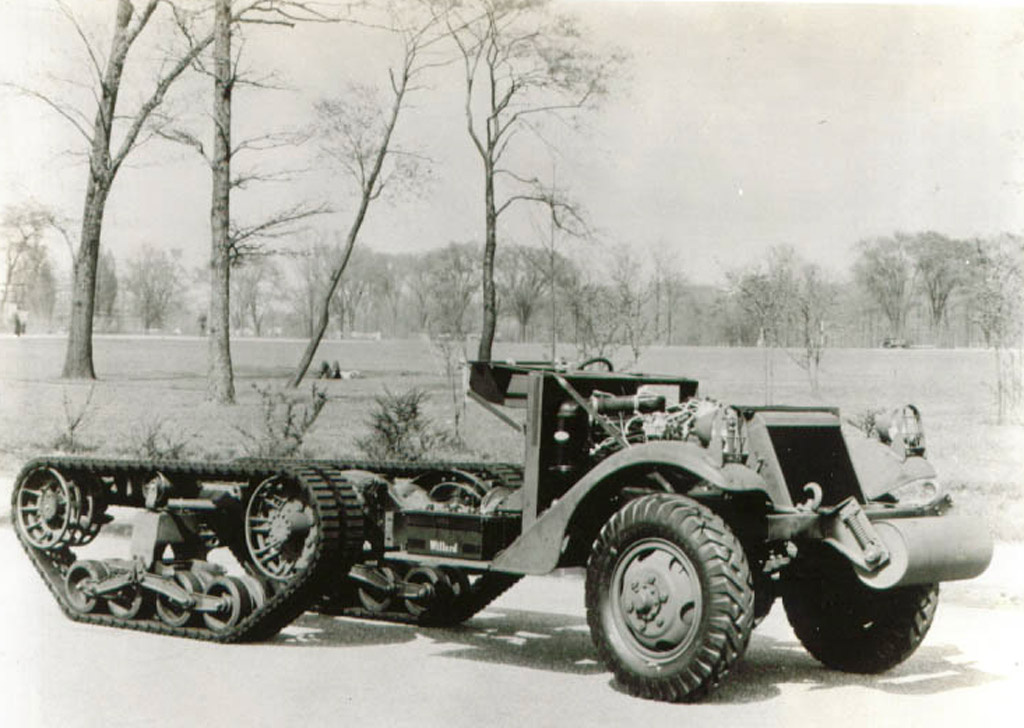
The famous half-track is also a Knox
Harry Knox wasn’t just about tanks. Like Heinrich Knipkamp, he also worked on semi-tracked tractors. It began with an adaptation of the Vickers Mk.E-type suspension, but gradually a proprietary, highly successful undercarriage was developed. The suspension was of the VVSS type, but with blocks of two twin rollers on each side, which ensured a very smooth ride. A rubber-fabric track belt was also introduced, which was more durable than Adolf Kegress’s. Further development led to the creation of the famous Half-tracks, which were produced in massive numbers—more than 50,000 units.
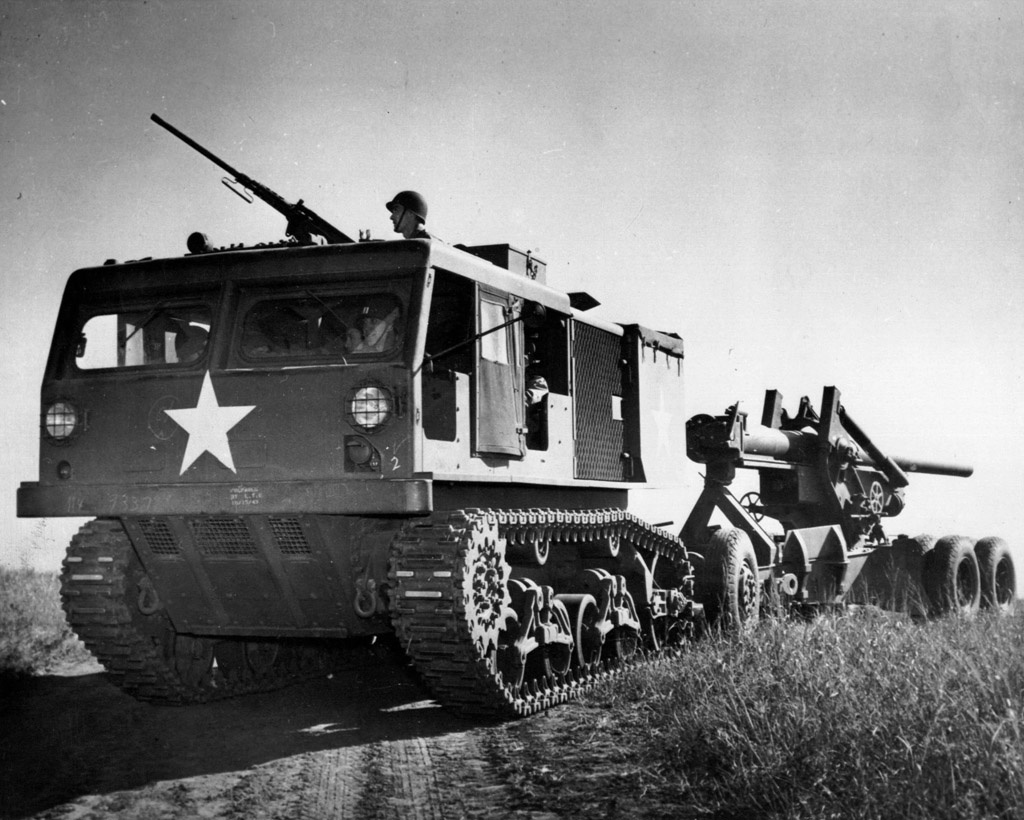
He also developed a suspension system for high-speed tractors
Starting in 1935, Harry Knox gained a de facto monopoly on tank chassis. No, this had nothing to do with any kind of lobbying: it just so happened that the designer, who was 60 years old at the time, had created the optimal design. Attempts to develop an alternative were made time and again, but the problem was that Knox’s design always turned out better. The rigid suspension had a large margin of durability, and the chassis concept had significant room for improvement. At the same time, Knox didn’t rest on his laurels; he continued to develop new suspension designs as well as tracks. The HVSS suspension is also his creation, as is the undercarriage of American high-speed tractors.
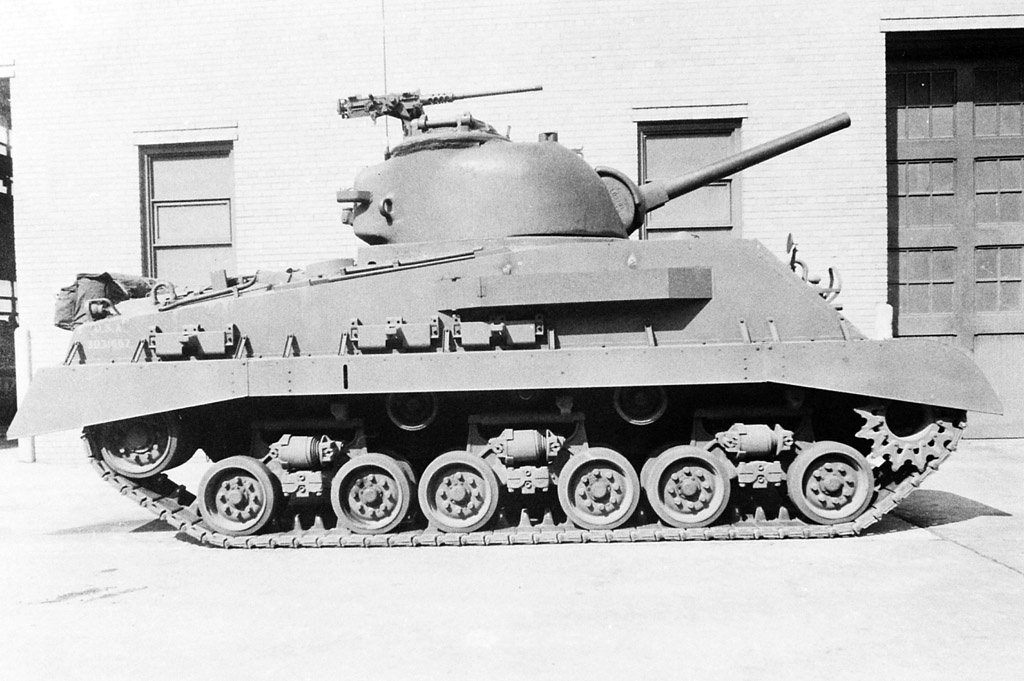
The HVSS suspension has given the M4 Medium Tank’s chassis a new lease on life
If we tally up the total number of tanks and self-propelled guns built on the Knox suspension, it becomes clear just how significant a figure this man is in the global tank industry. Even if you add up all the tanks and self-propelled guns that used the Christie suspension, they still fall significantly short of the number of combat vehicles that used the Knox suspension. At the same time, there is a significant difference between these two designers. Christie had only one tank go into production (a total of 7 units), and toward the end of his life, he was barely making ends meet. Knox, on the other hand, held an important position in the Ordnance Department, and he was directly involved in the development of virtually all tanks that used his suspension design. It’s just that, unlike Christie, Knox’s name didn’t make headlines in newspapers and magazines. He simply did his job.
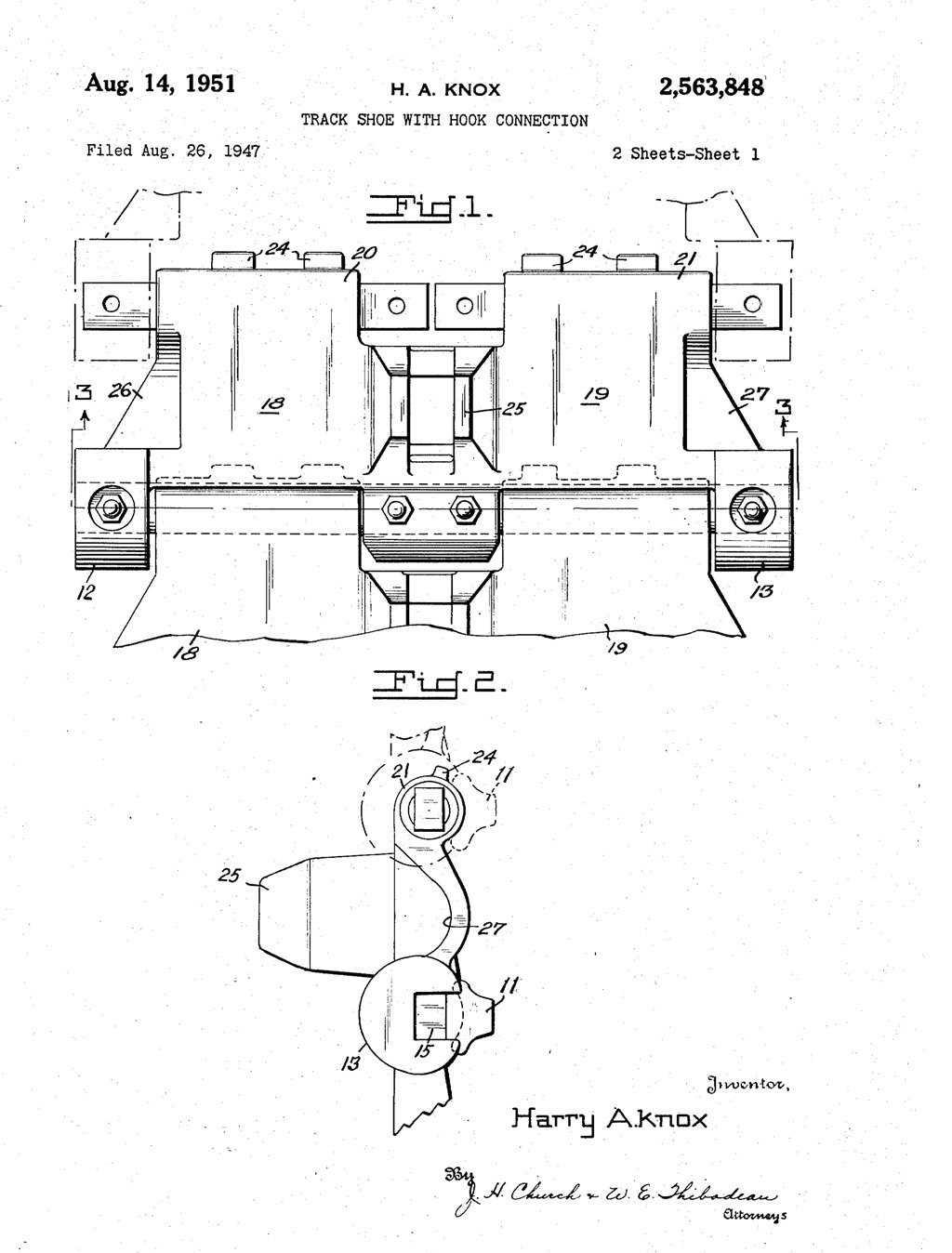
One of Harry Knox’s most recent patents
A replacement for the VVSS suspension did not appear until 1943, and even then, the torsion bar suspension promoted by Gladeon Barnes and Joseph Colby took quite a long time to perfect. Meanwhile, Lieutenant Colonel Harry Knox continued to work on new designs. Classic American postwar tracked vehicles, featuring rubber cushions and rubber treads, are also his creations. Knox retired when he was well into his 70s. He passed away on June 2, 1957. Unlike Christie, Harry Knox did not achieve worldwide fame. But Christie was left with a public relations campaign—largely unfulfilled—and spent the end of his life in near poverty. Knox, on the other hand, left behind a tremendous legacy; his contributions to American tank manufacturing cannot be overstated.
List of Sources:
-
-
- US NARA
- ЦАМО РФ
- РГВА
- Stuart History of the American Light Tank, Vol. 1, R.P. Hunnicutt, Presidio Press, 1992
- Knox Automobile Company (MA) (Images of America), Arcadia Publishing, 2000
-