The Donald Trump administration has released a draft defense budget for fiscal year 2027 — and not only does U.S. military spending rise to a record $1.5 trillion (nearly a third more than in 2026), but it also includes an unexpectedly large increase in a number of areas.
Let’s take a closer look at the budget:
AVIATION
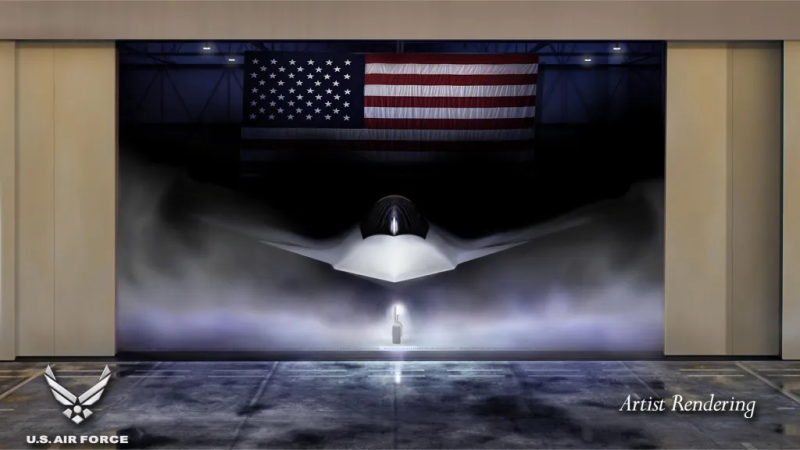
* The development and testing program for the new sixth-generation Boeing F-47 “Phoenix” fighter jet (working title) is projected to cost $5 billion—$1.5 billion more than in 2026. Construction of the fighter’s first prototype is currently underway, and the F-47’s maiden flight is expected in 2028.
* Only $0.14 billion is being requested for the development program of another sixth-generation fighter—the F/A-XX—for the U.S. Navy, which once again confirms the Pentagon’s lack of interest in this project. The military has already attempted to freeze the F/A-XX program, and it was saved only by direct intervention from Congress.
* Significant funding of $3.2 billion is earmarked for programs involving unmanned escort fighters (designed to operate in conjunction with and under the command of manned aircraft) known as Collaborative Combat Aircraft (CCA). Of this amount, approximately $1 billion will go directly toward the procurement and production of production models—primarily the YFQ-42A “Dark Merlin” from General Atomics and the YFQ-44A “Fury” from Anduril.
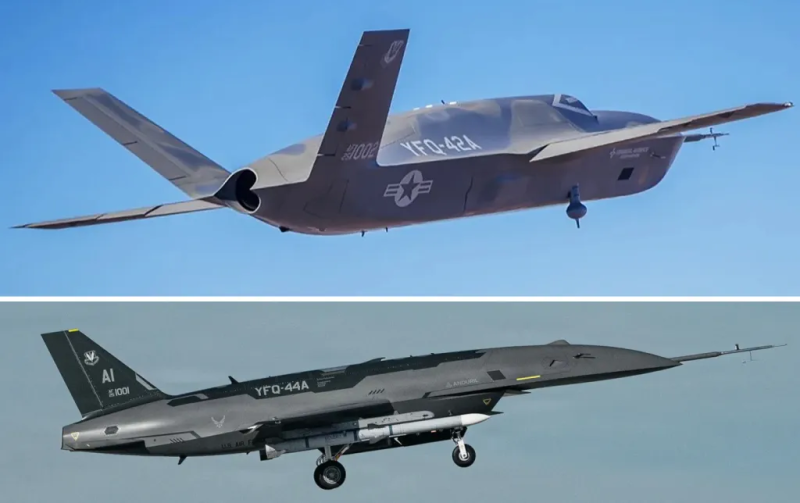
YFQ-42A «Dark Merlin» (top) and YFQ-44A «Fury» (bottom)
Another 1.4 billion is earmarked for the continued development of the aforementioned vehicles (as well as a number of other projects in the same category), and 0.8 billion is earmarked for further development and modernization—although the CCA vehicles are still undergoing testing, the military is evidently convinced of their potential and is planning their development in advance.
* Meanwhile, the production program for the B-21 “Raider” medium stealth bomber is facing a cut of nearly $4.2 billion. The specific reason for this is unknown, as the Pentagon does not disclose procurement figures for the B-21. This may be due to the procurement plan being “stretched out” over a longer period, or perhaps to some delays in the aircraft’s development.
* Funding for the LRS-B next-generation strategic bomber program remains virtually unchanged—$2.86 billion in 2027, compared with $2.7 billion in 2026.
* The cost of producing the F-35 “Lightning II” stealth fighter-bombers has risen sharply—plans call for ordering 85 aircraft, which represents nearly a twofold increase compared to 2026 (47 aircraft ordered). Of these, 38 are F-35A models for the USAF, 10 are F-35B models for the USMC, and 37 are F-35C models for the Navy.
* The procurement of F-15EX «Eagle II» fighter-bombers is ongoing—there are plans to acquire an additional 24 aircraft.
* The decision to halt funding for the development and procurement of the Boeing E-7 “Wedgetail” AEW&C aircraft (based on the Boeing 737 airframe) appears to be an unexpected move. These aircraft were intended to replace the aging fleet of E-3 “Sentry” fleet, but it appears that the Pentagon has lost enthusiasm for the idea of large, expensive (and highly vulnerable to an enemy possessing stealth aircraft and long-range anti-aircraft missiles) heavy AEW&C aircraft.
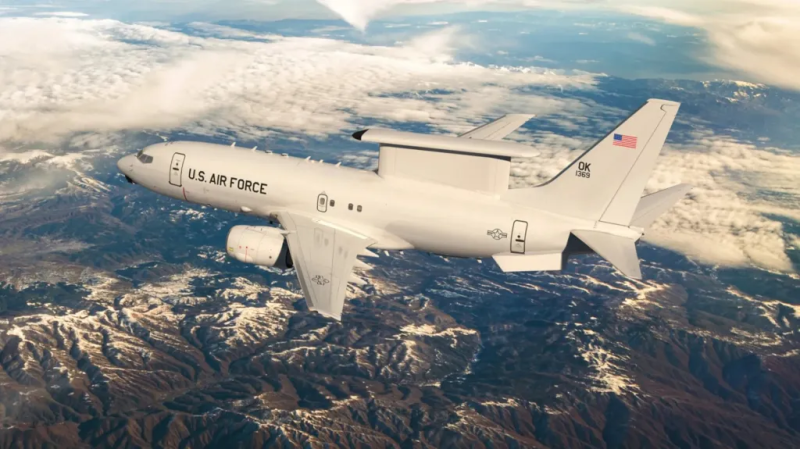
As an alternative to the E-7 “Wedgetail,” generals want to see a next-generation satellite-based radar detection constellation supported by more numerous and cheaper light AEW&C aircraft—similar to the Navy’s E-2D “Advanced Hawkeye.” According to the Pentagon, such a system would be significantly less vulnerable to enemy attack. However, Congress does not share the generals’ view and insists on continuing to fund the E-7 program.
* The NGAS (Next Generation Air-refueling System) stealth refueling aircraft program appears to be winding down—the USAF is requesting only $17 million in funding for fiscal year 2027.
* The U.S. Army is requesting $2.14 billion for the production and rapid deployment of Bell MV-75 tiltrotors (formerly known as the Bell V-280 “Valor”). Compared to 2026, this represents an increase of nearly one-third, indicating the U.S. Army’s significant focus on the new tiltrotor.
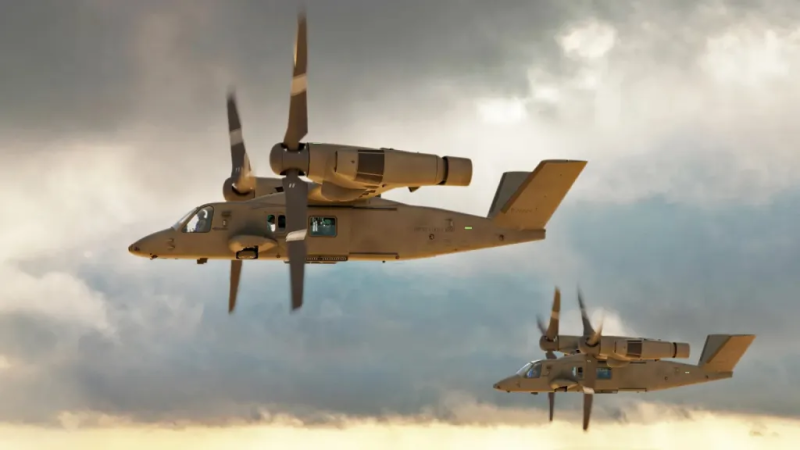
* However, the U.S. Army is drastically cutting funding for the procurement of combat helicopters—only $0.25 billion has been requested for the production of the AH-64 “Apache,” UH-60 “Black Hawk,” and CH-47 “Chinook.” In 2026, the Army requested nearly $1.8 billion for these purposes. This sharp decline in funding is attributed to the U.S. Army’s reevaluation of the role of helicopters in modern warfare—and its growing interest in combat drones.
AMMUNITION
* Orders for air defense and missile defense systems have increased significantly (SIGNIFICANTLY!). For example, in 2027, 857 (!) THAAD exoatmospheric anti-missile missiles are expected to be ordered (compared to 31 in 2026), along with 136 SM-3 exoatmospheric naval anti-missile missiles (compared to 12 in 2026), and 3,163 PATRIOT PAC-3 MSE surface-to-air missiles (compared to 357 in 2026). What is particularly interesting is that the Navy plans to order 406 PAC-3 MSE missiles; it has long been planning to integrate this ground-based interceptor onto combat ships.
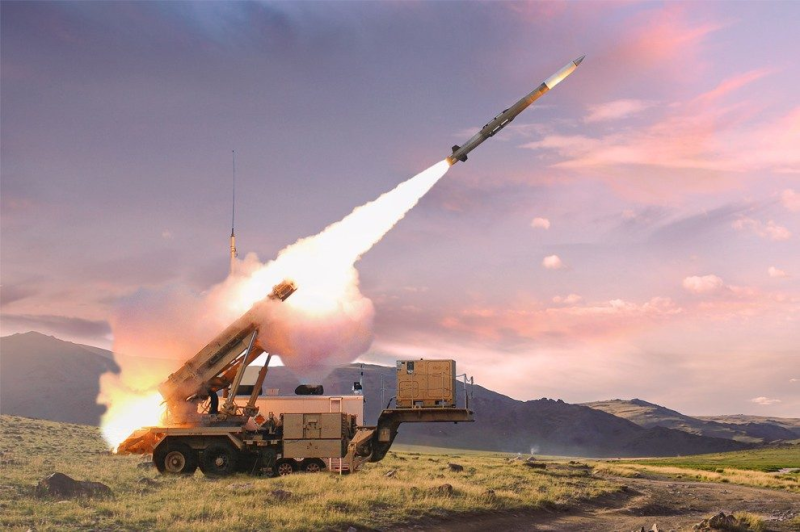
This massive order reflects, first, the U.S. military’s desire to replenish as quickly as possible the stockpiles of anti-aircraft missiles and anti-missile systems depleted during the U.S.-Iran War. Second, this order—spread out over several years—also represents a major investment in the production of essential munitions. Having significantly miscalculated their needs for anti-aircraft missiles and anti-missile systems, the U.S. military clearly does not want to make the same mistake again; it is therefore expanding production to meet projected consumption.
* Production of PrSM operational-tactical missiles (a more compact and accurate replacement for the aging ATACMS) is expected to increase nearly tenfold—from 108 to 1,134. It is important to note that this represents an increase in stockpiles, not a replacement of spent missiles. According to available information, the U.S. Army was very impressed with the effectiveness of the PrSM when fired from mobile HIMARS launchers during the Iran War and wants to have as many of them in service as possible.
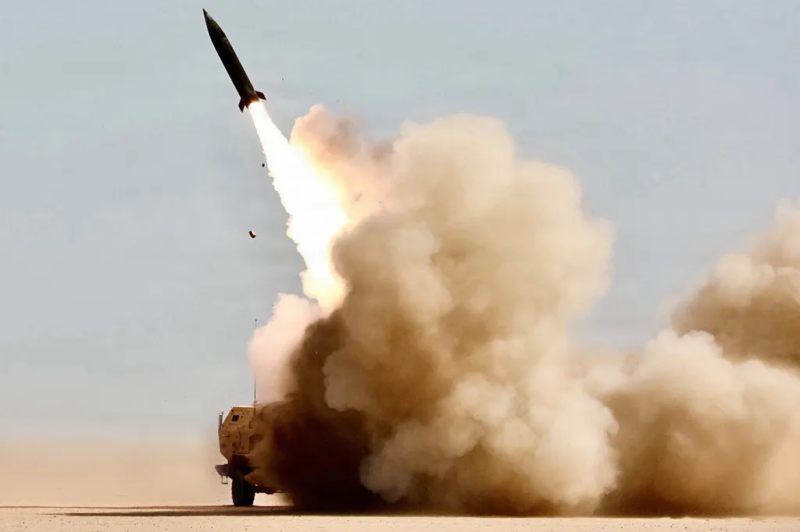
* The budget also calls for a significant increase in the order for BGM-109 “Tomahawk” sea-launched cruise missiles (from 55 to 785) and AGM-158 JASSM air-launched cruise missiles (from 381 to 821). Both of these types of missiles were actively used in the Iran War, which created the risk of a dangerous depletion of stockpiles.
* The USAF and USN are jointly requesting nearly $3 billion for the new-generation AIM-260 JATM air-to-air missile—more than a threefold increase compared to 2026. Such a sharp jump in spending indicates that the missile is nearing mass production.
* The USAF also requested $0.4 billion to procure HACS hypersonic cruise missiles, and (unexpectedly) $0.4 billion for the production of AGM-183A Air-Launched Rapid Response Weapons (ARRW) hypersonic missiles, which, until recently, were slated for cancellation following a series of failed tests. The Navy, in turn, has ordered 12 Intermediate-Range Conventional Prompt Strike (IRCPS) hypersonic strategic missiles to arm Zumwalt-class destroyers.
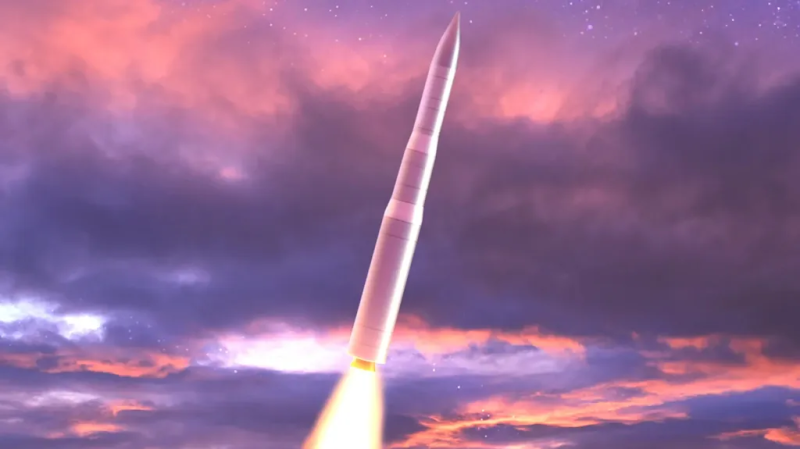
* Funding for the long-troubled LGM-35A “Sentinel” next-generation ground-based ICBM program has been cut by $0.3 billion due to further delays in production and deployment plans.
SHIPS
* The Navy is requesting a record $65.8 billion to build 18 combat ships and 16 support vessels. This amount is viewed not only as a shipbuilding budget, but also as a large-scale investment in the modernization and expansion of shipyards—as well as the involvement of shipyards that have not previously engaged in military shipbuilding.
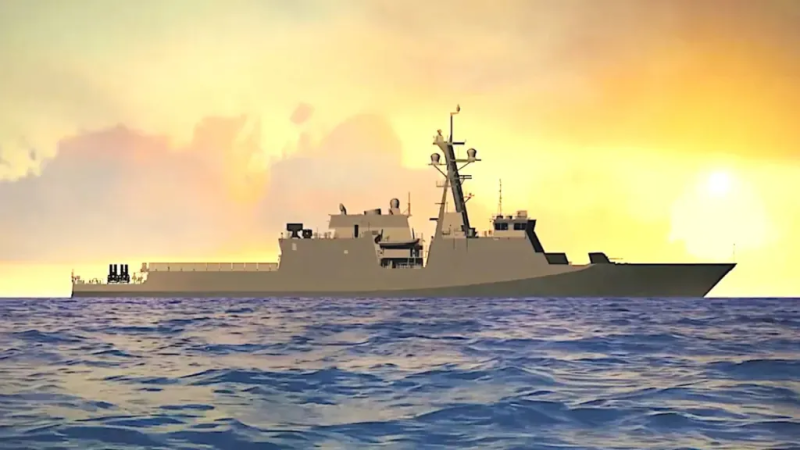
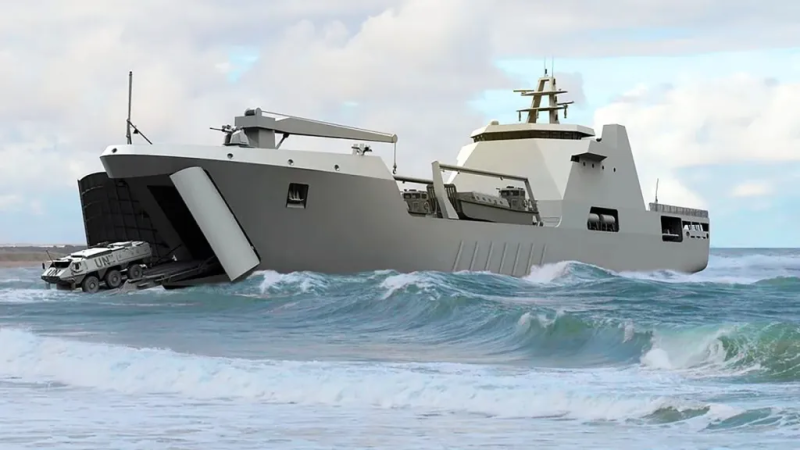
* The 2027 budget calls for the procurement of one Arleigh Burke-class destroyer, one next-generation FF(X) frigate, two Virginia-class multipurpose submarines, and one Columbia-class strategic missile submarine. The order for amphibious forces includes one “America”-class amphibious assault ship, one “San Antonio”-class amphibious dock ship, and six new Medium Landing Ships (MLS).
* The order for support vessels includes two AS(X)-class submarine tenders, an “Explorer”-class research/oceanographic vessel, five fireboats, and an unspecified “special operations vessel” (likely a prototype drone carrier).
* The budget also allocates $1 billion for the construction of the first “Trump”-class BBG(X) guided-missile battleship.
SPACE
* The U.S. Space Force (USSF) emerged as the clear winner in the budget debates, securing an increase in its funding that nearly doubled—from $40 billion to $71.2 billion.
* The 2027 budget allocates $17.5 billion for the “Golden Dome” missile defense program — specifically, the development, testing, and procurement of prototypes of orbital interceptor missiles and satellite-based guidance and targeting platforms from various companies.

* More than $7 billion has been allocated to the Space-Based Air Moving Target Indicator (AMTI)—a new generation of satellites designed to detect, track, and provide target designation for airborne targets in the atmosphere (aircraft, drones, and cruise missiles). The USAF views this program as the replacement for previous air-target detection systems based on heavy AEW&C aircraft.
* Approximately $1 billion has been allocated to develop the capabilities of the Ground Moving Target Indicator (GMTI)—real-time detection and targeting of moving ground targets.
* The budget also requests, for the first time, $1.56 billion for the development of low-Earth-orbit military satellite communications systems (“Starshield” and similar systems).