An article by Yuri Pasholok from the WARSPOT website, dated July 20, 2016.
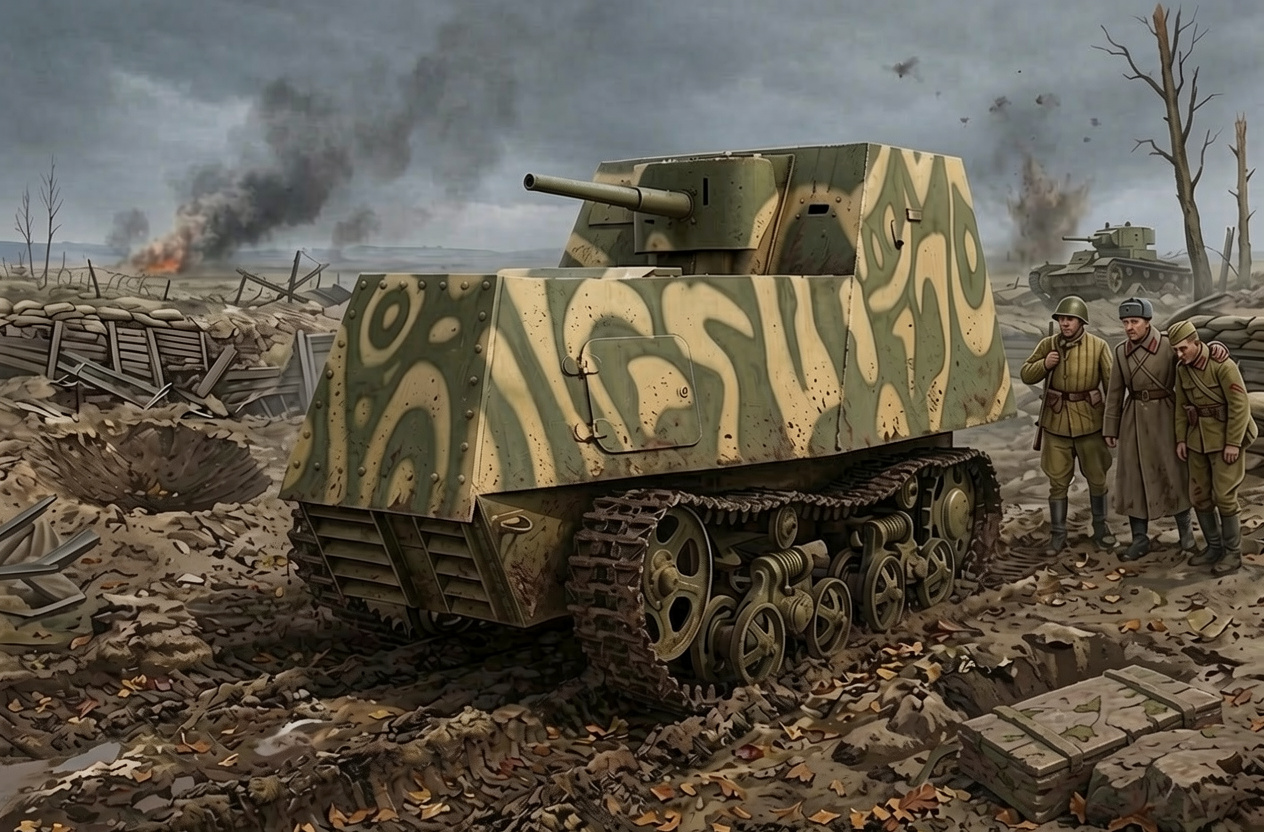
Improvised armored vehicles first appeared during World War I, but they were used on a truly large scale during the Spanish Civil War. The main focus of military engineering innovation there was the production of improvised armored cars. However, armored tractors also gained some popularity. Less mobile than wheeled armored vehicles, they proved to be of limited use under Spanish conditions. A new surge in the production of improvised armored vehicles occurred during World War II. The largest number of armored tractors was produced in the USSR; one of them, the KhTZ-16, was even adopted for military service and manufactured on an industrial scale. Today, July 20, marks the 75th anniversary of this vehicle.
Everything for the front. Anything at all
During the first three weeks of Operation Barbarossa, German forces dealt a crushing blow to the Red Army, causing it to lose more than half of its tanks in a short period of time. Most of the lost tanks were already considered obsolete, and replacements were already being built. But among the losses were also brand-new T-34s and KV tanks. Almost immediately after the start of the Great Patriotic War, production targets for new tanks were revised to include a sharp increase. The problem was that while such plans looked good on paper, in practice, a sharp increase in production was hampered by serious difficulties. The situation with light tanks proved particularly dire. According to prewar plans, the T-50 was supposed to be the main light tank. But production of this vehicle had only just begun, and the situation with its engines was far from rosy.
The power unit for the T-50 was manufactured at Plant No. 75 in Kharkiv. Plant No. 183 was also located there; at that time, it was the main manufacturer of the T-34 medium tank. Nearby was the Kharkiv Tractor Plant (KhTZ), the main manufacturer of light agricultural tractors. Starting in 1937, the plant produced the SKHTZ-NATI light tractor, developed in 1935 by a team at the Scientific Auto-Tractor Institute (NATI). This tractor was also used as an artillery tractor. However, it was not particularly well-suited for that role. Building on the experience gained with the SKHTZ-NATI, Soviet designers created a specialized transport tractor in 1935, which went into mass production as the STZ-5.
Although KhTZ’s profile was similar to that of tank-building plants, its production facility was not listed as a base for tank production in the 1941 plans. Nor was it designated as such at the start of the war, since even the production of the light T-50 required significant restructuring of production facilities. Furthermore, as mentioned above, problems with the power plant severely limited the capacity to produce this tank. Then, on July 13, 1941, GKO Resolution No. 124 was issued, according to which equipment from the new workshop under construction at KhTZ was sent to Stalingrad for installation at the Stalingrad Tractor Plant (STZ).
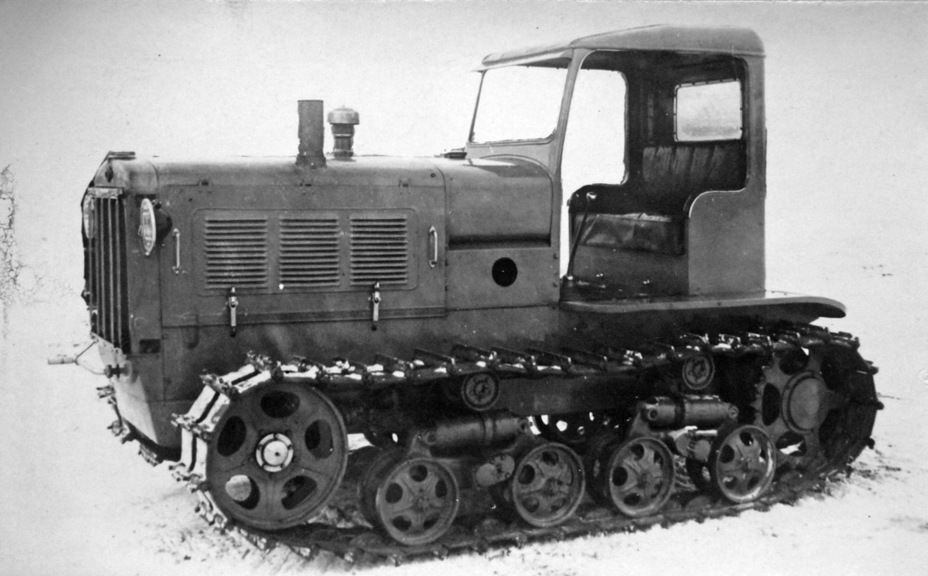
The SHTZ-NATI tractor, which served as the basis for the HTZ-16 armored tractor
Meanwhile, the teams at KhTZ and NATI found a way to help their country at this critical moment. History does not reveal whether this was an initiative by NATI/KhTZ employees or an idea that originated with the military. Most likely, however, it was a proposal from the factory workers.
In early July 1941, a project was launched at NATU that revived ideas from the early 1930s. At that time, a family of armored tracked vehicles—including self-propelled artillery pieces—had been developed based on tractor designs. They followed roughly the same path now as well. The work at NATi was led by engineers V. Ya. Slonimsky, who had previously headed the development of the SHTZ-NATi, and E. G. Popov, who later created the NATi D (Ya-11) tractor. A. M. Cherepin and A. V. Sapozhnikov also participated in the work. The latter had previously served as a test driver for tractors.
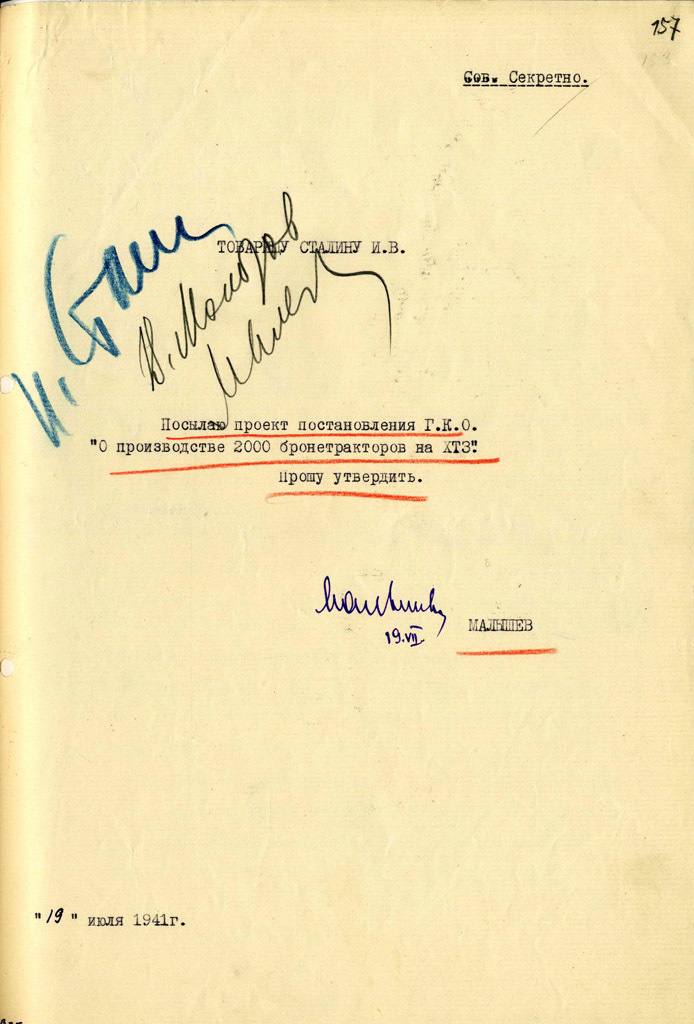
A memo accompanying State Committee for Defense (GKO) Resolution No. 219/ss. It bears the signatures of Stalin, Molotov, and Malenkov.
By the middle of the month, the technical design for an armored tractor based on the SHTZ-NATI had been prepared and sent to V. A. Malyshev, the People’s Commissar of Medium Machine Building, for review. Overall, the armored tractor proposed by NATI was approved, and on July 19, Malyshev sent Stalin a draft GKO resolution on the production of two thousand such combat vehicles. There is information regarding State Defense Committee Resolution No. 019 “On the Shielding of Light Tanks and the Armoring of Tractors.” According to this resolution, the production of the tractors was to be entrusted to KhTZ and STZ. In reality, however, this information is inaccurate.
To begin with, the GKO resolution signed on July 20, 1941, was numbered 219/ss (top secret) and was titled “On the Organization of Production of 2,000 Armored Tractors.” However, the resolution did not even mention the STZ; the armored tractors were to be produced exclusively in Kharkiv. According to the deadlines specified in the resolution, the first 50 vehicles were expected as early as August, 850 in September, and 1,100 in October. Furthermore, as mentioned above, the document dealt not with the development of the tractor, but with its introduction into production.
The claim that the selection was made from among four tractor prototypes—and that this allegedly took place in August—is also untrue. GKO Resolution No. 219/ss clearly specifies not only the base (SKhTZ-NATI) but also the tactical and technical characteristics of the armored tractor. The vehicle’s armament consisted of a 45-mm cannon paired with a DT machine gun; frontal armor was 30 mm thick, and side armor was 13.5 mm thick. The tractor was designed to reach speeds of 18–20 km/h on roads and up to 10 km/h on virgin soil.
A Month Without Armor
The designation “HTZ-16” first appeared in correspondence in early August 1941. By that time, NATU staff and the HTZ team had already begun working together to bring the armored tractor into mass production. On the HTZ side, work on the HTZ-16 was led by Chief Designer M. S. Sidelnikov. It was expected that two prototypes of the armored tractor would be ready by August 12; in reality, however, only one vehicle had been completed by that time. Due to a shortage of 13-mm-thick armor plates, the prototype’s hull had 10-mm-thick side panels, and the remaining plates were not made of armor at all, but of boiler plate.
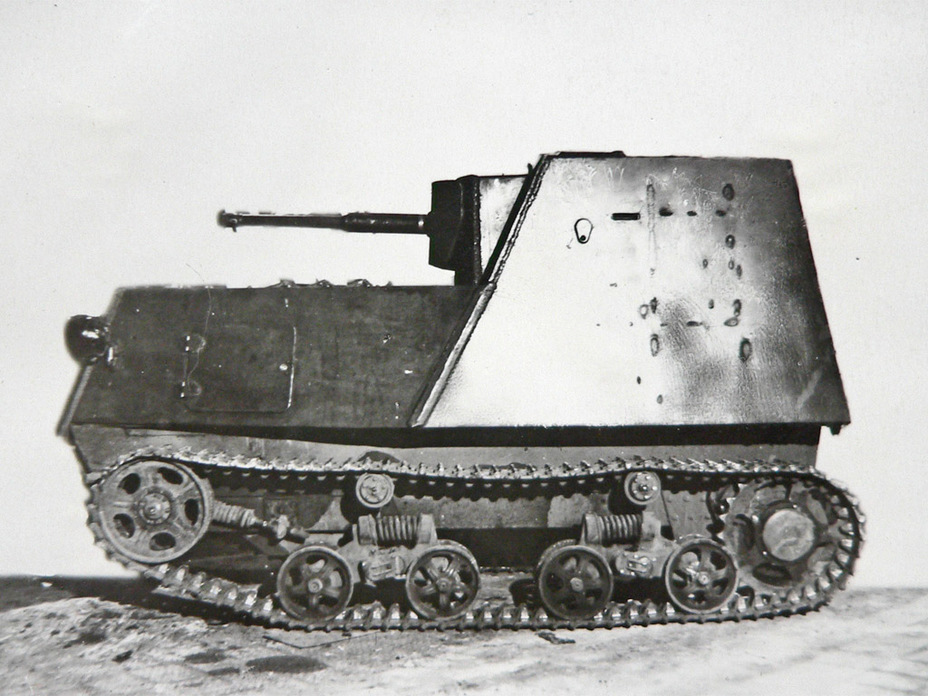
XTZ-16 Prototype, August 1941
By the time the prototype entered testing, work was in full swing at KhTZ on the production of chassis for armored tractors. It is often stated in the literature that the STZ-3 tractor served as the base for the KhTZ-16, but this is not true. The vehicle’s technical specifications clearly state that the SHTZ-NATI, an agricultural tractor, served as its base. However, in order to use it as the base for the HTZ-16, modifications had to be made to 27 groups of components. This is not surprising, since the SHTZ-NATI, with its “long-nosed” layout and limited space suitable for use as a fighting compartment, was unsuitable in its original form as a base for an armored tractor. It required reconfiguration, as well as the replacement of certain components.
To begin with, the power of the 1-MA tractor engine was increased from 52 to 58 horsepower. That’s not much, but given that the combat weight had increased from 5.1 to 8.6 metric tons, every extra horsepower certainly came in handy. Due to the increased weight and engine tuning, the transmission was redesigned. The frame was lengthened, with the track carriages arranged similarly to those on the STZ-5 transport tractor, and the idler wheels were moved forward. The designers also borrowed the track belts from the STZ-5, as they were better suited for a combat vehicle. The fuel tank was shifted to the left, freeing up space to move the driver’s seat forward and to the right. This made it possible to carve out enough space for the fighting compartment, which accommodated two additional crew members.
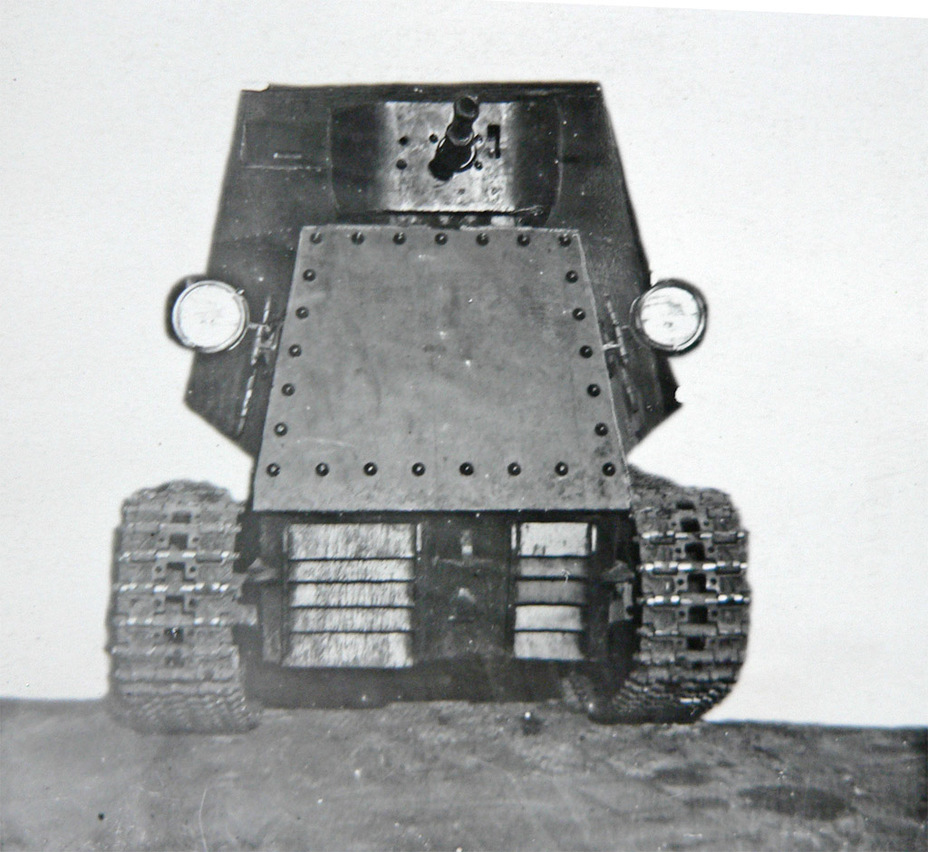
The front panel in front of the engine compartment was bolted on to facilitate maintenance
An armored hull was mounted on the modified chassis; when designing it, the engineers sought to give the armor optimal angles of inclination. They succeeded only partially, since the SHTZ-NATI itself was relatively small in size (length without the crank handle: 3,451 mm). The KhTZ-16 turned out to be not much larger than its predecessor—3,830 mm long, 1,870 mm wide, and 2,300 mm high. The 30-mm-thick frontal armor plate at the front (in front of the engine) had a 20-degree angle of inclination; in the fighting compartment, this angle was increased to 25 degrees. Thus, the armored tractor’s front was protected against large-caliber machine guns and 20-mm automatic cannons. However, this protection was insufficient against anti-tank guns. However, Soviet light tanks, with the exception of the T-50, had even thinner armor.
Despite its tractor-based design, the KhTZ-16 cannot be called an archaic design. As far as possible, the issue of visibility was addressed; the hull was welded together, and the design of the hatches was handled quite competently. The 45-mm gun mounted in the front of the turret, paired with a DT machine gun, fully met the armament standards for Soviet light tanks. The problem was that by 1941, this gun was already obsolete.
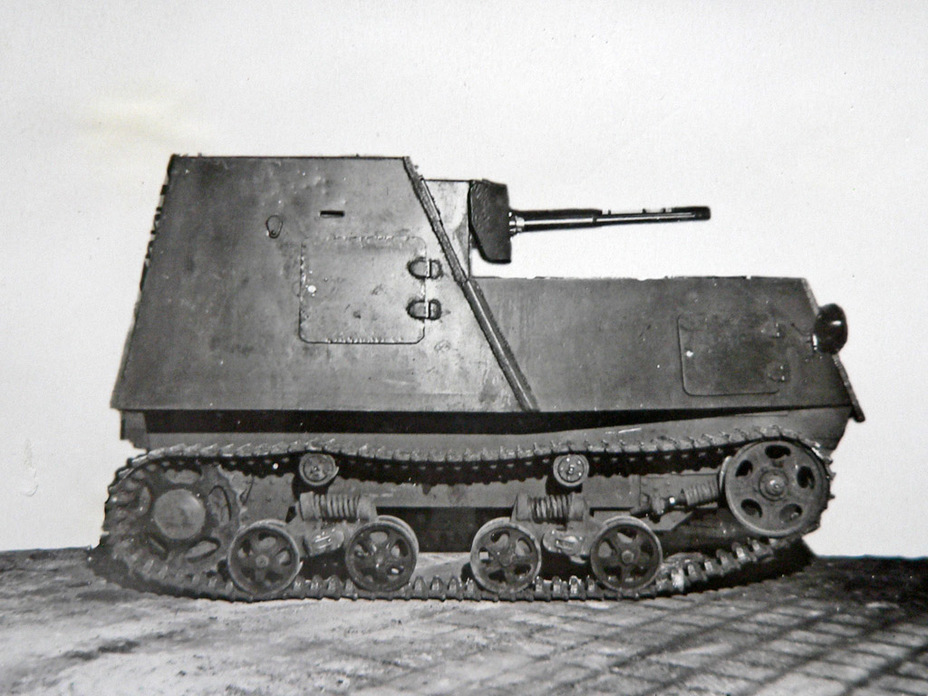
A large hatch was cut into the side of the vehicle near the driver’s seat
The uniqueness of the HTZ-16 lies not only in the fact that it is arguably the most mass-produced armored tractor in history. This vehicle underwent a comprehensive testing program, including both road and live-fire tests. According to the original plan, the tractor was supposed to cover 500 kilometers. In the end, the prototype HTZ-16 covered 470 kilometers, including 240 km on a cobblestone highway, 69 km on a graded dirt road, 139 km on a country road, and 22 km under other road conditions. For a makeshift vehicle, that is a great distance. On the highway, the armored tractor’s average speed reached 17 km/h, and its range was estimated at 119 km. Across open terrain, the average speed was 8.9 km/h, with a range of 61 kilometers.
During testing, the engine overheated—which, incidentally, drew air from the passenger compartment. Given the increased weight, the overheating is hardly surprising, especially since the tests were conducted at an air temperature of nearly 30 degrees. During off-road testing, the tractor was able to climb a 25-degree incline, which is quite good for an improvised combat vehicle. The maximum permissible roll angle was 24 degrees. The tractor crossed a 1.3-meter-deep trench and a 55-cm-high vertical wall, as well as a 0.6-meter-deep ford. At steep angles of ascent, the engine stalled; this problem was resolved by adding fuel. Breakages of the track belts were also observed.
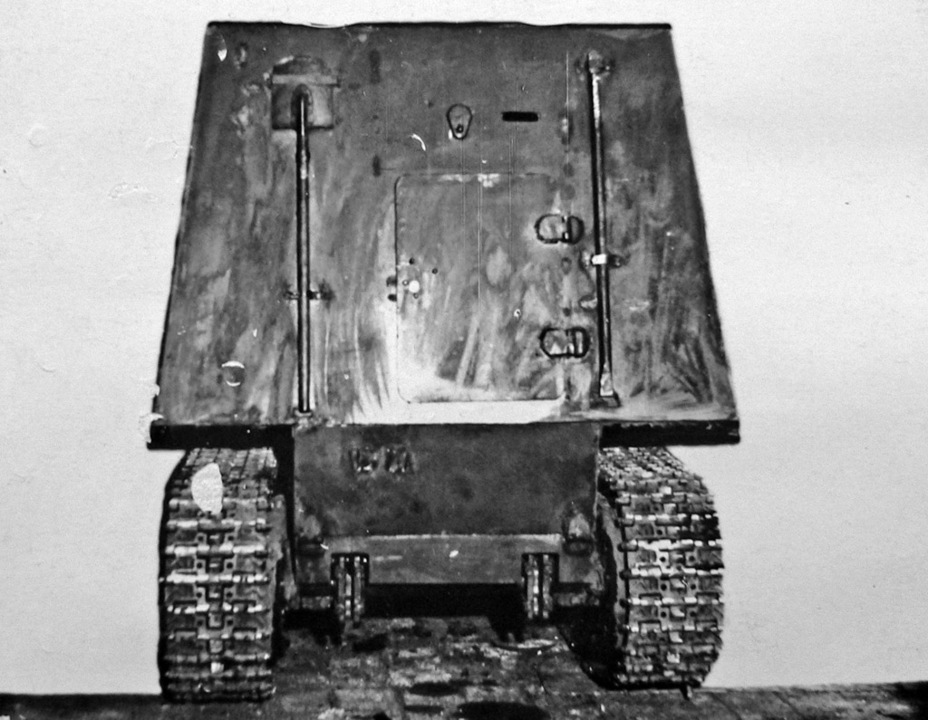
Access to the combat compartment was through a large aft hatch
The scope of the firing tests was also quite substantial. A total of 247 rounds were fired, 147 of which were armor-piercing shells. The group size was slightly below the specified standard. This was partly attributed to play in the gun mount’s aiming mechanism. The average rate of fire reached 5 rounds per minute. This, too, was partly due to the play. The gun’s armor also drew criticism, as it allowed bullets and shrapnel to penetrate the interior.
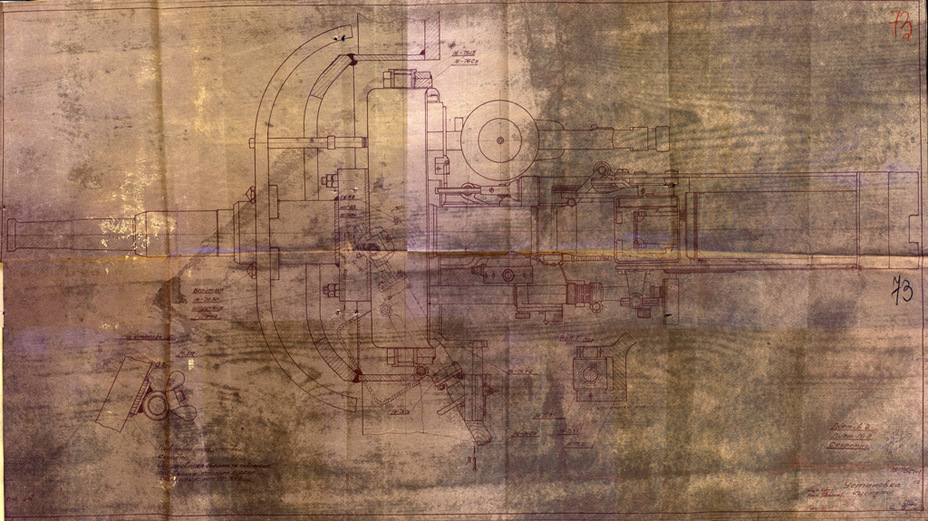
Installation of a 45-mm cannon and a DT in the HTZ-16
Overall, the military did not like the armored tractor, which is not surprising. A dissenting opinion called for the production of full-fledged tanks to be established as soon as possible. Moreover, on July 20, 1941, State Defense Committee Decree No. 222 was issued, pursuant to which Kharkiv Tractor Plant (KhTZ) was tasked with producing the T-60. Incidentally, the armored tractor borrowed some parts from this very T-60, including observation devices. It’s another matter entirely that, as they say in Odessa, “desire and capability are two very different things.”
As of August 18, the documentation for the T-60 was still undergoing acceptance testing at the plant, but by that time there were as many as 329 HTZ-16 chassis in various stages of completion! True, they did not yet have tracks or electrical equipment. As of August 30, there were already 1,037 chassis, but the situation with them was becoming critical. The problem was that these chassis had not been supplied with armored hulls. The Voroshilovgrad and Novo-Kramatorsk plants served as subcontractors for the armored hulls for both the T-60 and the HTZ-16. As of the end of August, neither of these plants had delivered a single armored hull, citing problems with heat treatment as the reason for the delay.
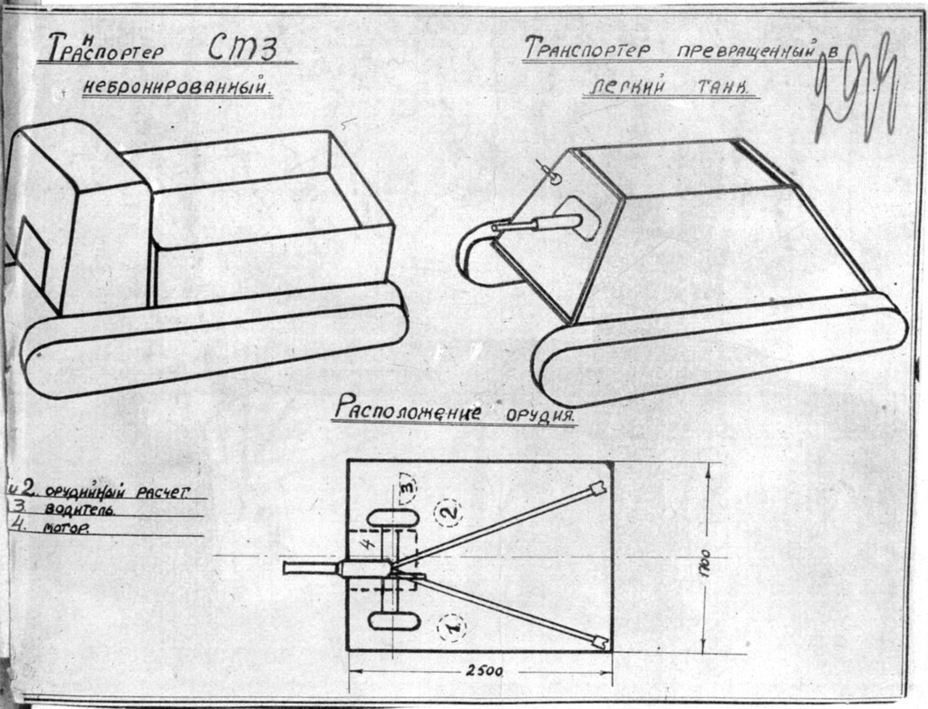
A project to convert the STZ-5 into an armored tractor. The idea proposed by engineers Krasilshchikov and Nemchinsky of Plant No. 264 was not supported
The situation turned out to be so critical that the first 33 vehicles had to be built with non-armored steel hulls. As of September 14, 1941, 36 KhTZ-16s had been delivered. By that time, 1,528 chassis had already accumulated on the KhTZ premises, of which 717 were without tracks, 1,334 were without fuel tanks, and 1,304 were without electrical equipment.
The first HTZ-16s, which came to be referred to as T-16s in GABTU correspondence, began rolling off the factory line on September 7. The vehicles had serial numbers beginning with the digit 16 (16–001, and so on). Since the serial number was tied to the chassis, other vehicles had numbers such as 16–1672. The actual production total was 142 armored tractors. As early as September 16, GKO Resolution No. 681 was signed, according to which the Kharkiv Tractor Plant (KhTZ) was to be evacuated to Stalingrad. Production of the KhTZ-16 continued after that date, but the goal of producing 2,000 armored tractors was no longer on the table.
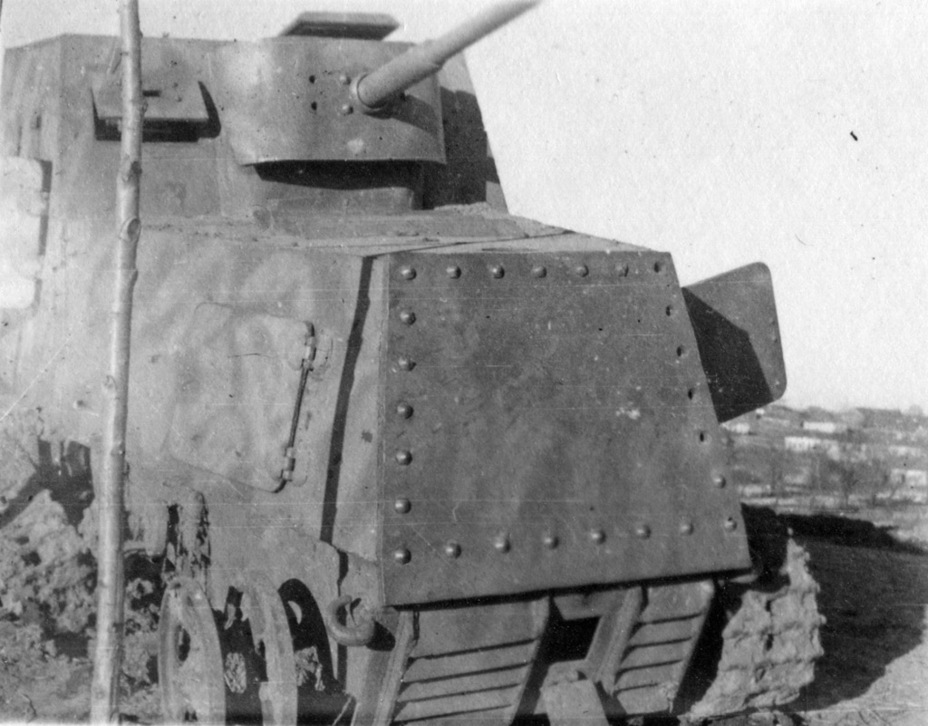
A damaged HTZ-16. It is clearly visible that the armored tractor was painted in camouflage colors.
It is also worth clarifying the issue of the alleged production of the KhTZ-16 in Stalingrad. To begin with, the KhTZ in Stalingrad was not able to evacuate completely. Part of the tractor production ended up in Rubtsovsk, in the Altai Krai. As for tank production, it was not located at the STZ but at another Stalingrad plant, No. 264. Documents on the movement of armaments mention 45-mm guns, as well as correspondence regarding what to do with them. Factory No. 264, however, had no interest in armored tractors. In addition to the order for T-34 armor production, this plant was also tasked with producing the T-60.
However, in mid-August 1941, engineers Krasilshchikov and Nemchinsky from Plant No. 264 wrote a letter to Stalin and to I. I. Nosenko, the People’s Commissar for the Shipbuilding Industry. They proposed launching the production of armored tractors on the plant’s premises, using STZ-5 tractors as the base vehicle. The response was negative.
The Short Life of the Armored Tractor
According to available documents, the HTZ-16s, which had hulls made of non-armored steel, were sent to training units. Incidentally, these vehicles were not sent only to Kharkiv: one armored tractor was sent to each of the tank schools in Ulyanovsk, Armavir, and Stalingrad. The first unit to receive combat vehicles with armored steel hulls was the 12th Tank Brigade, which received fourteen HTZ-16s. Eight armored tractors went to the 14th Tank Brigade, one to the 13th Tank Brigade, and five to the 7th Tank Brigade. The 133rd Tank Brigade received the largest number of HTZ-16s—36 vehicles. The 47th Tank Division and the 23rd Reserve Regiment each received eight vehicles. Incidentally, the mere fact that the vehicles were shipped does not mean they actually reached their intended recipients. For example, formally, the 35th Tank Brigade was also supposed to receive eight HTZ-16s, but in reality, they never arrived there.
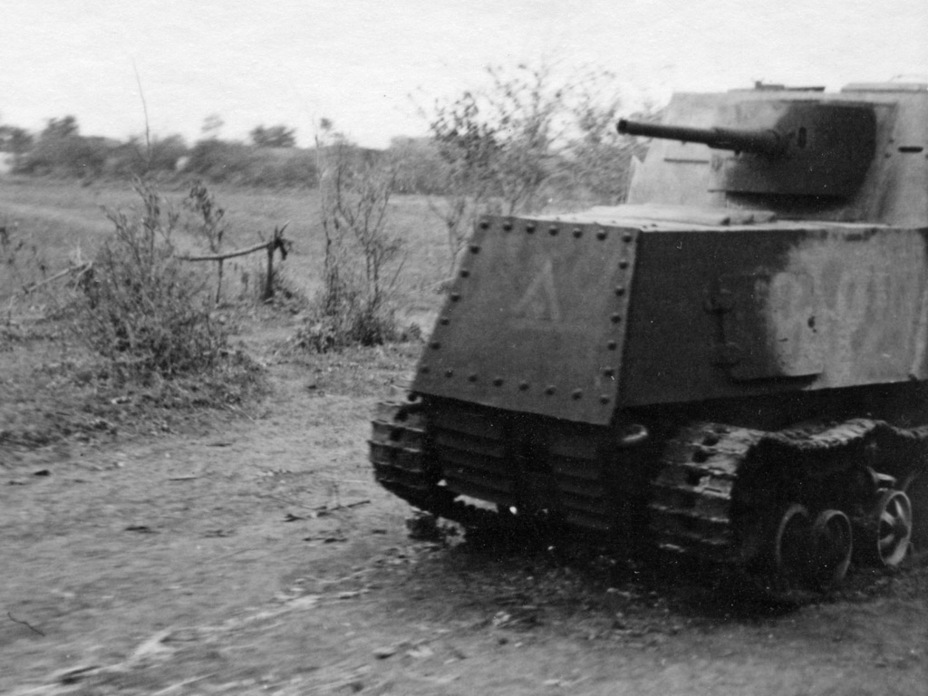
A damaged and partially burned-out HTZ-16. This vehicle had not only camouflage but also an emblem.
For obvious reasons, Kharkiv and its environs became the site of the KhTZ-16’s combat debut. On September 22, the 12th Tank Brigade was tasked with capturing Krasnograd (Kharkiv Oblast). According to operational reports, the armored tractors made their combat debut in battles against Italian forces. For several days, the 12th Tank Brigade fought for Krasnograd, with fierce street battles taking place in the city. Starting on September 27, Soviet units were forced to switch to a defensive posture; the brigade suffered heavy losses in tanks and personnel. The KhTZ-16s also participated in the defense of Kharkiv. On October 24, 1941, one such armored tractor supported the militiamen fighting in the square near the Central Department Store (TsUM). In that battle, the KhTZ-16 was destroyed, and its crew perished in the fire.
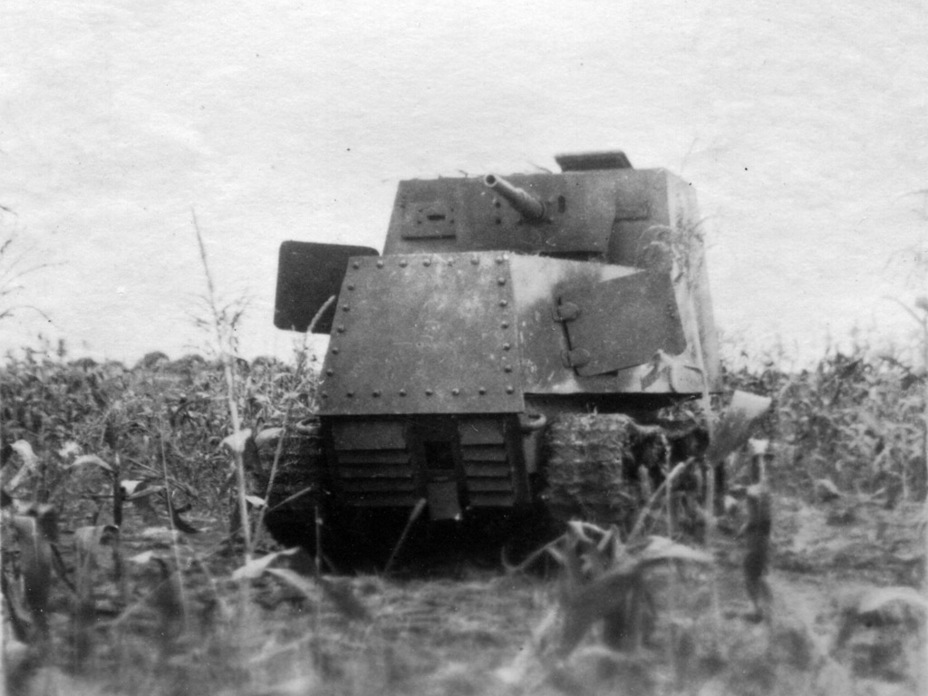
This KhTZ-16 survived 1941 but was destroyed in the spring of 1942
Most of the KhTZ-16s were destroyed in the fall of 1941. However, a small number of armored tractors survived the battles of 1941. A few vehicles were used in the battles for Kharkiv in May 1942. This was their last combat deployment, at least as combat vehicles. The question of the HTZ-16’s use in the battles of 1941–42 requires in-depth study, which is complicated by the fact that very few documents from that period have survived.
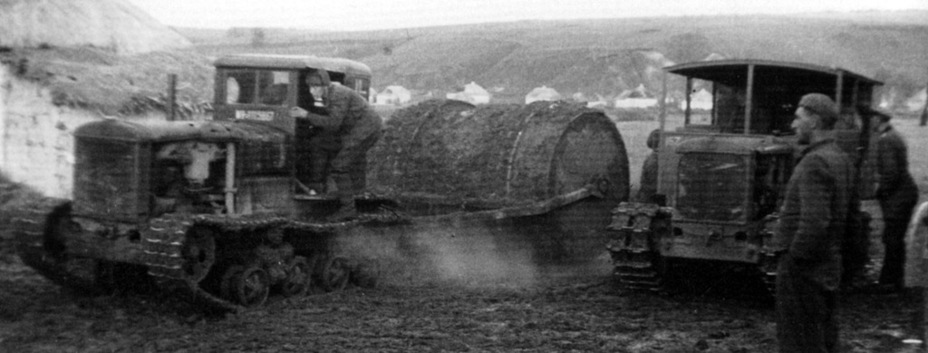
The photo shows two types of tractors that the Germans began manufacturing in Kharkiv. The difference lies not only in the cabs but also in the tracks.
It is too early to draw a final conclusion about the history of the KhTZ-16. As previously mentioned, by mid-September 1941, more than 1,500 armored tractor chassis in various stages of completion had accumulated at the KhTZ plant. Not all of them could be evacuated: documents mention 809 chassis left at the plant. Of course, there was no question of producing armored tractors: not only did the Germans simply have no use for them, but there were also no armored hulls available for them. On the other hand, the Germans were quite interested in producing conventional tracked tractors, since in muddy conditions only tanks and half-track tractors could operate normally among their vehicles. Work began on converting the chassis of the armored tractors into ordinary tractors.
Their appearance turned out to be extremely varied. Some machines were modified based on the SKHTZ-NATI model, with cabs installed just like on the base tractor, but there were also some even more bizarre designs. There weren’t enough STZ-5 tracks for all the vehicles, so some of the tractors were equipped with SKHTZ-NATI tracks. Some of the tractors were fitted with homemade cabs to house the crew. Most of the “reverse-converted” units became artillery tractors, which were used to transport anti-tank guns, among other things.
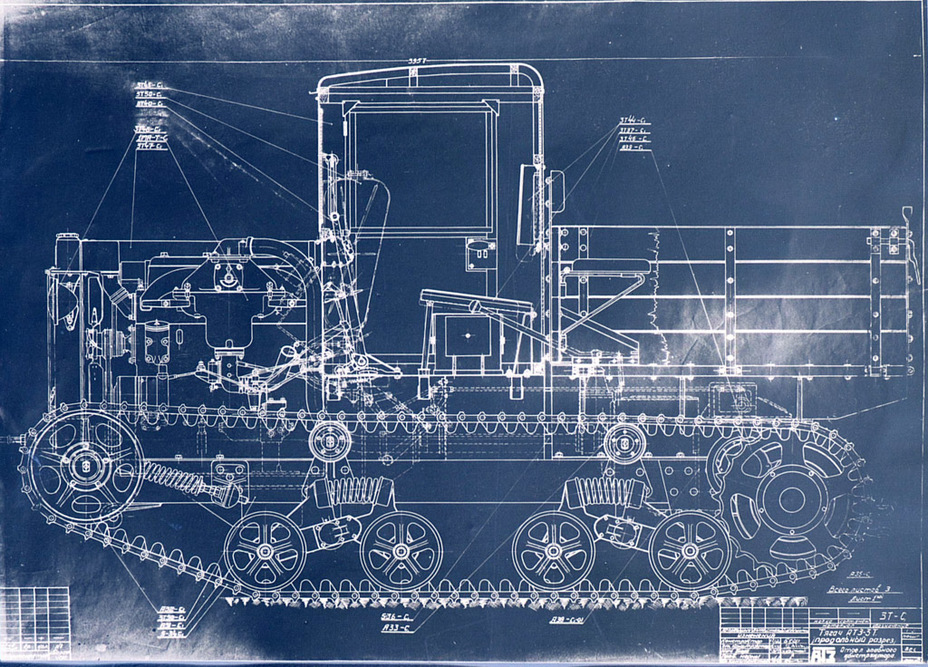
ATZ-3T, an artillery tractor based on the HTZ-16
Finally, it is worth mentioning one more vehicle that was the direct successor to the HTZ-16. As mentioned above, part of the HTZ’s production facilities were evacuated to Rubtsovsk. Using these evacuated production facilities, the Altai Tractor Plant (ATZ) was established there, with Sidelnikov himself serving as its chief designer. As early as August 1942, ATZ delivered the country’s first tractor, designated the ATZ-NATI.
Meanwhile, the country needed not agricultural tractors, but tractors like the STZ-5. It was precisely such a tractor that the ATZ Design Bureau, headed by Sidelnikov, developed in 1943. This machine was designated the ATZ-3T and featured the same technical solutions as the HTZ-16. Even the fuel tank was shifted to the left, while the driver sat on the right. Thanks to this design, there was enough space for a small cargo platform. Incidentally, the engine on this tractor was also tuned to produce 58 horsepower. According to documents, a prototype of the ATZ-3T was built in the summer of 1943. On July 1, 1943, Colonel General Yakovlev, head of the State Aviation Administration (GAU), proposed producing a trial batch of tractors. But by that time, production had already begun on the far more advanced Ya-11 tractor, which clearly outperformed its Altai competitor. And that was the end of its story.
Sources
-
-
- TSAMO RF
- GRASPI
- Author’s Photo Archive
-
Source: https://warspot.ru/6466-improvizatsiya-v-promyshlennyh-masshtabah