"Kalashnikov" Unveils the New "KUB-10ME": Russia Is Betting on Heavy, Long-Range Kamikaze Drones

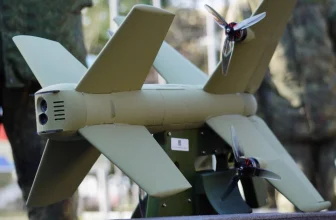
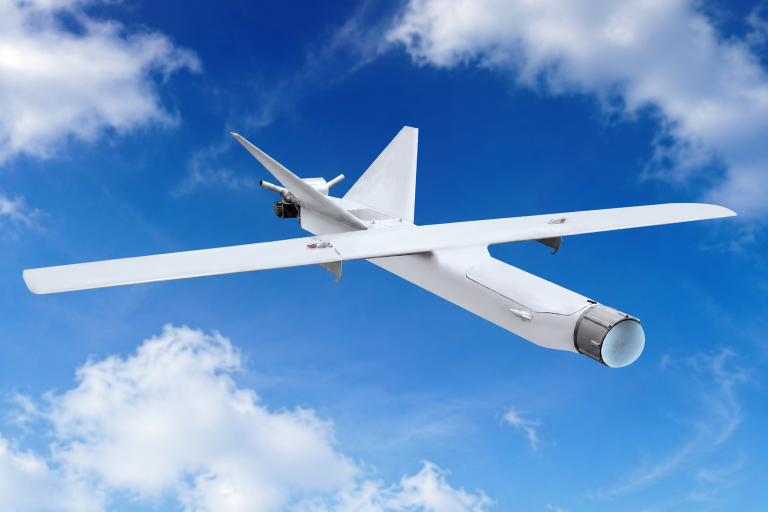
The Kalashnikov Concern officially unveiled its new guided munition, the “KUB-10ME,” for the first time — and at first glance, it might seem like just another loitering munition in the long line of modern kamikaze drones. But a closer look reveals that Russia is gradually attempting to transition from relatively lightweight FPV drones and tactical UAVs to an entire class of heavier operational-depth weapons.
And this is exactly where the “KUB-10ME” looks particularly interesting.
Because we’re no longer talking about a small drone designed to strike a single trench or an armored vehicle on the front lines. The new “KUB” is, in fact, approaching the concept of a compact cruise missile—cheap, mass-produced, and capable of operating in environments with heavy electronic warfare and air defense.
From a “flying grenade” to a full-fledged operational-level weapon
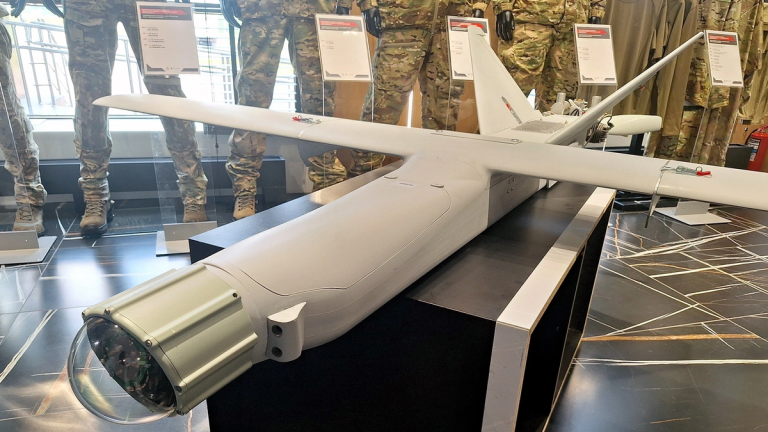
The history of the “KUB” family is a very good reflection of the entire evolution of modern drone warfare.
The first “KUB-BLA,” unveiled back in 2019, looked relatively modest. It was a compact loitering munition with a warhead weighing about 3 kg, a range of about 40–50 kilometers, and a flight time of approximately half an hour. At the time, the very idea of a “kamikaze drone” was viewed by many as something rather exotic.
But then the situation in Ukraine began.
And suddenly it turned out that cheap loitering munitions are capable not only of supplementing artillery, but also of gradually changing the very architecture of the battlefield. FPV drones, “Lancets,” Switchblades, Warmates, and dozens of other systems began to evolve into a new generation of expendable, high-precision artillery.
It was against this backdrop that the “KUB” family began to evolve rapidly.
The «KUB-2» has been introduced, featuring an improved guidance system, the ability to engage moving targets, and autonomous control capabilities. But the «KUB-10ME» represents the next step.
In fact, this represents a shift from a tactical loitering munition to a full-fledged long-range strike system.
A small winged rocket disguised as a drone
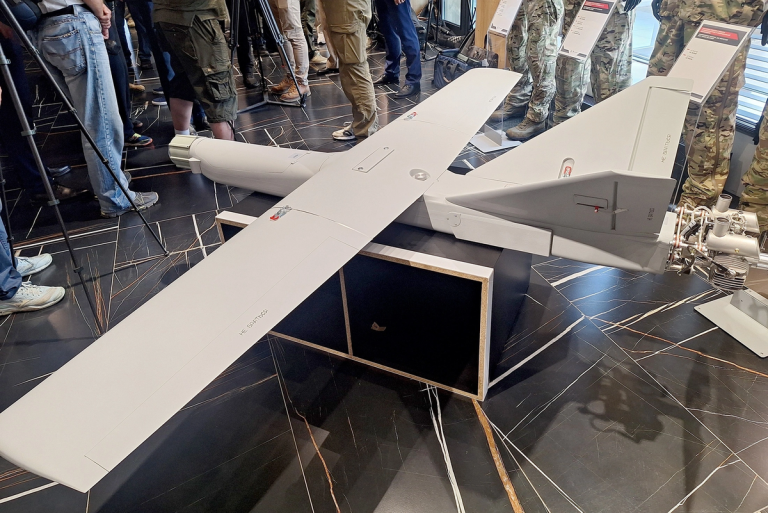
The first thing that catches your eye is the new car’s specifications.
Its range exceeds 100 kilometers. For a tactical-class loitering munition, that is already a very impressive figure—especially considering its stated warhead weight of 16 kilograms.
By way of comparison: many early FPV drones carried payloads of less than one kilogram, while the first “KUBs” were limited to approximately 3 kg of warhead.
Here, however, we are talking about an entirely different level of damage.
The 16-kilogram warhead makes it possible to effectively engage:
— lightly armored vehicles,
— armored personnel carriers,
— command posts,
— radar stations,
— air defense systems,
— electronic warfare systems,
— warehouses,
— and even aircraft in open parking areas.
In essence, the «KUB-10ME» is beginning to fill the niche between a conventional loitering munition and a light cruise missile.
That said, a cruising speed of about 120 km/h may seem relatively low, but that is precisely the logic behind the system. Unlike an expensive missile, a drone can remain airborne for a long time, search for a target, and adjust its attack.
And most importantly, it must be affordable enough for widespread use.
The main focus is not on range, but on resistance to electronic warfare
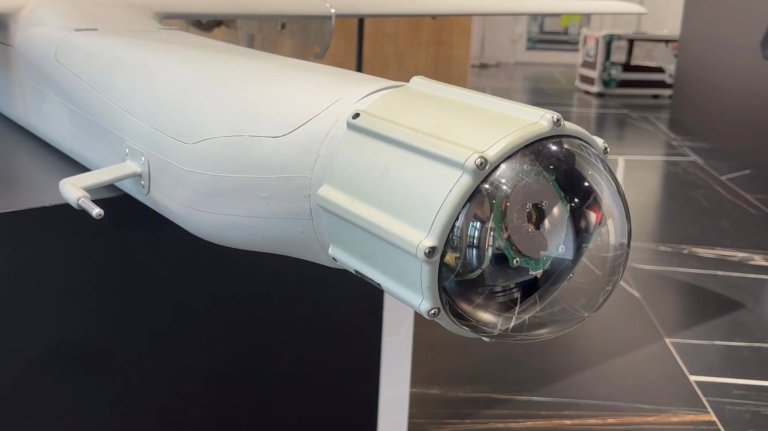
But the most interesting thing about the new «KUB» isn’t even its range.
Russian developers are placing the main emphasis on the optoelectronic guidance system and resistance to electronic jamming.
And this is a highly telling aspect of modern warfare.
Over the past two years, the conflict in Ukraine has effectively turned into a massive electronic warfare campaign. GPS jamming, spoofing, radio frequency jamming, and the hunt for UAV operators have become almost as important as artillery or armored vehicles.
In such an environment, a standard FPV drone doesn’t last very long.
That is precisely why the “KUB-10ME” is equipped with an optoelectronic guidance system featuring a video feed and the ability to confirm the target before strike. Essentially, the developers are trying to reduce their reliance on satellite navigation and constant radio monitoring.
This is especially important when facing a formidable adversary with powerful electronic warfare capabilities.
If the system is truly capable of operating autonomously during the final phase of an attack, it becomes significantly more difficult to neutralize it. And in modern warfare, this is already a nearly critical requirement.
Russia is gradually moving toward the concept of «cheap labor»
There is something else that is particularly important in this whole story.
Until very recently, high-precision strikes were associated primarily with expensive cruise missiles such as the Tomahawk, Storm Shadow, or Kalibr. But modern warfare is gradually changing that dynamic.
Because it becomes too expensive to waste a missile costing hundreds of thousands or millions of dollars on every radar, truck, or air defense position.
That is precisely why all the major armies of the world are now moving in roughly the same direction:
— Iran is developing the Shahed-136,
— the U.S. is developing LUCAS,
— Europe is experimenting with low-cost loitering systems,
— and Russia is scaling up production of the “Lancet” and “KUB” systems.
Everyone follows the same logic: it’s better to have hundreds of relatively inexpensive, high-precision systems than a limited number of «perfect» weapons.
And the “KUB-10ME” clearly illustrates how Russia is trying to adapt to this new philosophy of warfare.
But the main issue is production
The problem lies elsewhere.
Modern drone warfare is, above all, a war of industry.
Many countries today are capable of producing a single effective loitering munition. The real question is whether the defense industry is capable of producing them by the thousands.
That is precisely why the fate of the “KUB-10ME” will depend not so much on its impressive specifications as on production volumes, cost, and the ability to rapidly equip the troops.
Because the very philosophy behind such systems is based on mass participation.
A single drone is simply a piece of ordnance.
Hundreds of drones, however, represent a new architecture of war.
And it seems that the entire modern world is gradually moving toward this very model.
Source: https://dzen.ru/a/ahBOvXM-KU9rsdRd