Superbattleships, or Senator Benjamin Tillman’s Unrealistic Delusion. 24 main-caliber guns. Who has more?

At the beginning of the second decade of the twentieth century, the U.S. Navy was faced with the issue of the strategic balance of power at sea. Senator Benjamin Ryan Tillman put forward a radical initiative that called for the construction of battleships that went beyond the conventional engineering standards of the time. The essence of his proposal was to commission the U.S. Navy to build battleships of the largest possible size and firepower that could withstand sea conditions and meet the infrastructure limitations of the United States. Tillman insisted that quantitative superiority in firepower and protection would be the decisive factor in future naval battles. His idea was not the result of a thorough engineering analysis, but rather a political ultimatum aimed at forcing a technological leap forward and demonstrating American naval dominance. Despite its seemingly reckless nature, this request compelled U.S. design bureaus to seriously explore the limits of what was feasible in shipbuilding.
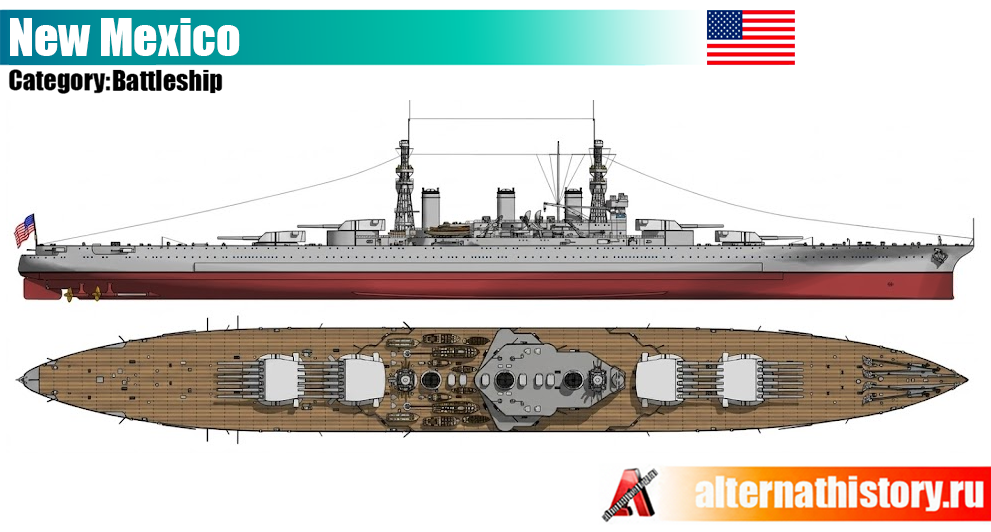
The Project’s Origins: The Panama Canal’s Limitations and Four Concepts
In 1912, the senator’s official request was submitted to the Navy Department, after which engineers began extensive calculations. By 1916–1917, the U.S. Navy had prepared four basic designs, and later added two more variants. All of them were based on a single hull design, engineered to meet strict infrastructure constraints. The main limiting factor was the Panama Canal locks, which had maximum dimensions of 305 meters in length and 34 meters in width. This meant that the ships had to be no more than 297 meters in length at the waterline and 33 meters in width to maintain strategic mobility between the Atlantic and Pacific Oceans. Engineers at the Bureau of Construction and Repair took on the task without much enthusiasm, as their resources were focused on addressing more urgent and critical wartime issues. Nevertheless, they developed four designs for maximum capacity, each emphasizing one of the key parameters: maximum armament, reinforced armor protection, increased speed, or an optimal combination of these. In early 1917, additional designs emerged in which the caliber of the main guns was increased from sixteen to eighteen inches, opening a new chapter in theoretical shipbuilding.
Diagram II: Twenty-four main-caliber barrels
Of all the options considered, Scheme II stands out in particular, demonstrating the concept of maximizing firepower concentration. This design called for the installation of twenty-four 16-inch guns, housed in four six-gun turrets. In the context of that time, such a concentration seemed fantastic. The “New Mexico” and “Tennessee” class battleships then entering service carried only twelve 14-inch guns, and the next class, “Colorado” class was to be equipped with only eight 16-inch guns. For the first time in naval history, designers opted to use a six-gun turret for the main-caliber heavy artillery. No official drawings of the gun arrangement have survived, so researchers assume a standard layout with an individual cradle for each gun, although configurations grouping the guns in sets of three, two, or even a single gun are theoretically possible. The ship’s hull was designed with five-layer anti-torpedo protection, and the propulsion system featured an unusual layout in which the boiler rooms encircled the inner sections containing the turbines and electric motors. Each boiler was located in an isolated compartment, which minimized the risk of the power system being completely knocked out by a single torpedo hit. The total power output was estimated at 132,000 horsepower, provided by six turbines and four electric motors, which required the installation of three funnels. The secondary armament remained in line with the traditions of the era and included twenty-one casemate-mounted 5-inch guns and standard 3-inch anti-aircraft guns.
Engineering Paradoxes and the Reality of Implementation
Despite being thoroughly worked out on paper, the project remained beyond the technical capabilities of its time. Six-barrel turrets for 16-inch guns posed insurmountable problems with gas exhaust, salvo synchronization, weight distribution, and the ship’s stability during firing. The ammunition feeding mechanisms and barrel cooling system would have required entirely new technologies that simply did not exist in 1917. Furthermore, the attempt to fit twenty-four heavy guns into a hull constrained by the width of the channel inevitably led to a critical reduction in stability and overloading of the upper deck. The Bureau of Construction and Repair recognized that such calculations were purely experimental in nature and could not be realized in metal without a fundamental redesign of the battleship’s architecture. The war and shifting strategic priorities put an end to these projects once and for all, leaving them in the archives as a monument to engineering maximalism.
Modernization: A Theoretical Concept Based on the 1944 “Tennessee”
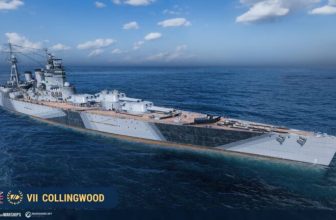
Decades later, enthusiasts of historical modeling and naval analysis revisited the 1917 blueprints, attempting to apply the realities of World War II to them. One such reconstruction, created at the initiative of user @beardedtree17, is a modernized version of the original hull incorporating design features from the 1944-model USS Tennessee battleship. The idea was to preserve the historical architecture of the 24-gun battleship, but to equip it with a propulsion system, anti-torpedo protection, anti-aircraft armament, and radar equipment meeting mid-1940s standards. As a result of theoretical recalculations, the displacement increased, engine power was boosted to levels capable of maintaining a cruising speed on par with modern battleships, and deck armor was reinforced to protect against dive bombers. The anti-aircraft armament was completely redesigned to cope with the realities of air attacks, and the casemate artillery was replaced by versatile twin mounts. The design remains hypothetical, but it clearly demonstrates what the evolution of a super-battleship might have looked like had it survived the interwar period and entered service during the era of total war.
Tactical and Technical Specifications of the 1917 Basic Design
- Dimensions: 297.18 (width) × 304.2 (perimeter) × 32.92 × 10 m
- Displacement: 70,000 metric tons (standard)
- Engines: Westinghouse turboelectric propulsion system with a capacity of 132,000 l.s., 4 shafts
- Speed: 49 km/h (26.5 knots)
- Range: 22,200 km (12,000 nautical miles at 10 knots)
- Armor: 76 mm on the deck, 330 mm on the belt
- Armament: 4×6 16″/50 Mark 2 guns, 21×1 5″/51 Mark 8 casemate guns, 4×1 3″/50 Mark 10 DP-AA guns, 4×1 533-mm torpedo tubes
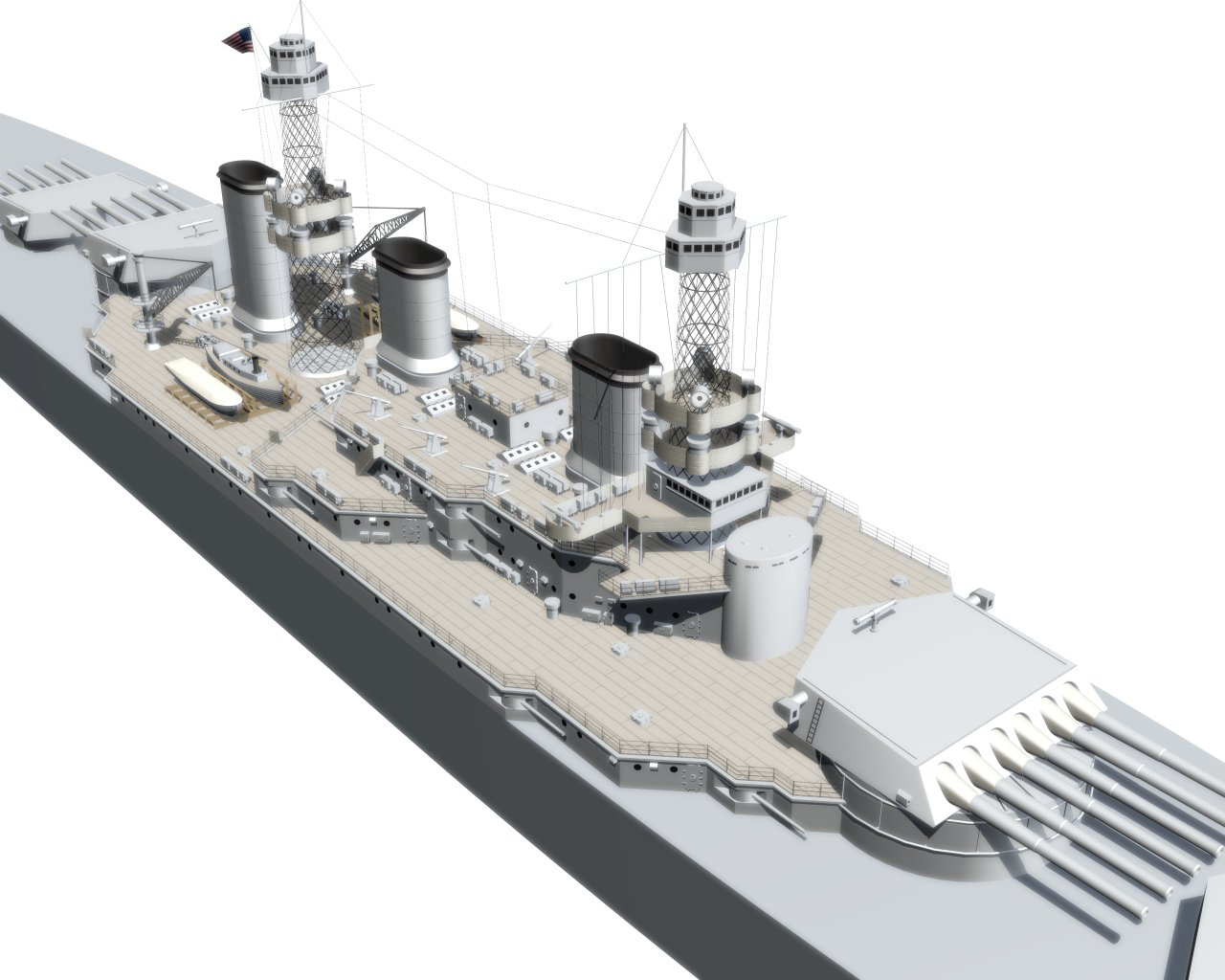
Tactical and Technical Specifications of the Upgraded Version
- Dimensions: 297.18 (width) × 304.2 (perimeter) × 32.92 × 10 m
- Displacement: approximately 74,000 metric tons (standard)
- Engines: Westinghouse turboelectric propulsion system with a capacity of approximately 200–212,000 l.s., 4 shafts
- Speed: about 52 km/h (28 knots)
- Range: 22,200 km (12,000 nautical miles at 10 knots)
- Armor: deck 140 mm, belt 330 mm
- Armament: 4×6 16″/50 Mark 2 guns, 10×2 5″/38 Mark 12 DP-AA guns, 16×4 40-mm/56 Mark 1 anti-aircraft guns, 50×1 20-mm/70 Oerlikon Mark 2 anti-aircraft guns, 2 SC Seahawk seaplanes
- Sensors: SG-1 Surface Search Radar, SK-1 Air Search Radar, SP-1 Altimeter/Air Search Radar, FC-1 Fire Control Radar
Conclusion
Senator Tillman’s proposal to build battleships of maximum size went down in history as an example of political pressure on engineering thought, which led to the creation of unique theoretical designs. The design featuring twenty-four 16-inch guns never made it off the drawing board, as the physics of recoil, stability issues, and the limitations of the Panama Canal made its realization impossible with the technology available in the first half of the twentieth century. Nevertheless, these calculations allowed designers to test the limits of what was feasible and refine designs for armor and power systems that were later applied to actual ships. Modernized versions created by contemporary researchers serve merely as an intellectual experiment, illustrating how interwar ambitions might have clashed with the realities of World War II. Ultimately, the 24-gun super-battleship remained an unfeasible fantasy on paper, but it is precisely such bold—albeit utopian—ideas that have often paved the way for future technological breakthroughs in naval shipbuilding.