Less than a month had passed since the inglorious end of the “Constellation”-class frigate program — of which it was decided to complete only the first two ships and cancel the laying of the keels for the rest — that the U.S. Navy announced the start of work on a new frigate, the FF(X) program:
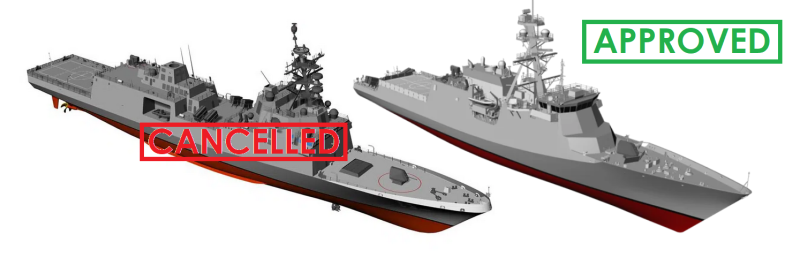
The FFG(X) program for a new generation of missile frigates, known as the “Constellation” class, has become one of the most high-profile failures in U.S. naval shipbuilding in recent years. And yet the original idea was quite sound: rather than wasting time developing a design from scratch, the plan was to take an existing design (including foreign ones) and “slightly modify” it to meet the needs of the U.S. Navy.
What happened next turned out to be a textbook example of “it looked good on paper.” The winning design for the FREMM frigate, submitted by the Italian firm “Fincantieri Marine Group,” (a highly successful and popular multi-purpose frigate design, currently being built in large numbers by French and Italian shipyards both for their own navies and for export), as it turned out, fell short of U.S. requirements for combat survivability and seaworthiness. The scope of modifications required to meet U.S. standards turned out to be significantly greater than originally anticipated.
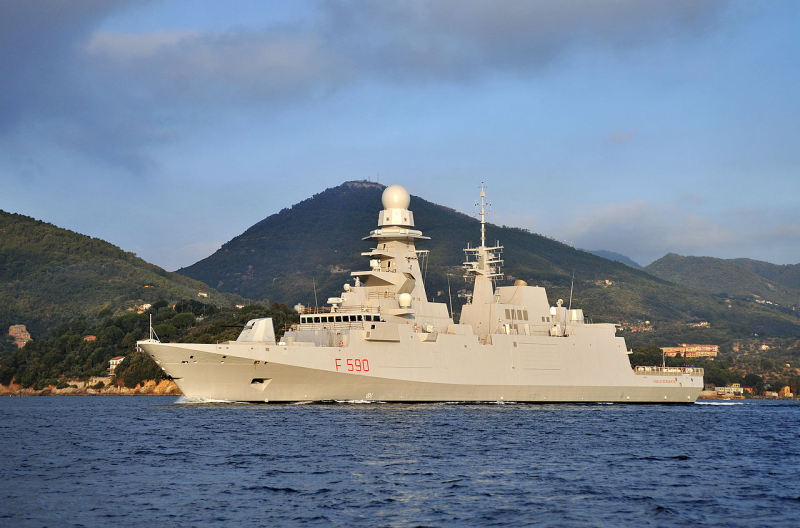
The FREMM-class frigate is clear proof that Italian shipbuilders know how to succeed in the export market!
In and of itself, this wasn’t yet a disaster. But then the engineers at Fincantieri lost control of the situation. At the request of American admirals, more and more changes were made to the design—which, quite naturally, led both to delays in development and to a rapid increase in the cost of the “simple and inexpensive” project. The admirals’ desire to create a “dream ship” ultimately resulted in a final design that resembled a light destroyer more than the original frigate—and, moreover, had very little in common with the prototype.
By the time the lead ship of the series was laid down in the spring of 2024 (after a delay of nearly three years), the frigate’s final design had not only not yet been approved, but had not even been finalized. A year later, in April 2025, the ship was still not even 10% complete—and the final design had still not been finalized.
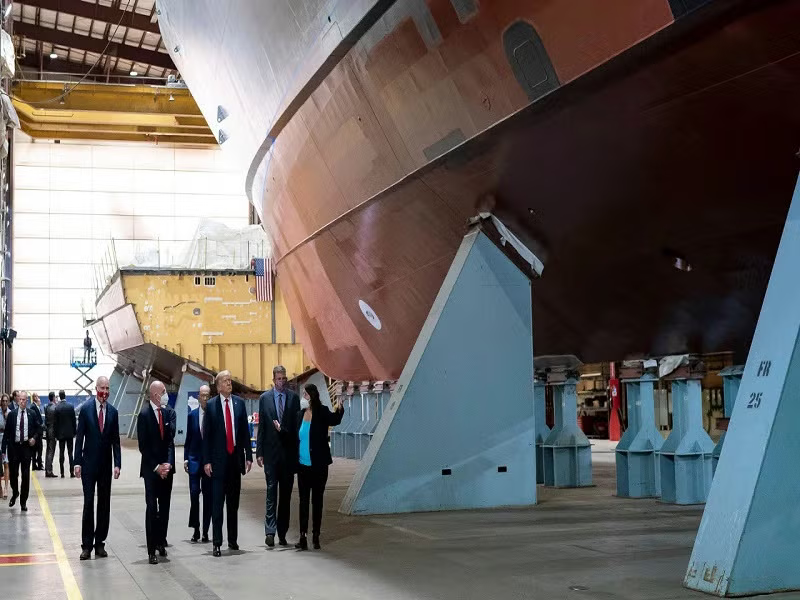
President Donald Trump is inspecting sections of the hull of the lead frigate—the FFG-62 USS “Constellation”—currently at the shipyard. The ship is now not expected to join the fleet until at least 2030.
Ultimately, the decision made in November 2025 to limit the “Constellation” class of frigates to the first two ships (FFG-62 USS “Constellation” and FFG-63 USS “Congress”) was merely an acknowledgment of the inevitable. The program had clearly gone off track; for half the cost of an Arleigh Burke-class destroyer, the U.S. Navy was getting a ship with about one-third of a destroyer’s capabilities—one that was too expensive for mass production and took too long to build. Once again, the lack of engineers’ control over the sailors’ “wish list” resulted in an overly complicated and expensive design.
(I can’t help but recall how German shipbuilding fell into the same trap during the interwar period…)
The collapse of the “Constellation” program put the U.S. Navy in a difficult position. As a result, the Arleigh Burke-class destroyer remained the U.S. Navy’s only mass-produced combat surface vessel—and while these ships are good and effective, they simply cannot be built in even greater numbers. Starting in the 2030s, the first-generation destroyers were scheduled to be phased out of the fleet, thereby reducing its combat-ready strength. In an attempt to stabilize the situation, the Americans arranged to extend the service life of the best-maintained ships from the first series, but this was only a stopgap measure.
A new frigate was needed immediately. And it seems the U.S. Navy was able to find a solution quickly:
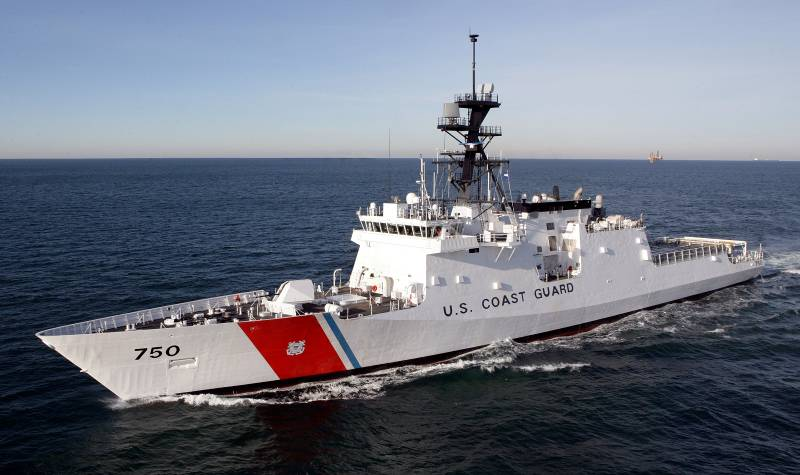
According to available data, the FF(X) frigate project—note that it is not the FFG(X), i.e., it is not equipped with a zone defense air defense system! — is based on the “Legend”-class large coast guard cutter design by the American company Huntington Ingalls Industries. It is interesting to note that the company had submitted its own frigate design (based on the same platform) for the future “Constellation” competition, but at that time lost the competition to a ready-made European design. Now, however, the U.S. Navy has returned to the idea of a cutter-based frigate as the best remaining option.
Although the “Legend”-class cutter is “merely” a coast guard vessel, this does not mean that it is built to civilian standards. U.S. Coast Guard vessels are traditionally built to military standards — and are regarded as auxiliary combat units in the event of a large-scale conflict, featuring advanced electronic systems and reserved space in the hull for the installation of additional weaponry. Therefore, the transition from a cutter to a frigate seems… a fairly logical solution. Especially since Huntington Ingalls Industries has already proposed such a solution.
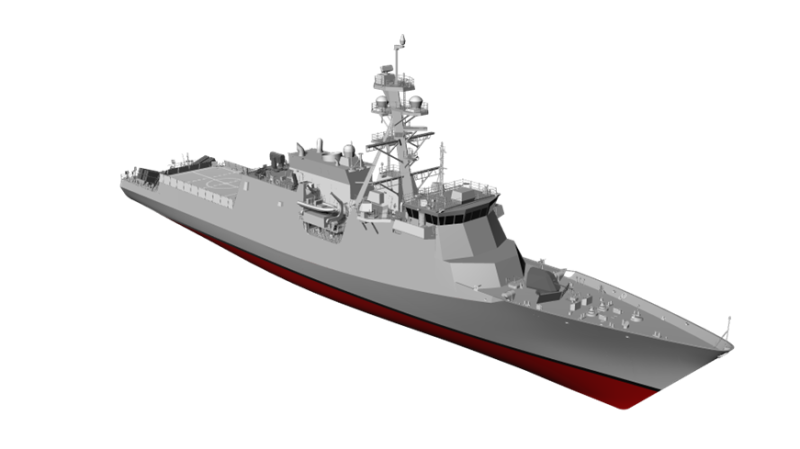
A Possible Look at the Future of FF(X)
The details of the program are not yet entirely clear, but based on what has been announced—having learned its lesson the hard way—the U.S. Navy is taking a cautious approach and aims to make as few changes to the project as possible in order to launch the new frigate into production as quickly as possible. This is clearly indicated by the use of the FF(X) designation instead of the previous FFG(X); the new frigate is not intended to provide zonal air defense and will not be equipped with long-range anti-aircraft missile systems.
Minimizing the changes required means no significant modifications to the ship’s electronics. Unlike the “Constellation”-class frigates, which were designed to use an adapted Aegis combat management system with the AN/SPY-6 radar (similar to that used on destroyers), the new frigates will continue to use the simplified combat management system inherited from the corvettes, based on the AN/SPS-75 radar (the U.S. designation for the German-made European TRS-3D radar). This significantly limits their combat capabilities—although the compatibility of their electronic equipment will allow them to fully interoperate with other U.S. Navy combat units, exchange sensor data, and receive and provide external target designation.
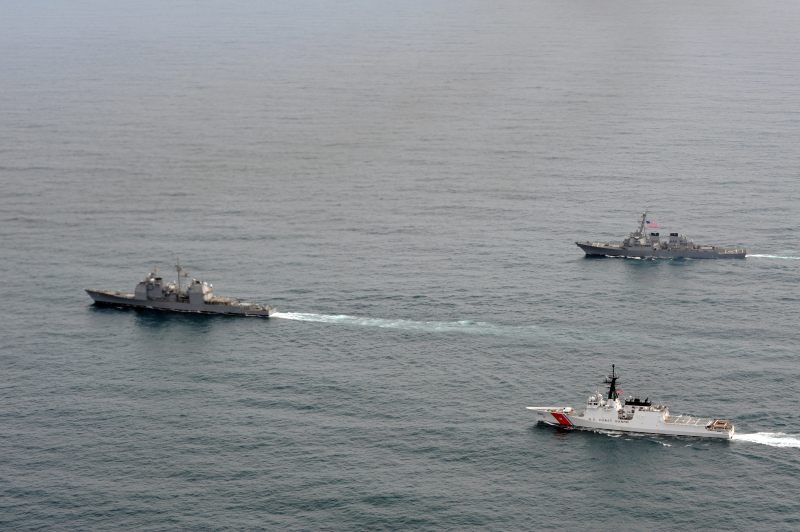
A Coast Guard cutter operating as part of a task force with a cruiser and a destroyer—for the U.S. Coast Guard, this type of deployment with the Navy is routine
The frigate’s armament is expected to be enhanced—primarily through the installation of Mk-70 containerized launchers, capable of accommodating any missiles of the same type as those used in the standard Mk-41 launcher. To accommodate the missile containers, the frigate’s aft deck (which, on the cutter, is occupied by boats and lifesaving equipment) is expected to be modified. The integration of Mk-41 vertical launch systems does not appear to be planned at this stage—although the frigate design from Huntington Ingalls Industries did call for them. However, it appears that the U.S. Navy is concerned about delays associated with integrating new equipment into the hull and prefers (at least initially) to opt for the simplest solution.
Equipped with Mk-70 container launchers, the frigates will be able to carry the entire modern missile arsenal of the U.S. Navy. However, they will only be able to fire some of them on their own. Since the cutters do not have the AN/SPG-62 missile fire control radar (and their fire control systems cannot support the functionality of this radar without modifications), they will be able to use only active-guided anti-aircraft missiles—they have no way to “illuminate” the target for semi-active seeker heads. On the other hand, they are fully capable of transporting and launching missiles with semi-active seekers to be guided by other ships.
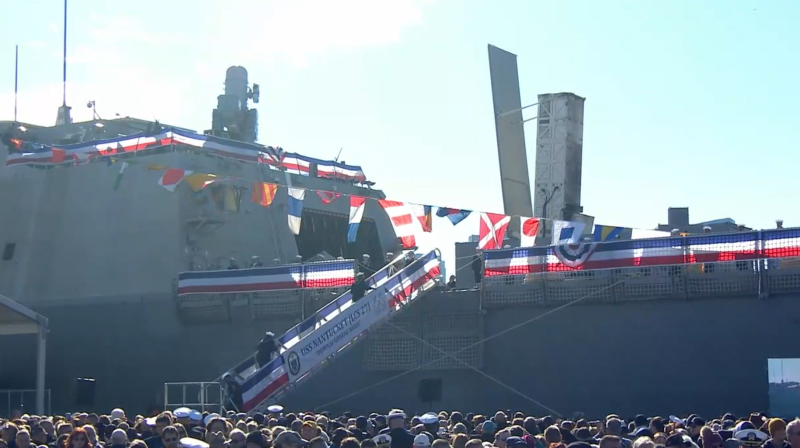
An Mk-70 launch container installed on the helicopter deck of an “Independence”-class LCS for experimental purposes
The frigate’s artillery armament is expected to remain unchanged; The 57-mm Mk-110 automatic cannon is considered an effective, reliable, and low-maintenance weapon in modern conditions, better suited for countering, for example, unmanned aerial vehicles than heavy 127-mm guns. However, the defensive armament—specifically, the “Vulcan-Phalanx” automatic anti-aircraft system—is expected to be replaced with the “SeaRAM” self-defense anti-aircraft missile system. This modernization is a standard feature of the cutter’s design, so it is unlikely to pose any problems.
A major problem with the new frigates is their lack of adequate anti-submarine equipment. “Legend”-class cutters (unlike their “Hamilton”-class predecessors) are not standardly equipped with towed sonar, and the U.S. Navy’s plan to use the aft deck for missile containers precludes its rapid installation. The U.S. Navy acknowledges this problem but plans to resolve it as the FF(X) series program progresses—either by redesigning the stern of the improved-series frigates or by installing a hull-mounted sonar. For now, the FF(X) frigates will have to rely exclusively on deck-based helicopters and, likely, additionally installed torpedo tubes.
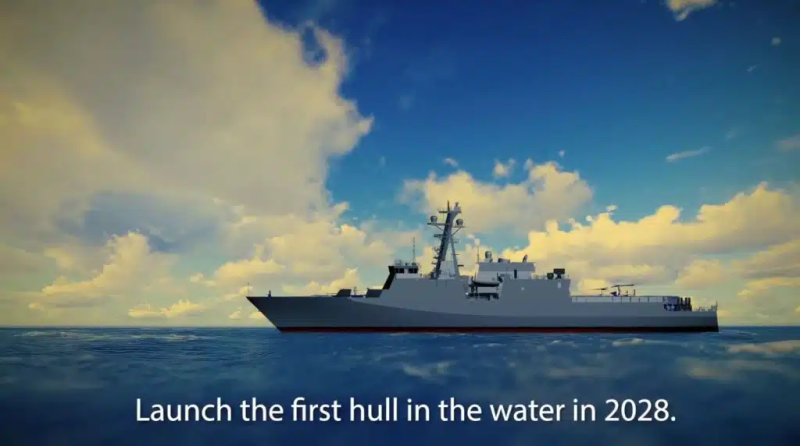
The U.S. Navy is counting on launching the first frigate of this new class in 2028—and commissioning it no later than 2030. The plan is to build the new ships in large numbers at a rapid pace. Although Huntington Ingalls Industries is initially expected to be the sole contractor, as production gets up to speed, subsequent contracts are expected to be distributed among other shipyards.
It should be noted, however, that choosing Huntington Ingalls Industries does not seem to be the best solution in this regard. The shipyard is currently facing a number of challenges that have already led to the early termination of the “Legend”-class cutter construction program; construction of the 11th ship in the series was halted midway, and the order for the 12th ship was canceled altogether. The company, however, insists that these problems are surmountable, but only time will tell how accurate these assessments are.
P.S. To be honest, if I were designing a new frigate for the U.S. Navy, I would choose the “Independence”-class littoral combat ship as my model, rather than the “Legend”-class cutter. Here’s why:
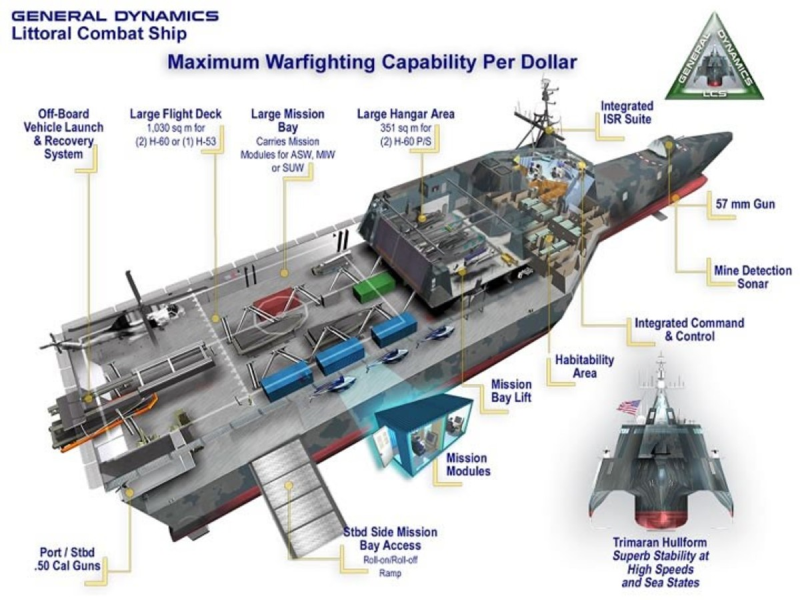
* Despite all the shortcomings of the LCS program, it proved to be an impressive success (by modern American standards) in terms of production, delivering 35 ships (19 Independence-class and 16 Freedom-class) over a 20-year period;
* Mass production of the “Independence”-class ships was well established—the last one was built in less than two years;
* “Independence”-class LCSs have adequate seaworthiness and a long range of approximately 8,000 km — which could be further increased by switching to an all-diesel propulsion system (it’s unlikely that an escort frigate needs the LCS’s breakneck 40-knot speed);
* The presence of large hull volumes in the stern—originally intended to house removable weapon modules—facilitates the ship’s modernization;
* The large, wide stern with a built-in hangar deck (again, a legacy of the LCS’s “multi-purpose” design, which was intended to allow them to be used as light amphibious assault vessels) makes it easy to install a towed sonar, and the presence of hangars for two helicopters makes the LCS far more effective in anti-submarine operations;
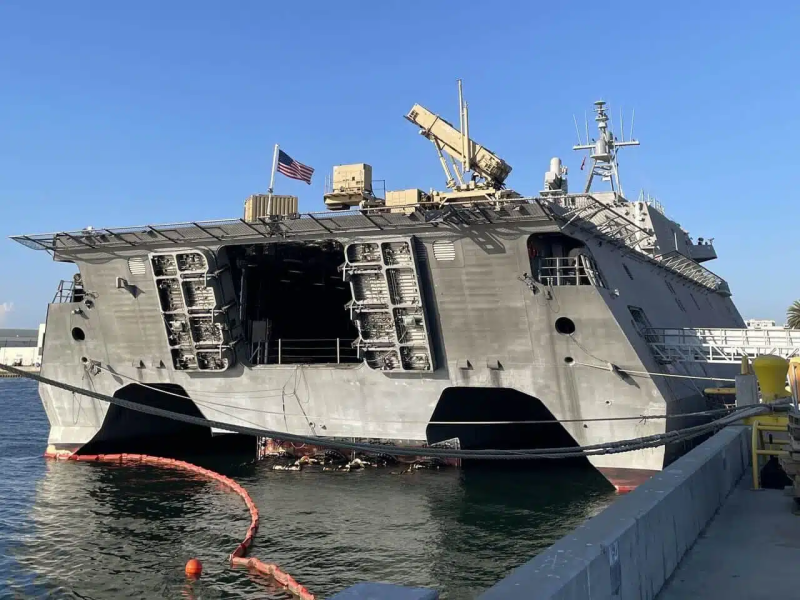
* Although the LCS’s waterjet propulsion systems are considered excessively noisy, the manufacturer, Austal, proposed a plan to replace them with low-noise propellers, at the cost of a slight reduction in speed (see above);
* At the cost of slightly narrowing the flight deck, the ships can be equipped with Mk-57 peripheral launchers (a version of the Mk-41 developed specifically for installation along the sides of Zumwalt-class destroyers), which are compatible with all types of missiles used by the U.S. Navy;
* In the bow—behind the Mk-110 gun and the Hellfire missile launcher (which, incidentally, can easily be removed to save weight)—there is free space that could easily be used to mount anti-ship missile containers;
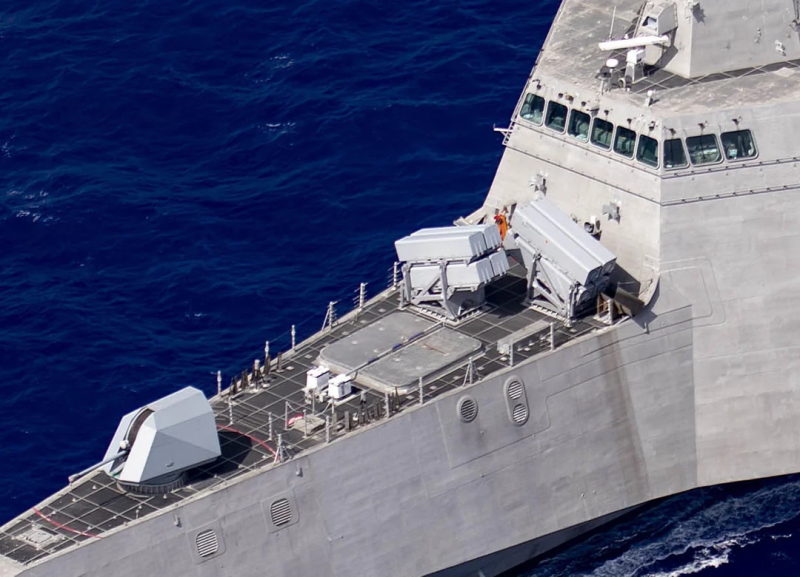
Overall, I would say that the “Independence”-class trimaran would be a far better choice as an escort frigate for low-intensity operations. Again, Austal was developing a frigate design based on the “Independence” for the very same FFG(X) program competition. But, apparently, the U.S. Navy has faced so much criticism regarding the LCS that it no longer wants anything to do with them. Well, that’s their problem.)