The “hybridization” of different schools of armament on a single chassis is always of great interest to historians (and a headache for those who carried out this “hybridization”). Even within large blocs with standardized equipment, compatibility issues are quite common; needless to say, combining equipment from opposing blocs is an even greater challenge!
The normalization of relations between China and Western countries—which began with Nixon’s visit in 1972 and culminated in the U.S. recognition of the People’s Republic of China in 1979 — opened up the Chinese arms market to Western partners. Europe was set to play a leading role in this process. While American military-technical cooperation with communist China was held back by both ideological and political considerations, France, for example, was completely unconcerned by such trivialities. French defense contractors worked actively with their Chinese counterparts, and whenever political complications arose, the French would simply declare, “We didn’t sell any licenses; those naughty Chinese copied our designs without permission— oh dear, how unsightly!” In this way, China managed to gain access to a whole range of military technologies that were state-of-the-art at the time—technologies that far surpassed its own developments.
It was only natural that the United Kingdom had no intention of staying on the sidelines either. And here it had a strong trump card up its sleeve: its navy. In the late 1970s, China had just begun building a full-fledged ocean-going navy, but its technological capabilities left much to be desired.
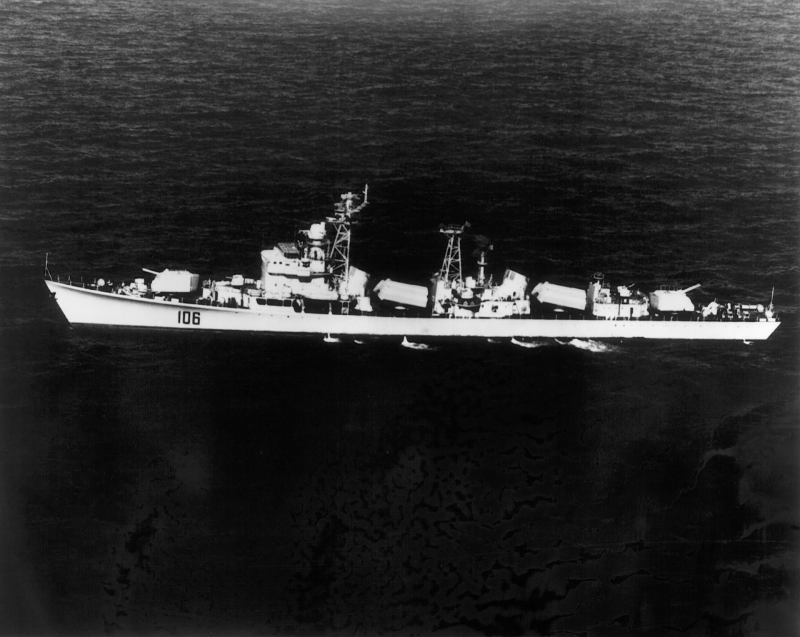
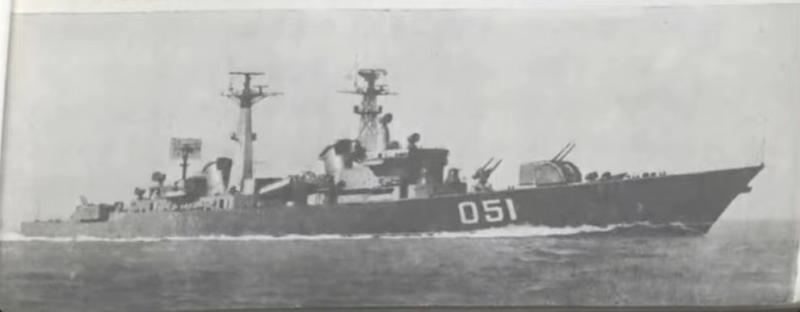
The largest class of Chinese ships at that time were the Type 051 destroyers—the Chinese version of the Soviet Project 41 “Neustrashimy,” the blueprints for which had been transferred from the USSR even before diplomatic relations broke down. The original design for a torpedo-artillery destroyer was already outdated at the time of the transfer, and twenty years later it was a veritable anachronism that the Chinese built simply for lack of any alternative. And while the Chinese managed to “upgrade” the ship’s offensive armament (by replacing the torpedo tubes with swiveling launchers for anti-ship cruise missiles), the Type 051’s air defense capabilities were very, very poor; the 130-mm SM-2-1 multi-purpose guns were of little help in the late 1970s.
And the Chinese were very hopeful that Britain—which possesses complete technological supply chains for the production of modern naval weapons and is not dependent on the United States in these areas—would be able to help them solve the problem.
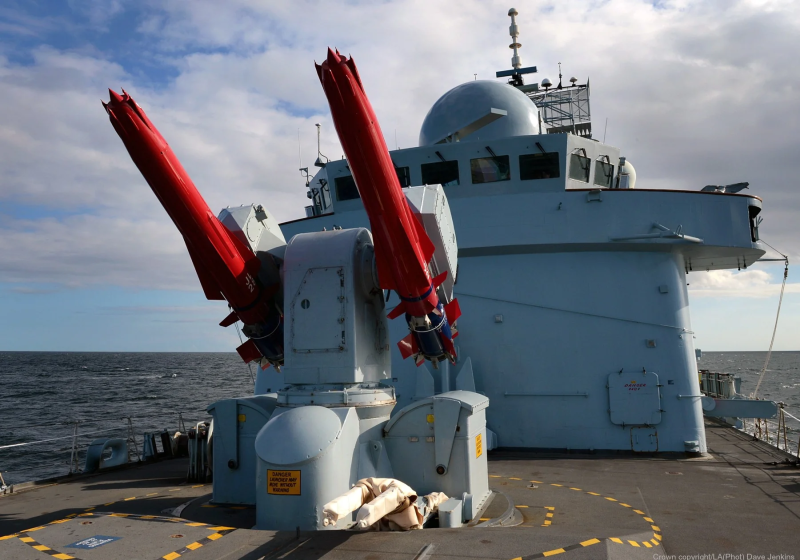
The British “Sea Dart” naval air defense system was of the greatest interest to the Chinese. At the time, this system—featuring a long-range direct-flight anti-aircraft missile with semi-active radar homing (much like a scaled-down version of the American RIM-8 “Talos”) was quite on par with the world’s best systems, hardly inferior to the American “Standards.” Moreover, it was a purely British design, developed without any American involvement, which allowed the British to sell the “Sea Dart” to whomever they chose.
The Chinese, quite understandably, were very eager to be among the owners. As far as I could tell, three possible approaches were being considered:
* The construction in the United Kingdom of Type 42 destroyers for export to the PLA Navy—this project, by all accounts, was what the Chinese wanted most of all. There were no fundamental problems here; the British were quite willing to offer the Type 42 for export and, in the early 1970s, built two destroyers for Argentina. In 1980, the destroyer HMS Coventry visited Shanghai, and according to British accounts, the mere sight of this powerful, modern ship—equipped with digital electronics, gas turbines, a zone defense air defense system—was enough to make the Chinese admirals drool.
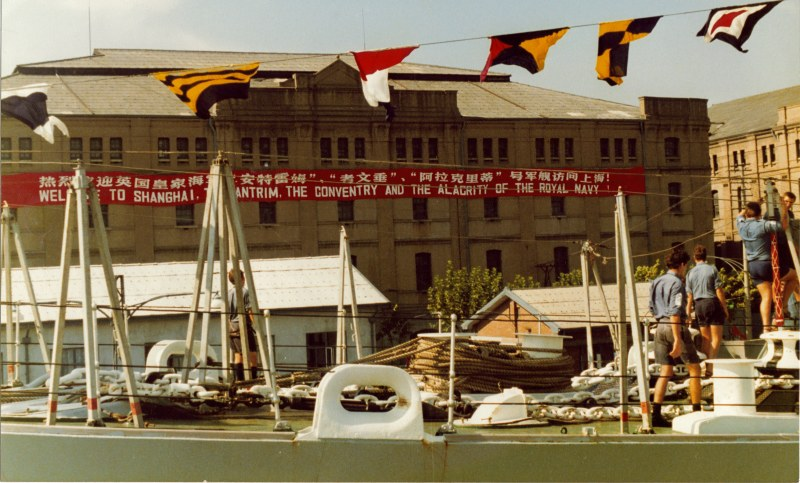
The «Coventry» at the quay in Shanghai in 1980; the first visit by a British ship to a Chinese port since 1949
However, the price became an obstacle to the deal. Taking into account the export markup, a single Type 42 destroyer cost about £60 million—approximately 220 million yuan at the 1980 exchange rate. The Chinese government was prepared to bear these costs, but only on the condition that at least some of the ships would be built under license at Chinese shipyards. However, the British would not agree to this, as the Chinese order was a way for them to support their own industry. Consequently, negotiations over the purchase of Type 42 destroyers ultimately reached an impasse.
* An alternative solution was to equip the existing fleet of Chinese destroyers with British anti-aircraft missiles—having failed to acquire Type 42 destroyers, the Chinese proposed working with the British to develop plans to modernize their existing fleet of Type 051 destroyers to accommodate the British “Sea Dart” anti-aircraft missile system:
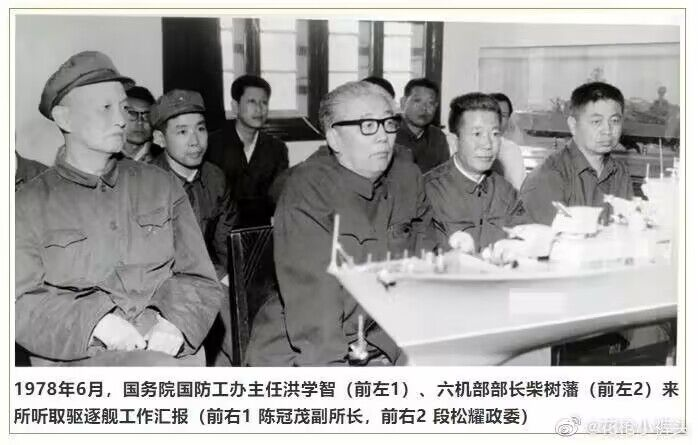
On paper, the idea seemed quite reasonable. Although the Chinese Type 051 destroyers were based on an outdated design, they were newly built and in good condition. In terms of displacement and size, they were practically on par with the British Type 042 destroyers. And the British “Sea Dart” air defense system was originally designed to be “adaptable,” intended for installation on a wide variety of hulls. The cost of a single “Sea Dart” system was estimated at about 16 million pounds—a much more modest sum.
British engineers were initially quite optimistic… but their optimism quickly evaporated when they had the opportunity to inspect the Chinese destroyers and review their blueprints. The hulls of the Type 051 destroyers were extremely “cramped”; there simply wasn’t enough space to accommodate a bulky surface-to-air missile system with 4.4-meter-long missiles.
Ultimately, the British concluded that it would be theoretically possible to squeeze a “Sea Dart” launcher into the space proposed by the Chinese (behind the main-caliber conning tower, replacing the twin 57-mm anti-aircraft gun) was theoretically possible—but there simply wasn’t enough space on the ship for the ammunition magazine. The “Sea Dart” missiles were stored on a conveyor belt in a vertical position; in order to somehow accommodate them on the Chinese destroyer, it would be necessary to cut such a large opening in the main deck that the destroyer’s bow would most likely simply fall off.
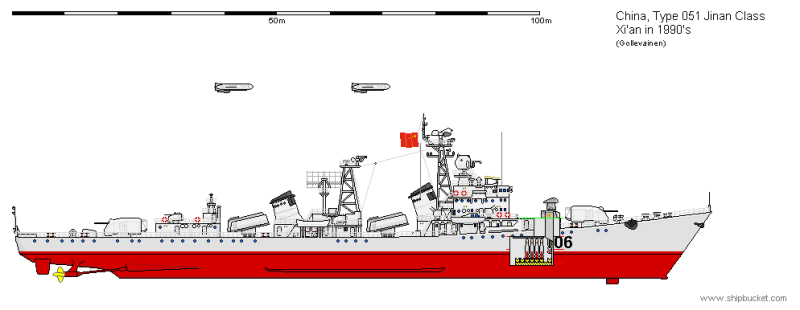
An illustrative demonstration of an attempt to cram a “Sea Dart” onto a Chinese destroyer. A deck cutout of the required size for the ammunition magazine would critically weaken the ship’s bow.
The Chinese admirals, however, were not willing to give up so easily, and proposed a “brilliant” idea—to place the missiles horizontally in the corridors and crew quarters, and to transport them to the launchers manually on carts. Let me remind you that we’re talking about liquid-fuel missiles filled to the brim with aviation kerosene! Fortunately for the Chinese sailors, the British refused to even consider this “crazy idea,” citing the fact that the missiles’ electronics require special storage conditions.
Nevertheless, the British were also reluctant to abandon the idea entirely, so they proposed a radical alternative—the “Sea Dart,” an air defense system designed to be as lightweight as possible, in which anti-aircraft missiles would be launched from non-reloadable launch containers:
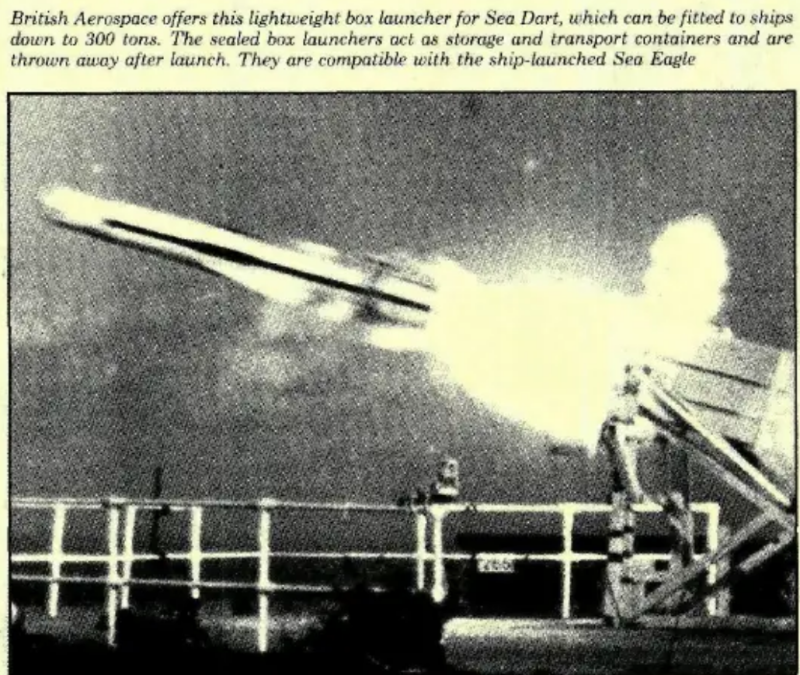
British Aerospace took the “Lightweight Sea Dart” (LWSD) project quite seriously, primarily as an export solution. To launch the anti-aircraft missiles, the plan was to use a four-tube launcher from the “Sea Eagle” anti-ship missile system—mounted on a rotating base with azimuth and elevation guidance mechanisms.
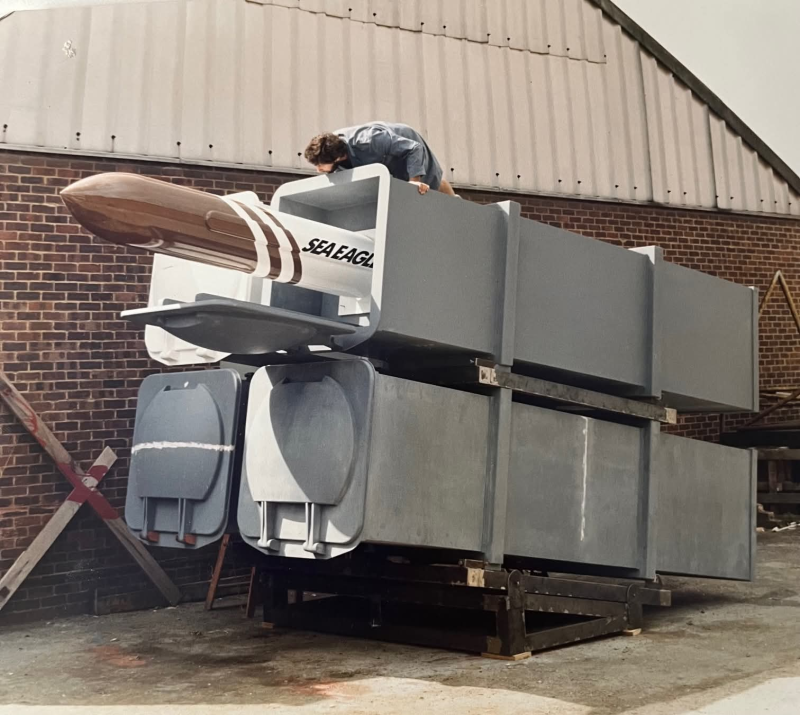
A ship-based 4-container launcher for «Sea Eagle» anti-ship missiles. Ultimately, it was not adopted for service due to budget cuts.
The “lightweight” “Sea Dart” turned out to be (at least in theory) light and compact enough to be easily squeezed onto a Chinese destroyer. British engineers proposed a plan to mount two LWSDs on each ship, replacing the bow and stern 57-mm anti-aircraft guns, respectively. However, the Chinese apparently weren’t too fond of this solution: judging by available data, they were dissatisfied with the proposed limited ammunition load of 8 missiles (by comparison, the Type 42 destroyer carried 22 “Sea Dart” missiles in a conveyor-fed magazine—that is, nearly three times as many). Although a framework agreement was signed in 1983, no orders for the LWSD ever materialized.
* Finally, the last idea was to build a new series of Type 051 destroyers—originally redesigned to accommodate the “Sea Dart” air defense system. Type 051 destroyers were still being built quite actively in the early 1980s, and a new series, originally designed to accommodate the “Sea Dart,” seemed like a perfectly reasonable solution. According to available data, the air defense destroyer project was designated Type 051S.
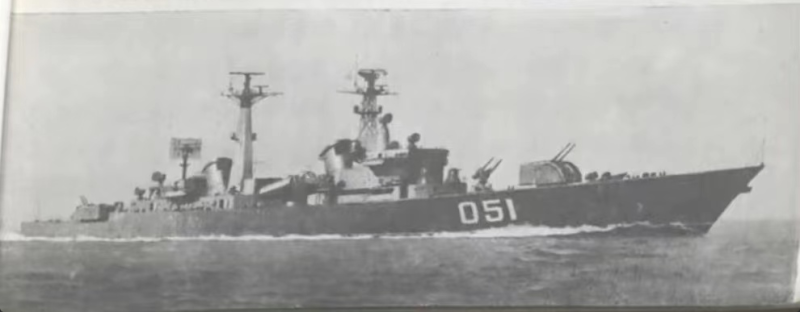
THIS illustration may depict a hypothetical design rendering of the Type 051S destroyer in one of its early iterations
As mentioned above, the Chinese Type 051 destroyers were comparable in size to the British Type 042 destroyers. Nevertheless, the Chinese apparently decided to play it safe: the proposed Type 051S air defense destroyer was to feature an elongated hull. Thanks to a hull extension between the main-caliber bow turret and the bow superstructure, the destroyers’ displacement was to increase from 3,670 metric tons (the base Type 051) to approximately 4,100 metric tons. This solution made it possible to accommodate the “Sea Dart” air defense system without having to completely redesign the ship’s bow.
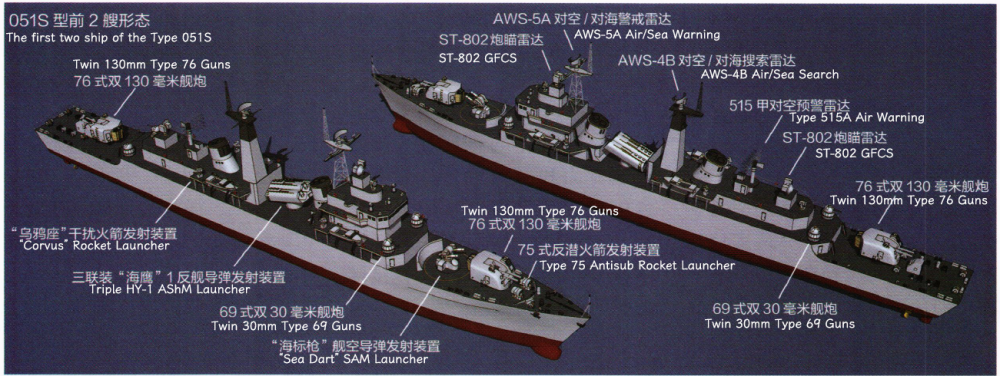
Modern reconstruction; contains errors
Information on the Type 051S project is rather scant, but based on what researchers have been able to uncover, the project appears to have gone through several iterations. Initially, it differed only moderately from the base Type 051, retaining virtually the same armament: two twin 130-mm Type 76 gun mounts (a copy of the Soviet SM-2-1) at the bow and stern, and a triple launcher for the HY-1 anti-ship missile (the Chinese version of the Soviet P-15 “Termit”) between the funnels (the second launcher was removed to make room at the stern for electronic equipment).
It was planned to supplement this standard armament with:
* The GWS.30 “Sea Dart” and a 20-missile below-deck magazine in the bow—between the forward 130-mm gun and the bridge (to protect the bridge from the exhaust of a launching missile, a protective screen was planned to be installed behind the launcher);
* The “Plessey” AWS-4 air search and tracking radar—a British export model—was mounted on a pyramidal mast in the center of the hull. The radar’s specifications, however, were more in line with those of a frigate (its air-target detection range did not exceed 110 km), but the Chinese had no other choice;
* A pair of “Marconi” target-tracking radars Type 909 (often mistakenly referred to as “Marconi” ST-802 non-linked radars)—mounted on the bridge roof and the stern superstructure, to “illuminate” targets for the homing heads of anti-aircraft missiles;
* «Corvus» dipole jammer launchers—on either side of the stern pipe;
The later Type 051S version, it appears, was intended to incorporate the new technologies that were ultimately implemented in the later batches of Chinese Type 051 destroyers—the helicopter-carrying version (represented by a single ship, the “Jinan”) and the final version, the Type 051G.
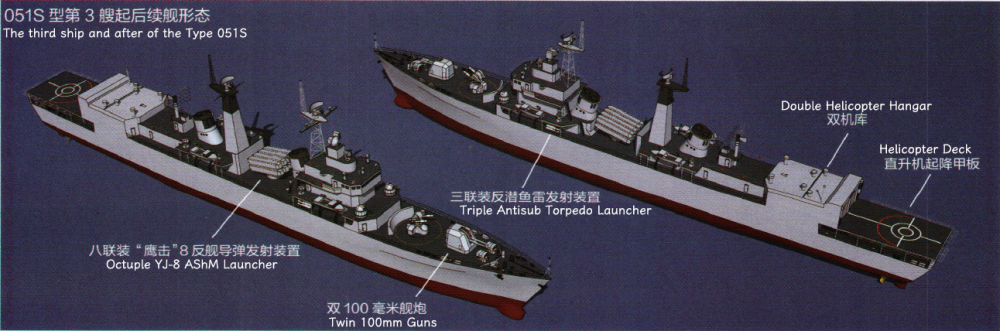
According to modern reconstructions—the accuracy of which, unfortunately, cannot be guaranteed—the later iteration of the Type 051S was intended to be a multi-purpose helicopter-carrying destroyer equipped with a modern arsenal. Instead of the outdated Soviet 130-mm guns, it was intended to be equipped with a (more) modern Type 79 100-mm twin-barrel gun mount, featuring fully automatic loading and developed with French assistance. It was intended to replace the bow 130-mm turret; in place of the stern turret, a hangar was to be installed to accommodate two “Harbin” Z-9C helicopters (a licensed version of the French Eurocopter AS565 “Panther”). The heavy HY-1 anti-ship missiles were to be replaced by a large number of lighter YJ-8 missiles in four twin-tube container launchers.
The British component remained largely the same, with only minor differences. Overall, the final version of the Type 051S design was intended to be a fully-fledged multipurpose destroyer—quite modern and possessing significant combat value.
The Falklands War, which began in 1982, drastically changed the situation.
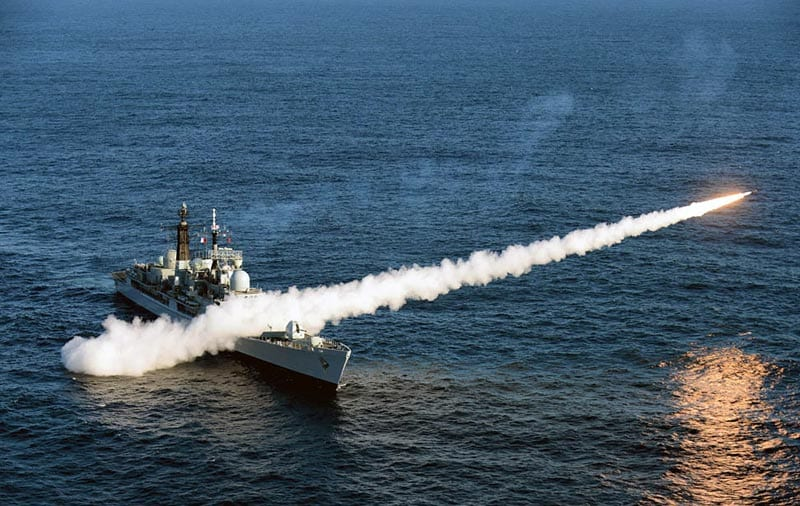
First, the Falklands War created a supply crisis—all of British industry’s efforts were focused on making up for its own losses. Any exports could not begin until the last Type 42 destroyers currently under construction were completed, i.e., no earlier than 1985.
Second, the “Sea Dart” air defense system’s combat debut in the Falklands demonstrated that the system has a number of significant shortcomings—first and foremost, its insufficient effectiveness against low-flying targets. The Chinese had reasonable doubts as to whether this very expensive purchase would prove its worth. The British, of course, promised to resolve the issue, but the “Sea Dart” Mod 1 version was not expected until the late 1980s.
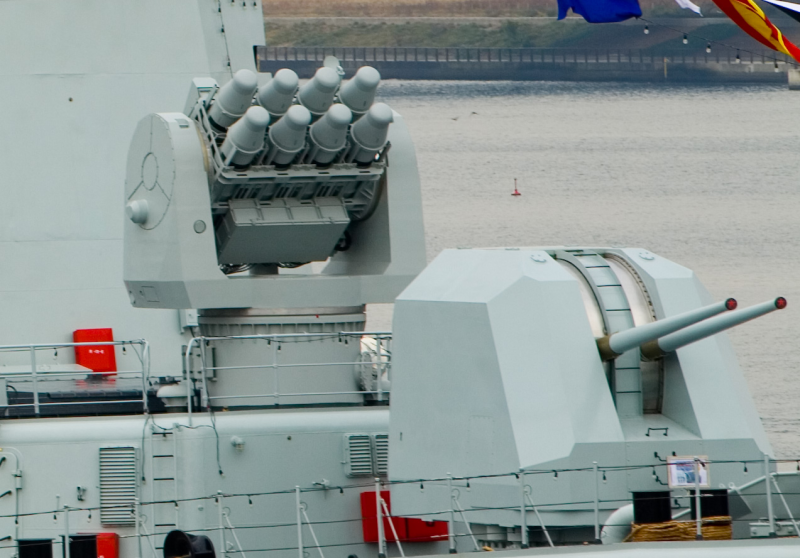
Third, competitors have stepped up their efforts. The Changfeng Institute of Electromechanical Technology and Design (Chinese: 中国长峰机电技术研究设计院) successfully promoted the Chinese copy of the French R440 “Crotale” as an alternative to the HQ-7 air defense system. Although it had a shorter range than the “Sea Dart,” this system was simpler, cheaper, and performed much better against low-flying targets. Most importantly, it could be installed on existing ships with minimal modernization.
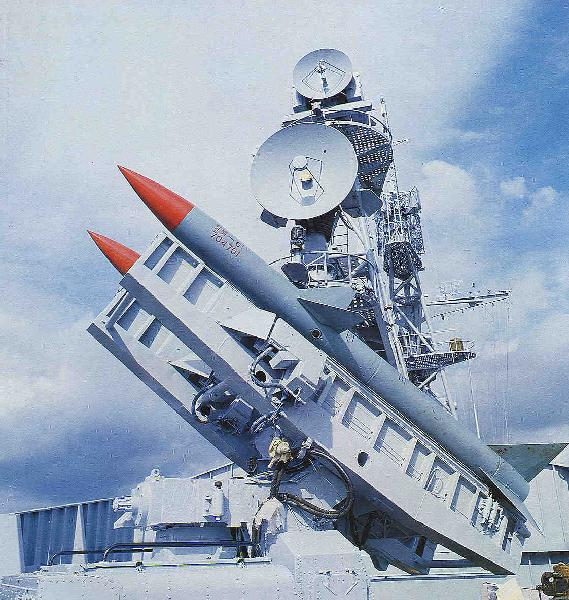
For its part, the Shanghai Aerospace Technology Institute promoted its HQ-61 air defense system—a short-range surface-to-air missile developed on the basis of the PL-11 medium-range surface-to-air missile (which, in turn, was a licensed copy of the Italian “Aspide” anti-ship missile). Engineers at the institute claimed that they would be able to use the HQ-61 as the basis for a medium-range air defense system comparable in performance to the “Sea Dart” (here they proved to be overly optimistic—the HQ-61 was ultimately deemed rather unsuccessful and installed on only a few ships).
Finally, the “platform” of the Type 051S destroyers was considered obsolete, and Chinese designers shifted their focus to the promising Type 052 destroyers, which were being developed with European technical assistance and relied heavily on imported equipment.
Nevertheless, negotiations with the British continued until 1989—when the infamous events at Tiananmen Square led to a sharp cooling of relations between China and Western countries. Military cooperation with China suddenly became “toxic,” and many countries chose to scale it back. Britain was no exception, and the Type 051S project was shut down “for reasons beyond our control” in 1990.
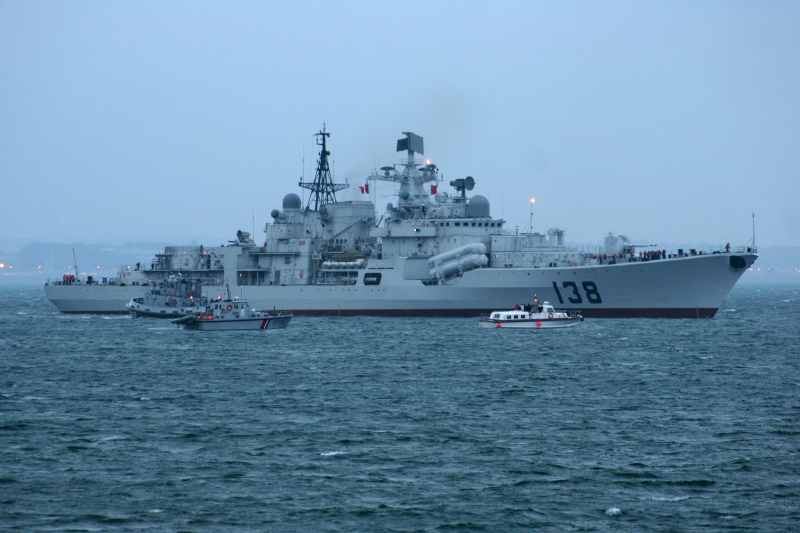
The first Chinese ships equipped with area air defense systems turned out to be Russian Project 956-E destroyers, armed with the “Shtil” air defense missile system (the export version of the Soviet M-22 “Uragan”), purchased in the early 2000s
Overall, the attempts to acquire British naval air defense systems represented a very interesting phase in the development of the PLA Navy—one that did not yield practical results but contributed to a better understanding of exactly what Chinese admirals want. And it should be noted that the project had a very good chance of success:
* The first scenario—the purchase of Type 42 destroyers on a “turnkey” basis—would have provided China with fully modern air defense ships by the late 1980s, as well as a modern and highly effective anti-aircraft missile system for them;
* The second scenario—installing the “Lightweight Sea Dart” on Type 051 destroyers—was, at the very least, on par with the modernization that the Taiwanese carried out on their old “Giering” class ships during roughly the same time period;
* Finally, the third scenario—building a new series of Type 051S ships equipped with imported British systems—would offer the best value for money (though the implementation timeline would be the longest).