An article from the magazine *Klassiker der Luftfahrt* (January 2015 issue) that I think will be of interest to readers and colleagues.
Editor’s Note: The Grumman F3F carrier-based fighter was the last biplane to serve on U.S. Navy aircraft carriers and one of the last combat aircraft to sport bright, non-camouflaged paint schemes in the 1930s. The subject of this article owes its return to flight to Hurricane Ike. Luigino Calviro tells the story of the Grumman F3F-2 biplane carrier-based fighter.
It was a dark and stormy night—the story of Chris Prevost’s Grumman F3F begins just as such stories are meant to begin. This aircraft is one of only two airworthy Grumman F3F fighters in the world. Indeed, it was on the night of June 24, 1941, that three “flying barrels” (as the Grumman F3F carrier-based fighters were nicknamed because of their rounded fuselage) from VMF-2 took off from their base at Ewa for a night patrol. The three “Grummans” were flown by three young Marine pilots: 1st Lieutenant William M. Ferris piloted fighter No. 0972, 2nd Lieutenant Warner Hagermann was piloting the fighter with number 1028, and 2nd Lieutenant Clyde H. Story) was flying fighter No. 1033. Soon, everything went awry in the worst possible way, because the weather, which had already been poor at takeoff, deteriorated even further as the flight continued. Within a few minutes, the situation for the three pilots became extremely difficult and dramatic: from the sky, shrouded in low clouds, Trying to return to base, without any radio navigation aids and, likely, unable to see anything from their tiny cockpits, the three fighter jets crashed into the forested slopes of Haleakalā, an extinct volcano on the island of Maui.
The wreckage remained forgotten for four decades
After the remains of the ill-fated pilots were recovered from the wreckage, the planes themselves were literally forgotten on the inaccessible slopes of the mountain for more than forty years. In the early 1980s, following a resurgence of interest in historic fighter aircraft, the wreckage of the fighters was recovered by Alan De Coite. He worked for collector Doug Champlin, who, until 1971, had piloted the only Grumman G-32—the civilian version of the F3F fighter. For several years, the G-32 was used as a corporate jet; then, after the United States entered World War II, the G-32 was requisitioned by the U.S. Army Air Forces and returned to the civilian market after the war ended.
This aircraft changed hands several times and was eventually purchased by Doug Champlyn. Champlyn flew the G-32 until it was destroyed in a fire at the Oshkosh Air Show in 1971. In the late 1970s, in Mesa, Arizona, Doug Champlin began building a museum and restoring his G-32. To that end, Champlin contacted Texas Aircraft Factory, but the company’s owner, Herb Tischler, quickly dashed Doug Champlin’s hopes, deeming the restoration of the aircraft completely unprofitable. The situation changed dramatically after the discovery of the wreckage of three fighters in Hawaii, as well as thanks to the fact that Grumman provided the technical drawings for the F3F fighter.
A small production run was manufactured in accordance with Grumman’s standards
In the mid-1980s, Doug Champlin began negotiations with Herb Tishler regarding the production of a small series of biplanes. The plans took shape in 1988 when Champlyn and Tishler signed a contract to build three single-seat models and one two-seat model. Restoring the aircraft to Grumman standards proved to be a lengthy and complex process, and it was only after five years of work that the biplanes were ready for their maiden flight. The aircraft, which contained only a handful of original parts, were in a condition close to that in which they were originally delivered. The results were remarkable, and the “flying barrels” were almost identical to the aircraft built fifty years earlier. The only differences were the modern avionics, the braking system, and the R-1820-50 engines, which were slightly more powerful than the original R-1820-22s. Over time, Doug Champlin donated one of the restored Grumman F3F aircraft (0972) to the Lone Star Flight Museum (Lone Star Flight Museum – LSFM), while all the others were acquired by collector Tom Friedkin’s company, Cinema Air Inc. The company subsequently sold the single-seat aircraft—one each—to Kermit Weeks and Jim Slattery. These aircraft remain airworthy.
The aircraft featured in this article, with serial number 0972, was donated to the Lone Star Aviation Museum—one of the most important museums in the United States dedicated to airworthy aircraft—while it was still under construction. However, despite the fact that this biplane fighter was considered one of the most important aircraft in the collection, the Grumman was rarely displayed and ultimately ended up as just another exhibit in the museum hangar.
In September 2008, Hurricane Ike, which struck the Texas coast with extraordinary force, also dealt a severe blow to the museum. Museum staff were unable to move all the aircraft to a safe location. The Grumman was also damaged, having been buried under seawater and silt. Although it was believed that the aircraft could not be saved, the Grumman, along with other flood victims, was transferred to Ezell Aviation. The company subjected all metal parts to a special cleaning process designed to prevent any corrosion that might have resulted from contact with saltwater. At this point in the aircraft’s history, Chris Prevo, owner and chief pilot of Vintage Aircraft Company in Sonoma, California, entered the picture. Chris Prevo explained:
“I’ve always been fascinated by airplanes from the ‘Golden Age.’ And when the opportunity arose to purchase the ‘Flying Barrel,’ I couldn’t pass it up—especially since I really wanted to fly the U.S. Navy’s last biplane fighter. In previous years, I had often spoken with museum director Larry Gregory and had always been turned down.”
After Hurricane Ike, the Grumman was put up for sale
Chris Prévot continued:
“However, the situation changed dramatically in my favor after Hurricane Ike, since the museum needed money and decided to sell several airplanes. I immediately contacted the museum staff and, thanks in part to Larry Gregory’s help, was able to purchase the aircraft in late 2012. I was a little concerned about the flood damage, but I have to admit that Ezell Aviation did an excellent job cleaning and preserving it. After the Grumman was delivered to Sonoma to my company’s workshop, we thoroughly inspected the aircraft and found that its overall condition was quite good. Most importantly, there were no signs of corrosion on the aircraft’s structural components. However, a complete overhaul was clearly necessary, during which we replaced missing parts and installed a different engine. I hoped to restore the Grumman to the condition it was in during its active service. For this reason, I replaced the 1,050-horsepower R-1820-55 engine with the original 950-horsepower R-1820-22 engine. The old fabric covering was removed from the wings and replaced with new Ceconite fabric. During the overhaul, which also included replacing all the electrical wiring, I properly adjusted the balance. After removing the old fabric covering, we discovered that it had been installed upside down. We also modified the braking system and installed the original wheels I had purchased, since Texas Aircraft Factory had previously installed disc brakes and smaller-diameter wheels.
After installing the engine—the only component that had been overhauled by a third-party company—we immediately began painting. We based our work on photographs showing the aircraft on the Oakland runway in November 1938.”
In September 2012, after more than two and a half years of extensive repairs and over a thousand hours of work, the Grumman finally took to the skies again. Chris Prevo, who has now logged more than 20 hours flying the biplane, describes its flight characteristics as follows:
«Without a doubt, the ‘Flying Barrel’ was one of the most effective combat aircraft of its time. My experience flying other historic aircraft, such as the P-40 and the Mustang, made the transition easier for me, but the Grumman handles exceptionally well in the air. It’s stable and easy to fly. What I like most is its speed, especially during takeoff.”
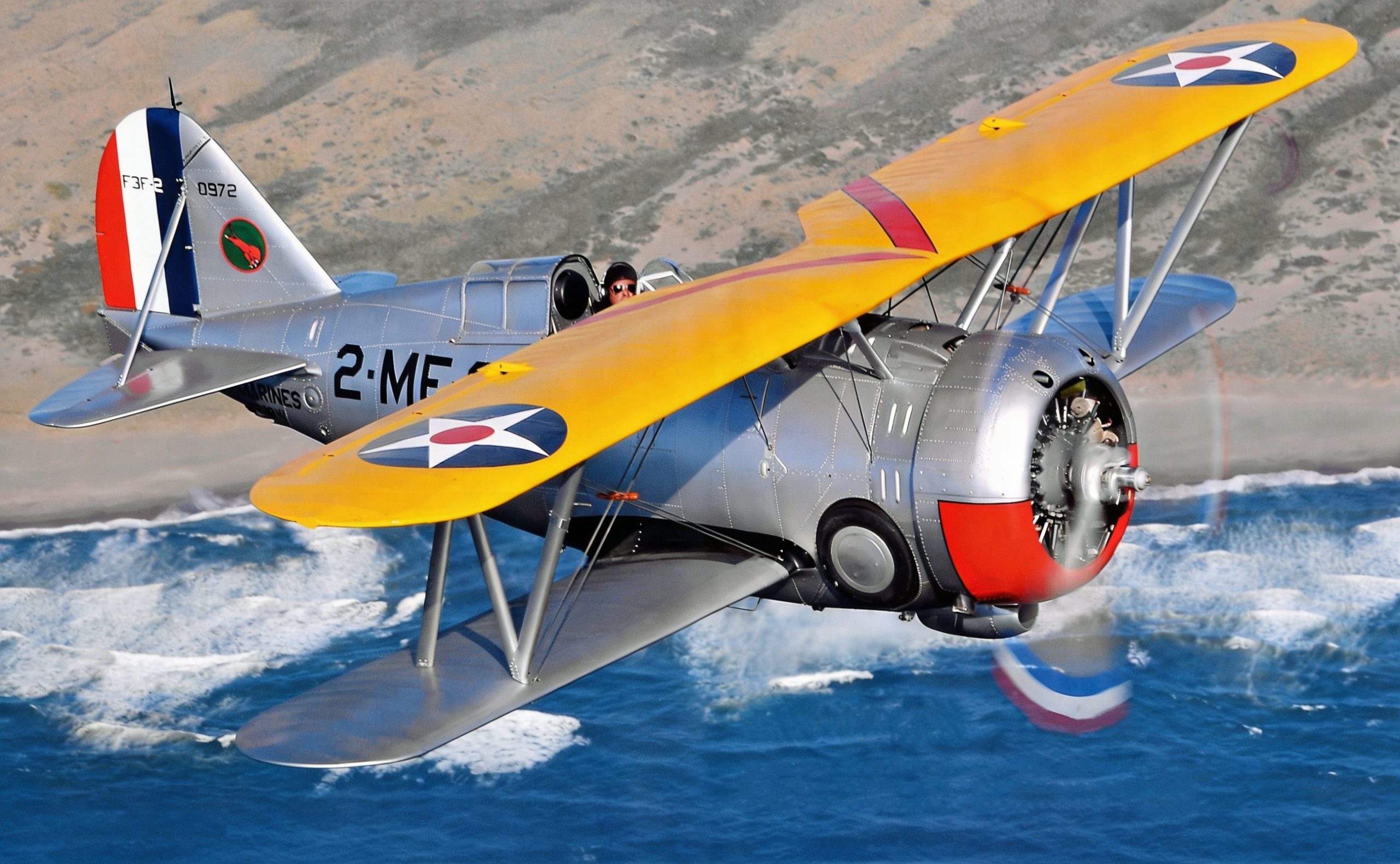
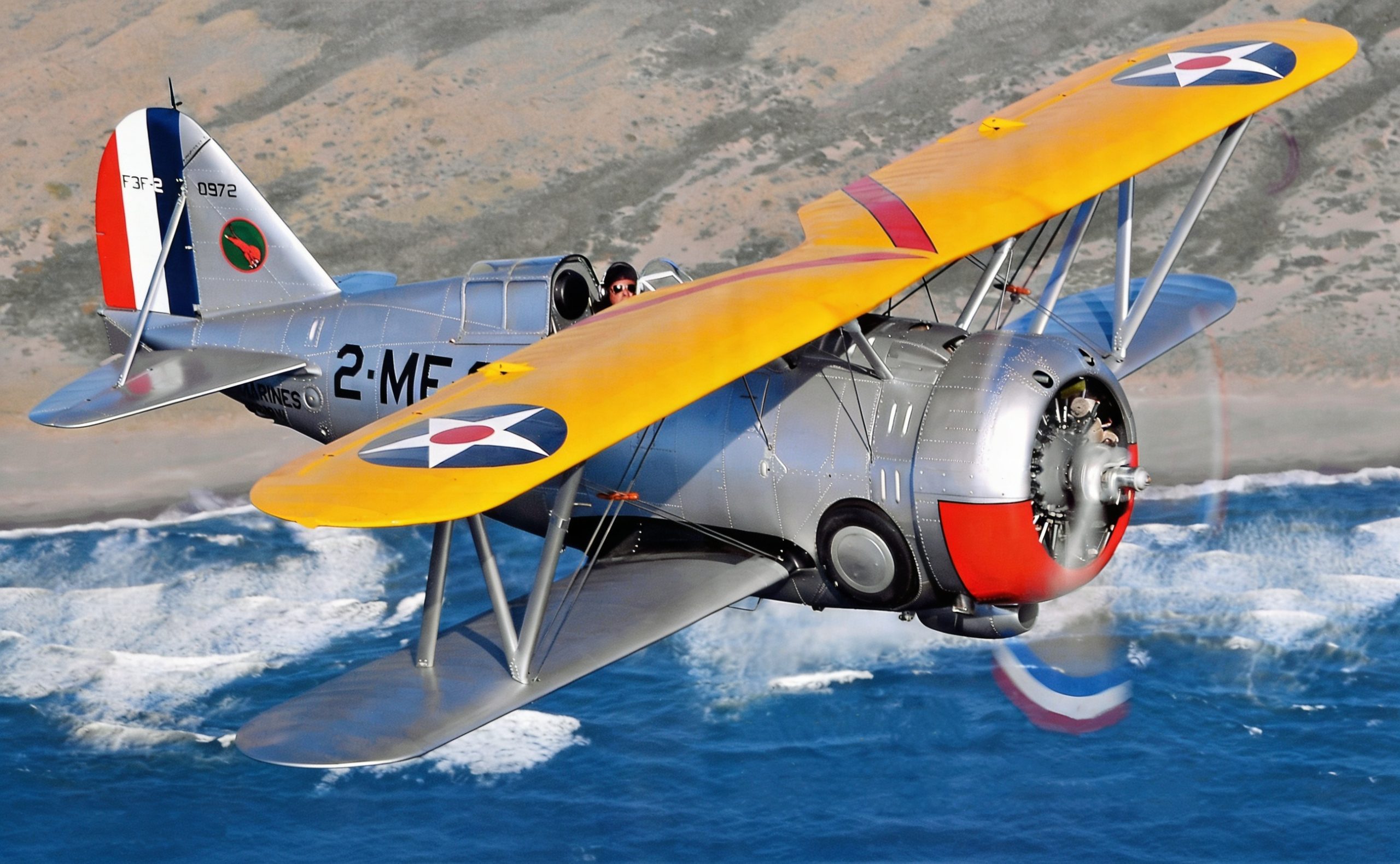
Chris Prevo purchased the Grumman in 2012 from the Lone Star Aviation Museum in Texas. Photo by Lujino Caljaro. Image processed by lmarena.ai
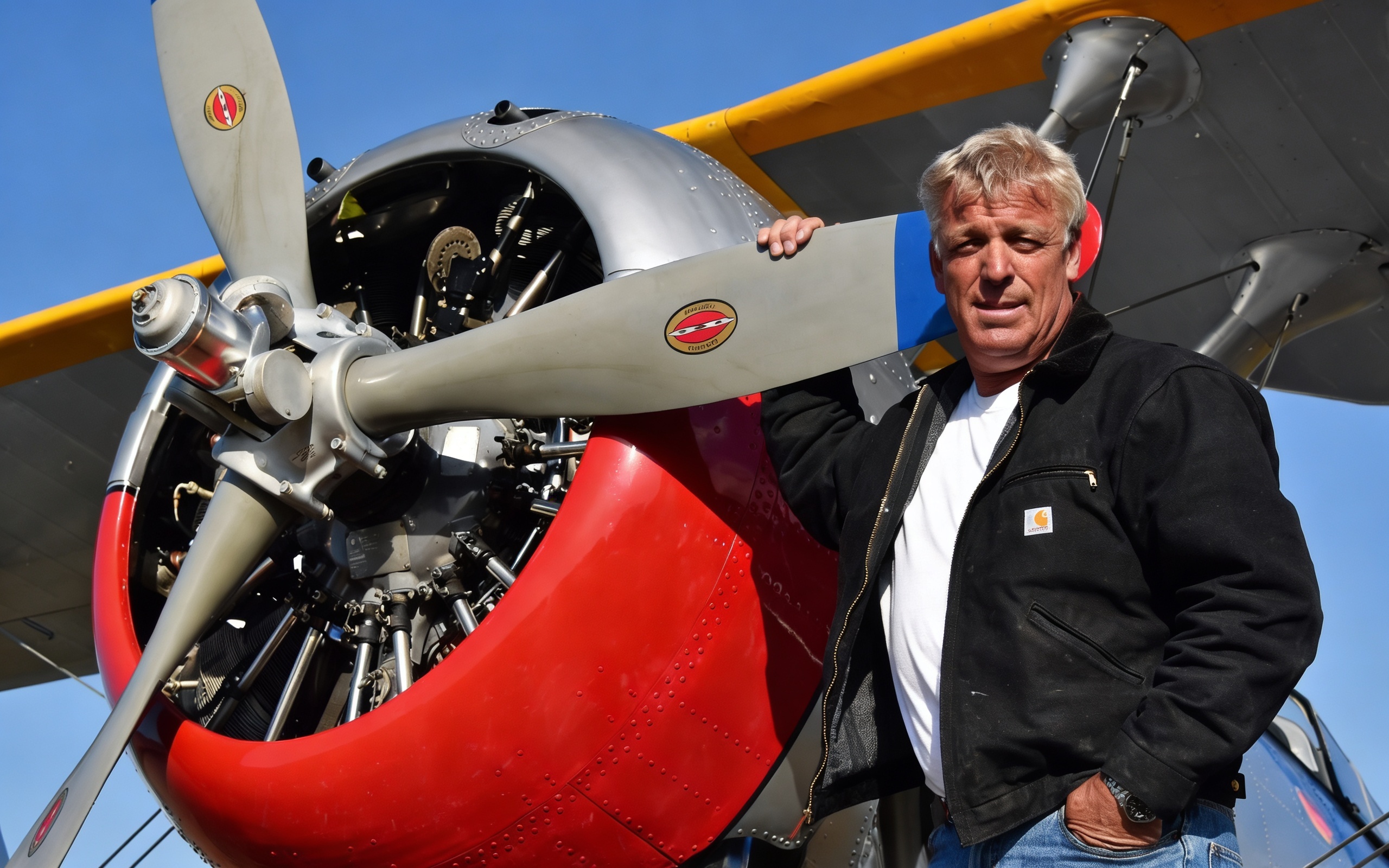
Chris Prevo has already flown several historic fighter jets. He likes the Grumman’s stability and ease of handling. Image processed by lmarena.ai
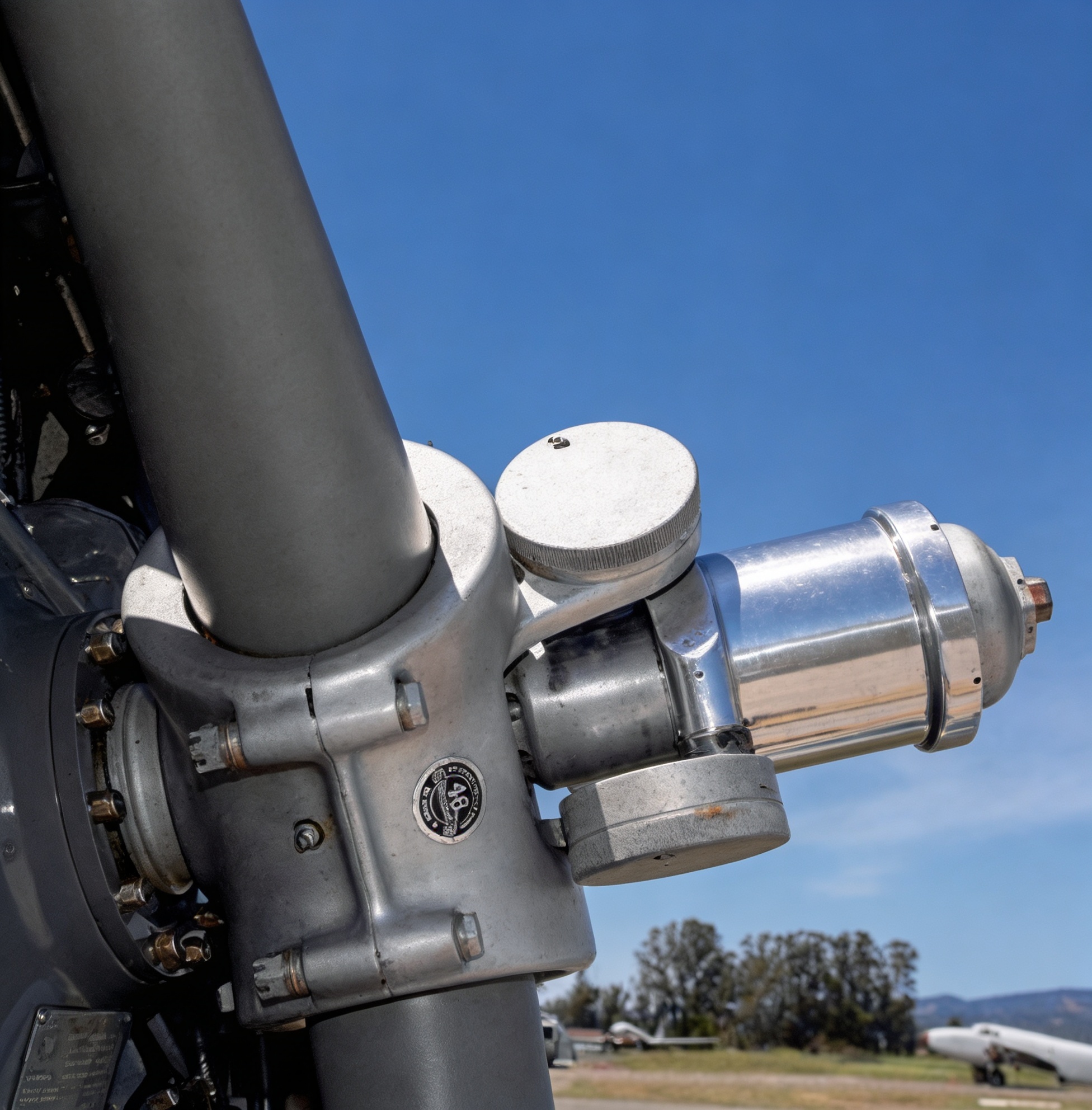
The powerplant consists of a Wright R-1820 engine and a Hamilton-Standard propeller. Image processed by lmarena.ai
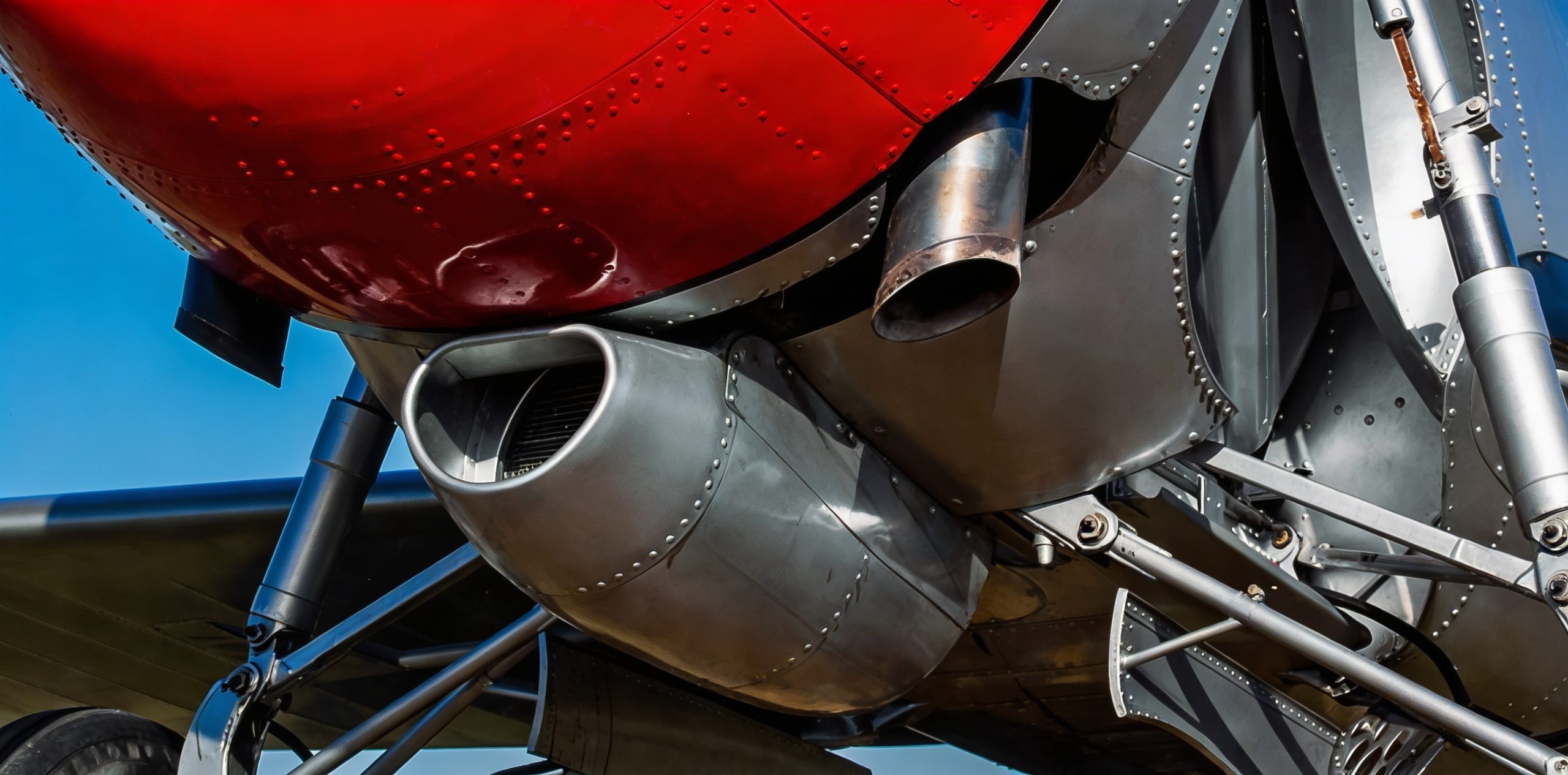
The Wright R-1820, a nine-cylinder, air-cooled radial engine, produces 950 horsepower. It is equipped with a single-stage mechanical supercharger. Image processed by lmarena.ai
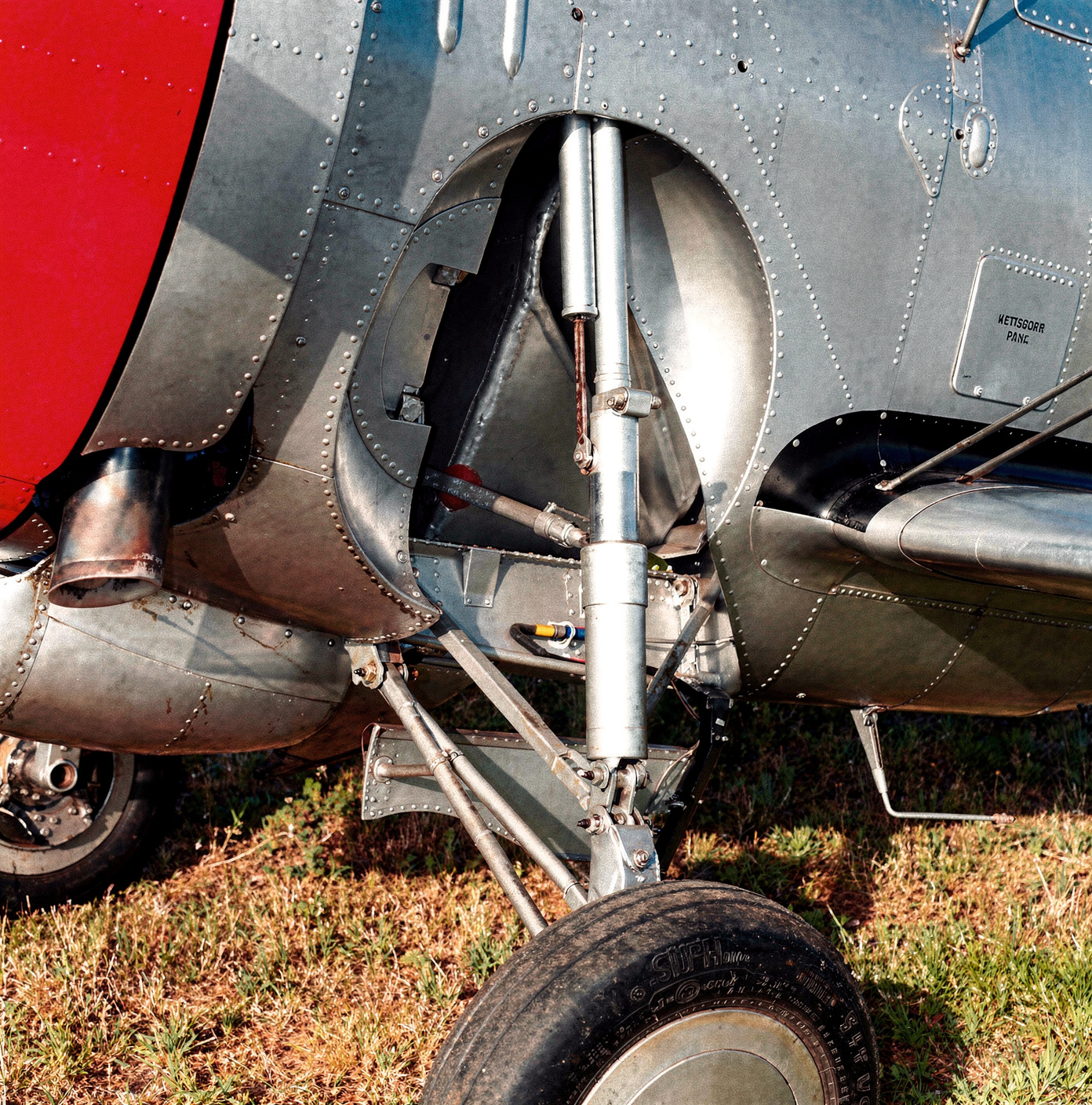
The F3F carrier-based fighters, like their predecessors, the F2Fs, are equipped with retractable main landing gear. Photo by Lujino Caljaro. Image processed by lmarena.ai
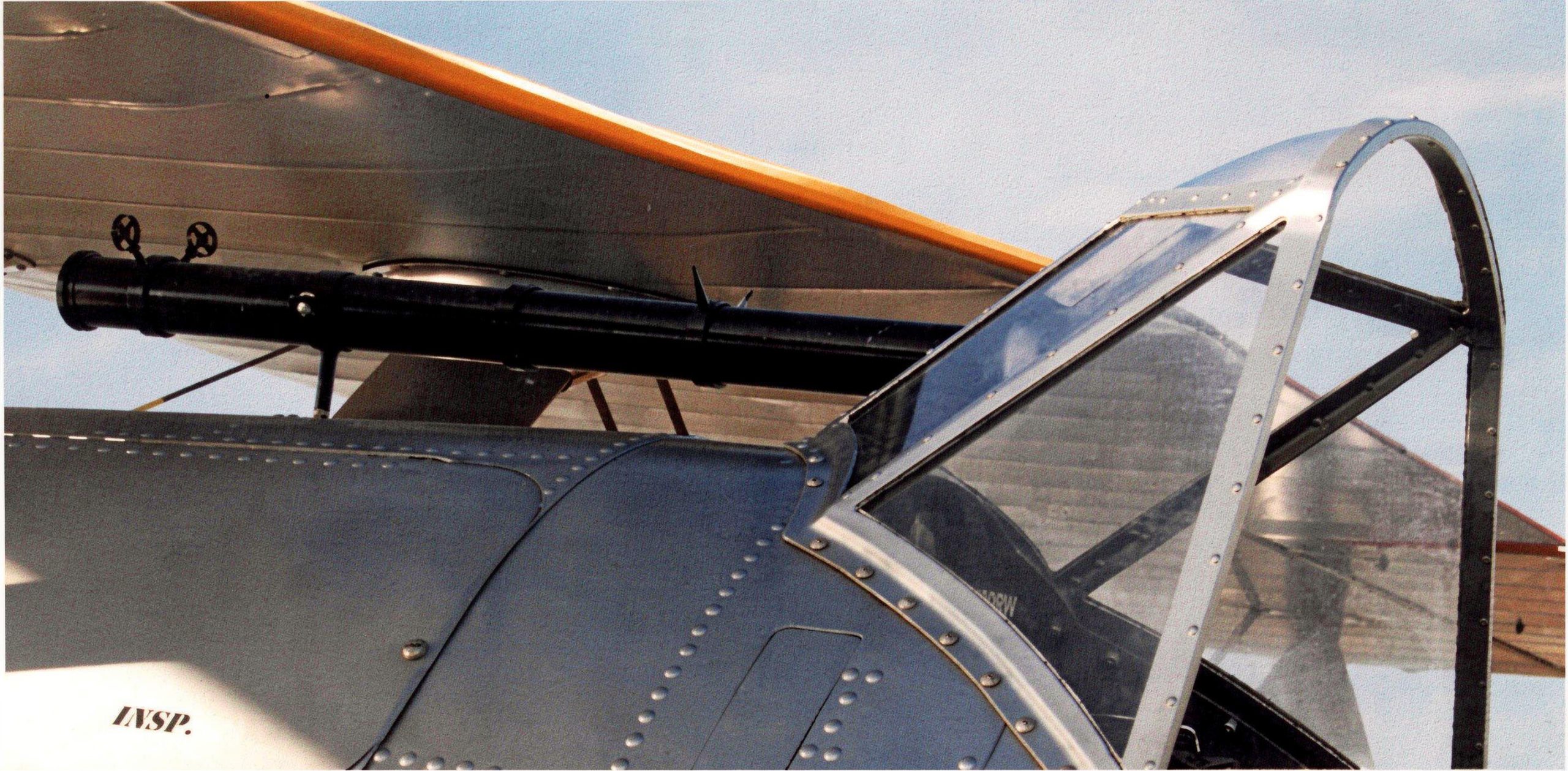
The F3F deck-based fighter was armed with two synchronized machine guns of two different calibers: 12.7 mm and 7.62 mm. It was also capable of carrying a single 116-pound (53 kg) bomb. Photo by Lujino Caljaro. Image processed by lmarena.ai
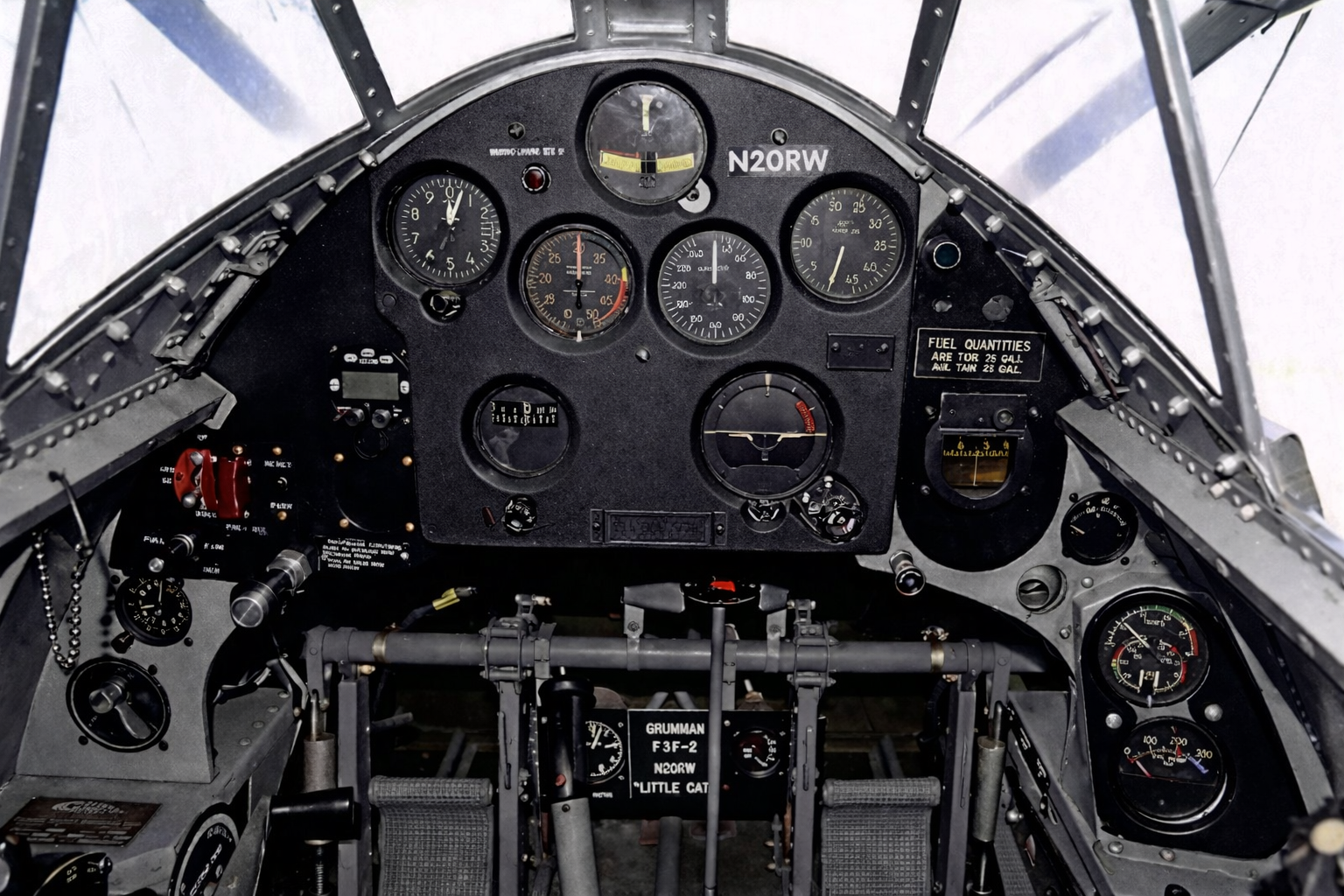
The instrumentation in the spartan-looking cockpit is not original, but is consistent with the era in which the aircraft was built. Image processed by lmarena.ai
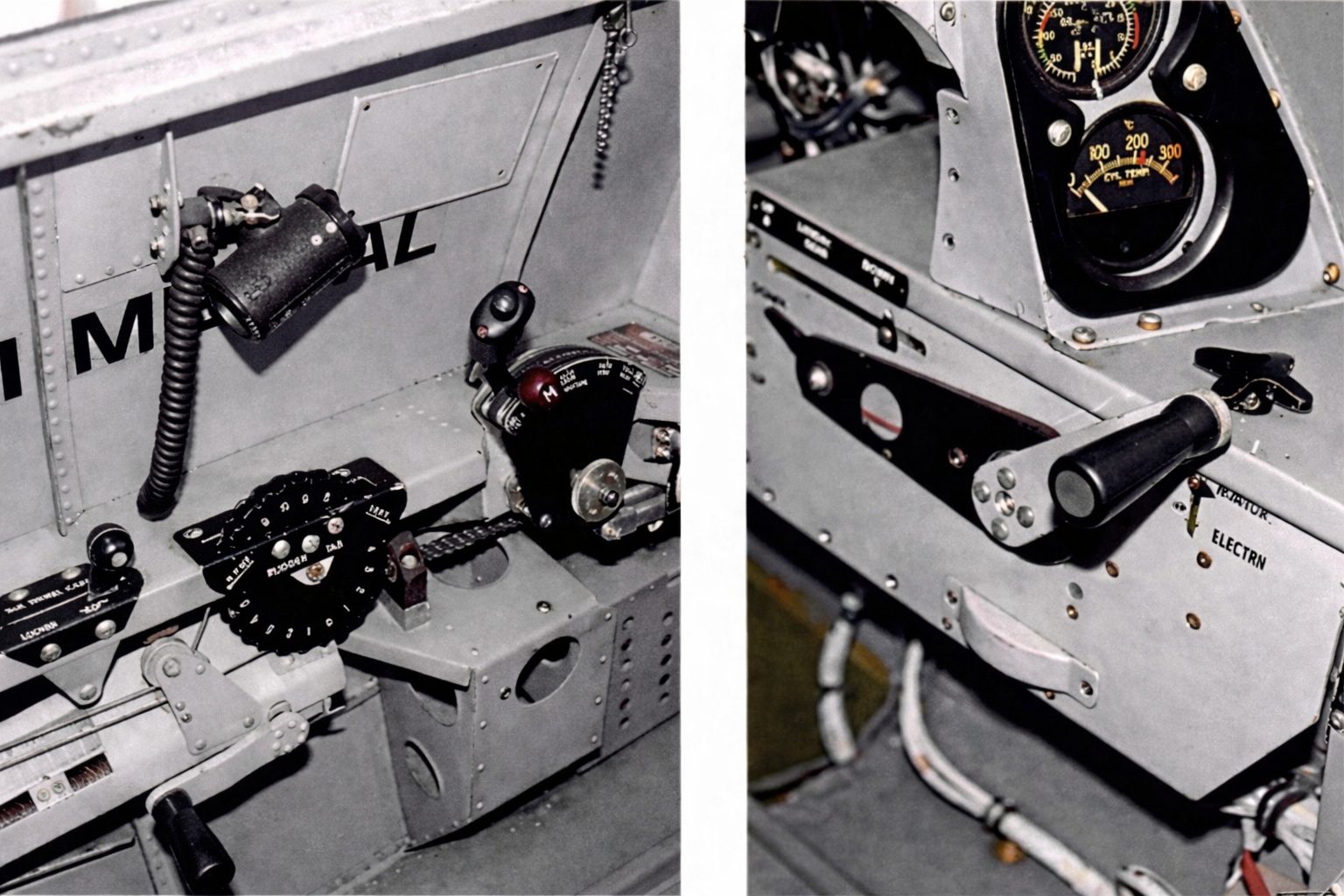
According to Chris Prevo, the Grumman can be well balanced. The main landing gear legs are retracted manually. Image processed by lmarena.ai
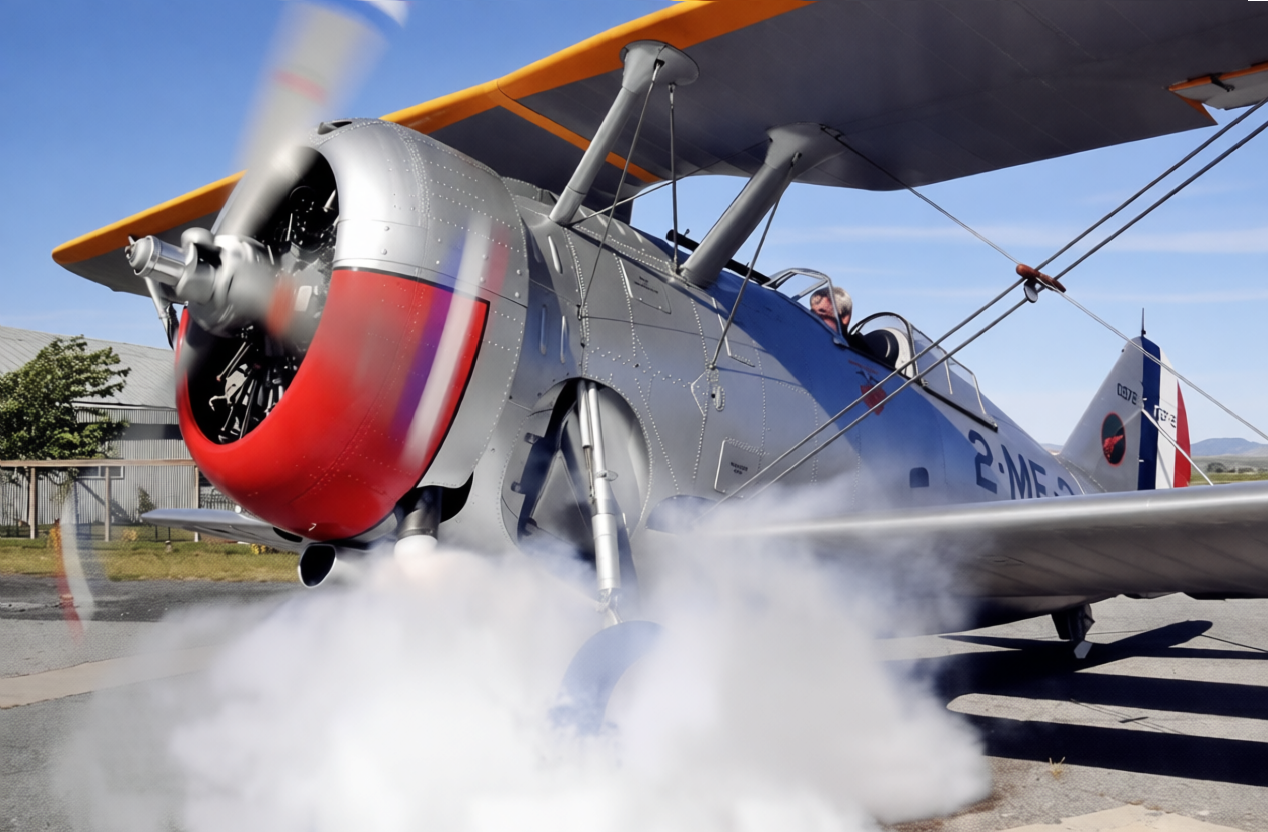
The F3F-2 accelerates very well, but it isn’t particularly fuel-efficient in this mode. Forward visibility is poor during taxiing. Image processed by lmarena.ai
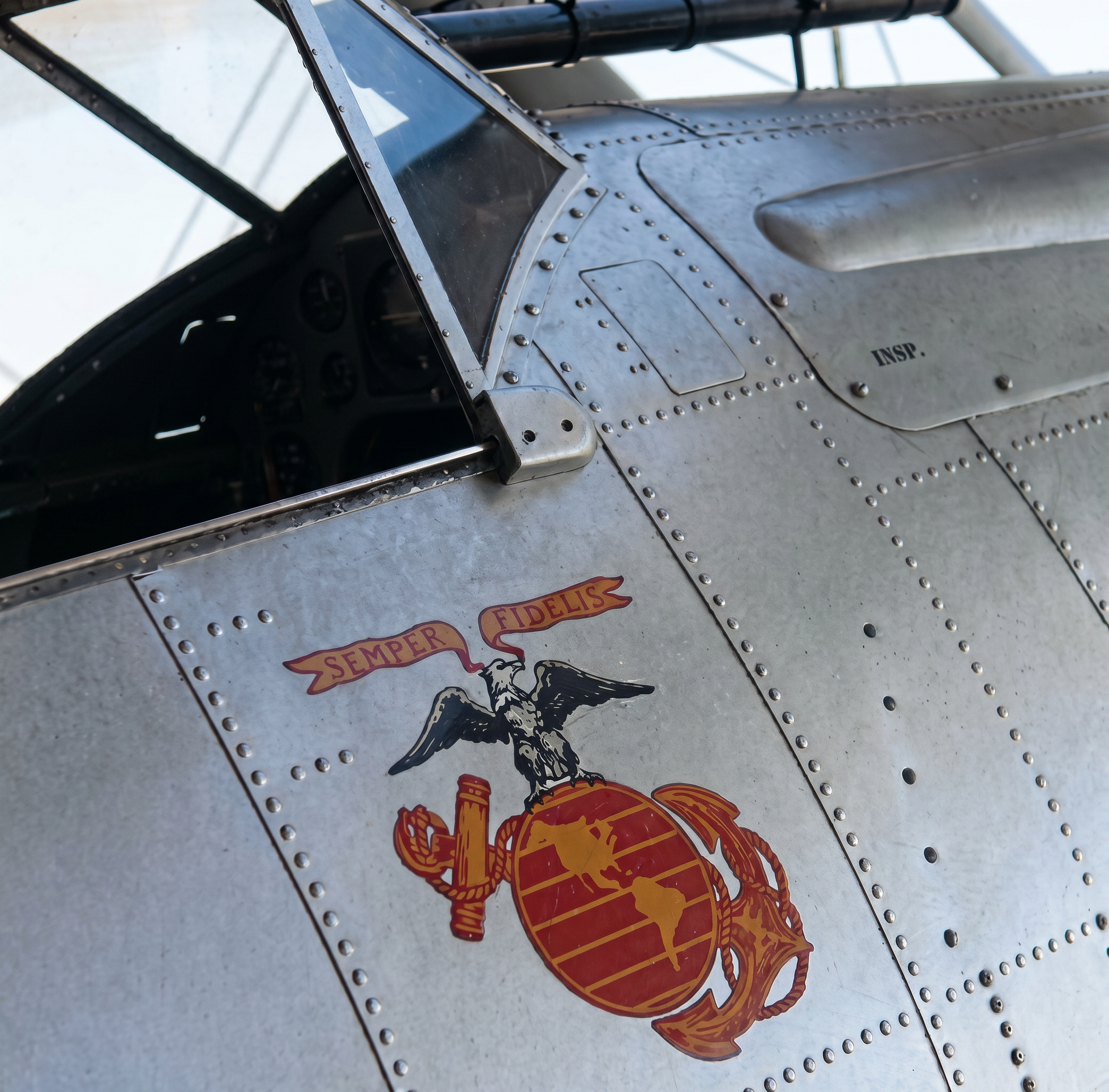
The U.S. Marine Corps motto and emblem on the fuselage: Semper Fidelis (Always Faithful). Image processed by lmarena.ai
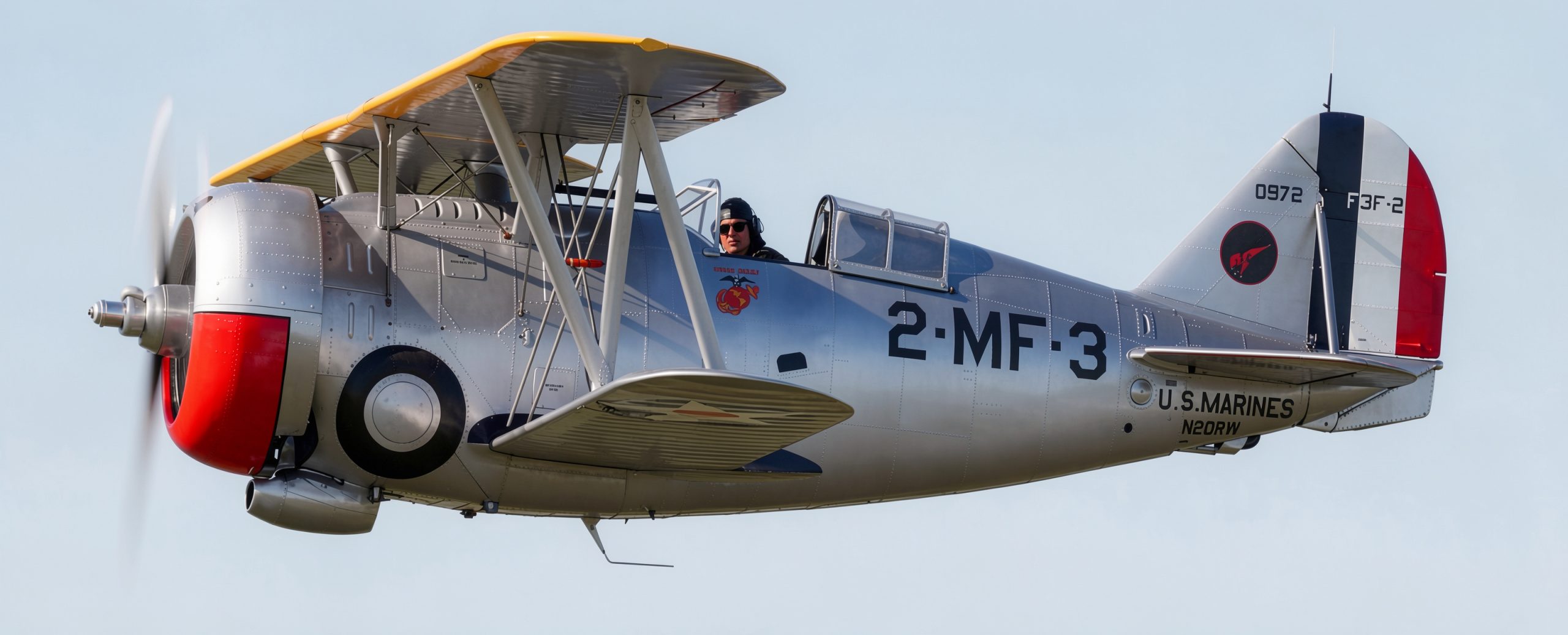
The barrel-shaped fuselage is a characteristic feature of Grumman fighter aircraft. The connection between the F3F-2 and the later F4F Wildcat fighter is undeniable. Image processed by lmarena.ai
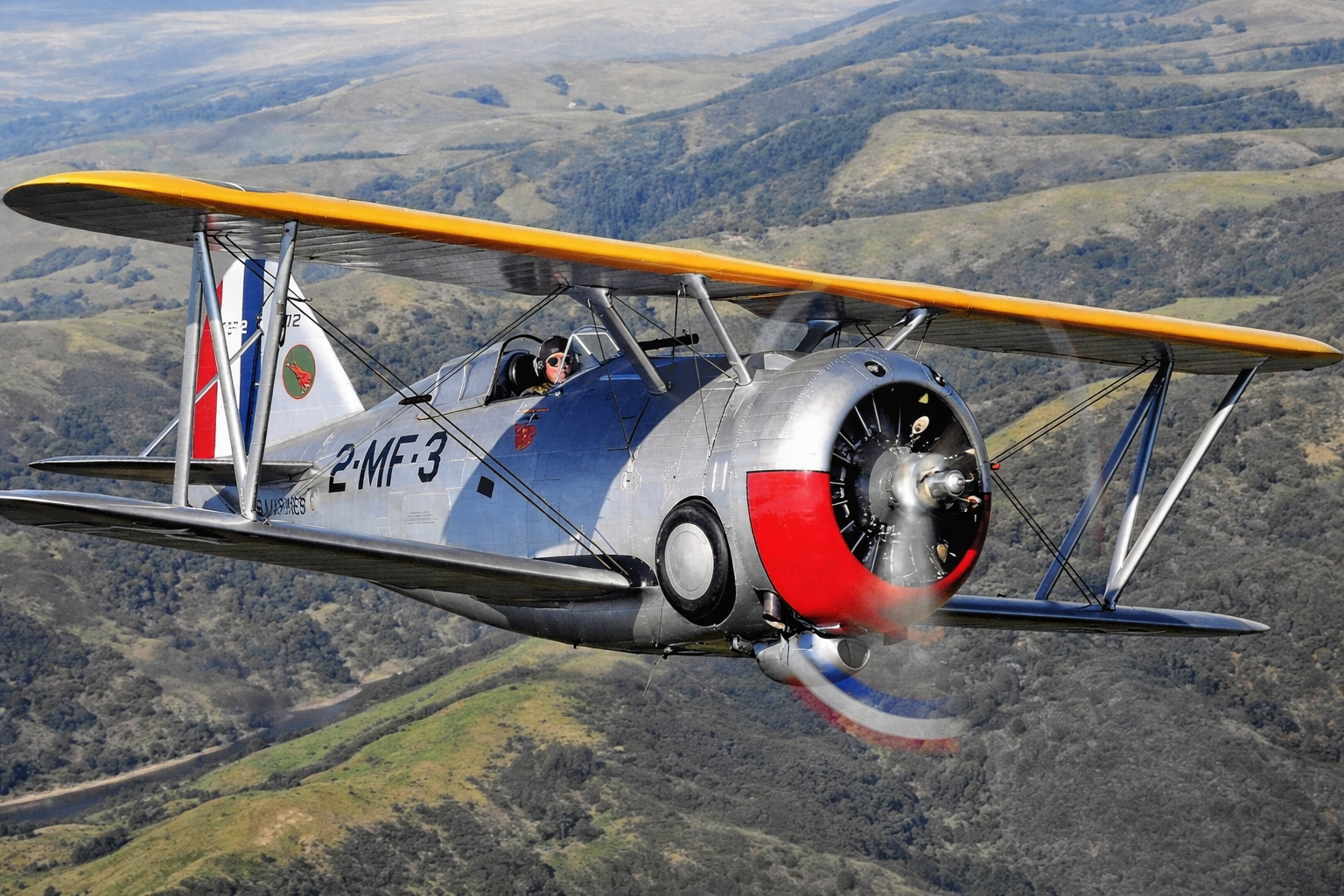
With the Grumman F3F, the era of American carrier-based biplane fighters came to an end. Image processed by lmarena.ai
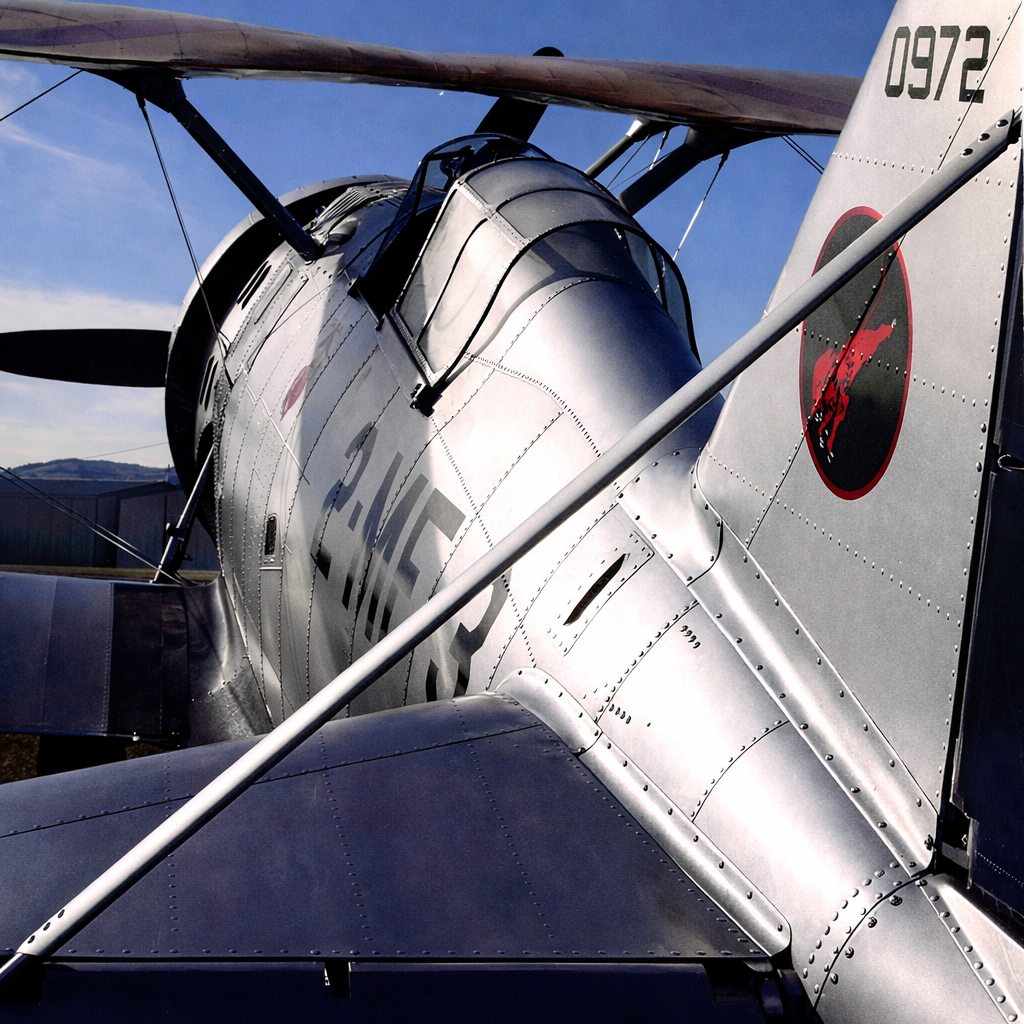
This biplane from the 1930s is in excellent condition today. There are only two airworthy Grumman F3F fighters in the world. Image processed by lmarena.ai
FLIGHT AND TECHNICAL SPECIFICATIONS
Type: Grumman F3F-2
Role: carrier-based fighter
Status: Mass Production
Manufacturer: Grumman Aircraft Engineering Corp., New York, U.S.
Crew: 1 person
Powerplant: one nine-cylinder, air-cooled Wright R-1820-22 radial engine, producing 950 l.s. (698 kW) and driving a three-bladed Hamilton-Standard metal propeller
Dimensions:
Wingspan: 9.75 m
; Length: 7.06 m
; Height: 2.84 m
; Wing area: 24.15 m²
Weight:
Empty weight: 1,490 kg
; maximum takeoff weight: 2,175 kg
Flight Characteristics:
Maximum speed: 425 km/h
; cruising speed: 240 km/h
; service ceiling: over 10,000 m
; range: approx. 1,500 km
APPENDIX
The Grumman F3F-2 prototype, an upgraded version of the F3F-1, took to the skies for the first time in July 1936. Externally, the new version differed from its predecessor mainly in its enlarged engine cowling, which became necessary after the installation of a nine-cylinder Wright R-1820 engine (the F3F-1 was equipped with 14-cylinder Pratt & Whitney R-1535 radial engines). The first F3F-2s, which entered service in November 1937, were issued to Squadron VF-6, based on the aircraft carrier Enterprise. The last unit equipped with the F3F-2 variant was Marine Corps Squadron VMF-1, based at Quantico Air Station. A total of 167 “Flying Barrels” were produced: 57 F3F-1s (54 production models + 3 prototypes), 82 F3F-2s (81 production models + 1 prototype), and 28 F3F-3s (27 production models + 1 prototype). The final version, the F3F-3, differed from the F3F-2 only in minor details. Even before the United States entered the war, all F3Fs had been withdrawn from fighter squadrons and were being used as training and liaison aircraft.
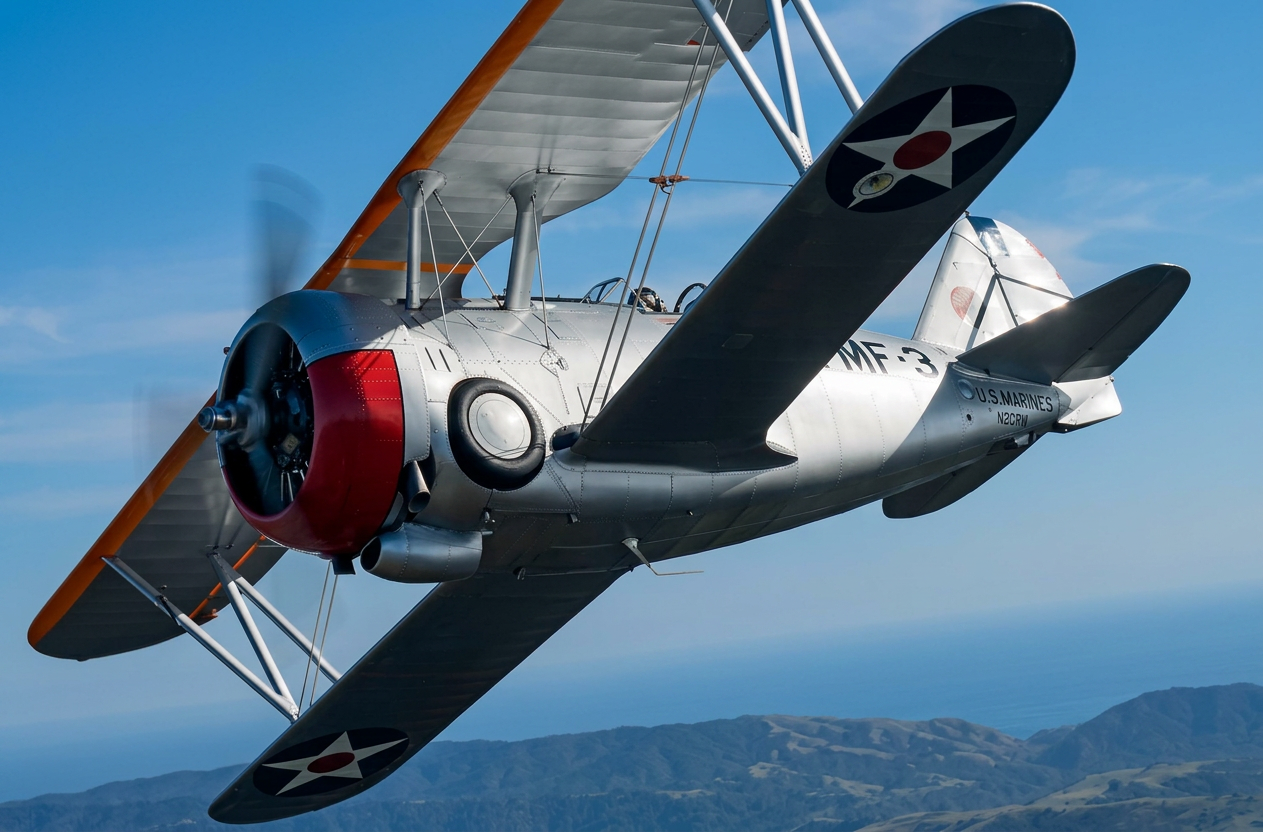
The F3F carrier-based fighters were adopted by the U.S. Navy in 1936. By the end of 1941, the biplanes had been withdrawn from fighter squadrons. Image processed by lmarena.ai
Source: Luigino Caliaro, “The Flying Barrel,” *Aviation Classics*, January 2015, pp. 60–66
Translation first published at – https://vk.com/@710541705-das-fliegende-fass