What's that strange antenna on the Su-34? We reveal the secret behind the latest upgrade to the Russian fighter-bomber

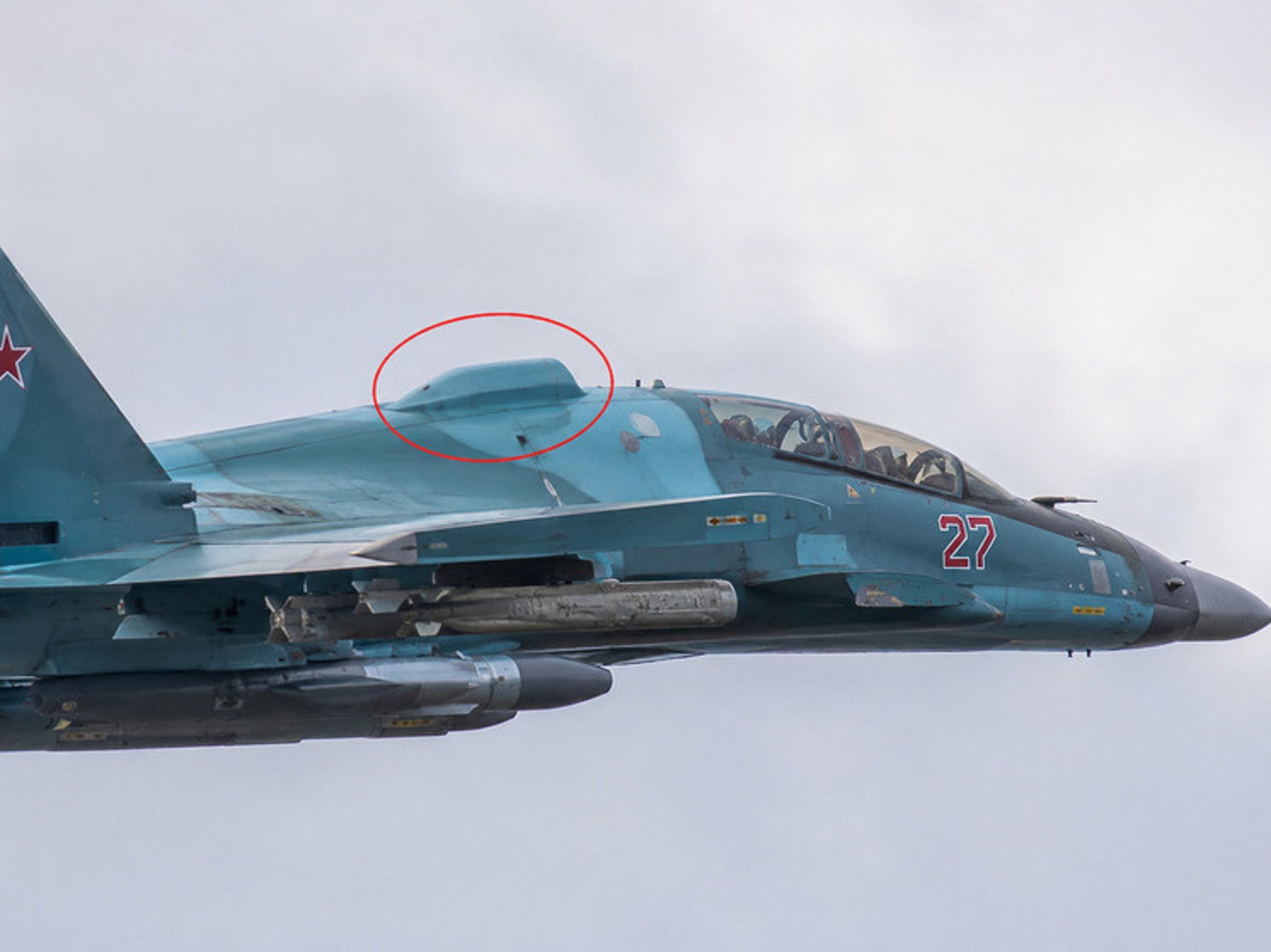
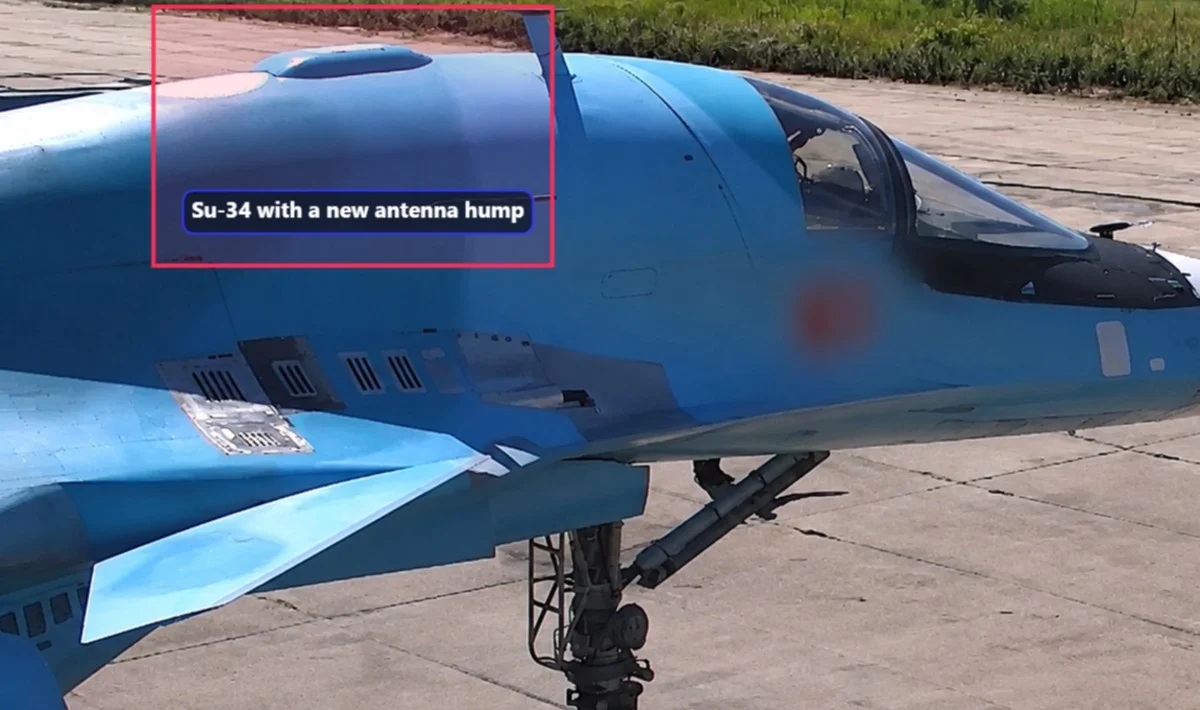
In recent weeks, there has been active discussion within the expert community about an intriguing detail spotted on the Su-34 frontline bombers of the Russian Aerospace Forces. In footage released by the Russian Ministry of Defense showing these aircraft in action in the zone of the special military operation, attentive observers have spotted a previously unseen design feature. This refers to a distinctive antenna “hump” located on the upper part of the fuselage, directly behind the armored crew compartment. The authors of the Telegram channel “Military Chronicle” were the first to notice this unusual detail after closely examining the video footage released by the Ministry of Defense.
Who was the first to identify the new product?
Following in the footsteps of Russian enthusiasts, foreign analysts also began examining the images. Israeli defense analyst Guy Plopsky published his own analysis, in which he confirmed the presence of a new design change on the Su-34. According to him, he first noticed a similar protrusion back in May 2026 in photographs published on the Russian Telegram channel “Aviamir34.” At the time, the expert speculated that what he was looking at was either a modernized Su-34M or one of the aircraft’s new versions adapted for combat conditions. According to Plopsky’s assessment, the placement of the new fairing is typical for satellite communication antennas, data transmission systems, or electronic warfare equipment that require an unobstructed view of the upper hemisphere without interference from airframe components.
What’s Hidden Under the “Hump”
The exact functional purpose of the new antenna module remains a subject of debate, as there have been no official comments from the Russian defense industry on this matter. Nevertheless, the most plausible theory is that a high-speed, low-Earth-orbit satellite communications terminal is housed beneath the fairing. It is precisely this interpretation that explains both the characteristic shape of the fairing and its location on the fuselage’s nose cone. According to some reports, the supplier of such equipment may be the Russian aerospace company “Bureau-1440,” which specializes in space communications systems.
In addition to satellite communications, experts are considering other possible options. In particular, the fairing could house additional receivers for a radiation warning system, electronic warfare equipment, or data relay equipment for inter-aircraft information exchange as part of network-centric combat concepts. Nevertheless, the satellite terminal theory appears to be the most likely, as it is the one that best aligns with the overall logic of the modernization of Russia’s strike aviation.
Why Does the Su-34 Need Satellite Communications?
The integration of a high-speed low-Earth orbit satellite communications terminal has the potential to dramatically expand the combat capabilities of a front-line bomber. In modern warfare, where the speed of receiving and transmitting information plays a critical role, the availability of a secure broadband communication channel with a satellite allows the Su-34 crew to receive real-time target designations, up-to-date data on the air and ground situation, as well as intelligence from other sources. This significantly reduces the time required for decision-making and the use of weapons, which often determines the outcome of major offensive operations.
In addition, satellite communications make it possible to significantly improve the accuracy of high-precision aerial weapons, especially when operating at great distances from the front lines. The bomber effectively becomes a full-fledged component of so-called “algorithmic warfare,” where information is transmitted in a closed-loop “reconnaissance—command—strike” cycle with minimal delays. This is particularly relevant in the context of the increased ranges of guided aerial bombs with standardized planning and correction modules (UMPBK), where the carrier aircraft can remain outside the engagement range of enemy air defense systems while still needing to rapidly receive target coordinates and adjust the trajectories of its munitions.
The Context of Continuous Modernization
The introduction of a new antenna module is by no means the only change the Su-34 has undergone in recent years. Throughout the special military operation, the Russian aviation industry has consistently made modifications to the aircraft’s design in response to accumulated combat experience and increasing resistance from enemy air defense systems. The strengthening of the enemy’s air defense system has forced the Russian Aerospace Forces to increase the launch ranges of their air-to-ground munitions, improve their electronic warfare capabilities, and seek new ways to enhance the aircraft’s survivability.
At the same time, scheduled production of the upgraded Su-34M variant continues at the V. P. Chkalov Novosibirsk Aviation Plant. This variant differs from the base aircraft in its new electronic systems, expanded arsenal, and improved radar. As noted by pilots operating the new aircraft, the difference between the basic Su-34 and its upgraded variant is comparable to the difference between a “Zaporozhets” and a “Mercedes.”
The new antenna “hump” may indicate that the modernization process is not limited to scheduled upgrades but is continuing on an ad hoc basis, taking into account the most current battlefield requirements. We are likely witnessing the emergence of yet another—as yet unofficially designated—variant of the famous “combat duck.”
Tactical and Technical Specifications of the Su-34
- Crew: 2 people
- Length — 23.3 m
- Wingspan — 14.7 m
- Height — 6.09 m
- Wing area — 62 m²
- Curb weight — 22,500 kg
- Normal takeoff weight — 39,000 kg
- Maximum takeoff weight—45,100 kg
- Engines — 2 × AL-31F turbofan engines
- Maximum drawbar pull without afterburner — 2 × 8,250 kgf
- Thrust with afterburner — 2 × 13,500 kgf
- Maximum speed: 1,900 km/h
- Practical range — 4,000 km
- Range with a full tank and refueling—up to 7,000 km
- Practical ceiling — 17,000 m
- Maximum combat load — 12,000 kg
- Sh-141 “Predator” Radar with Phased Array Antenna
Sources of Information
- MK — “Military experts have noted changes in the Su-34’s design” (dzen.ru/a/aigCIov7R3hKl5lz)
- Militarnyi — «New Antenna Fairing Spotted on Russian Su-34, Indicating an Upgrade» (militarnyi.com)
- Podolyaka.ru — “A still from a recently released video by the Russian Ministry of Defense showing the combat operations of the Su-34 of the Aerospace Forces” (podolyaka.ru, June 8, 2026)
- Rambler/News — “Military experts have noted changes in the Su-34’s design” (news.rambler.ru)
- DefenceBlog — Analysis by Guy Plopski (defence-blog.com)
- RUWIKI — Article “Su-34” (ru.ruwiki.ru)
- Vzglyad — “Su-34 Pilot: Aircraft, Tactics, and Targets Have Changed During the Special Military Operation” (vz.ru, September 23, 2025)
- https://www.flyajetfighter.com/su-34-moscow-adapts-its-bomber-based-on-lessons-learned-in-ukraine/