In Forbes, journalist Vikram Mittal analyzed all the strengths and weaknesses not only of the “Yolka” UAV but also of its successors that have already entered service with the Russian military. I think a Western perspective on Russian UAVs will be of interest to most readers.

The New Reality of the Battlefield
High-precision drone strikes are radically changing the nature of modern warfare. Under these conditions, interceptor drones are becoming a crucial component of the combat arsenal, as they hunt down approaching enemy aircraft and destroy them before they reach their targets. The Russia-Ukraine conflict serves as a unique testing ground for such systems, as both sides are actively integrating them into their air defense systems. Ukraine is adopting a wide range of interceptors, which are being used extensively against Russian attack drones. Russian developments in this area are also intensifying, with the “Yolka” system emerging as the primary interception system.
The Design and Operating Principle of «Yolka»
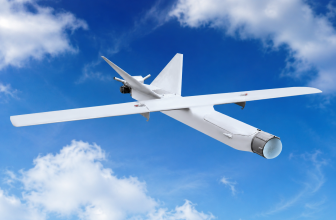
The Russian “Yolka” interceptor is a lightweight, short-range system designed to physically destroy a wide variety of aerial targets. The aircraft is capable of engaging both small FPV quadcopters and larger fixed-wing systems. The interceptor has a compact cylindrical fuselage and four short fixed wings in a cross-shaped configuration, located at the rear of the fuselage. The drone’s airframe is made of carbon fiber, and many of its parts are printed on standard 3D printers. The drone is most often launched by a single military personnel using a portable launcher, although there are also stationary platforms integrated with radar stations. After launch, the onboard computer begins tracking the target using an electro-optical camera, and in the final stage, guidance switches to an infrared camera to lock onto the heat signature of the engines and batteries.
Tactical and Technical Specifications
The drone weighs 1.3 kilograms. Its maximum flight speed reaches 230 kilometers per hour. Its effective interception range varies from three to four kilometers. The operational flight altitude is limited to two kilometers. The drone does not carry an explosive warhead and strikes its target solely through kinetic impact.
Advantages and Disadvantages of Kinetic Damage
Avoiding the use of explosives offers a number of practical advantages. Production costs are reduced, the process of transporting and storing ammunition is simplified, and the risk to the operator during launch preparation is minimized. The “fire-and-forget” principle significantly increases the crew’s survivability, since the operator can immediately change position or take cover after launch—a feature that sets “Yolka” from many Ukrainian counterparts that require constant manual control right up until impact. However, the absence of an explosive warhead also entails serious drawbacks. The kinetic impact reduces the probability of guaranteed target destruction upon impact, especially if the drone has structural integrity. Furthermore, even the most advanced autonomous tracking system can fail in conditions of poor visibility or gusty winds, leading to missed shots or only minor damage to the enemy drone.
Challenges of Mass Production
Although the “Yolka” was designed as an inexpensive, mass-produced drone, its use by the military has so far been quite limited. Since the drone was demonstrated in 2025, footage of its actual combat use has been rare, appearing mainly in official reports from the Ministry of Defense. On the front lines, soldiers still prefer to defend themselves against small drones using small arms and shotguns. This situation points to serious manufacturing challenges. Modern guidance systems require optical sensors, infrared cameras, and specialized onboard processors based on artificial intelligence. The production of these components is complicated by sanctions and dependence on foreign microchip supply chains. As a result, the Russian defense industry has not yet been able to catch up with the enemy in terms of production volume, since Ukraine’s monthly production of FPV drones alone reaches 200,000 units.
Successors and Prospects for Development
In addition to “Yolka,” Russian designers are actively developing other interceptor systems. Open-source reports mention the “Kinjal” high-speed kinetic interceptor, designed specifically to counter maneuverable FPV drones. Also presented is the “BOLT” system, which is initially integrated with detection networks based on radar stations. Engineers are also demonstrating larger integrated systems that combine interceptor drones, early-warning radars, and fully autonomous guidance. Although these developments have not yet achieved the same level of widespread adoption as “Yolka,” they demonstrate the direction of future development. “Yolka” should be viewed not as the final result, but merely as a starting point in a large-scale effort to create a layered air interception system that will be continuously improved to counter growing airborne threats.
Sources:
https://www.osnmedia.ru/svo/forbes-dron-perehvatchik-rf-yolka-rabotaet-po-sisteme-vystrelil-i-zabyl/