The crater is forty meters in diameter. What was the Soviet Air Force’s most powerful World War II aerial bomb, and what aircraft could carry it?

On August 5, 1943, the Red Army liberated Oryol. That same day, Moscow fired the first salute of the war. And on the outskirts of the city, near the train station, several staff vehicles pulled up. Generals stepped out of them—Air Force Commander Novikov, Chief Engineer Repin, and Mataev, the man in charge of aviation armaments.
What they saw was beyond belief. A huge crater—forty meters in diameter and eight meters deep—looked as if someone had scooped out the earth with a giant bucket. All around were crushed train cars and a mangled locomotive. At the station itself, several trains carrying equipment and ammunition were locked up. She did all this all by herself…
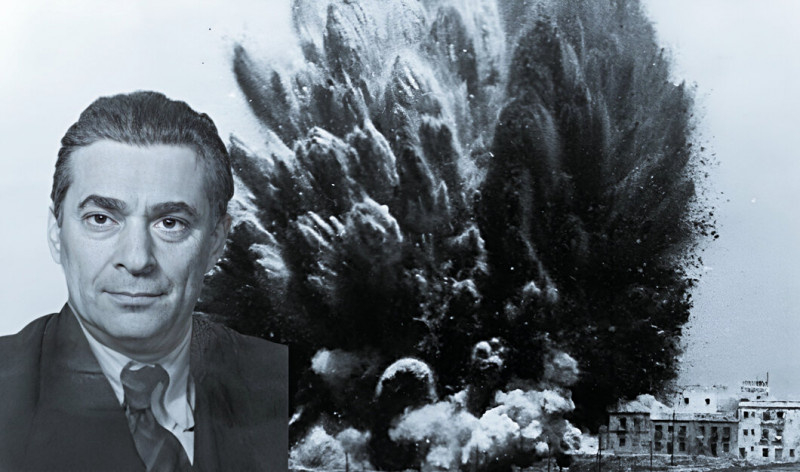
Who came up with the term “little one”?
It was established by a team led by Professor Nison Gelperin, Doctor of Technical Sciences. Before the war, he had built chemical plants—the Berezniki, Stalino, and others. Shortly before the war, he was tasked with organizing a design bureau for aircraft bombs.
At first, the Gelperin Design Bureau focused on replacing steel casings with reinforced concrete ones—to conserve scarce metal. Calculations revealed something surprising: the strength of the casing has almost no effect on the explosive force. This meant it was possible to build thin-walled bombs and fill them with much more explosive.
That is how reinforced concrete bombs weighing 100, 250, 500, and 1,000 kilograms came into being. And then came the welded, thin-walled bombs, in which the casing accounted for only 35 percent of the weight.
But the army needed something truly devastating—something that could destroy factories, fortresses, and airfields in a single strike. Ordinary bombs scattered when dropped. They needed just one—but one that would be enough.
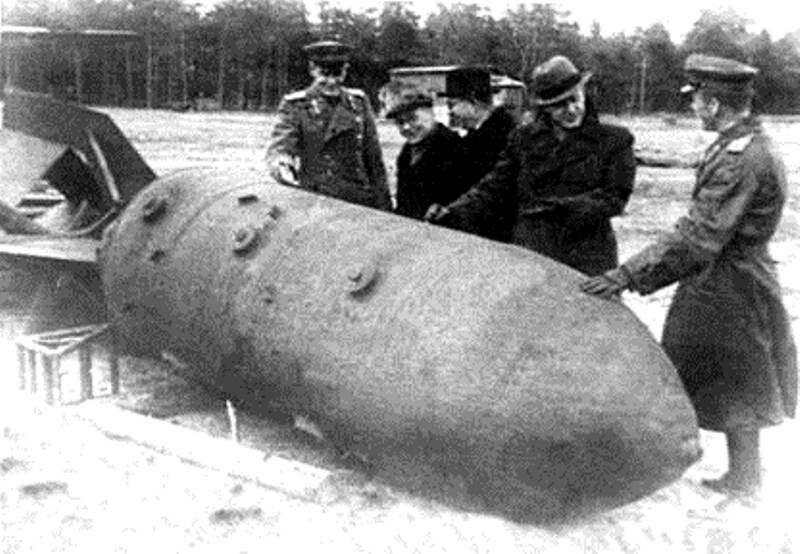
How it was set up
The FAB-5000NG weighed 5.4 metric tons. It was 5.2 meters long and had a diameter of 1 meter. Inside were 3.2 metric tons of TGA explosive mixture: 60 percent TNT, 24 percent hexogen, and 16 percent aluminum powder. It had six instant-action fuses: a nose fuse, a tail fuse, and four side fuses.
The problem was how to transport it. The only suitable aircraft was the Pe-8 heavy bomber. But its maximum payload was four metric tons. A little over five metric tons would mean an overload of nearly one and a half metric tons. The bomb did not fit entirely into the bomb bay; the hatch doors would not close, leaving a half-meter gap. The aircraft flew with compromised aerodynamics. In peacetime, this would never have been permitted. But it was wartime.
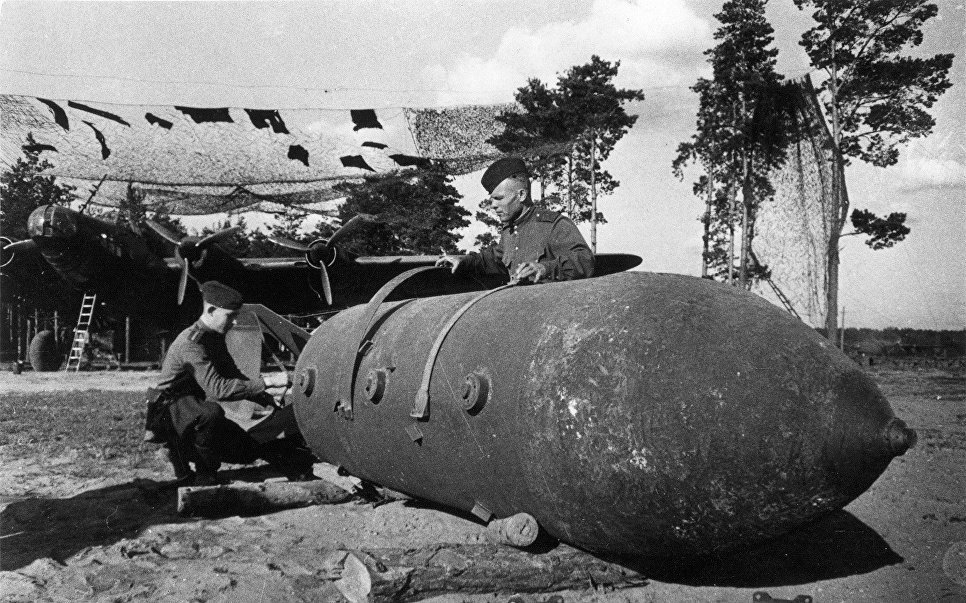
The designers and pilots would remember that first test flight for the rest of their lives. The takeoff roll was almost twice as long as usual—they were afraid it wouldn’t get airborne. It did. Then they were afraid the bomb would spin out of control in the air—but no, it flew steadily. They dropped it into the forest from an altitude of 2,500 meters instead of the planned 3,000—cloud cover got in the way. The pilot gave the order: drop it and gain altitude immediately. The aircraft shook, but not too badly.
When they reached the crash site, an unprecedented sight met their eyes. In the old forest, a huge crater, about 100 meters in diameter, gaped open. Trees lay toppled. They counted more than 600 tree trunks thicker than 20 centimeters.
The First Strike
On the night of April 28, 1943, two Pe-8s carrying the first production models of the five-metric-ton bombs set course for Königsberg. The Germans were not expecting the raid. The strike hit the coastal fortifications. The effect was stunning—the shock wave even shook the bombers themselves at an altitude of nearly six kilometers.
The Germans quickly realized the danger. Further attempts to use the 5-ton bombers deep behind enemy lines became too risky—the huge, overloaded Pe-8, with its bomb bay not fully closed, became an easy target for fighters. Therefore, they changed their tactics: targets were selected near the front line, and each sortie was escorted by three or four formations of Yak-9s and several Il-2s to suppress anti-aircraft fire.
Kursk, Helsinki, Königsberg
On July 12, 1943, a five-ton bomb was dropped on a concentration of armored vehicles on the northern flank of the Kursk Salient. The multi-ton “Tigers” and “Panthers” were flipped over like matchboxes.
On July 19, two bombs struck the train station in Orel—the very same crater that the generals had seen.
On the night of February 7, 1944, two five-ton bombers dropped bombs on Helsinki, destroying a military factory. According to one account, it was this strike that finally convinced Mannerheim to begin peace negotiations. Finland withdrew from the war.
In March 1944, an attack on the Brailov area paralyzed rail traffic for several days. And in the spring of 1945, five-ton tanks demolished the forts of Königsberg.
A total of 98 such bombs were manufactured during the war. That’s not many. But the impact of each one was enormous.
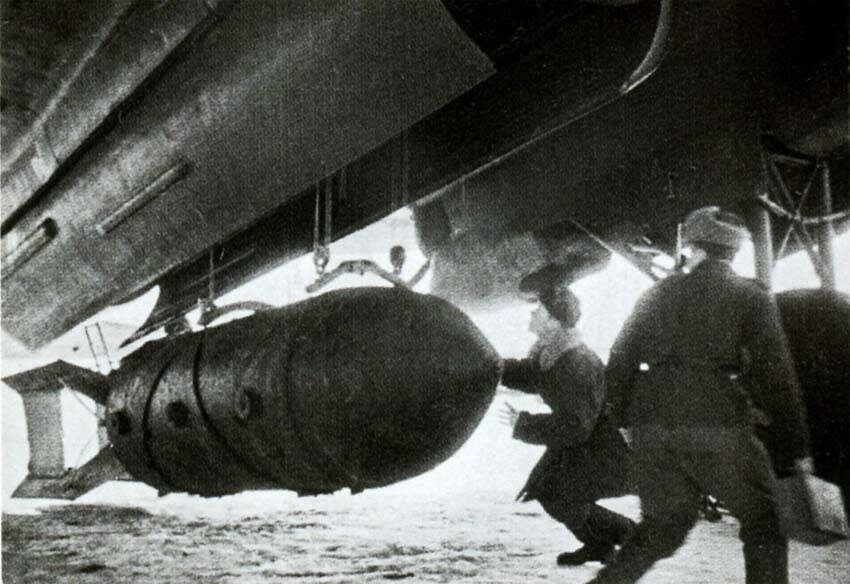
After the war
Production of the FAB-5000NG was halted in 1944, but ten years later, it was revived and a new variant—the FAB-5000 M54—was developed. These bombs were used in Afghanistan to destroy warehouses, command posts, and fortifications. There, they proved highly effective.
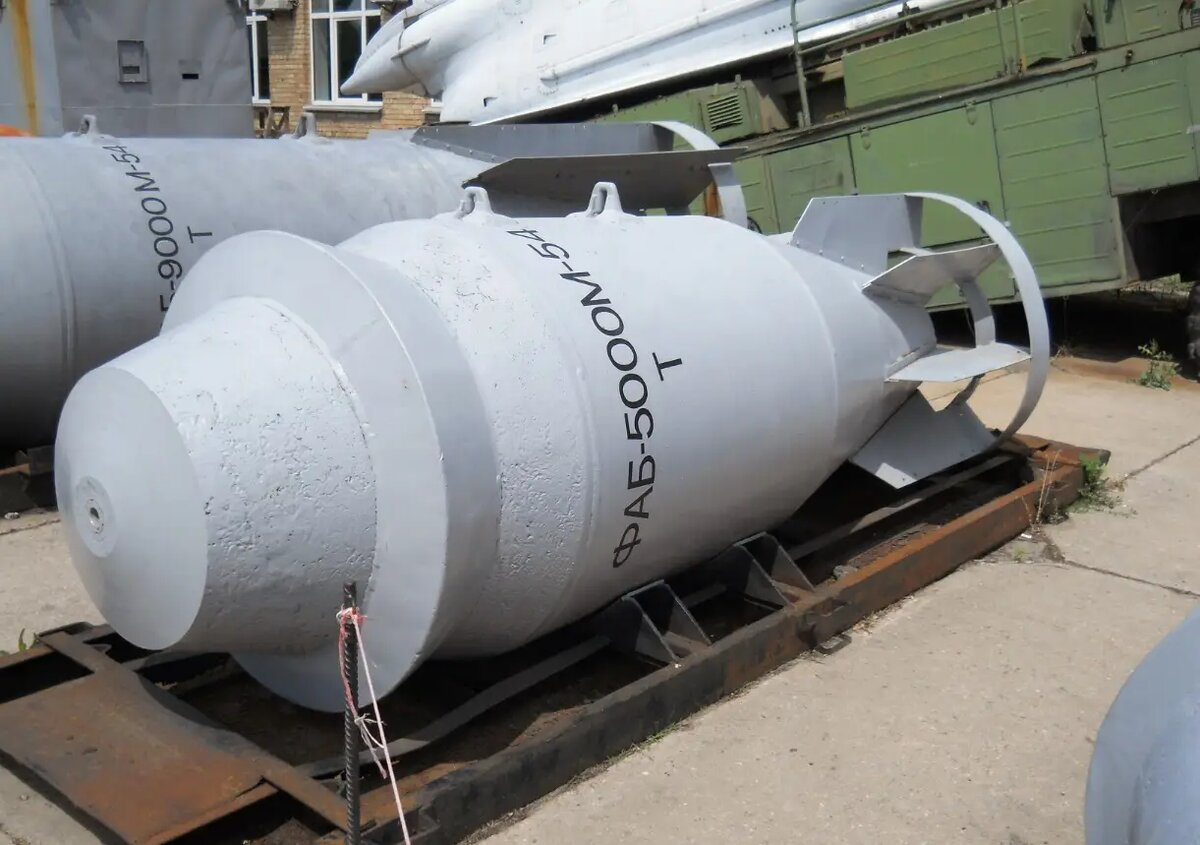
Today, guided missiles have replaced super-heavy bombs. But Gelperin’s “little one” has gone down in history as the most powerful non-nuclear aircraft weapon of its time. And it certainly played its part in the Victory.
And what about the competition?
Despite all its merits, the FAB-5000NG was still not the most powerful bomb of World War II. There were even heavier bombs, and we’ll discuss them in this section.
- “Tallboy” (United Kingdom): It weighed 5.4 metric tons. Although its total mass was comparable to that of the FAB-5000NG, it reached supersonic speeds due to being dropped from an enormous height. The bomb could penetrate up to 3 meters of concrete and caused mini-earthquakes (a seismic effect), which made its destructive power against fortifications many times greater.
- «Grand Slam» (United Kingdom): The heaviest non-nuclear bomb of World War II. It weighed about 10 metric tons (9,900 kg), of which more than 4 metric tons consisted of Torpex explosives. That is twice the weight of the FAB-5000NG.
Source — https://dzen.ru/a/ahzoTWRg-WVCaHhq