The Last Cavalry Battle in History: How 6,000 Cossacks Fought Against 15,000 Romanians in the Fields Near Stalingrad

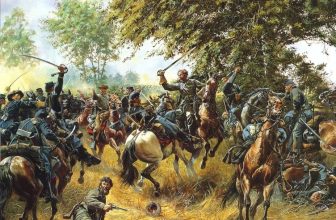
This was one of the last instances in world military history when the outcome of a battle was decided by a genuine cavalry charge with sabers drawn. And it did not happen in the 19th century, but during the Battle of Stalingrad.
When people talk about the Great Patriotic War, most immediately picture tank wedges, artillery duels, and aerial battles. It seems as though the era of cavalry charges had ended after World War I. And indeed, by the early 1940s, cavalry had long since been used in different ways.
Cavalry units served as a kind of mobile infantry: they moved quickly over long distances, and before battle they usually dismounted and fought like regular infantry units. However, in November 1942, an event took place that many historians refer to as the last major saber charge by the Soviet cavalry. And it ended quite differently than one might have expected.
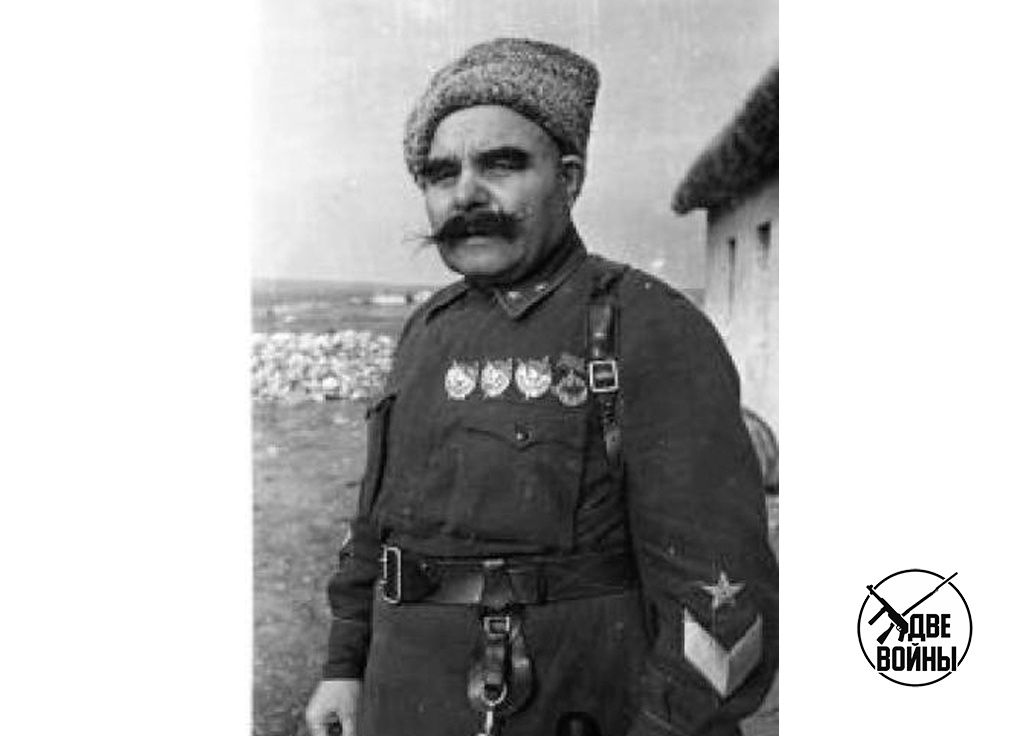
This story is connected with Lieutenant General Timofey Shapkin’s 4th Cavalry Corps. He was a most unusual figure. A Donskoy Cossack by birth, he had served in the cavalry since 1906. During the Civil War, he initially fought against the Bolsheviks but later defected to the Reds. After that, Shapkin not only managed to establish himself in the Red Army but also went on to have a highly successful career, becoming one of the country’s most experienced cavalry commanders.
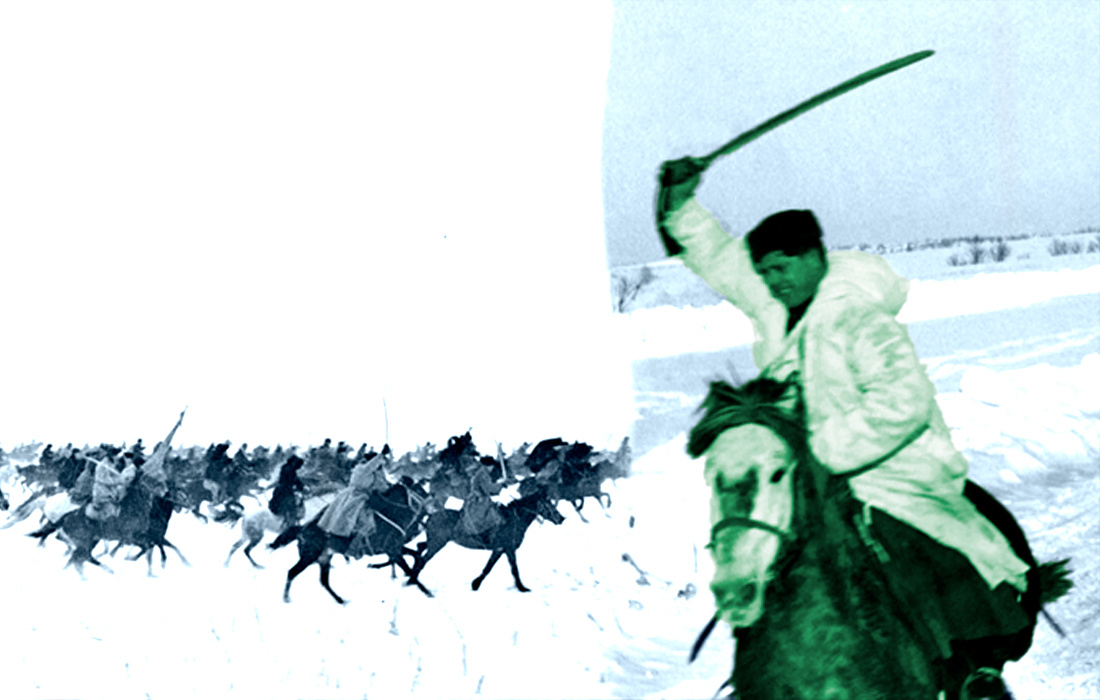
In 1942, Shapkin’s corps was stationed in Iran. However, at the height of the Battle of Stalingrad, the unit was urgently redeployed to the Soviet-German front. The cavalrymen had to march approximately 400 kilometers to the staging area. For tank units, such a march would have meant serious wear and tear on the equipment even before entering combat. But the cavalry retained its combat effectiveness and was thrown into action almost immediately.
Historical Note: Contrary to popular belief, the Red Army did not abandon its cavalry during World War II. As of early 1943, it included dozens of cavalry divisions. They proved particularly useful in winter, during the muddy season, and in areas where mechanized units faced serious difficulties moving around.
On November 20, 1942, Shapkin’s corps entered the breach behind the 4th Mechanized Corps. But then the two formations went their separate ways. The tanks moved to meet the strike groups of the Don Front to close the ring around Paulus’s army, while the cavalry was sent south, toward the Abganerovo area. Their task was to establish an outer encirclement line and destroy any enemy units that might attempt to come to the aid of the encircled German force.
Near Abganerovo, Soviet cavalrymen faced off against Romanian units. Upon reaching the enemy’s positions, the soldiers followed all the rules of modern warfare: they dismounted and began preparing for an attack following an artillery barrage. No one even thought about sabers or cavalry charges. However, subsequent events took a completely unexpected turn.
Soviet artillery unleashed such intense fire on the Romanian positions that the defenses began to literally crumble. Enemy units began abandoning their trenches en masse and retreating to the rear. When word of this reached Shapkin, the general instantly assessed the situation. He realized that this was a rare opportunity to make the most effective use of the cavalry’s mobility. The order followed immediately: return the horses to the soldiers, catch up with the retreating enemy, and attack them on horseback.
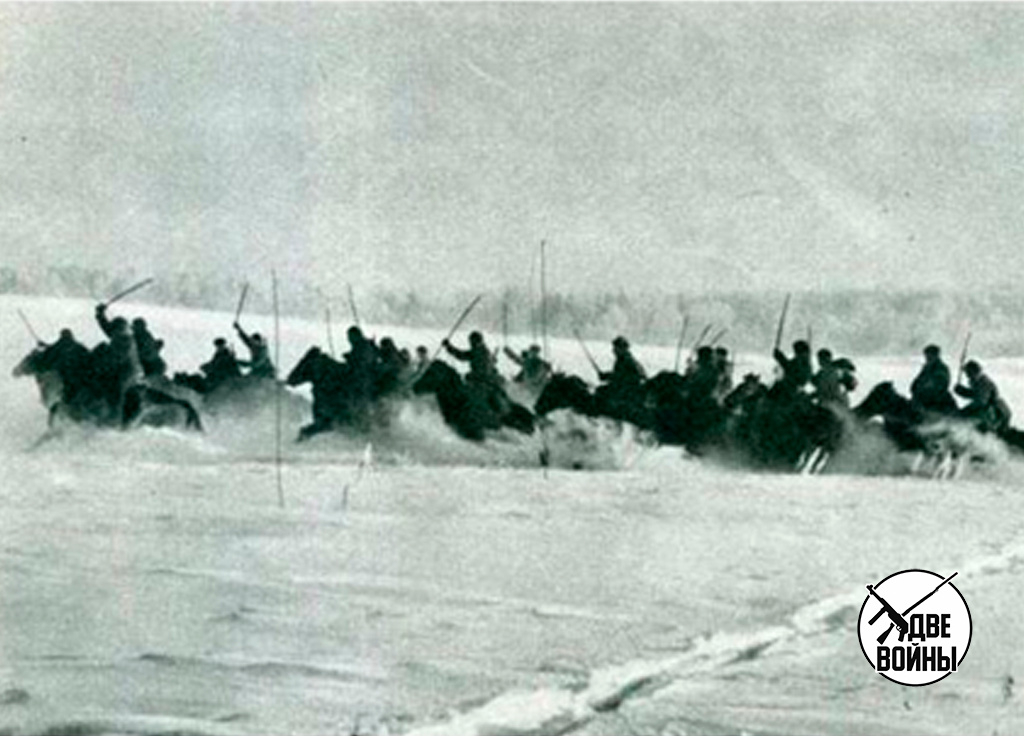
Two divisions of the corps—the 61st and the 81st—rushed forward. The cavalry flanked the retreating columns, broke through, and began to close the ring around the Romanian units. Out in the open steppe, the enemy had virtually no chance of mounting organized resistance. A few minutes later, an attack began that would forever go down in the history of the Soviet cavalry.
The attack near Abganerovo turned into a veritable disaster for the Romanian units. Soviet cavalrymen did not allow the enemy to retreat unhindered, split into small groups, or entrench themselves in new positions. They outflanked the fleeing units, surrounded them, and struck in mounted formation. There was nowhere to hide in the snow-covered steppe. The Romanian units, already demoralized by artillery fire, could not withstand the assault. As a result of this attack, three Romanian regiments were completely routed.
The losses among the Soviet cavalrymen turned out to be surprisingly low. The 81st Cavalry Division suffered 10 killed and 13 wounded. The 61st Division suffered 17 killed and 21 wounded. Given the outcome, this seemed almost unbelievable. Shapkin’s cavalrymen then immediately captured the Abganerovo railway station, also while riding in formation. There, they seized significant spoils of war: more than 100 artillery pieces, as well as warehouses containing food, fuel, and ammunition.
Historical Background: Operation Uranus in Stalingrad began on November 19, 1942. The Soviet command directed its main assault specifically at the flanks of the German 6th Army, which were covered by Romanian troops. Their defeat was one of the key factors leading to the encirclement of Paulus’s army.
However, things turned out to be much more difficult from there on. After Abganerovo, the next target for Shapkin’s corps was the Kotelnikovo station, approximately 100 kilometers from the site of their previous success. On the morning of November 27, the vanguard of the 81st Cavalry Division reached the station. But there, a completely different enemy awaited the Soviet cavalrymen. The German 6th Panzer Division, which had been transferred from France, was just being unloaded at Kotelnikovo. Rested, reinforced, and re-equipped, it was a formidable force. It was no longer possible to capture the station with a surprise attack.
The corps brought up its artillery and waited for the tanks of the 85th Tank Brigade and the “Katyusha” division to arrive. Only after a pause, on December 3, did Soviet units launch an attack. But they achieved only partial success—the village of Pokhlebin, 17 kilometers from Kotelnikovo, was captured. They were unable to advance any further. Moreover, as early as December 4, the 81st Cavalry Division, which had been leading the offensive, was surrounded by German troops.
As darkness fell, the division broke out of the encirclement, once again in mounted formation. But this time, the enemy was not demoralized Romanian units, but a well-organized German tank division. The losses were devastating: 1,897 men killed, wounded, or missing in action; 1,860 horses; 26 guns; and four 107-mm mortars. The division commander, the chief of staff, and the head of the political department were killed.
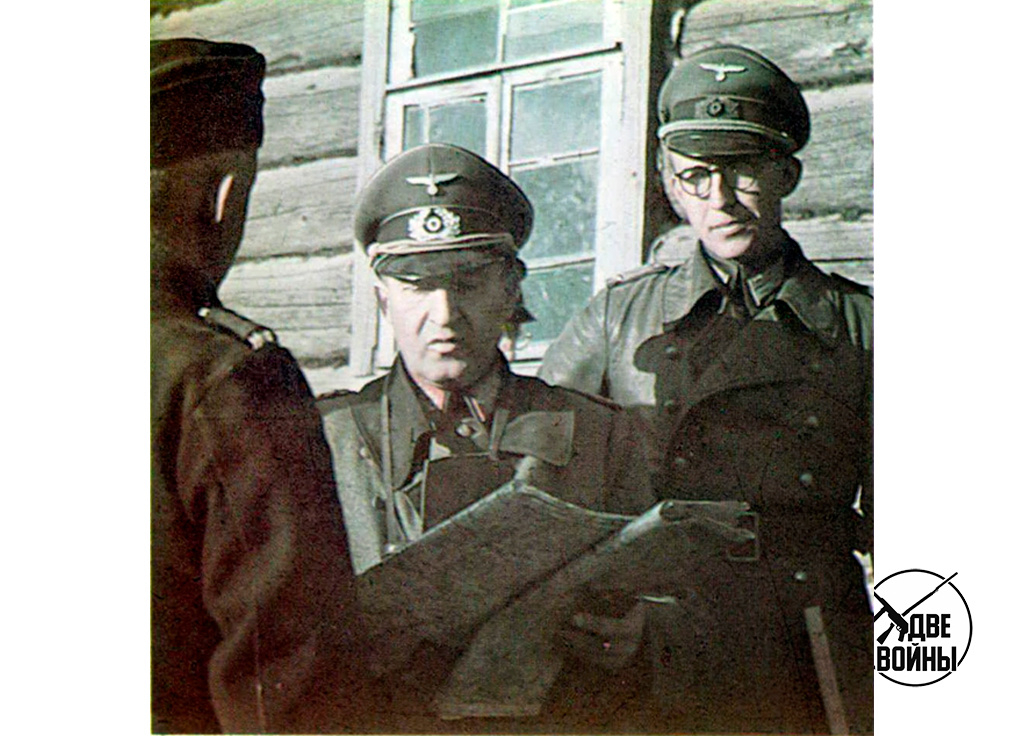
Erhard Raus, commander of the German 6th Panzer Division, later wrote that the Soviet cavalrymen, even with the support of 14 tanks, had almost no chance against his force. At the same time, however, he acknowledged that they fought very bravely. This is an important detail, because even the enemy could not deny the tenacity of the Soviet cavalry in those battles.
Historical Background: Before being deployed to Stalingrad, the German 6th Panzer Division underwent reorganization in France. It was this division that was incorporated into the Kotelnikov Group, which was tasked with breaking through to the aid of Paulus’s encircled army.
And yet, even the heavy defeat at Kotelnikovo was of great significance. Shapkin’s corps disrupted the German plans. The Kotelnikovo group was not able to begin moving to link up with Paulus until December 12. As a result, the mission to break through to the encircled 6th Army was never accomplished. Near Kotelnikovo, Soviet cavalrymen were already fighting mainly on foot; therefore, it is the pursuit of the Romanians near Abganerovo that is generally considered the last major saber charge in the history of the Red Army.
Sources do not provide exact figures regarding the saber charge itself. On the Soviet side, the 61st and 81st Cavalry Divisions of the 4th Cavalry Corps were involved—with an estimated strength of up to 6,000 troops. On the Romanian side, three regiments came under attack, amounting to approximately 4,500–5,000 men. The entire Romanian 6th Corps was much larger: according to various estimates, ranging from 29,800 to 49,205 men, but it held a front more than 100 kilometers long and did not participate in its entirety in this engagement.
And so this attack remained a strange, almost archaic episode in a massive mechanized war. Elsewhere, tanks, artillery, and aircraft were already deciding the outcome of battles, but on the snow-covered Don steppe, Soviet cavalrymen brought the old Cossack style of warfare back to the battlefield for a few hours—with mounted pursuits, sabers, and charges against a fleeing enemy.
Source — https://dzen.ru/a/ahwZJFRsUluZeeoW