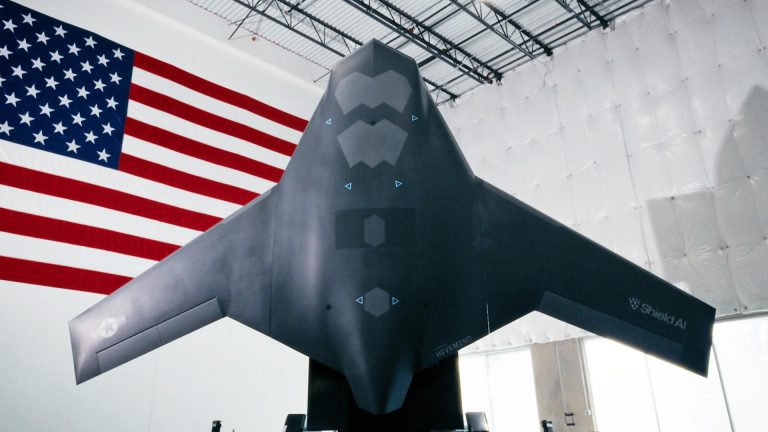
Sometimes, behind a spectacular presentation lies not so much a finished aircraft as an attempt to rethink the very logic of combat aviation. Shield AI’s X-BAT project is precisely one such case. On the surface, it’s just another “low-observable” jet-powered drone with internal weapon bays. In essence, it’s a declaration of a departure from the familiar model: an airfield, a pilot, and an expensive aircraft as a unit of force.
Discussion of this project went beyond promotional materials following an interview with company representatives, in which they clearly articulated for the first time exactly what they are focusing on.
Starting point: vulnerability on the ground
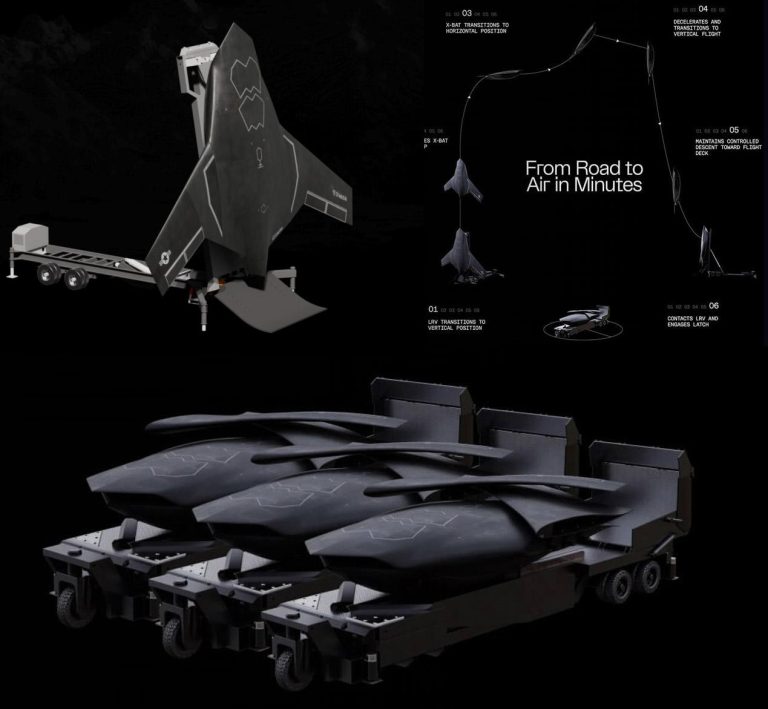
The developers’ key message is extremely straightforward and, importantly, doesn’t come across as a marketing slogan.
“In our simulations, we lose more aircraft on the ground than in the air.”
This phrase explains practically everything. In modern warfare, an airfield is not just infrastructure—it’s a vulnerability. Its coordinates are known, it’s stationary, and therefore a predictable target. Destroying aircraft before they take off has long been one of the top priorities.
The solution proposed by X-BAT makes sense: remove the airfield as a critical element.
The “tail-sitter” scheme: a revival of an old idea
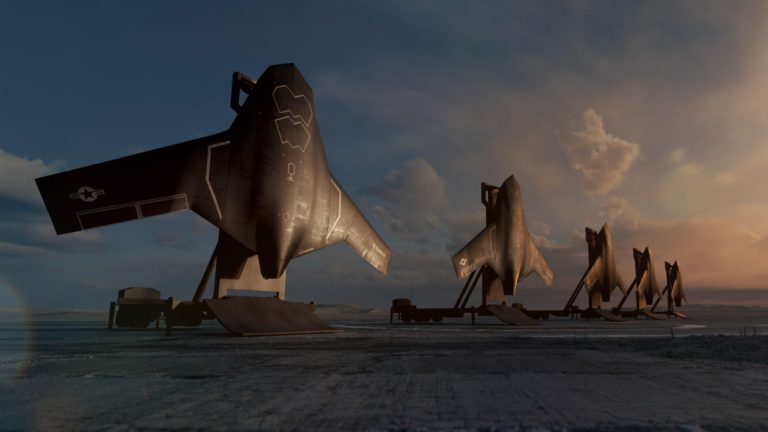
The X-BAT is designed according to the so-called “tail-sitter” configuration—an aircraft that takes off vertically while standing on its tail and then transitions to horizontal flight.
This solution is not new—similar concepts were explored as early as the mid-20th century. But back then, they were limited by the constraints of manned aviation. Today, with the development of automated control systems, they have been revisited.
This layout has some obvious advantages:
— No need for a runway
— Can be deployed in limited spaces
— Potential for decentralization
And, most importantly, the ability to keep the aircraft closer to the front lines.
Autonomy as a Basic Condition
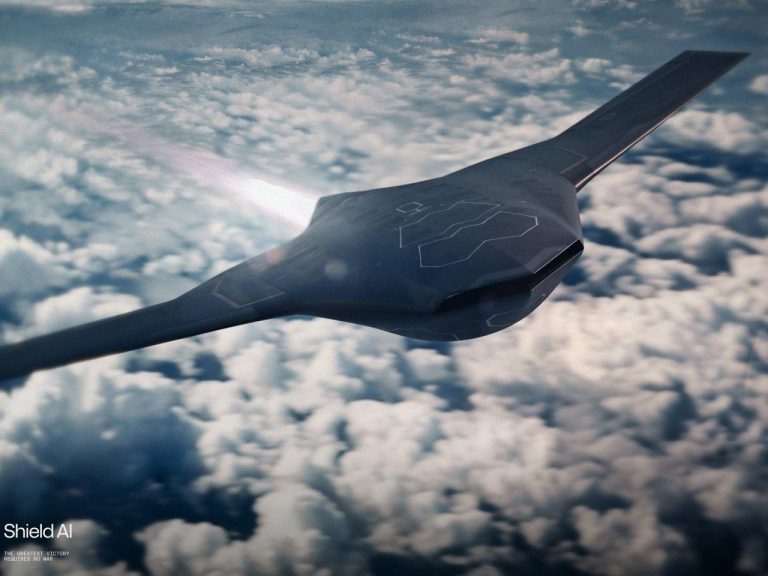
The second pillar of the project is the elimination of the pilot as an element of the system.
“To demonstrate the capabilities of autonomy, we need a platform designed specifically for that purpose from the start.”
This phrasing is more important than it seems. It’s not about “adding autopilot” to an airplane. It’s about creating a machine in which humans are not part of the design from the outset.
Control should be handled by the Hivemind system—a software suite that handles navigation, decision-making, and interaction with other devices. In theory, this not only reduces the operator’s workload but also enables a shift toward collaborative operation, where multiple machines function as a single system.
Dimensions and Layout: An Attempt to Mimic a Fighter Jet
In terms of size, the X-BAT goes beyond the scope of light drones.
Its stated specifications—a length of about 8 meters and a wingspan of approximately 12 meters—place it in a category where it begins to overlap with manned aircraft. More importantly, it features internal weapon bays.
This means that the developers are focused from the outset on maintaining low visibility and using standard aviation munitions. Essentially, this is an unmanned platform whose design is closer to that of a modern fighter jet than to a traditional drone.
Project Economics: Focusing on Mass Market Appeal
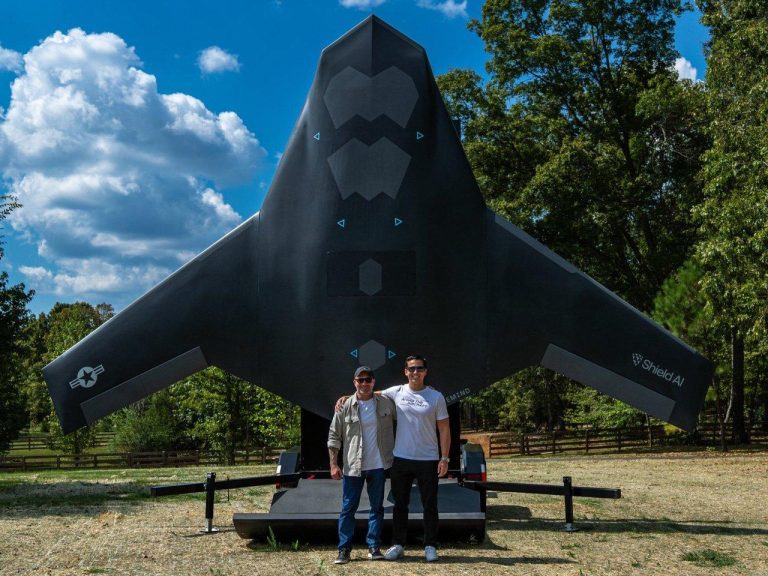
In a separate interview, a statement is made that defines the entire project:
“We’re bringing fifth-generation capabilities to a vertical platform, and we’re doing so at a cost that’s about ten times lower over the product lifecycle.”
How realistic this assessment is remains an open question. But the logic behind it is clear: the focus is not on the superiority of a single machine, but on a shift in the “cost-to-quantity” ratio.
If the price can be lowered, it becomes possible to offset losses and saturate the space with a large number of platforms. In this sense, the X-BAT is not a competitor to the fighter jet, but rather an attempt to “multiply” it in a cheaper form.
Versatility as a consequence of the concept
According to statements from the developers, the X-BAT is viewed as a multipurpose platform. They mention strike missions, naval operations, electronic warfare, and even refueling capabilities.
From a practical standpoint, this is more of a demonstration of flexibility than a definitive list of roles. But the idea itself is telling: to create not a specialized system, but a basic platform that can be adapted to different tasks.
Trials: No Illusions
It’s interesting that company representatives aren’t trying to downplay the risks.
“We fully expect to lose one unit during testing.”
This is a rare instance of candor for projects of this kind. The complexity is obvious: the vertical takeoff of a jet aircraft, the transition to horizontal flight, and autonomous control—each of these tasks is challenging in its own right.
Combining them increases the likelihood of failure.
So, in the end
The X-BAT is not a finished “unmanned fighter jet,” but rather a concept that brings together several ideas:
— breaking free from dependence on airfields —
transitioning to full
autonomy — an effort to reduce the cost of combat aviation —
a focus on mass production
Whether it will be possible to combine all of this into a single device remains to be seen.
But the very fact that such projects are emerging shows that
military aviation is gradually moving away from the logic of individual, expensive, and highly protected aircraft toward systems in which it is not the individual aircraft that matters most, but rather their number and distribution
источник https://www.twz.com/air/could-the-x-bat-stealth-fighter-drone-change-the-air-combat-game