A Victim of the '90s. The Ka-137, a pioneer of Russian drone technology, appeared long before the drone boom. Why has it been forgotten today?

During the Soviet era, numerous projects were developed and created that were destined to come to fruition only after the country’s collapse.
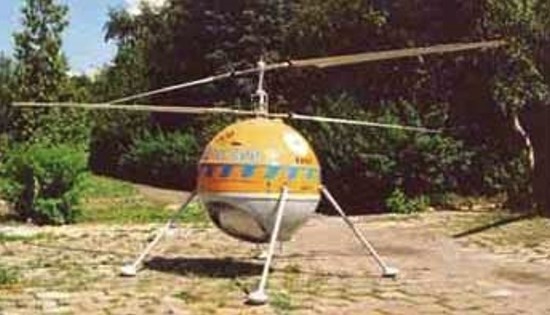
After the collapse of the Soviet Union in 1994, work began on developing a drone that looked like something out of a science fiction movie—or even, more likely, an alien craft.
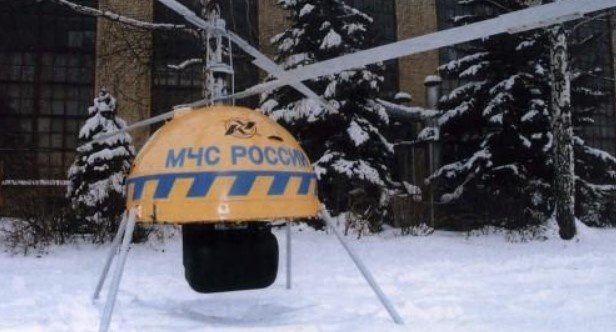
The spherical unmanned aerial vehicle with propellers was designed for use in environments where conventional, human-operated equipment would be unable to function.
Because of its unusual appearance, people have nicknamed the drone “Pepelats,” in honor of the Soviet comedy film *Kin-Dza-Za*.
The first official test of the unmanned aircraft took place in 1998.
Contents:
Whose idea was it to create the Ka-137?
In the mid-1990s, the Kamov Design Bureau began exploring the idea of developing an unmanned aerial vehicle capable of performing some of the tasks related to reconnaissance and gathering information on the presence of radiological, bacteriological, or chemical hazards.
Perhaps the engineers were inspired by the Chernobyl tragedy or something else, but technology of this kind was needed, and the idea of creating an unmanned, remotely controlled vehicle was very timely.
It should be noted that these developments significantly accelerated the design of the first reconnaissance drone, and within just four years, the engineers were ready to begin testing.
The tests conducted in 1998 included patrolling forested areas to detect fires, surveying hard-to-reach areas to monitor levels of radioactive and chemical emissions, and other activities, as well as testing the delivery of valuable cargo and medical supplies in the event of unforeseen situations that would normally require the involvement of Emergency Situations Ministry units.
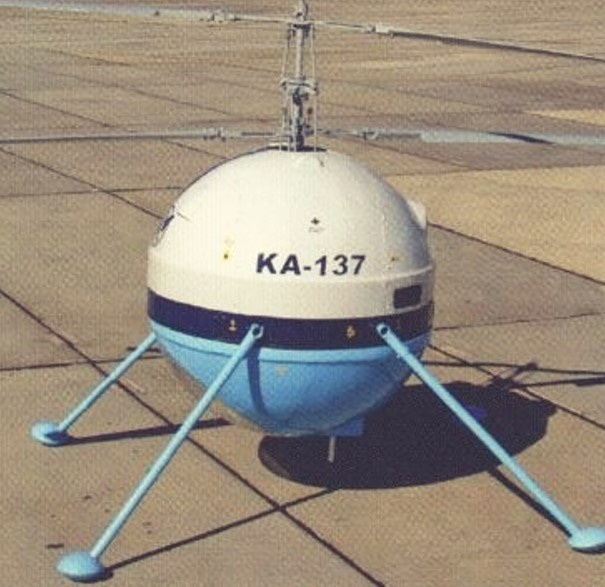
The engineers thought through every detail and concluded that the unmanned drone must be as invulnerable as possible during flight.
The spherical hull, designed to reduce inertia and featuring helicopter-like blades, allows the craft to fly in the desired direction without turning, and provides space inside the sphere to install the equipment needed for the research.
Kamov engineers installed coaxial propellers arranged one above the other, which increases the drone’s maneuverability.
This feature has been used on several helicopter models produced by the Kamov Design Bureau, and its only drawback was considered to be a control system that was more complex than other options.
So what was the result?
And the result turned out to be simply fantastic—or, to be more precise, truly impressive—since the Ka-137 proved to be a very useful and, most importantly, indispensable “workhorse.”
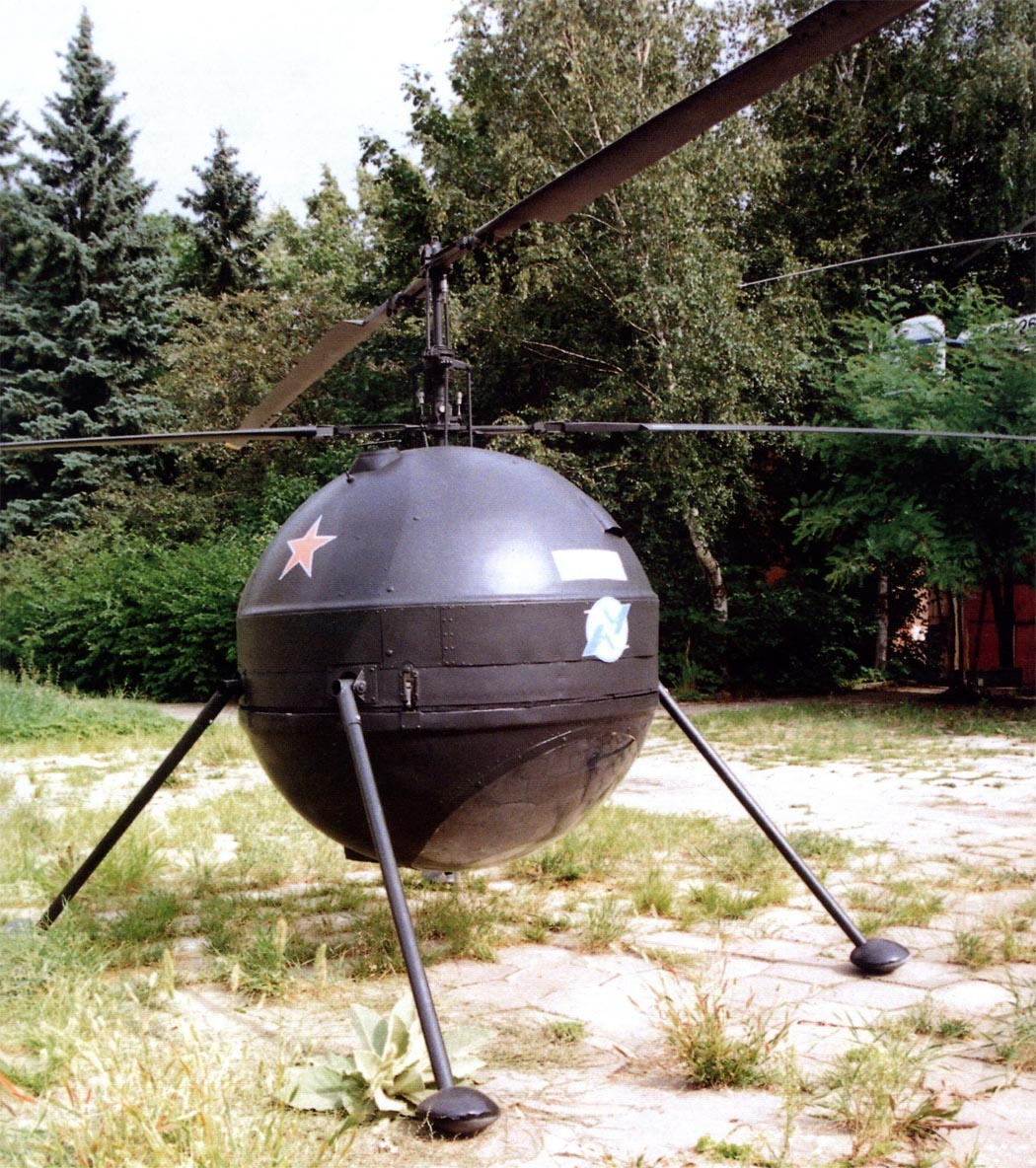
The drone patrolled hard-to-reach sections of the border, conducted reconnaissance of biological, radiological, and chemical conditions, and, when necessary, delivered cargo weighing up to 80 kg.
The aircraft was specifically designed to be easy to fly and reliable in operation, qualities that operators immediately appreciated.
Even if the connection was suddenly lost, it could be restored quickly, and the reliable, 65-horsepower engine proved to be exceptionally durable and resilient.
But one of its most important features is that the drone is unaffected by sudden gusts of hurricane-force winds, blizzards, rain, or extreme heat.
At any time of day or night, the drone easily handled the tasks assigned to it, with the speed at which they were completed depending on the operator’s experience and skills.
So what happens next?
And even though new models began to appear—featuring artificial intelligence and other capabilities that allowed them to perform more complex tasks—the Ka-137 remained in demand and essential.
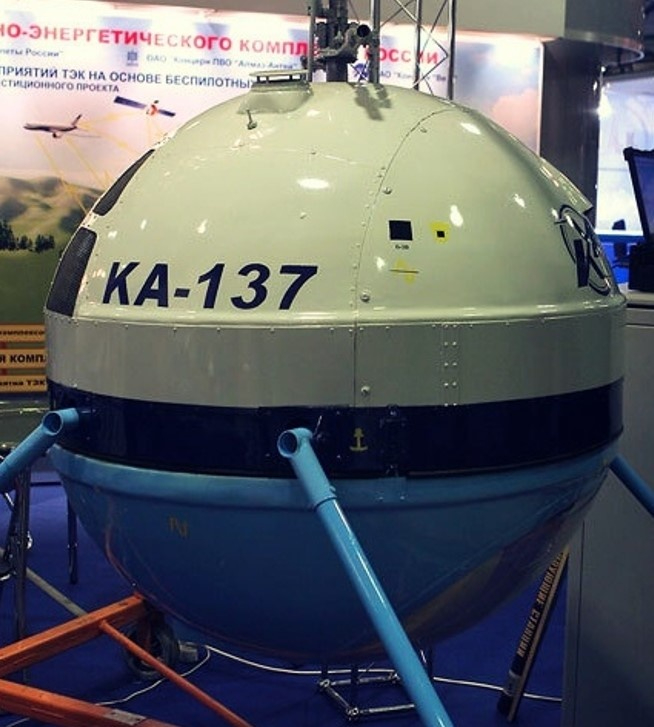
The first to recognize all of its necessary and useful features were employees of the Ministry of Emergency Situations. Almost immediately, agricultural and forestry operations took an interest in the capabilities of the unmanned aerial vehicle, as there was plenty of work for the smart drone to do.
A simple design featuring a spherical fuselage is designed to withstand in-flight loads, allowing it to fly even in the most challenging weather conditions; compartments that, in addition to the avionics and engine, provide space for luggage; and straightforward controls—all of which keep the Ka-137 in high demand to this day.
Having two fuel tanks allows for fairly long flights without refueling, and minor repairs—which are bound to occur anyway—can be carried out without the involvement of factory personnel.
In addition to the Ministry of Emergency Situations and other sectors of the industry, the drone has attracted the interest of ordinary businesspeople and enthusiasts of this type of technology; however, unfortunately—or perhaps for the best—the Ka-137 is not yet available for sale to the general public.
The question of why anyone with the necessary funds can afford to privately purchase a model airplane or helicopter, but not a Ka-137, remains unanswered.
Source — https://dzen.ru/a/aSWOk8QfaV047j8R