A Weapon Without an Explosion or Traces. What the USSR Tested in 1984 and Why It Frightened the U.S.

In 1984, an American reconnaissance satellite detected a strange phenomenon over the territory of the USSR—at an altitude of about 80 kilometers, the atmospheric temperature suddenly rose by hundreds of degrees. Instruments began to malfunction, telemetry data came in in “choppy” bursts, and analysts were unable to figure out for several days exactly what they were observing.
A week later, a report marked “priority” arrived at the Pentagon. It stated cautiously, without embellishment: The Soviet Union is experiencing an unknown phenomenon that bears no resemblance to any known weapon.
And it wasn’t a nuclear bomb.
The most alarming thing was something else: there was an effect, but no damage.

Why did this seem more dangerous than a nuclear strike?
At the height of the Cold War, the world had grown accustomed to thinking in terms of megatons, silos, and missile trajectories. Nuclear weapons were terrifying, but easy to understand: there was an explosion, there were consequences, and there was a retaliatory strike.
But a new line of reasoning emerged here.
A weapon that:
— leaves no craters
— emits no radiation
— isn’t always detected right away
— and yet is capable of “shutting down” equipment or a person
That was what scared me the most.
Because it’s hard to mount a defense against something like that.
After the collapse of the Soviet Union, it became clear that the observation in question was actually just one of several projects. In reality, there were several of them, and each, in its own way, changed people’s perception of war.
In this story, one detail makes all the difference: almost all of these systems acted not on the body… but on the control system—technology, the psyche, and space.
“Terra-3”: When a Beam Became an Argument
The Sary-Shagan test site in Kazakhstan was long considered a standard testing ground. But at the center of the complex stood a structure that defied conventional logic—a massive optical system capable of focusing energy into a narrow beam.
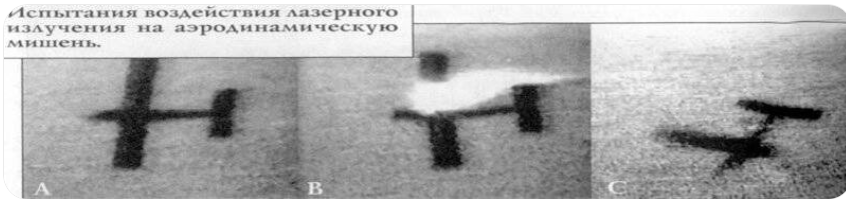
The discussion centered on the “Terra-3” project—an experimental military laser.
Key facts that were later leaked to public sources:
— The system’s power output reached one megawatt
— Its range was estimated at tens of thousands of kilometers
— The system was capable of targeting objects in orbit
— Its primary effect was to blind or disable electronic systems
Officially, the complex was considered a research facility. But in the mid-1980s, an incident occurred that made the West nervous.
While the American space shuttle was flying over the test site, the crew reported brief instrument malfunctions and feeling unwell. Later, reports included a cautious statement: possible exposure to directed radiation.
It wasn’t an attack.
Rather, it is a demonstration that such a possibility exists.
And that’s exactly what made the difference.
But the laser, strange as it may seem, was still a “comprehensible” technology.
What followed was something that still sounds alarming even today.
Electromagnetic Pulse: When Electronics Simply “Die”
Behind closed doors, research was being conducted in parallel that produced no visible beam or flash. The result seemed simpler—the equipment simply stopped working.
Projects related to directed electromagnetic pulses involved the following:
— a brief, powerful burst of energy
— disables electronic equipment without causing physical damage
— effective range: from hundreds of meters to several kilometers
Archival test reports often contain the following almost matter-of-fact description: after exposure to the test, the convoy lost control, the engines stopped, and communication was lost.
No explosions.
No signs of an attack.
Just silence—and a system that’s completely down.
If we apply this to a real battle, the picture looks different: the army is left without communications, without navigation, and without coordination. Formally, it still exists, but in reality, it no longer does.
And that is precisely what made the technology particularly dangerous.
But the strangest project didn’t involve technology at all.
He worked with a person.
Infrasound: An Effect You Can’t “See”
At a research center near Moscow, scientists were conducting research on low-frequency vibrations that humans cannot hear but can feel.
The topic was infrasound.
Experiments have shown that, under certain conditions, such waves can cause:
— anxiety for no apparent reason
— disorientation—
a sudden decline in concentration
— physical discomfort and even panic
The most important thing is that people don’t understand the source.
He doesn’t see a threat.
He can’t hear her.
But he feels the consequences.
According to the recollections of the test participants, even a mild exposure caused a state that is difficult to describe in words—a mixture of fear, confusion, and an inability to concentrate.
That’s where the main problem arose.
The weapon was becoming unpredictable.
It could affect not only the enemy but also its own troops.
And, according to some reports, this was one of the reasons the program was shut down.
Why Didn’t These Projects Gain Widespread Popularity?
If we take a sober look at it, all of these projects had serious limitations.
Lasers required an enormous amount of energy and were dependent on environmental conditions.
Electromagnetic systems were bulky and had limited range.
Acoustic technologies remained unstable and difficult to control.
But the key reason ran deeper.
They changed the very nature of war.
Too much.
The military understood that weapons that cannot be precisely controlled could pose a threat to all sides.
Even for those who created it.

What remains of that today?
After the collapse of the Soviet Union, many projects were shut down, but the ideas themselves didn’t disappear.
Modern electronic warfare systems are, in fact, a continuation of electromagnetic technology developments, only in a more compact and controllable form.
Combat lasers are back in the news—this time as actual systems, not experimental prototypes.
Meanwhile, research into the psychological effects of the environment continues in a more “civilian” context—ranging from medicine to security systems.
In other words, the concept itself is alive.
It’s just that she’s become quieter.
And perhaps less noticeable.
If we go back to that same satellite from 1984, it becomes clear why that report caused concern.
Americans saw more than just an experiment.
They saw the direction.
In which war ceases to be loud.
Where there are no flashes, but there are results.
And where the main blow is directed not at armor, but at the command and control system—technology, information, and people.
And here’s a question that remains unanswered.
Source — https://dzen.ru/a/ab1TB2aSXBpc9w6L