Armored King of the Arctic: What a Production-Friendly Object 279 Could Have Looked Like

The Soviet Object 279 went down in history as perhaps the strangest tank ever to actually exist in metal. Four tracks, a 130 mm gun, extraordinarily heavy armor, and a hull that looked more like a flying saucer than a conventional armored fighting vehicle — even among the numerous experimental tanks of the 1950s, the Leningrad designers’ creation looked like something from an entirely different technological reality.
Yet its bizarre appearance was not merely an exercise in engineering extravagance. The tank was intended to operate where conventional heavy armor would struggle: over soft ground, deep snow, swampy terrain, and battlefields devastated by nuclear weapons. At the same time, the crew had to be protected from the effects of nuclear warfare, while the vehicle itself needed enough stability to reduce the risk of being overturned by the blast wave of a nearby nuclear explosion.
For the most part, Soviet engineers succeeded in solving these problems. The trouble was elsewhere: Object 279 was a nightmare for production engineers and maintenance crews. Its unique four-track running gear was particularly problematic. It gave such a heavy vehicle remarkably low ground pressure, but at the cost of tremendous manufacturing and maintenance complexity.
But what if the same requirements had been addressed using more conventional engineering solutions? What if the designers had avoided some of the most controversial features and, from the very beginning, considered not only record-breaking performance but also the possibility of producing hundreds of tanks and keeping them operational in regular army units?
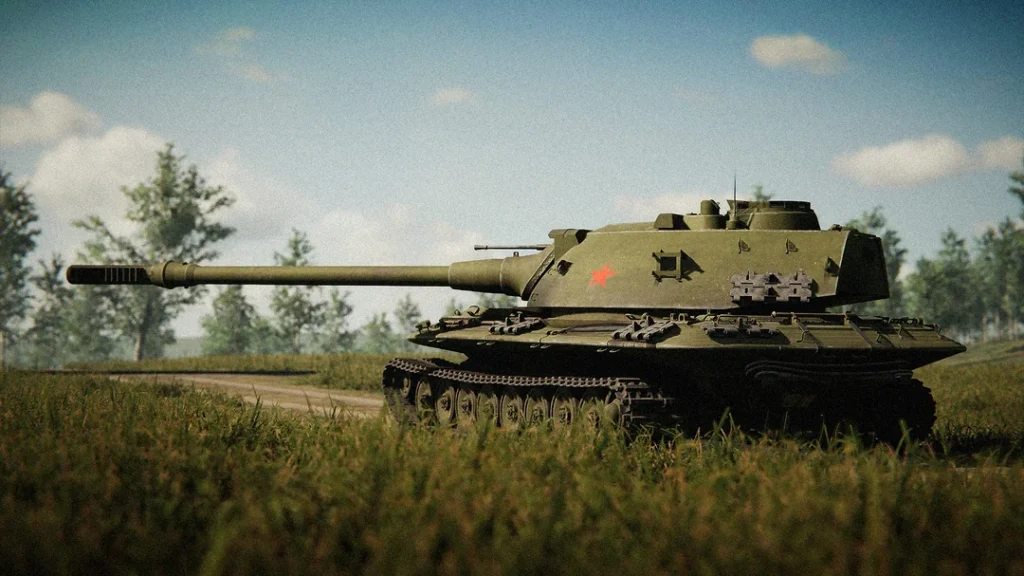
Western designer MAFIALAA attempted to answer that question with an alternative vehicle created in Sprocket: the Object 279(B). It should be made clear from the outset that this is not a recently discovered Soviet archival project or an obscure historical modification of Object 279. It is a modern fictional reconstruction. Nevertheless, it provides an excellent starting point for imagining what the next generation of Soviet super-heavy tanks might have looked like had history taken a slightly different path.
The Real Object 279: Engineering Extremism of the Late 1950s
Object 279 was developed in Leningrad under the direction of Lev Troyanov. The prototype appeared in 1959 and weighed approximately 60 tons. It was armed with the powerful 130 mm M-65 rifled gun and a coaxial 14.5 mm KPVT heavy machine gun. The main gun used mechanized ammunition stowage and an electromechanical loading system. The crew consisted of four men.
Its diesel engine developed roughly 1,000 horsepower, giving the tank a projected top speed of around 55 km/h and a cruising range of approximately 300 kilometers.
But the true engineering marvel was not the gun or even the armor.
Underneath the hull were four tracks mounted on two longitudinal structures. The enormous contact area allowed the designers to reduce ground pressure to roughly 0.6 kg/cm² — an extraordinary figure for a vehicle weighing around 60 tons. Object 279 was therefore expected to cross snow and soft terrain that could immobilize more conventional heavy tanks.
Its hull was equally unusual. The complex cast structure, with heavily sloped and curved surfaces, combined excellent ballistic protection with improved resistance to the blast wave of a nuclear explosion. Armor on the turret reached approximately 319 mm at its thickest points, while extreme angles further increased the effective protection.
On paper, it looked almost like the perfect heavy tank for World War III.
In practice, every record-breaking feature came at a price.
Four Tracks That Could Have Doomed an Otherwise Brilliant Tank
The running gear was perhaps the greatest problem.
The four-track arrangement provided exceptional cross-country mobility, but it also imposed a major penalty in mechanical complexity. Accessing certain components during maintenance was considerably more difficult than on a conventional tank. For an experimental vehicle, that could be tolerated. For a production machine expected to serve for years, travel hundreds of kilometers on exercises and campaigns, and be repaired by ordinary army workshops, it was a serious drawback.
The unconventional running gear also generated considerable resistance while turning, further increasing mechanical losses and placing additional demands on the powertrain.
The result was something of a paradox. Soviet engineers had created a suspension and track arrangement that allowed a 60-ton tank to crawl through snow and marshland, yet at the same time made the vehicle substantially more difficult to operate and maintain.
For a one-off prototype, that was acceptable.
For a tank intended to be built in the hundreds, it was not.
And this is where our alternative history begins.
What If the Four Tracks Were Abandoned Altogether?
Imagine that after the initial trials of Object 279, the Soviet military does not abandon the heavy-tank concept. Instead, it orders the Leningrad design team to radically rework the vehicle.
The basic requirements remain unchanged: exceptional armor protection, high mobility over snow and soft terrain, the ability to operate after the use of nuclear weapons, and enough firepower to destroy virtually any prospective Western tank.
But one additional requirement is introduced: manufacturability.
The military no longer wants a technological demonstrator showcasing everything Soviet industry can theoretically achieve. It wants a tank that factories can actually manufacture in meaningful numbers and that an ordinary army maintenance battalion can keep running.
The first feature to go is the four-track running gear.
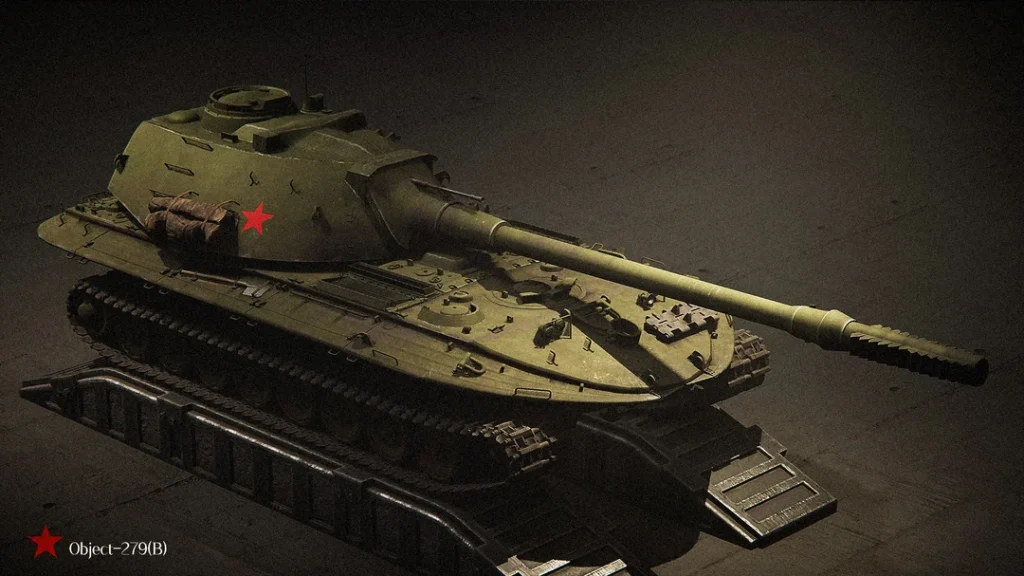
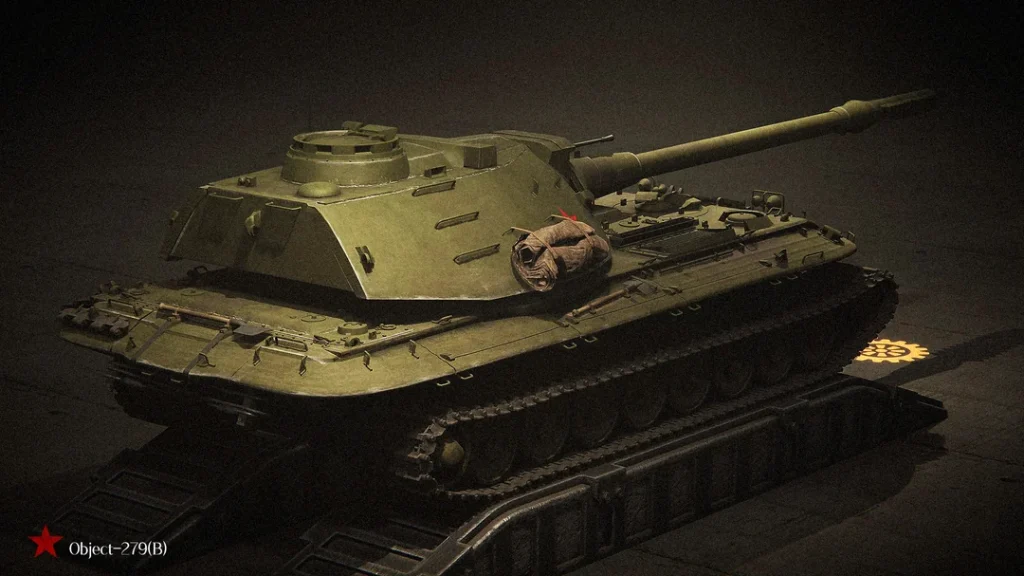
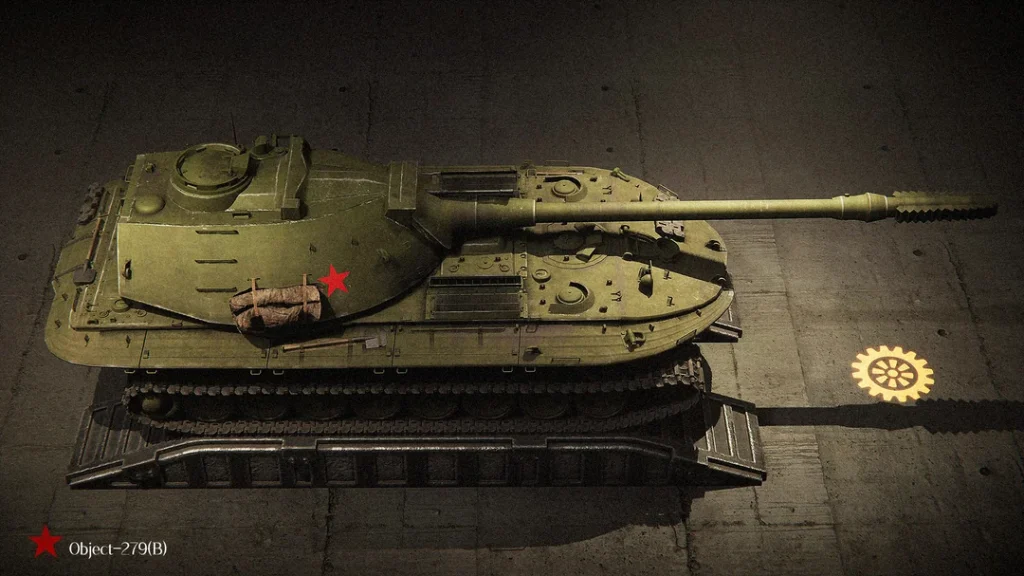
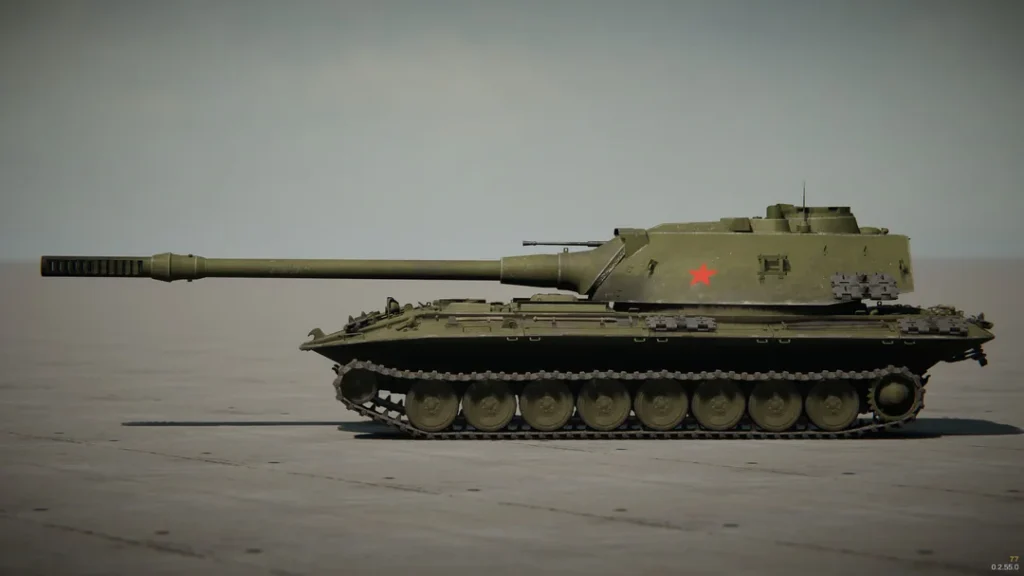
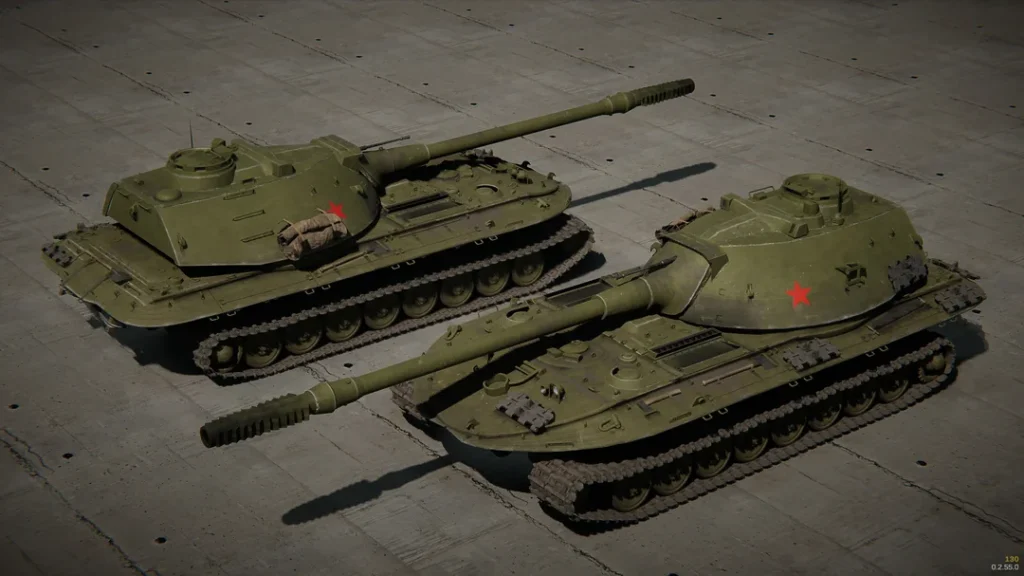
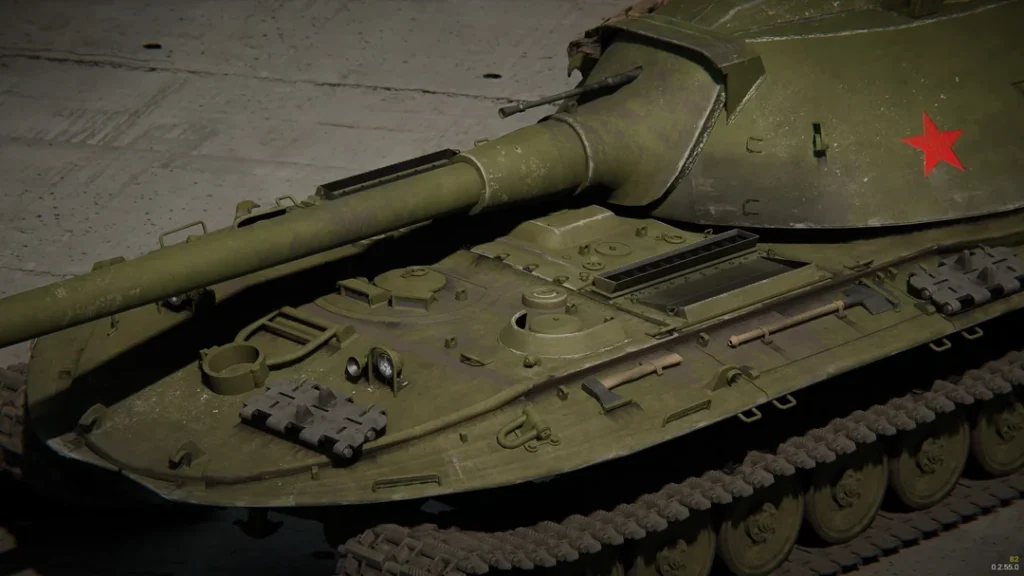
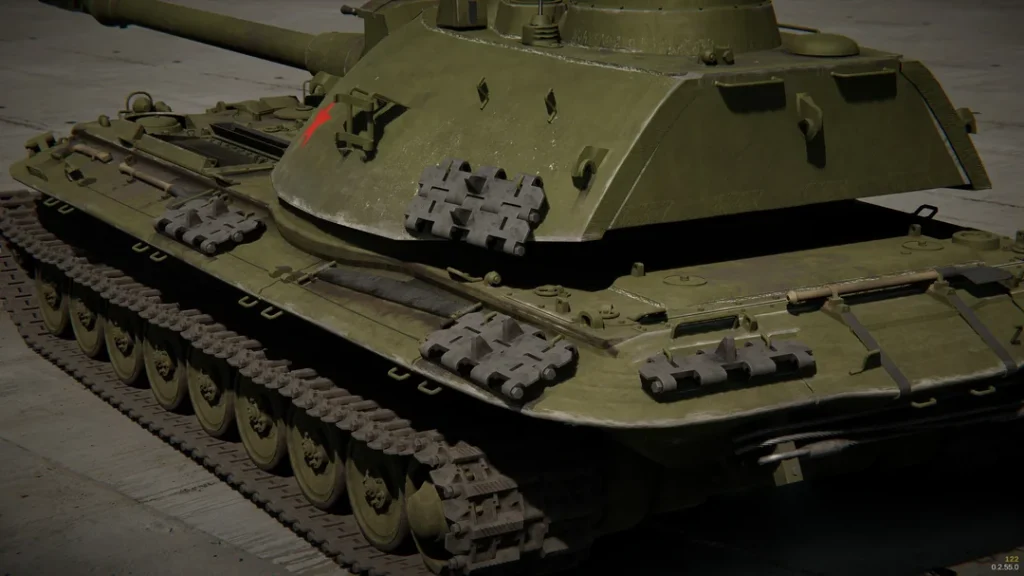
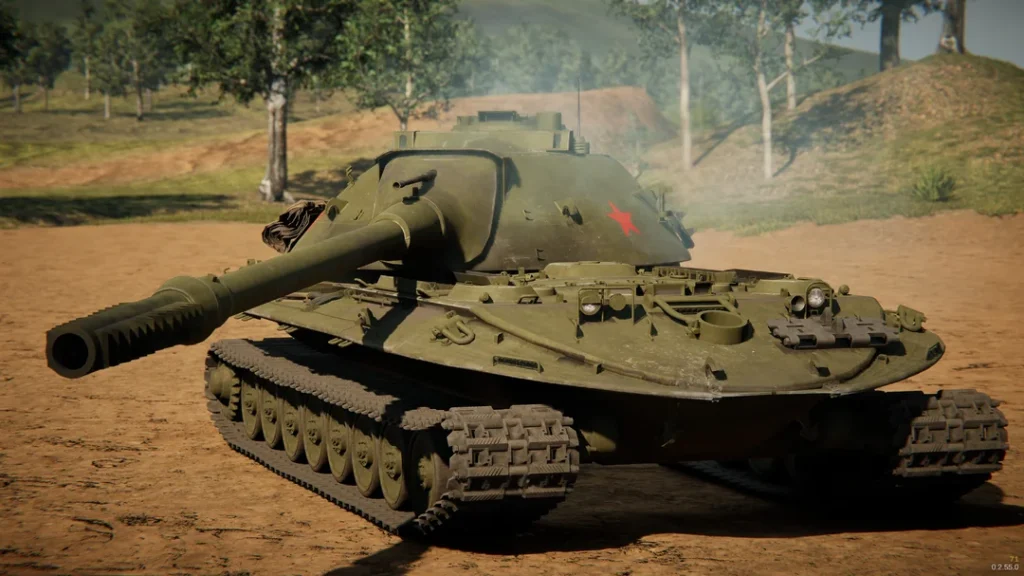
This is what makes MAFIALAA’s Object 279(B) such an interesting concept. Instead of the famous “flying saucer” riding on four tracks, we see a much more conventional heavy tank. Yet its visual connection to Soviet experimental armor of the late 1950s and early 1960s remains unmistakable.
Not Lighter — Just More Rational
There is one important distinction to make here. The 279B can be called a “simplified Object 279” only in terms of its construction — certainly not in terms of weight.
MAFIALAA gives his vehicle a mass approaching 70 tons and an overall length roughly comparable to the IS-7. More importantly, instead of the historical 130 mm M-65, his design carries a monstrous 152 mm gun. Its stated effective frontal protection exceeds 350 mm, while side protection exceeds 140 mm.
And that actually makes the alternative history even more interesting.
Soviet engineers could have concluded that reducing structural complexity was more important than reducing overall mass. A 68–70-ton tank was not necessarily harder to manufacture than the 60-ton Object 279 if the heavier machine used two conventional tracks, familiar road wheels, and a more traditional transmission instead of four separate track assemblies and highly specialized components.
Of course, this would create another problem: ground pressure.
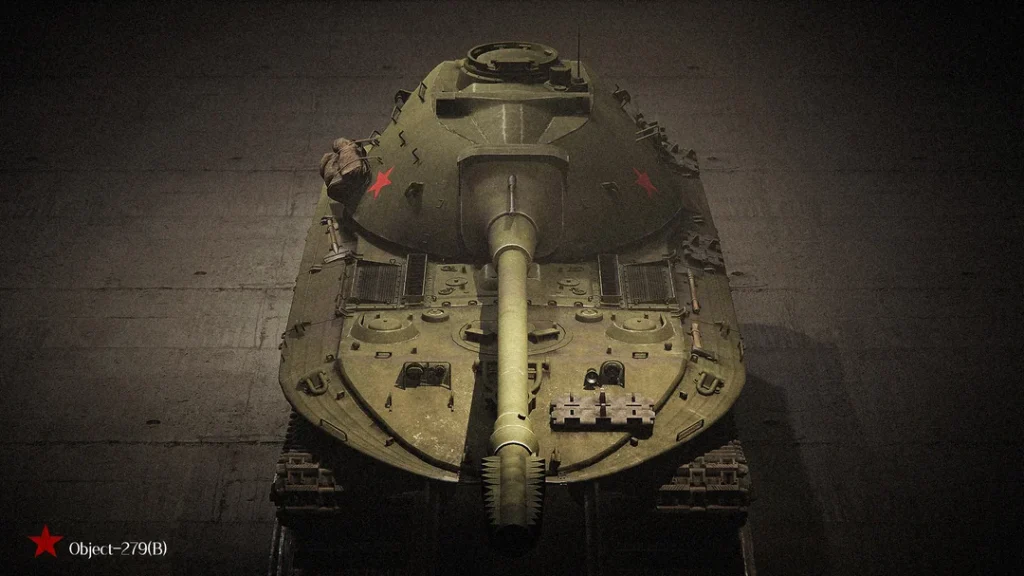
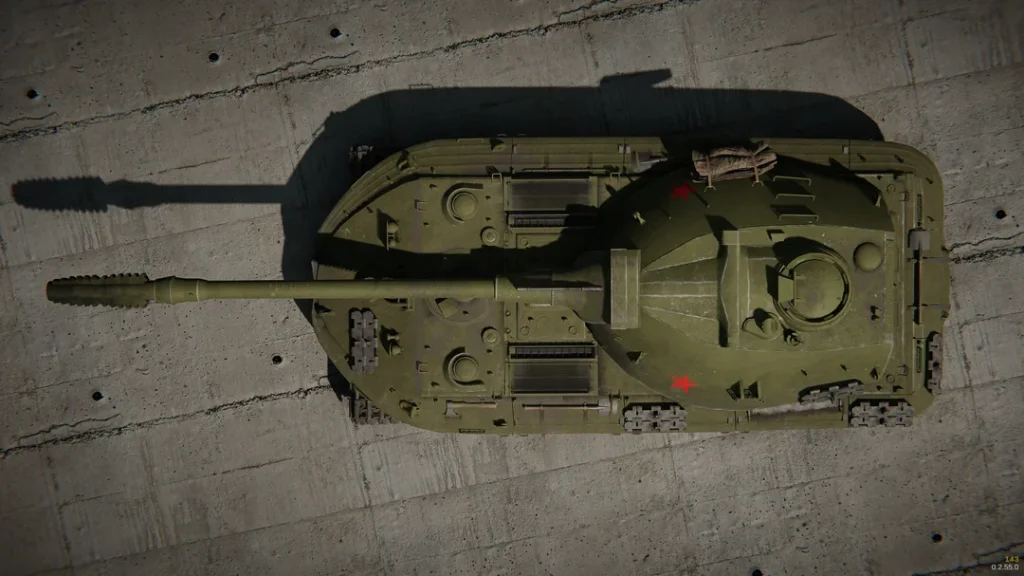
The tracks of the 279B would therefore have to be exceptionally wide. In effect, the designers would need to create a set of “Arctic snowshoes” for the tank, maximizing the contact area without resorting to the four-track configuration.
In deep snow and extreme swamp conditions, such a vehicle would almost certainly be inferior to the original Object 279.
The improvement in maintainability, however, could be enormous.
Why Would the Soviet Union Need Such a Monster in the Arctic?
In this alternative timeline, the strongest argument for preserving the project could have been the Arctic.
During the late 1950s and early 1960s, the Soviet Arctic was becoming increasingly important strategically. The shortest routes between the Soviet Union and North America crossed the polar regions. Airfields, radar stations, missile facilities, and other military infrastructure were expanding across the Soviet north.
Conventional armored vehicles were not ideally suited to the Far North. Deep snow, swampy tundra, poor road networks, and extreme temperatures imposed unique demands on military equipment.
Under those circumstances, the Object 279 concept might have been given a second life.
Not as a universal heavy tank for the entire Soviet Army, but as a specialized vehicle for heavy units stationed in the northern military districts.
The Object 279(B) could become a kind of Arctic land battleship — a machine that did not need to be produced in the enormous quantities of the T-54 or the future T-64. A production run of several hundred vehicles might have been sufficient, with the tanks distributed among a handful of specialized heavy regiments.
152 Millimeters: An Argument Difficult to Ignore
The armament is even more radical.
The historical Object 279 carried the extremely powerful 130 mm M-65 gun. Its ammunition load consisted of 24 separate-loading rounds, while mechanized assistance allowed a rate of fire of approximately five to seven rounds per minute.
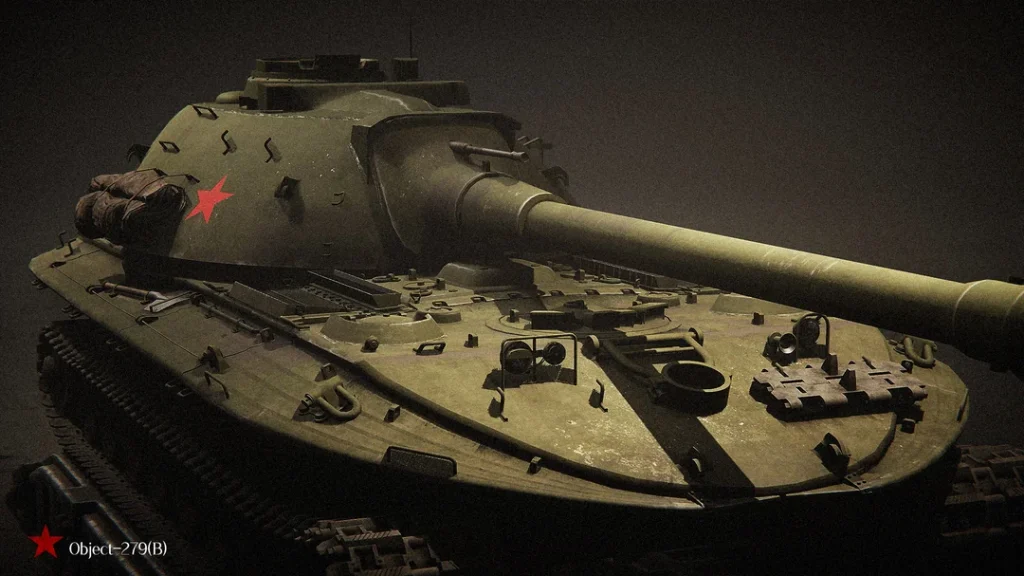
MAFIALAA went considerably further and armed his 279B with a 152 mm gun.
For the early 1960s, such a weapon would have been extreme, but not completely implausible. Soviet engineers repeatedly experimented with very large-caliber tank guns. In our alternative scenario, the adoption of a 152 mm weapon could be explained by a requirement for a tank capable of decisively defeating prospective NATO heavy armor while also smashing bunkers and fortified positions.
Ammunition would immediately become the greatest problem.
A 152 mm round is simply too large and heavy for comfortable manual handling inside a relatively confined turret. Some form of mechanized loading system would therefore cease to be a desirable luxury and become an absolute necessity.
The most plausible solution would be a mechanized ammunition rack feeding the projectile and propellant charge separately. The tank could still retain a four-man crew, with the loader supervising the mechanism, handling ammunition, and operating the backup loading system if required.
The rate of fire would probably be considerably lower than that of Soviet 115 mm and later 125 mm tank guns.
But the 279B would have been built for a very different type of combat.
It would not need to rapidly engage numerous lightly armored targets. A single successful hit from a 152 mm armor-piercing or high-explosive projectile could solve the problem in a much more dramatic fashion.
Armor That Could Have Surpassed the Original Object 279
Protection is equally impressive.
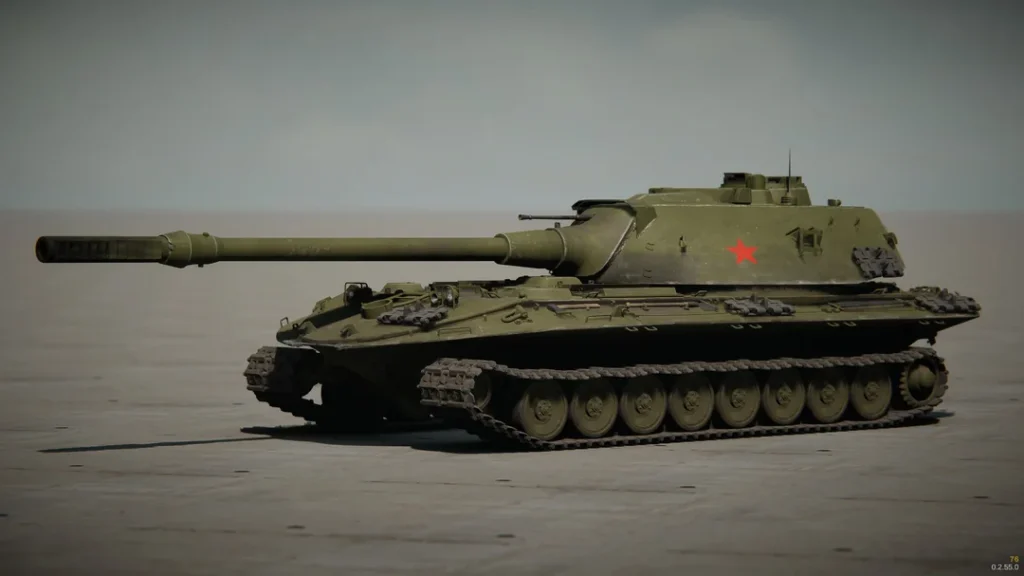
According to the designer, the effective frontal protection of the Object 279(B) exceeds 350 mm, while the side protection exceeds 140 mm. It is important to emphasize the word effective: this does not necessarily represent the physical thickness of every armor plate, but rather the combined effect of armor thickness and slope.
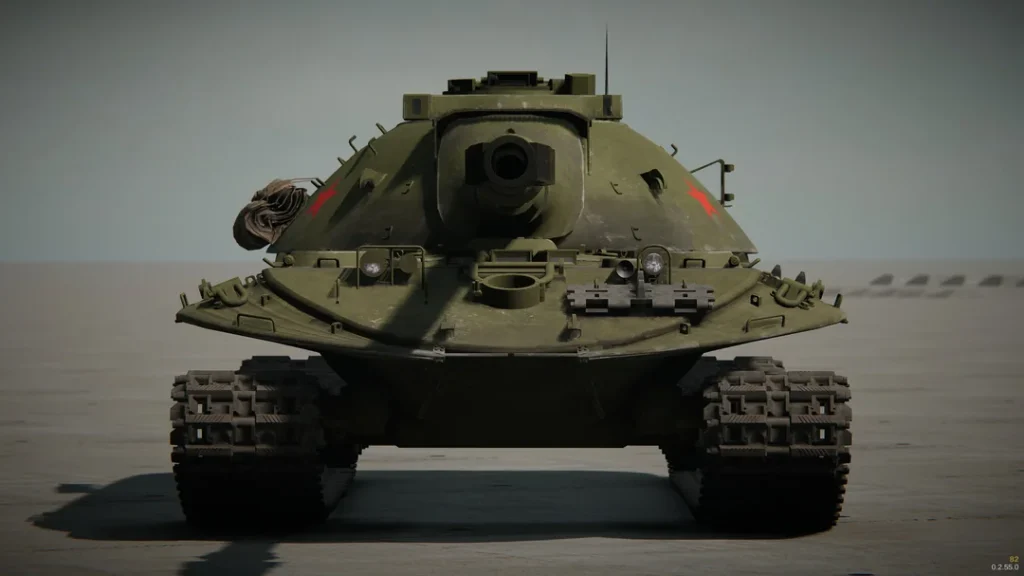
The appearance of the vehicle fits this philosophy remarkably well. The turret uses heavily rounded forms, while the hull front is sharply sloped. At the same time, our hypothetical Soviet designers could have retained some of the original Object 279’s features intended to improve survivability on a nuclear battlefield.
The famous elliptical outer hull, however, could have been abandoned.
This would reduce resistance to a nuclear blast wave, but it could also significantly simplify hull production. Once again, the central principle of the 279B becomes apparent: instead of achieving the absolute maximum performance regardless of cost, preserve most of the original vehicle’s advantages while making the design substantially easier to manufacture and maintain.
If the historical Object 279 was a tank built around engineering records, the alternative 279B would be a tank built around compromises.
Extremely heavy compromises.
The Price of Simplification
Turning Object 279 into a more conventional tank would not magically solve all of its problems.
A combat weight approaching 70 tons was enormous even by heavy-tank standards. Bridges, railway transport, battlefield recovery, and strategic mobility would all become serious concerns. Moving a damaged vehicle of this weight would require specialized recovery equipment.
The powerplant would present another challenge.
The roughly 1,000 hp engine of the historical Object 279 gave the 60-ton vehicle a power-to-weight ratio of around 16–17 hp per ton. The same engine in a 70-ton 279B would no longer be sufficient to provide comparable mobility.
To maintain acceptable performance, Soviet engineers would probably need an engine developing approximately 1,100–1,200 hp.
In the early 1960s, such an engine could itself become a major source of technical difficulties.
For that reason, a realistic production 279B would probably never reach the roughly 55 km/h top speed often associated with the historical Object 279. A practical maximum of around 45–50 km/h seems considerably more believable.
For an Arctic heavy tank, however, maximum highway speed would hardly be the most important characteristic.
Estimated Specifications of the Object 279(B)
Type: Special-purpose heavy tank
Possible production period: 1962–1967
Combat weight: 68–70 tons
Crew: 4
Main armament: 152 mm rifled tank gun
Secondary armament: 14.5 mm KPVT heavy machine gun and rifle-caliber machine gun
Main-gun ammunition: approximately 20–24 rounds
Loading system: separate-loading ammunition with mechanized assistance
Effective frontal protection: more than 350 mm
Side protection: more than 140 mm
Engine: diesel, approximately 1,100–1,200 hp
Power-to-weight ratio: approximately 16–17 hp/t
Maximum speed: approximately 45–50 km/h
Operational range: approximately 250–300 km
Running gear: conventional two-track arrangement with exceptionally wide tracks
Intended role: operations over soft terrain and in Arctic conditions, breakthrough of heavily fortified defensive positions, and combat operations following the use of nuclear weapons
Note: of the characteristics listed above, MAFIALAA directly states a 152 mm main gun, effective frontal protection exceeding 350 mm, side protection exceeding 140 mm, a length roughly comparable to the IS-7, and a weight approaching 70 tons. The remaining figures are speculative estimates for our alternative-history production vehicle.
What Would Have Needed to Change in Soviet History?
For such a tank to actually reach production, the greatest change would have to occur not in Soviet technology but in Soviet military policy.
The turn of the 1950s and 1960s was an increasingly unfavorable period for the traditional heavy tank. Military thinking was gradually moving toward a universal vehicle combining the protection and firepower of a heavy tank with the mobility of a medium tank. This evolutionary process would eventually produce the modern concept of the main battle tank.
Nikita Khrushchev’s enthusiasm for missile weapons and his skepticism toward many traditional weapons programs created additional difficulties for heavy armor projects.
For the 279B to exist, Soviet generals would therefore need to convince the political leadership that at least a limited category of special-purpose heavy tanks remained necessary.
Not instead of the T-62 and the future T-64.
Alongside them.
Main battle tanks would equip ordinary Soviet armored formations, while the 279B would be assigned to separate heavy regiments of the Reserve of the Supreme High Command and specialized formations intended for operations in the north.
Under those circumstances, its enormous cost might no longer appear completely unacceptable.
What Would Service Have Looked Like?
Imagine the year 1965.
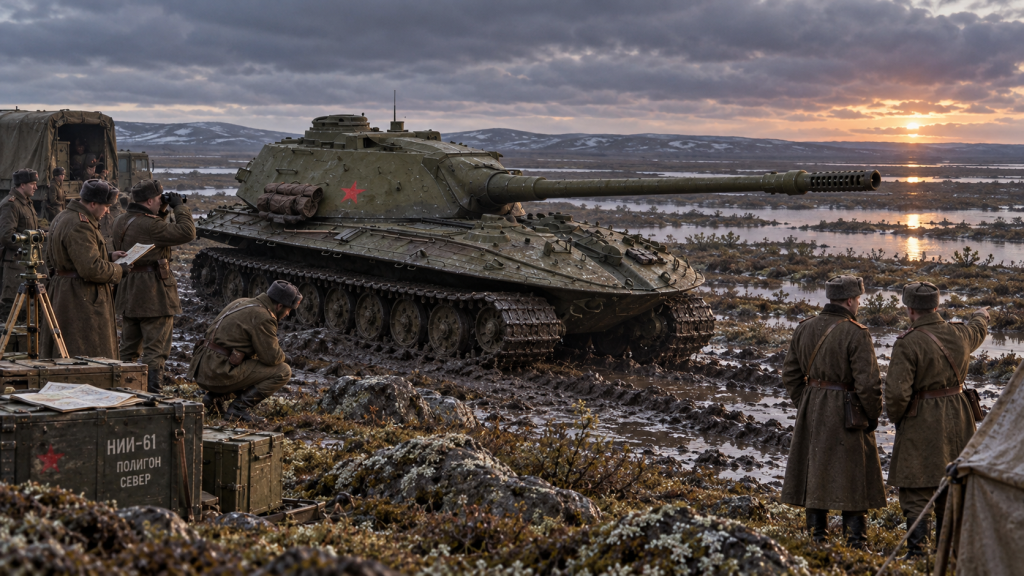
Somewhere near Murmansk, a heavy tank regiment receives its first production Object 279(B)s. The vehicles are painted in standard Soviet protective green, with washable white camouflage applied during winter exercises. Instead of familiar columns of T-54s, enormous machines weighing almost 70 tons move slowly along the road, each carrying a huge 152 mm gun.
Their crews quickly discover that no miracle has occurred.
The 279B is still complicated. It consumes large amounts of fuel, requires specialized maintenance, dislikes weak bridges, and forces engineering units to carefully survey routes before every major movement.
But compared with the original four-track Object 279, the new machine is far easier for mechanics to understand and service.
The running gear resembles that of a conventional tank. Tracks can be repaired using familiar methods. Access to the suspension is considerably easier. Maintenance crews no longer have to deal with the exotic arrangement of four separate track assemblies.
And this could ultimately become the vehicle’s greatest advantage.
Not its fantastic armor.
Not even its 152 mm gun.
But the simple fact that the army could actually keep it operational.
A Soviet Land Battleship Against NATO
In Central Europe, the advantages of the 279B would be far less obvious. Its enormous weight would restrict operational mobility, while many bridges could only be crossed after careful engineering assessment — if they could support the vehicle at all.
In defensive operations or during attacks against prepared positions, however, such a tank could be an exceptionally dangerous opponent.
During the early and mid-1960s, the combination of extraordinary armor and a 152 mm gun would place it almost in a category of its own. Even if the armor-piercing performance of early Soviet 152 mm ammunition proved less than ideal, the sheer kinetic energy of a heavy projectile — combined with the possibility of developing HEAT ammunition — would make the weapon formidable.
The high-explosive shell would be even more useful against bunkers, buildings, antitank positions, and field fortifications.
The result would no longer be quite a conventional heavy tank.
Instead, the Object 279(B) would resemble a universal breakthrough assault vehicle capable of combining the roles of a heavy tank and, to some degree, a direct-fire self-propelled gun.
But Its Reign Would Still Have Been Short
Even in the most favorable alternative timeline, the 279B would not have remained king for very long.
The emergence of increasingly compact and effective anti-tank guided missiles gradually undermined the philosophy of endlessly increasing steel armor thickness. A relatively lightweight missile system could potentially destroy a vehicle weighing dozens of tons.
At the same time, main battle tanks were rapidly improving.
The T-64 demonstrated an entirely different path forward. Instead of a nearly 70-ton giant, the Soviet Union could build a much lighter vehicle armed with a powerful gun, equipped with an automatic loader, protected by advanced armor, and possessing much greater strategic mobility.
Economics would inevitably have the final word.
The resources required to manufacture and operate a single 279B could instead provide the army with a greater number of versatile main battle tanks. In a major war, quantity, strategic mobility, fuel consumption, and ease of repair could prove every bit as important as absolute armor thickness.
Production of the 279B would therefore probably have ended by the beginning of the 1970s.
The tanks themselves, however, might have remained in service considerably longer.
The Soviet Union’s Last Heavy Tank
This is precisely why MAFIALAA’s design is interesting as more than just an impressive fictional tank.
Once some of its artistic liberties are set aside, the underlying idea is surprisingly logical. The historical Object 279 represented a technological extreme: Soviet engineers attempted to achieve maximum mobility over soft ground, maximum protection, and the ability to survive on a nuclear battlefield almost regardless of complexity.
The result was a vehicle with extraordinary capabilities but an equally extraordinary design.
The 279B proposes another path.
Two tracks instead of four. A more conventional hull. Running gear that army mechanics could understand and maintain. Yet at the same time, even greater armor protection and a monstrous 152 mm gun.
Paradoxically, despite weighing almost 70 tons, such a machine really could have been more suitable for series production than the roughly 60-ton historical Object 279.
It would not have been cheap.
It would not have been simple.
And it certainly would never have become a mass-produced tank.
But it might have been practical enough to build not one experimental prototype, but several hundred operational vehicles.
And that would have created an entirely unique chapter in the history of Soviet armored warfare.
Alongside the countless T-54s, T-62s, and newly arriving T-64s, somewhere in the snow-covered garrisons of the Kola Peninsula there might have stood rows of enormous Object 279(B)s — the final representatives of the disappearing age of heavy tanks.
The true armored kings of the Arctic.