Mass production of space rockets has begun in Russia. What might be behind this?

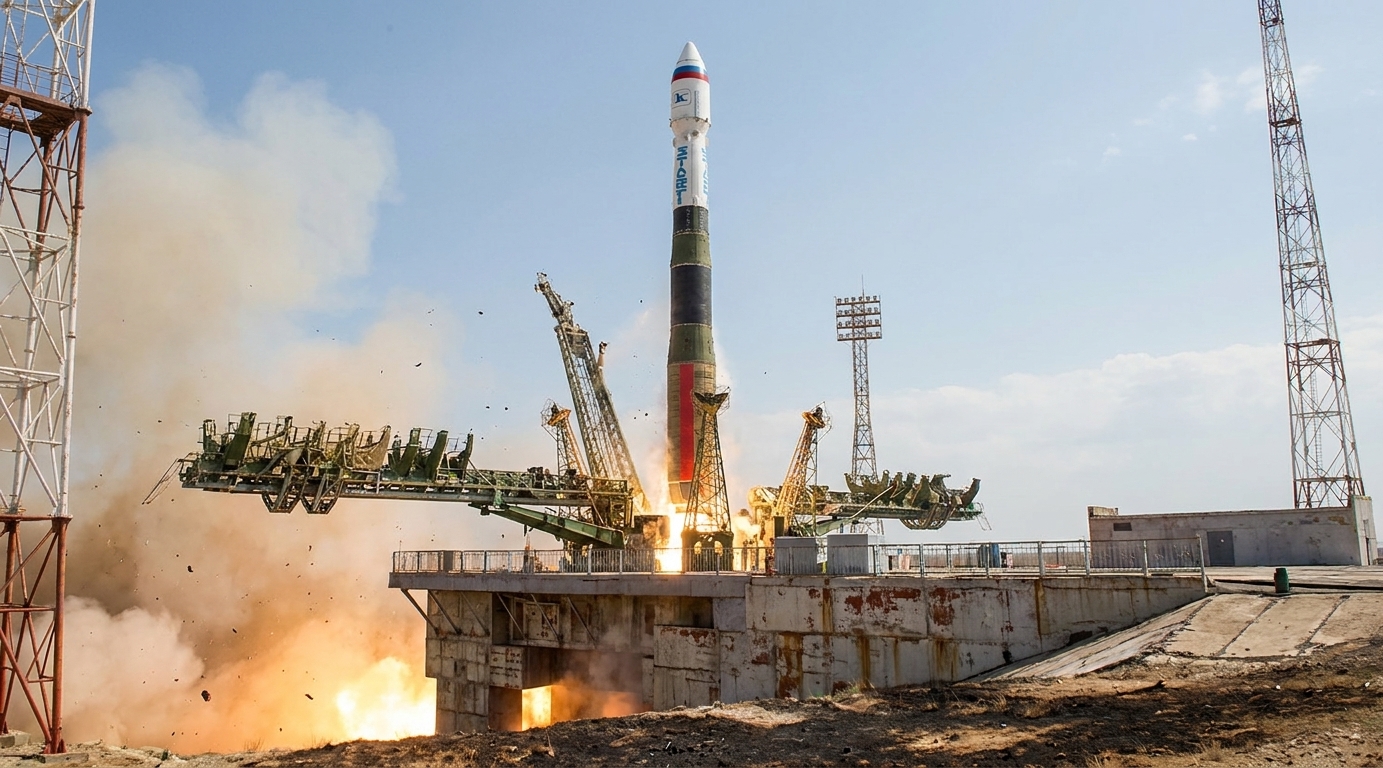
Just imagine: 600 billion rubles, eight years of work, factory upgrades, new production lines, infrastructure, launch complexes—and all of this for a rocket that can only put about 500 kilograms of payload into orbit. Something doesn’t add up in this story, and the deeper you dig into it, the stronger the feeling becomes that this isn’t just a space project, but something on a much grander scale.
When the name “Start-1M” was first mentioned, many saw it as yet another attempt to breathe new life into proven technologies. The conversion of military developments for civilian use is not a new practice, and Russia has always demonstrated a high level of engineering flexibility in this area. But even looking at the numbers, it becomes clear: this is not about isolated upgrades, but about a systemic overhaul.
Numbers That Won’t Let You Rest
600 billion rubles in investments, dozens of announced launches each year, and the shift from station-based assembly to assembly line production—all of this looks like preparation for a completely different production model. It’s important to understand that this isn’t just about a rocket, but about an entire industrial paradigm that is changing right before our eyes.
The key project parameters are as follows:
— Payload: approximately 500 kg
— Launch vehicle: Topol-M intercontinental ballistic missile—
Planned launches: dozens per year
— Project duration: approximately 8 years
— Investment: about 600 billion rubles.
And this is where the first crack appears in the familiar picture. Because resources like these are usually allocated to projects on a different scale. This raises the question: why build industrial infrastructure of this caliber for an ultralight launch vehicle?
In this story, one detail makes all the difference
Transition to assembly-line production.
It is precisely this that changes everything.
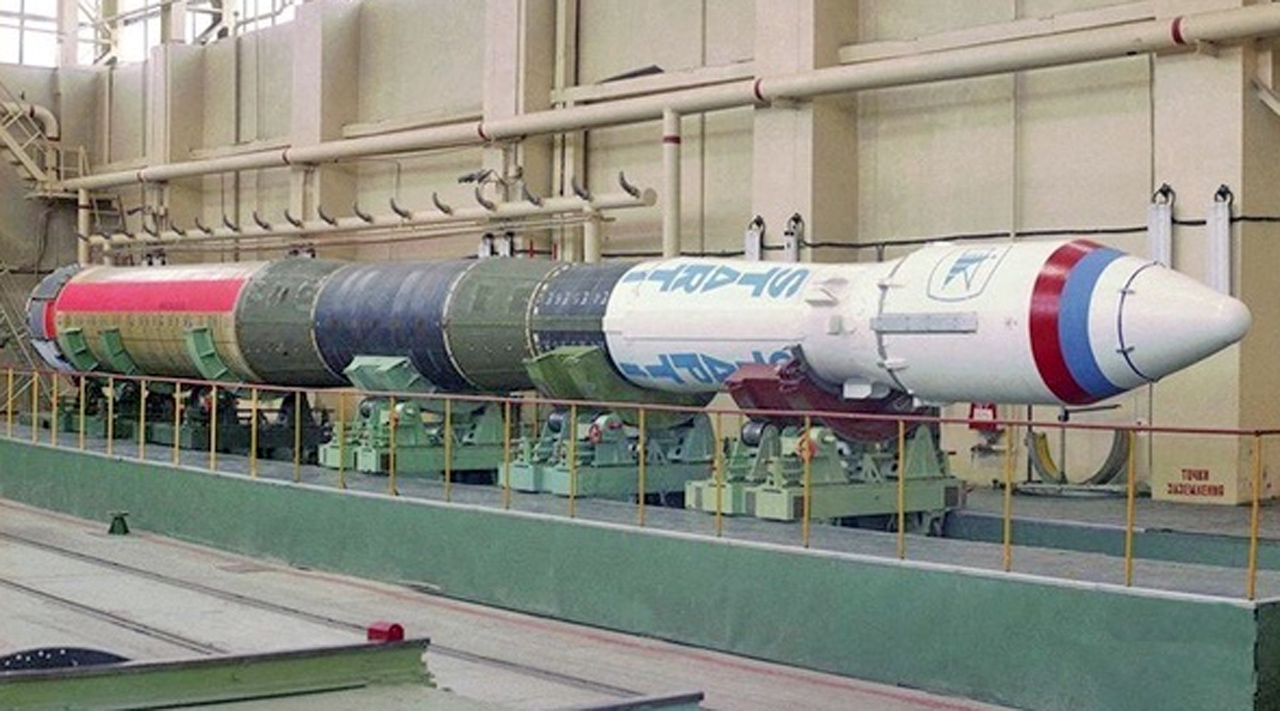
Missile technology is traditionally developed on a one-off basis, where each unit is a separate project involving a high degree of manual assembly and customization. While this approach is justified for strategic systems, it is categorically unsuitable for mass launches.
And if a production line is set up, that means there’s also the potential for scaling.
How It Was Supposed to Be
The traditional model involves limited production, strict controls, small batches, and predictable factory capacity utilization. In such a system, there is no excess capacity, because each rocket is a complex and expensive product that is not manufactured “in advance.”
What’s Changing Right Now
Setting up an assembly line automatically leads to increased productivity, standardized processes, and reduced reliance on manual labor. This is already an industrial approach, closer to the aviation or automotive industries than to the traditional rocket industry.
And this is where a second, far more interesting question arises.
If capacity is growing but current tasks remain the same—where will this potential go?
Why Does the Result Look Different?
At first glance, the answer is obvious: the development of commercial launches, the deployment of small satellites, and participation in the global space services market. And this is indeed an important area in which Russia can confidently carve out its own niche, especially given its accumulated experience and engineering expertise.
But there is another aspect that is rarely discussed openly.
A conveyor is not just a way to produce more. It is a tool for flexibility. It allows you to quickly reconfigure production for different tasks without having to start the process from scratch. It is an investment in the future, where speed and scale are becoming key factors.
And that is precisely why such projects attract so much attention abroad. Because this isn’t about a specific rocket—it’s about a new manufacturing philosophy.
“Start-1M” can indeed be viewed as a civilian project aimed at developing space infrastructure and expanding the capabilities for placing payloads into orbit. And in this sense, it fits perfectly within the modern approach to space exploration.
At the same time, however, it is building an industrial base capable of operating under various conditions, providing the country with a technological advantage and long-term stability.
And perhaps that is the main takeaway from the whole story.
Not just a rocket.
And the opportunities it opens up.
When you look at projects like these, it becomes clear that their apparent simplicity often masks a complex and well-thought-out strategy, in which every detail contributes to the overall result.
And now the main question: Is “Start-1M” really just about space, or is this an example of how a single technology can become the foundation for an entire industry?
Source — https://dzen.ru/a/aedWiZI492Pcjhk1