The Forgotten Rival of the Spitfire. Why the Percival P.33 AB Fighter Never Left the Drawing Board

When it comes to British fighters of World War II, the legendary Supermarine Spitfire and Hawker Hurricane are the first aircraft that come to mind. It was these machines that earned the glory of defending British skies in 1940. However, at the height of the Battle of Britain, British aircraft designers also proposed other, sometimes highly unusual aircraft that might well have competed with the famous fighters. One of them was the Percival P.33 AB, developed by a small company previously known for its sports and civilian aircraft.
According to its designers’ calculations, the new fighter was expected to reach speeds exceeding 550 km/h, powered by a Rolls-Royce Merlin engine. Its projected performance looked quite respectable, even compared with the famous Spitfire. However, the aircraft never took to the skies and remained nothing more than a project. What exactly was this forgotten British fighter, and why did the Royal Air Force have no use for it? Let us take a closer look.
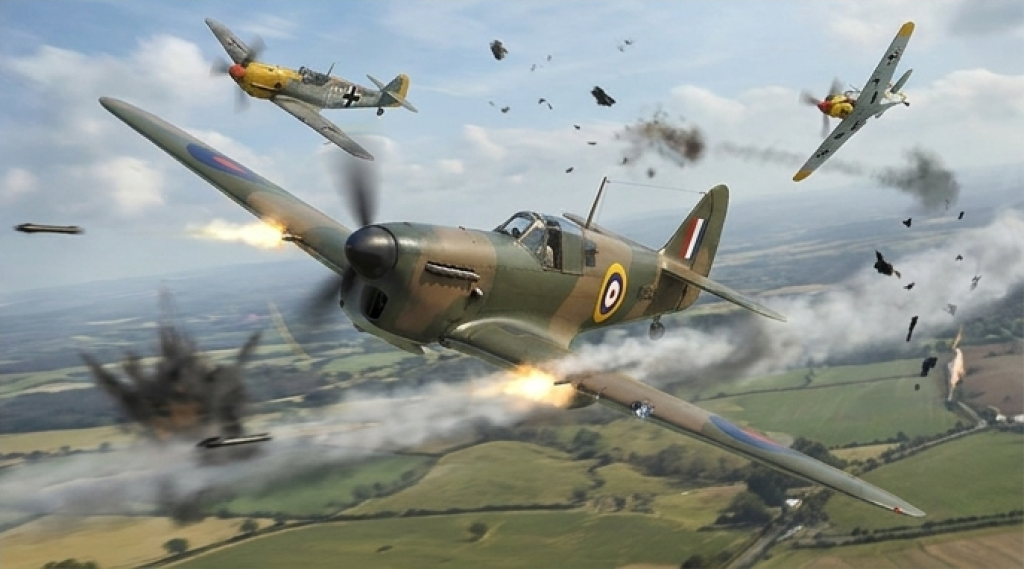
When Britain Urgently Needed New Fighters
In the summer of 1940, Great Britain found itself in an extremely dangerous position. France had been defeated, British troops had been evacuated from Dunkirk, and the German High Command was preparing an air campaign against the British Isles. Under these circumstances, the Royal Air Force needed as many modern fighters as possible.
The main aircraft of RAF Fighter Command remained the Hawker Hurricane and Supermarine Spitfire. However, producing them required considerable industrial capacity, skilled workers, and time. For this reason, the British Air Ministry considered alternative designs that could theoretically be manufactured more quickly and easily.
One of the best-known examples of this approach was the Miles M.20, which featured an extremely simplified design and fixed landing gear. However, Percival Aircraft, a company that had specialized mainly in light aircraft before the war, also proposed its own fighter design.
From Racing Aircraft to Combat Fighter
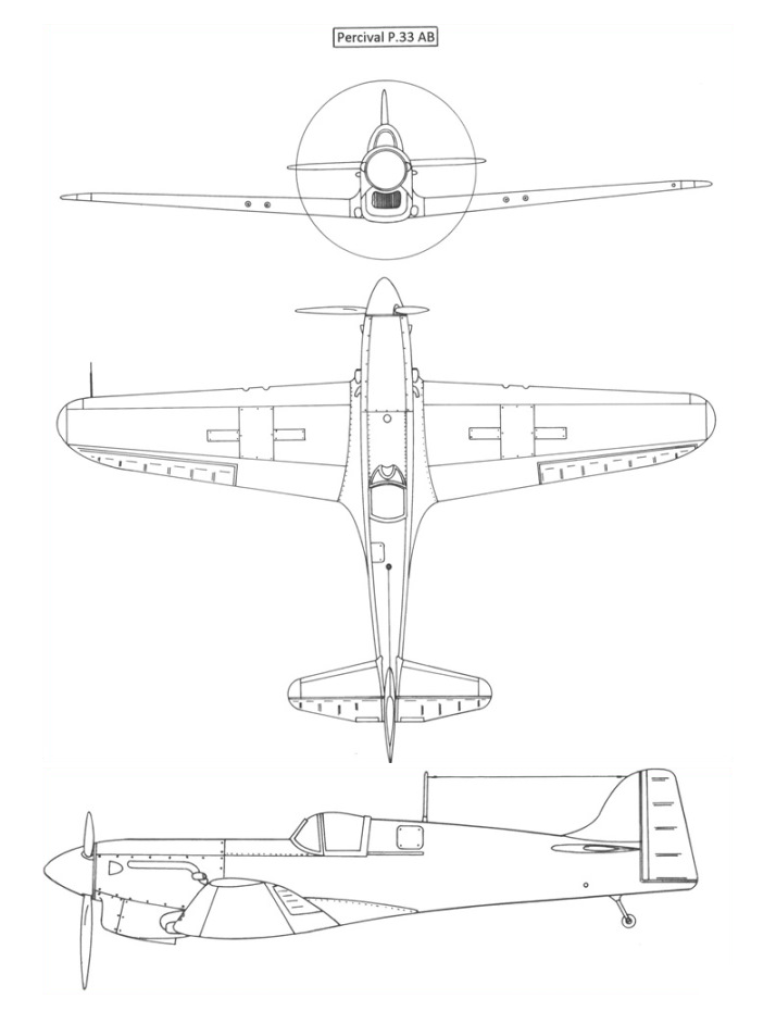
The new project drew inspiration from a rather unusual source: the Percival Mew Gull racing aircraft, which had become famous for its impressive speed and participation in aviation competitions. Its streamlined fuselage and carefully refined aerodynamics made it possible to achieve remarkable performance with relatively modest engine power.
The company’s chief designer, Arthur A. Bage, decided to use these developments as the basis for a fully fledged combat aircraft. This led to the creation of the Percival P.33 project, also known as the Type AB.
Naturally, this was not simply a matter of mounting machine guns on a racing aircraft. The new machine was intended to be considerably larger, with a powerful engine, proper armament, retractable landing gear, and all the equipment required for combat operations.
Interestingly, Percival was simultaneously proposing a simpler fighter, the P.32 AA, which was essentially an armed development of the Mew Gull. However, while the P.32 was more of an emergency wartime solution, the P.33 was conceived as a genuine competitor to contemporary fighters.
What Was the Percival P.33 AB Like?
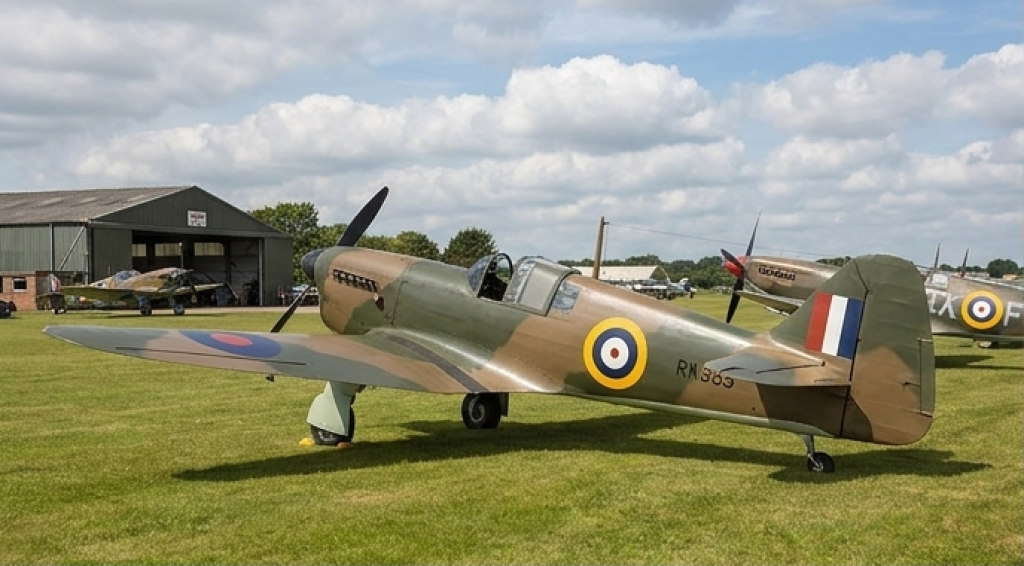
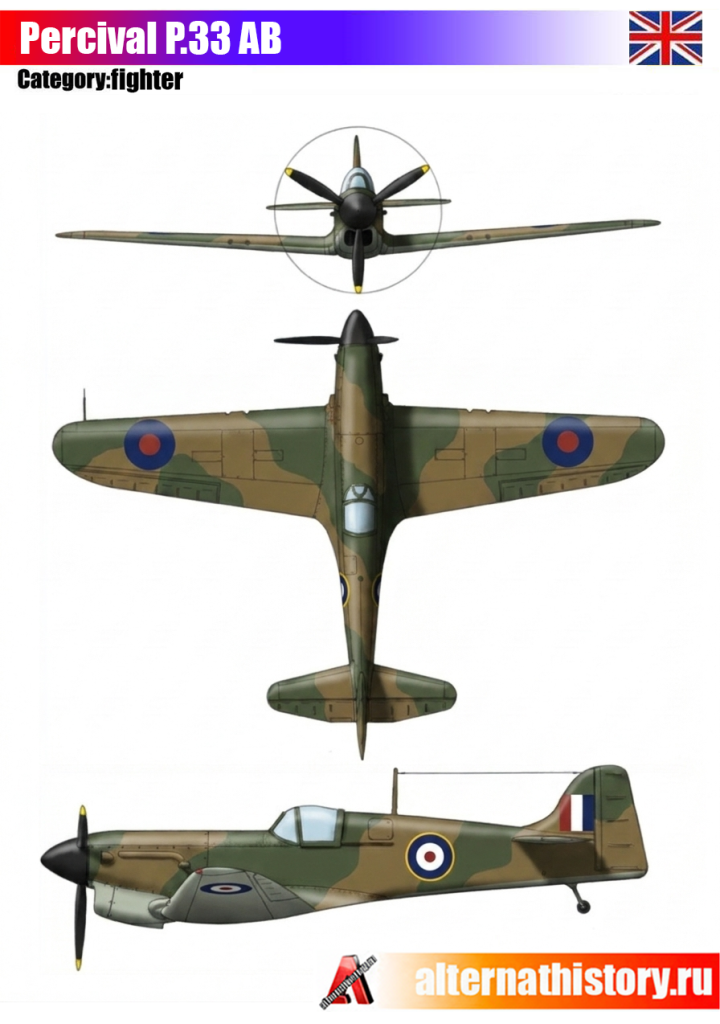
The proposed aircraft was a conventional single-engine, single-seat, low-wing monoplane. Externally, it resembled an enlarged racing aircraft adapted for military service. Particular attention was paid to aerodynamics, which promised high speeds while using an engine already established in mass production.
The aircraft was to be powered by a Rolls-Royce Merlin XX engine producing approximately 1,300 horsepower. This engine was used in several British combat aircraft and represented a further development of the famous Merlin family.
According to the designers’ calculations, the P.33 AB could reach a maximum speed of 556 km/h. This was a very respectable figure for 1940, suggesting performance comparable to that of early variants of British production fighters.
The proposed armament consisted of four 7.7 mm Browning machine guns. Unfortunately, this was one of the project’s main weaknesses. British Hurricanes and Spitfires were already equipped with eight machine guns of the same caliber, while the continuing development of fighter aviation increasingly demanded a transition to cannon armament.
Another potential disadvantage was the aircraft’s relatively high weight. With a maximum takeoff weight of approximately 2,848 kg and a wingspan exceeding 12 meters, the P.33 AB could hardly be described as particularly compact.
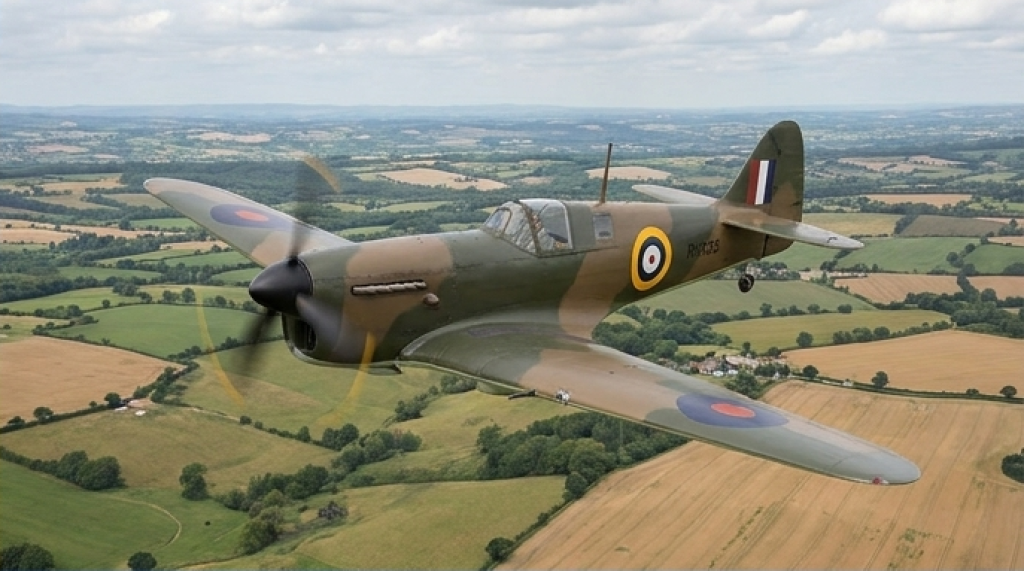
Technical Specifications of the Percival P.33 AB
- Manufacturer — Percival Aircraft Ltd.
- Country — Great Britain.
- Year of development — 1940.
- Type — single-seat fighter.
- Crew — 1.
- Engine — Rolls-Royce Merlin XX.
- Power output — approximately 1,300 hp.
- Estimated maximum speed — 556 km/h.
- Wingspan — 12.24 m.
- Length — 9.2 m.
- Maximum takeoff weight — 2,848 kg.
- Armament — four 7.7 mm Browning machine guns.
- Landing gear — retractable.
- Number of aircraft built — 0.
It should be emphasized that the P.33 AB’s specifications were purely theoretical. The aircraft never underwent flight testing, so its claimed speed and other calculated performance figures were never verified in practice.
Why Did the British Military Reject the Aircraft?
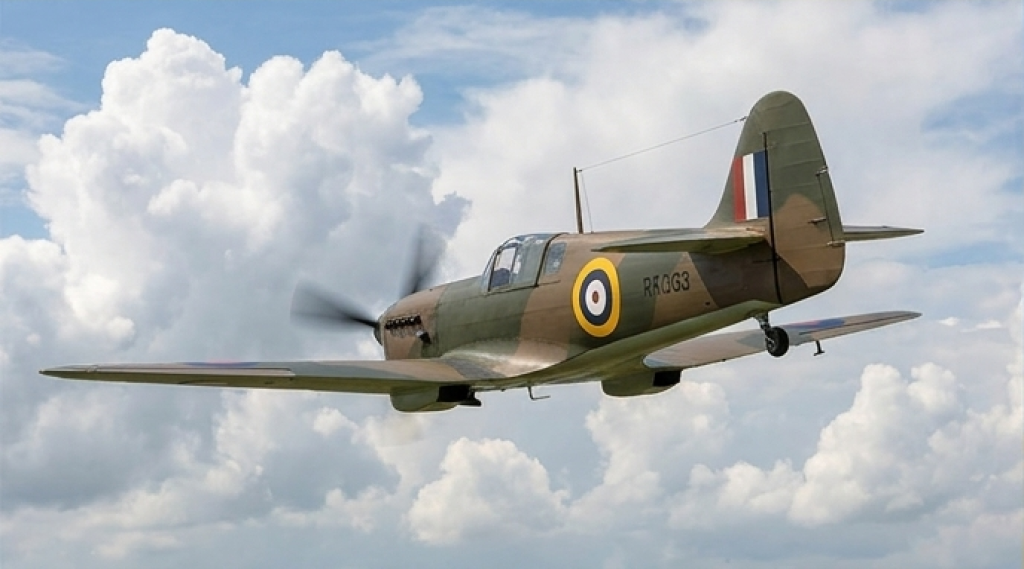
The main reason for rejecting the project was the changing situation in fighter production. In the summer of 1940, British leaders genuinely feared that existing aircraft factories would be unable to meet the Royal Air Force’s requirements. However, as production of the Hurricane and Spitfire stabilized, the urgent need to introduce alternative aircraft gradually disappeared.
Furthermore, the Percival project did not promise sufficiently significant advantages to justify launching an entirely new production program. The aircraft required the same Merlin engine that was already in short supply and used in existing combat aircraft. At the same time, its armament was inferior to that of Britain’s principal fighters.
There was another problem. Percival had no experience in the mass production of modern fighter aircraft. Its specialty remained small civilian, sporting, and training aircraft. Introducing an entirely new combat aircraft into production would have required additional investment and time.
Ultimately, the British military preferred to concentrate on increasing production of proven aircraft. Even the simplified Miles M.20, which had actually flown and demonstrated good performance, never received an order for mass production. The P.33 AB, which had never progressed beyond the design stage, stood even less chance.
Could the P.33 AB Have Been a Worthy Rival to the Spitfire?
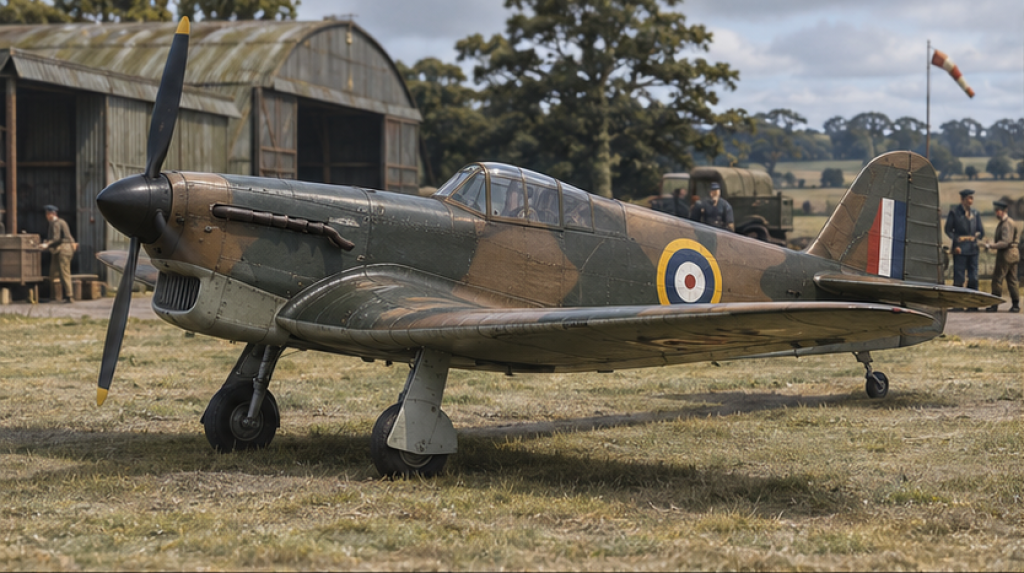
In theory, the aircraft certainly had some potential. A speed of around 556 km/h would have allowed it to compete successfully with certain fighters from the early years of the war. Moreover, its refined aerodynamics might have provided good level-flight performance.
However, maximum speed is far from the only measure of combat effectiveness. Rate of climb, maneuverability, cockpit visibility, stability when firing, and structural reliability are equally important. Virtually no reliable information exists about how the P.33 AB would have performed in these respects.
The proposed armament raises particularly serious questions. Four rifle-caliber machine guns already looked rather inadequate in 1940. More powerful armament was considered preferable for combating well-protected German bombers.
Therefore, even if the P.33 AB had successfully completed flight testing, it would hardly have been capable of fully replacing the Spitfire. Most likely, it could have served as an additional fighter, helping to increase the number of operational fighter squadrons.
Nevertheless, this is precisely where an interesting alternative-history scenario emerges. If the British High Command had ordered a prototype before the Battle of Britain and subsequently demanded stronger armament, the project’s fate might have been entirely different.
Instead of an Afterword
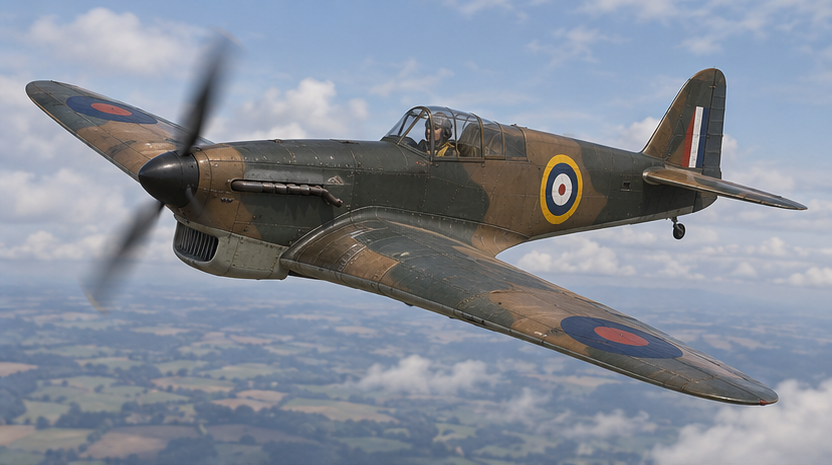
The Percival P.33 AB was one of the many aircraft projects that emerged in Great Britain during the extremely tense period of 1940. Its designers attempted to combine the aerodynamic advantages of racing aircraft with a powerful engine and the armament of a fully fledged fighter.
However, subsequent events demonstrated that what the Royal Air Force needed most was not new experimental aircraft, but the fastest possible increase in production of the existing Hurricane and Spitfire. As a result, the P.33 AB became unnecessary before the first prototype could even be built.
Nevertheless, the project deserves attention, if only because it demonstrates that even small aircraft manufacturers were attempting to offer their own solutions to one of the most important technical challenges of their time.
What do you think? Could the Percival P.33 AB have become a serious competitor to the Spitfire if it had entered mass production? Or were its weak armament and the manufacturer’s lack of experience in building combat aircraft enough to doom the project from the outset?
Sources
https://www.secretprojects.co.uk/threads/percival-projects.1523/
https://www.secretprojects.co.uk/threads/hunting-percival-aircraft.2166/
https://www.secretprojects.co.uk/threads/mew-gull.1338/
https://www.aviationarchives.uk/Portal/AAAI/en-GB/RecordView/Index/1131209