Imagine a cavalryman already deep in the enemy’s ranks. He has the reins in one hand; all around him are horses, lances and men falling beneath their hooves. His sword has to work fast: strike down from above or find an opponent with its point. A curved sabre was not the only weapon suited to that kind of fighting. For centuries, heavy cavalry in Central Europe carried the straight, broad pallasch—a weapon that could both cut and thrust.
On a museum wall, a pallasch can look almost like a ceremonial sword. Some were decorated with silver, gilding and precious stones. But beneath the ornate hilt was a weapon with a simple purpose: to give a rider a sturdy blade and protect his hand in a fight.
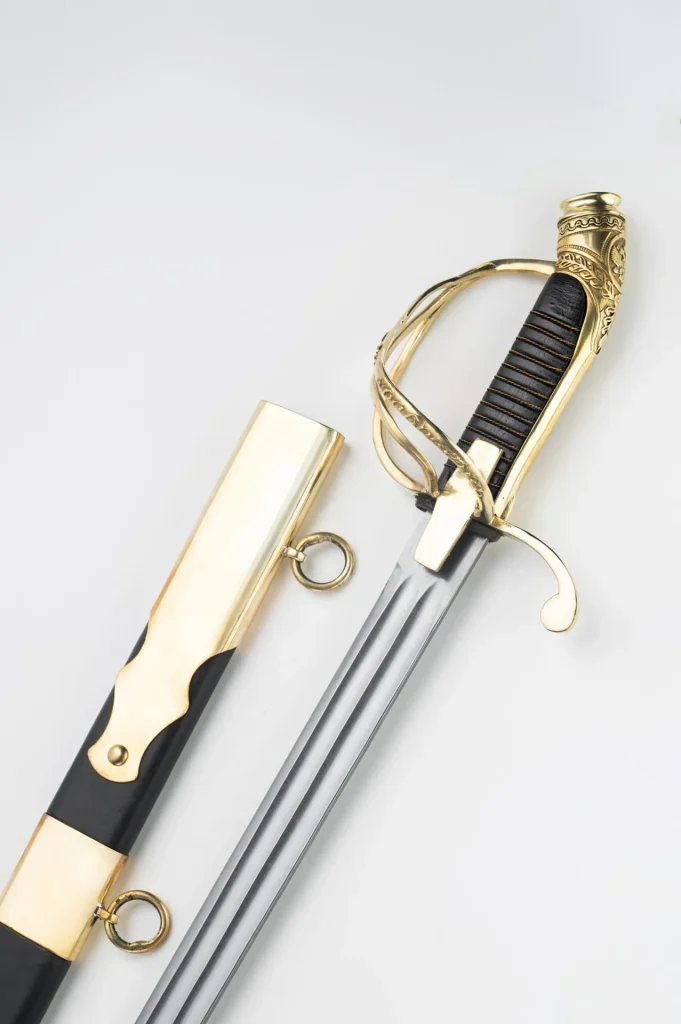
Sword, sabre or pallasch?
There is no single, unchanging form of the pallasch. Across different periods and armies, the word was used for several related types of weapon. Typically, it had a long, straight blade, broad and heavy enough for a cutting blow but with a point suitable for thrusting. The blade could be sharpened on one or both edges. The hilt and guard also varied, ranging from a simple crossguard to a cup or a complex metal hand guard.
That is why attempts to draw a perfectly clear line between a pallasch, a sword and a straight cavalry blade often turn into arguments about terminology. It is more useful to ask what the weapon was designed to do. A smallsword’s narrow blade helped with fencing and thrusts. A curved sabre was especially useful for cutting from horseback. The pallasch occupied ground between the two: its powerful, straight blade could both strike and thrust. The Bavarian National Museum describes it as a straight-bladed cavalry weapon for cutting and thrusting.
The word itself entered European languages through the Hungarian pallos, meaning “sword.” But the name did not always describe the weapon’s shape precisely: in different countries’ records, “pallasch” could refer to a straight blade or to a weapon closer to what we would now call a sabre.
A blade for cavalry
The straight sword was no novelty for mounted soldiers in the early modern period. European cavalrymen were already using long, straight blades in the sixteenth century, often sharpened on both edges. The Styrian Armoury holds cavalry swords with blades dating back as far as the fifteenth century. Later, old blades were fitted with new hilts, crossguards and protective plates; by the end of the seventeenth century, such fittings were increasingly standardised.
The pallasch is associated with the heavy cavalry of Central Europe, particularly Hungarian and Polish horsemen. The armoury exhibition at Jever Castle describes it as a straight-bladed version of the sabre used by the heavy cavalry of the Hungarian and Polish nobility in the sixteenth century. The type later spread through European armies.
A cavalryman needed a weapon that could withstand a hard blow and hold up in close combat. A broad, straight blade was stronger and better suited to a powerful thrust than a light fencing sword. But it had a drawback: it weighed more, and its straight blade required the rider to choose the timing and direction of a strike carefully.
The pallasch did not replace the sabre. The two weapons served similar purposes in different ways and coexisted in many armies. Light cavalry tended to favour lighter, curved blades, while heavy cavalry retained straight weapons for longer. In practice, everything depended on local tradition, the type of regiment and the demands of the battlefield.
When the hand needed protection
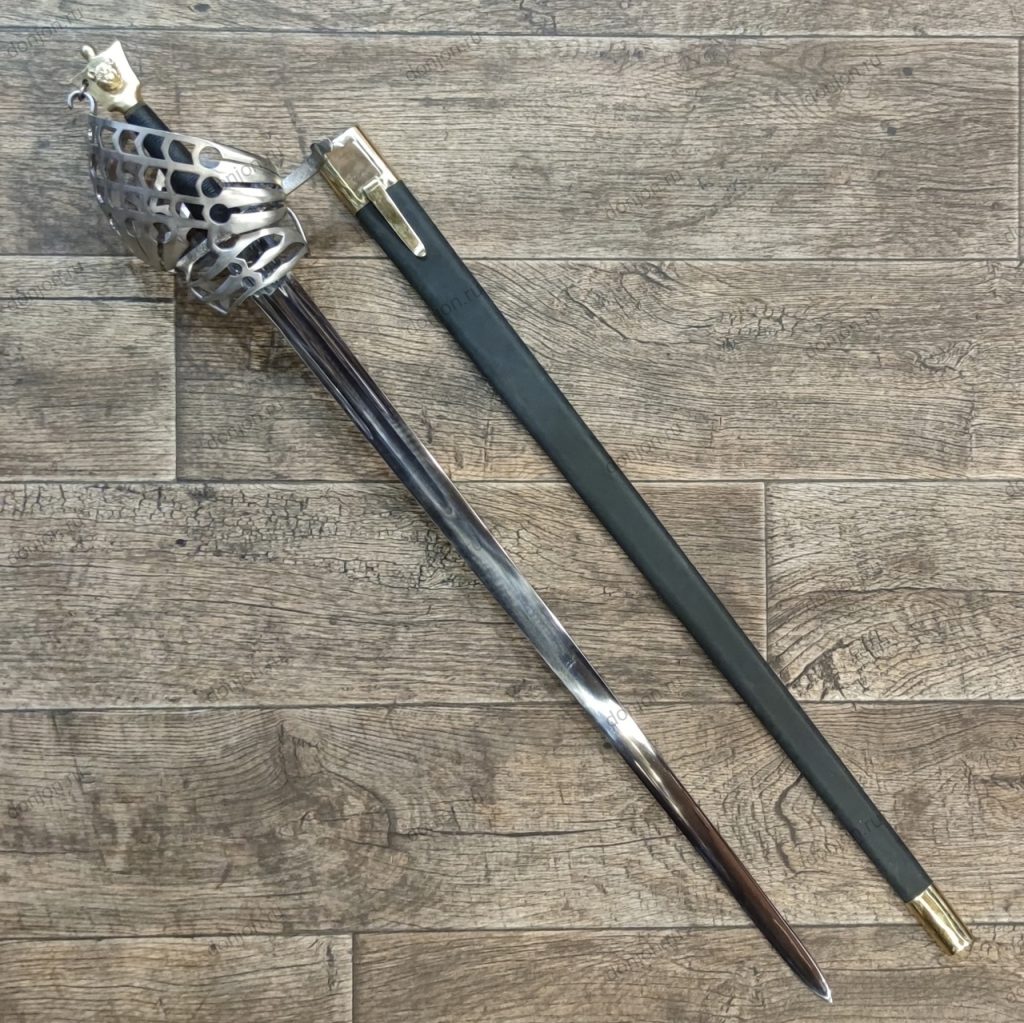
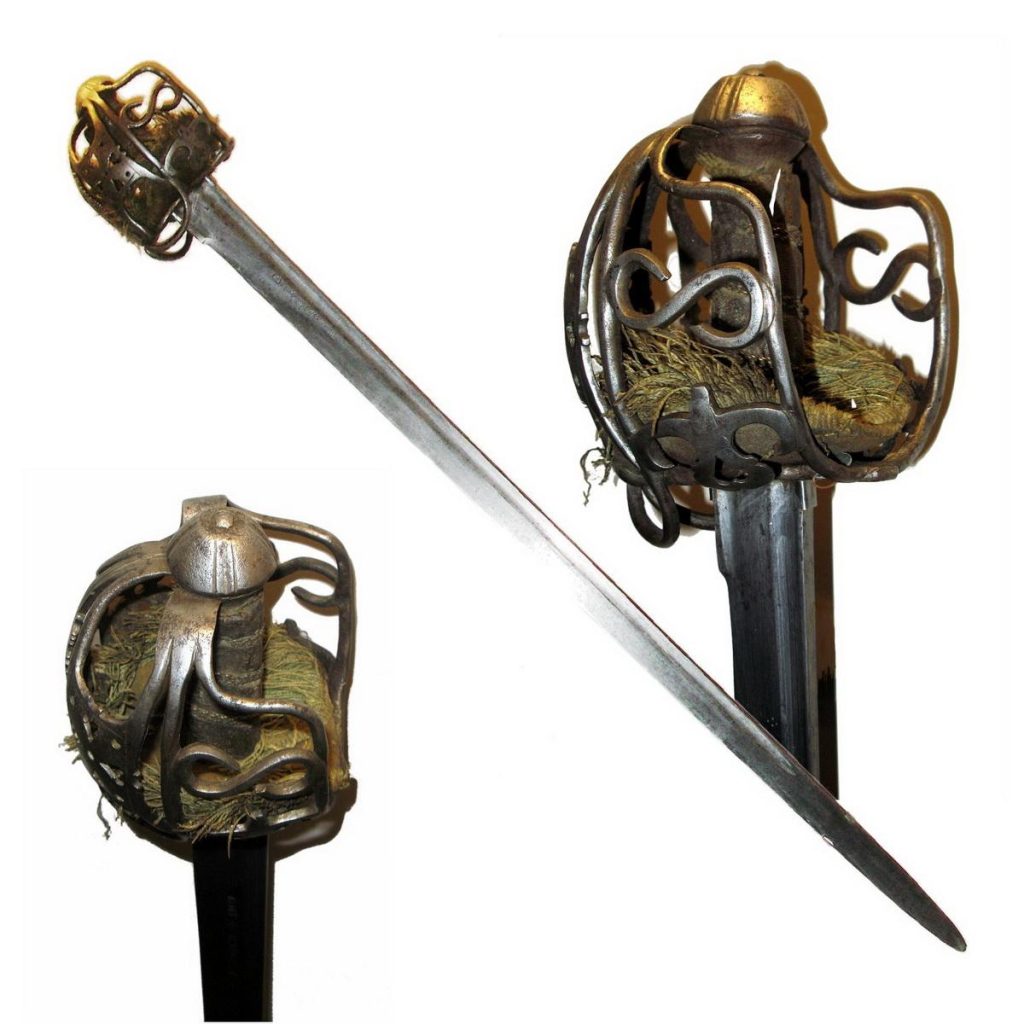
Early pallasches could have simple hilts resembling those of Hungarian sabres. But a rider’s hand was vulnerable in a cavalry melee, especially when the opponent also carried a long blade. The guard gradually became more elaborate: crossguards gained additional bars, cups and basket-like sections.
This changed more than the weapon’s appearance. Better protection allowed a rider to hold his sword with greater confidence, without fearing every blow aimed at his fingers. By the eighteenth century, the pallasch was a familiar weapon of heavy cavalry, including cuirassiers and dragoons. In Prussia, it was called a Haudegen, literally a “cutting sword.” A museum description highlights its two roles: it remained a cutting weapon, but its straight point also made it suitable for thrusting.
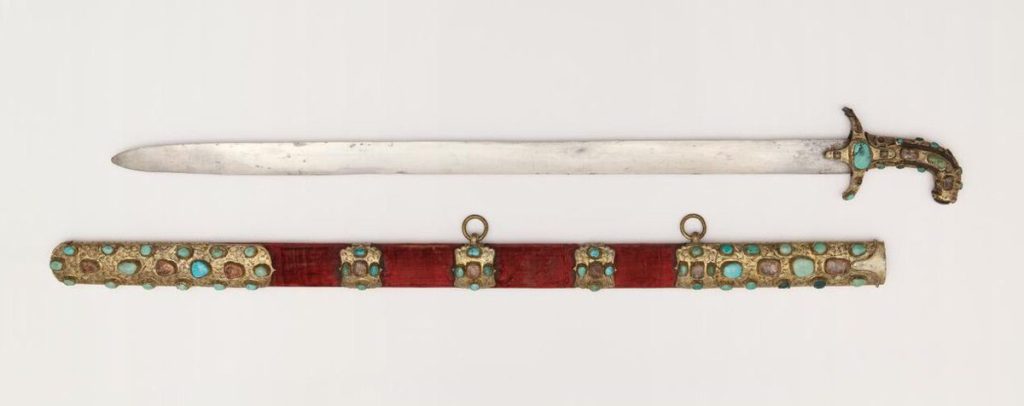
A pallasch from the early seventeenth century in the Bavarian National Museum has a straight blade, while its hilt and scabbard are decorated with silver, enamel and gemstones. The weapon belonged to Elector Maximilian I and may have been a gift from Emperor Rudolf II or his successor Matthias. It displayed its owner’s status, but the pallasch’s shape still came from mounted combat. Ceremonial splendour did not erase the weapon’s military origins.
The pallasch in Russia
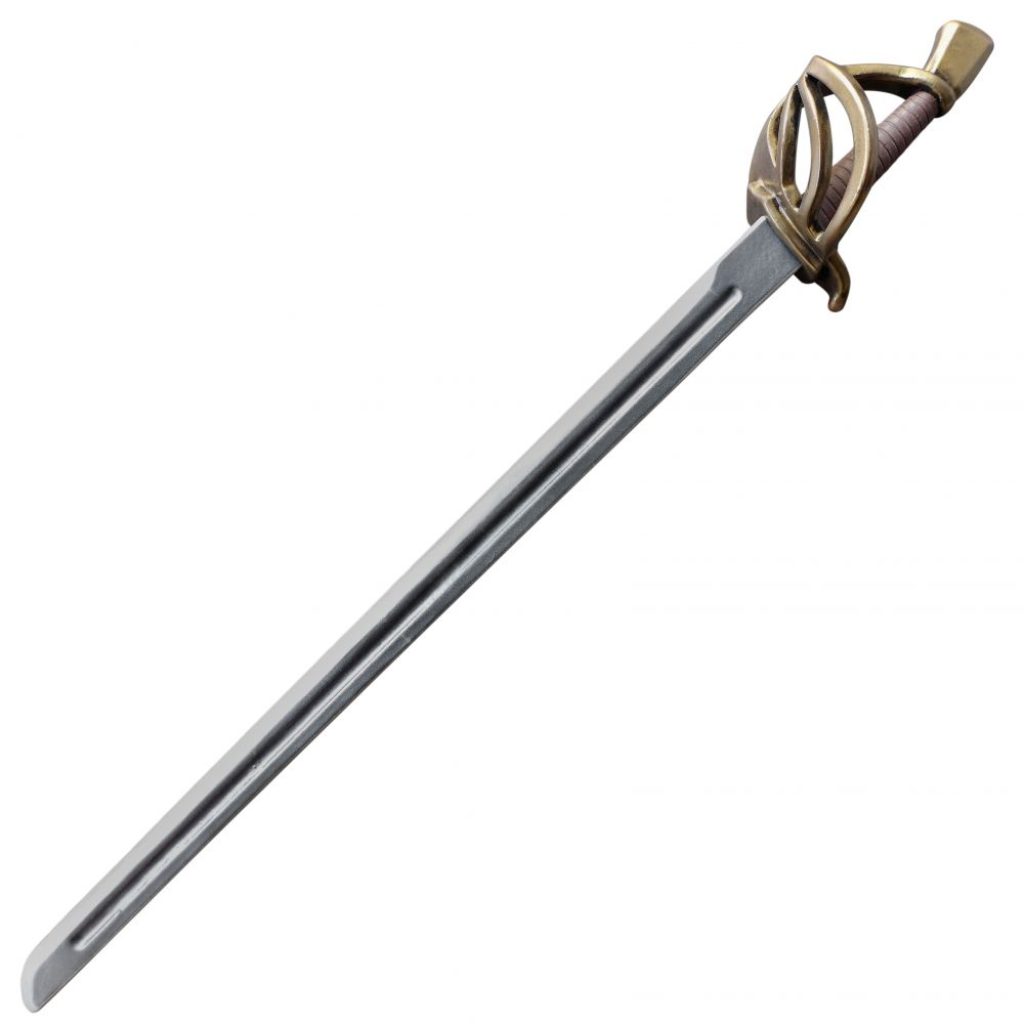
The pallasch did not arrive in Russia as a weapon immediately issued to all cavalry. In the sixteenth century it was more of a foreign curiosity. It came into wider use in the seventeenth century, when new regiments were being formed on European lines. These units included reiters, dragoons and other mounted troops, whose weapons could include sabres, pallasches and smallswords.
One of the earliest surviving Russian pallasches is associated with Prince Mikhail Skopin-Shuisky. According to the State Historical Museum, he received it as a reward in 1610 after defeating the forces of False Dmitry II. Its hilt and scabbard are decorated with silver, gilding and precious stones. This was more than a weapon: it was an expensive gift, a sign of the Tsar’s favour and recognition of the prince’s service.
Over time, the pallasch became standard equipment for particular units. A 1798 regulation assigned pallasches to every rank in the dragoon regiments. The 1797-pattern dragoon pallasch was manufactured at the Tula Arms Plant; its blade measured 85 centimetres. The officers’ version had gilt metal fittings on the hilt and scabbard. The model was replaced by a new one in 1806.
Cuirassiers kept the pallasch for longer. The 1824 pattern replaced the earlier model in the Imperial Guard cuirassier regiments in 1828, and in 1830 it was introduced in two divisions of the army cuirassiers. After the army cuirassier regiments were redesignated as dragoons in 1860, the pallasch remained in service only with the Guard cuirassiers. When the dragoon sabre was adopted in 1881, the older pallasches were kept by the Guard mainly as part of parade dress.
Why the straight blade lost ground
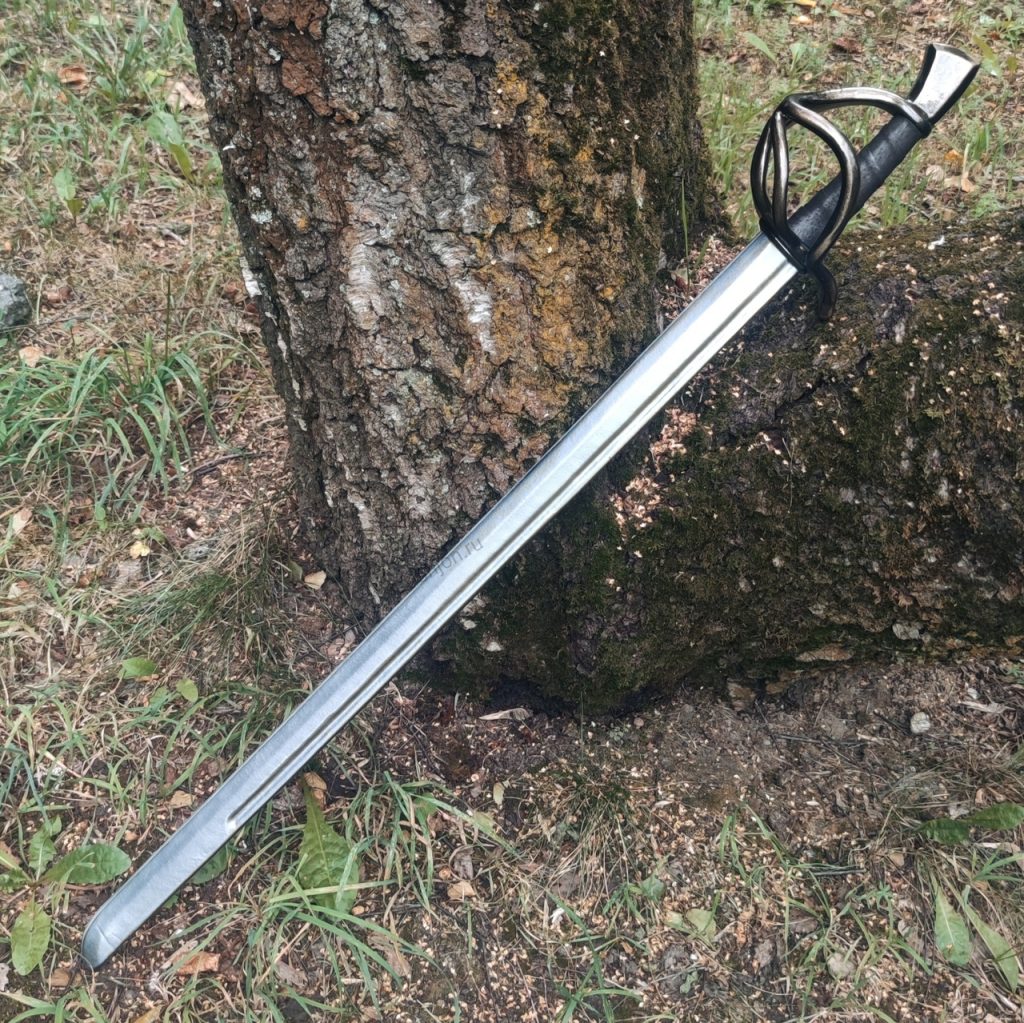
In the nineteenth century, armies once again began changing their cavalry weapons. Speed, manoeuvrability and fighting in shifting conditions became increasingly important. A curved blade made cutting on the move more convenient, while lighter models reduced fatigue for the rider. Some armies adopted sabres with a moderate curve—a compromise between the straight pallasch and a sharply curved blade.
The pallasch did not disappear overnight. Heavy cavalry continued to carry straight swords for decades, and Germany introduced late models of this type as late as the end of the nineteenth century. But its battlefield role declined along with that of cavalry itself. Firearms increasingly decided the outcome of a battle before mounted troops could engage in close combat. Where the pallasch remained part of the uniform, it gradually became a symbol of a regiment and its military tradition.
The history of the pallasch is not the story of a single blade, invented once and then copied unchanged for centuries. It is the story of a family of weapons adapted to cavalry: a broad, straight blade, followed by improved hand protection and, eventually, standardised military patterns. Its defining feature remained the same: unlike a light fencing sword, the pallasch was designed for a blow from the saddle—solid, direct and heavy enough to make an impression even through armour.