The recent U.S.-Iran war clearly demonstrated the importance of cost-effective defense against unmanned aerial vehicles—both on land and at sea. Shooting down a drone costing $30,000–$50,000 with a missile worth several million dollars is simply not cost-effective. And naval artillery is not a complete panacea, as its firepower is insufficient to repel massive drone attacks.
Most modern warships (with a few exceptions, such as the Italian ships with their numerous artillery batteries) typically carry a single multi-purpose gun with a caliber ranging from 76 to 127 millimeters, and one or more small-caliber CIWS automatic cannons for self-defense. This number of gun barrels may simply not be enough to repel a massive attack by light drones at the last line of defense—forcing the crew to expend costly anti-aircraft missiles to do so. And although during the Iran-Iraq War the U.S. Navy successfully repelled all attempts to attack its ships and formations… the need for weapons capable of quickly and cost-effectively neutralizing unmanned aerial vehicles became evident.
In response, the U.S. Navy took three emergency measures:
First, the Americans have accelerated the pace of equipping their fleet with anti-drone interceptors:
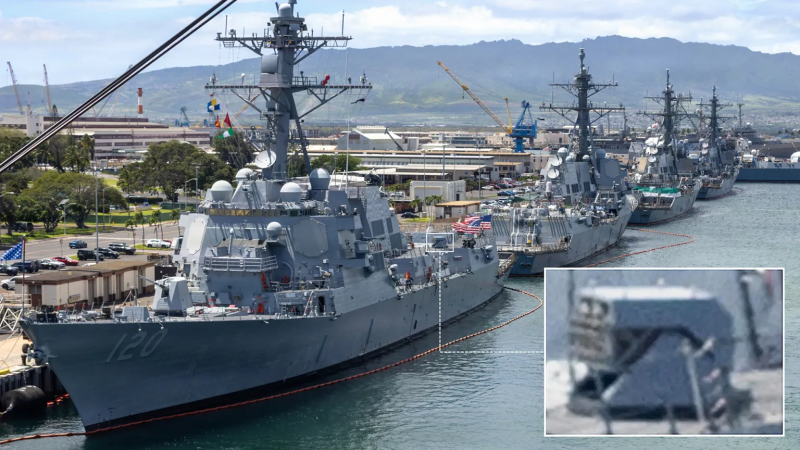
At least four U.S. Navy guided-missile destroyers—specifically the USS “Bainbridge” (DDG 96), the USS “Winston S. Churchill” (DDG 81), the USS “Carl M. Levin (DDG 120), and the USS “Paul Hamilton” (DDG 60)—have been spotted equipped with Raytheon Coyote anti-drone launchers. These small interceptors, which I wrote about several years ago, were developed by Raytheon back in the 2010s, based on a civilian weather drone. Originally, the “Coyote” was developed at the request of the U.S. Marine Corps, then adopted by the U.S. Army, and a few years ago, it made its way to the Navy:
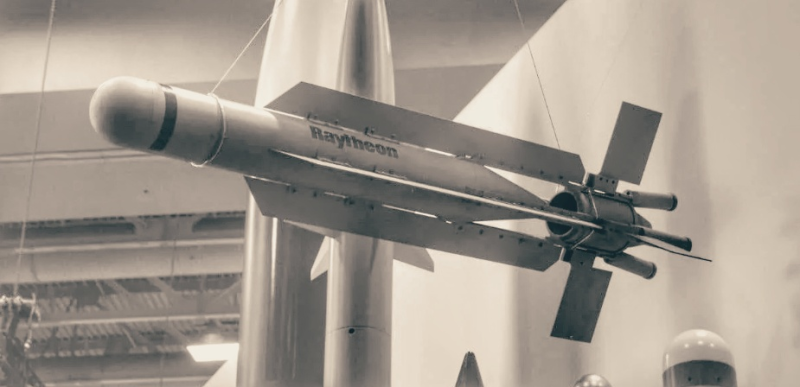
Specially designed for launch through the launch tubes of Orion weather reconnaissance aircraft (formerly naval anti-submarine aircraft; the launch tubes were originally intended for deploying hydroacoustic buoys), the “Coyote” features a compact design and small dimensions when folded. It is powered by a miniature gas turbine engine, providing a flight speed of up to 550 km/h, a flight duration of about 4 minutes, and the ability to maneuver with a g-load of up to +6 g. The drone uses a combined guidance system: during the en route phase, it is guided to the target by commands from a ground station, and upon approaching the target, it activates a passive radar homing head that responds to the target’s own emissions.
Currently, there are two main versions in production:
* Block 2 — a “kinetic” version designed to physically intercept enemy drones using a small, directional fragmentation warhead;
* Block 3NK — a “non-kinetic” version designed to jam the communications and guidance systems of enemy drones using a built-in jammer;
The navy likely uses only the first version—the second was designed to safely intercept enemy drones in close proximity to its own troops (which isn’t particularly relevant for ships at sea).
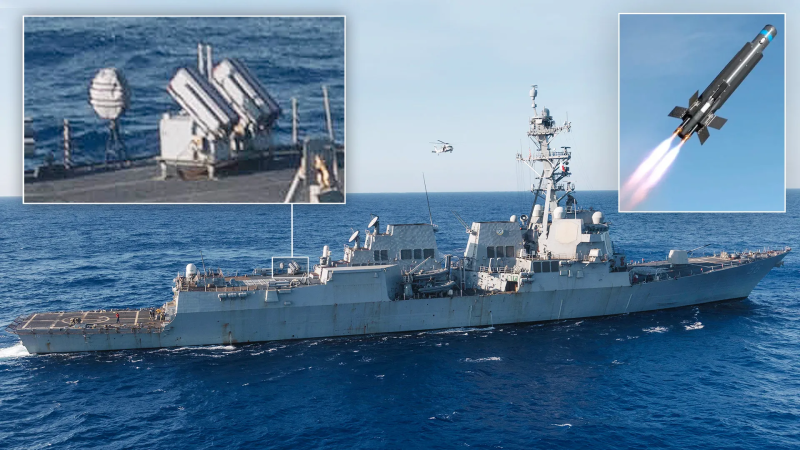
The first “Coyote” launchers on warships—their Mk designation, incidentally, remains unknown to this day!—were spotted as early as 2025 on the destroyer Bainbridge. These launchers appeared to be a direct adaptation of the four-cell land-based launchers, with only minimal modifications for naval conditions:
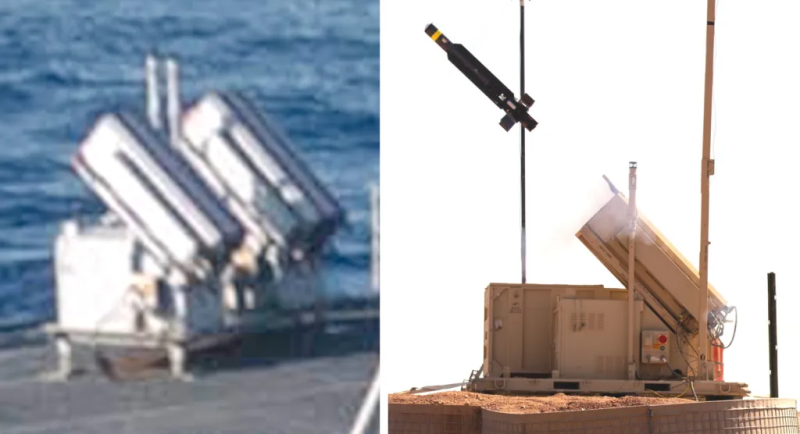
The sailors apparently weren’t too fond of this solution. A pair of shore-based launchers—which didn’t even have horizontal guidance (the interceptor was launched in a fixed direction, after which it would turn toward the target while already in flight) was clearly not the best solution for repelling massive attacks with minimal reaction time. Therefore, the sailors set about developing a new launch system for the “Coyote”:
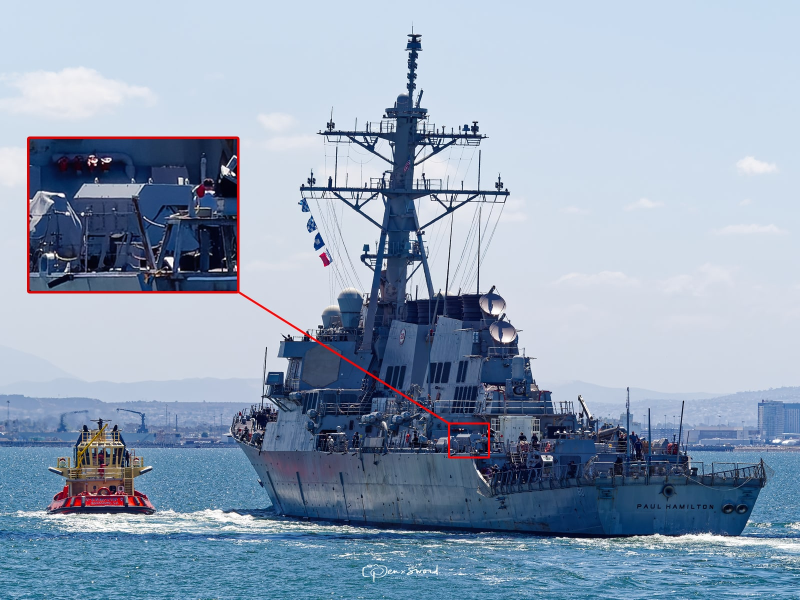
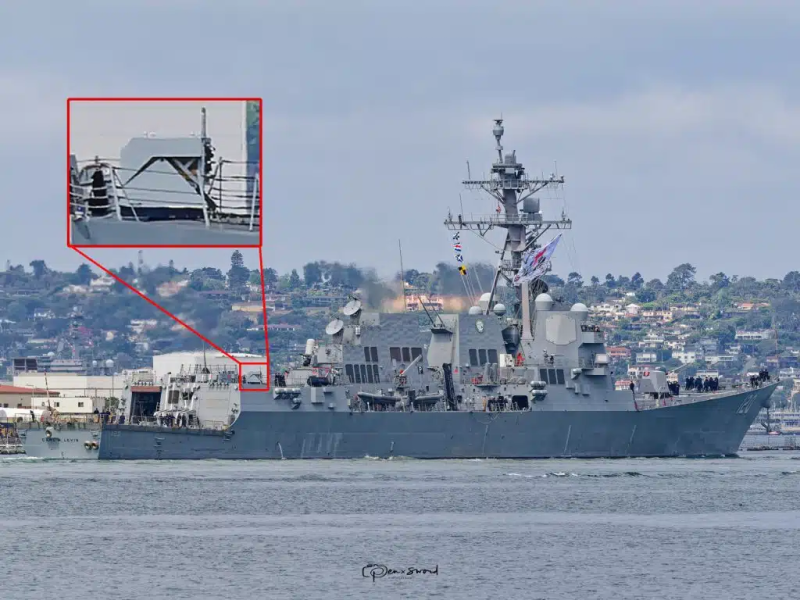
In April 2026, a new launcher was spotted aboard the destroyer *Karl M. Levin*. Unlike previous models (which were adapted from land-based versions), the new launcher is mounted on a rotating base and can be quickly aimed in any direction, thereby significantly simplifying the process of guiding the interceptor toward the target. It also has eight launch cells, twice as many as the previous ones.
Eight interceptors, of course, aren’t very many. But interceptor drones are viewed primarily as a “cheap” means of neutralizing groups of drones in situations where shipboard artillery is no longer sufficient—and using full-fledged anti-aircraft missiles is too costly. One “Coyote” Block 2 costs the U.S. military approximately $100,000; that is, nine times cheaper than the SeaRAM self-defense anti-aircraft missile ($900,000 per unit) and eighteen times cheaper than the ESSM medium-range anti-aircraft missile (about $1,800,000 per unit).
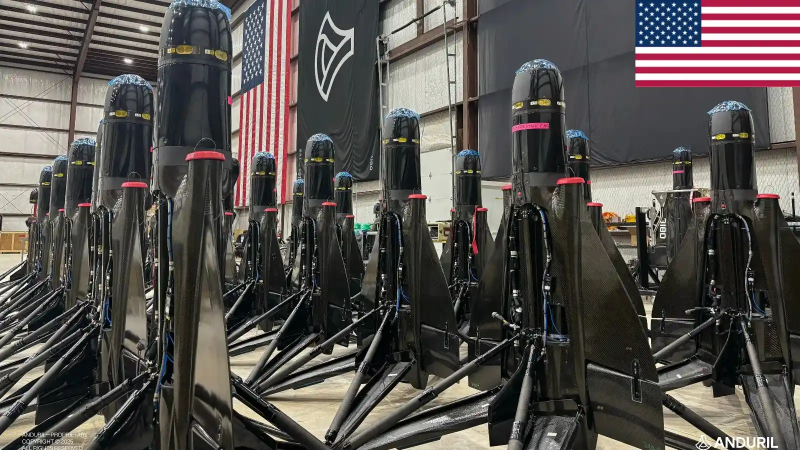
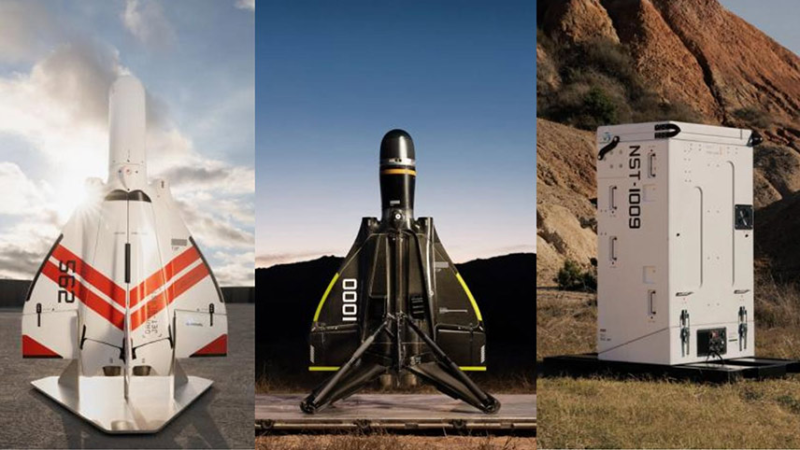
I should note that the “Coyote” is not the only interceptor drone in which the Navy has expressed interest. The Navy is also interested in the “Roadrunner-M” drones from Anduril. Larger and heavier than the “Coyote,” these twin-engine drones can be equipped with a wide range of payloads, are designed for vertical takeoff (as well as landing, if necessary) from compact launch containers, and use (according to experts) a visual infrared homing system that allows them to locate a target based on its infrared signature.
Second, the U.S. Navy is actively equipping itself with RGM-114L “Hellfire Longbow” missiles—a long-range version of the “classic” airborne anti-tank missile, specially modified to engage small air and sea targets:
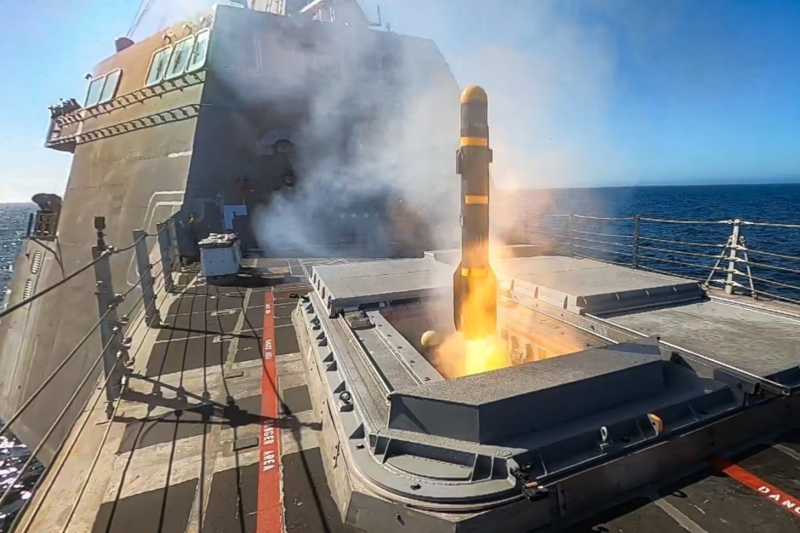
Originally, this missile was developed as the primary armament for the “Freedom” and “Independence” class littoral combat ships (LCS). The LCS-class ships were designed for operations in confined waters, where the primary targets were expected to be “swarms” of small boats, light aircraft, and other similar small targets. Against such threats, conventional anti-ship and anti-aircraft missiles were too expensive (and not particularly effective); a more compact and specialized solution was required.
Initially, the U.S. Navy planned to use the small XM501 NLOS-LS (Non-Line-Of-Sight Launch System) cruise missile for this role, with a range of up to 40 km. However, the missile performed poorly in testing, and it was decided to replace it with the AGM-176 “Griffin” light tactical missile, which was already in service. The sailors were not pleased with this decision either; the new missile had insufficient range (only 8 km) and required a laser designator to “illuminate” the target, which made it not particularly suitable for repelling massive attacks.
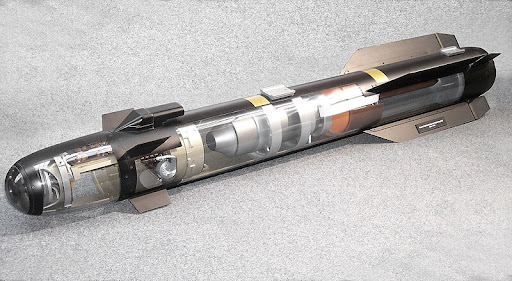
Ultimately, the solution came in the form of an upgrade to the classic AGM-114 “Hellfire” anti-tank air-to-ground missile. The “Hellfire Longbow” version, specially designed for ship-launch, had roughly the same range (8 km) but was equipped with a fully autonomous homing head featuring a millimeter-wave radar. The missile’s guidance system allowed it to lock onto a target after launch; in other words, the missile did not require pre-programmed target coordinates—it only needed to be given the coordinates, and it could then locate and home in on the target on its own.
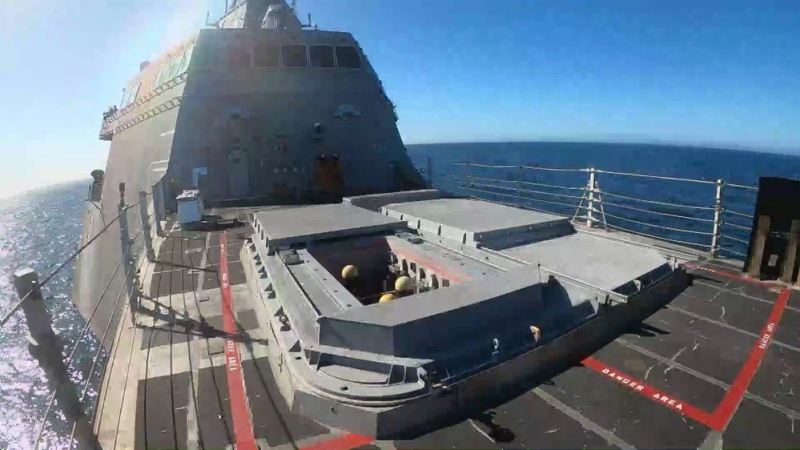
The Surface-To-Surface Missile Module (SSMM) launcher for Hellfire Longbow missiles. Unlike the Mk-41, this launcher has a sliding cover that covers several launch cells at once.
Launched from a special type of vertical launch system (the missiles are not compatible with standard Mk-41 launchers), the Hellfire Longbow is considered an effective weapon against attacking drones, thanks to its autonomous homing capability and the ability to launch a “salvo” at multiple targets simultaneously. The Hellfire Longbow’s effectiveness against drones has been confirmed by successful tests. And since this family of missiles has been in service for many decades—it is well-established and mass-produced—the idea of using them to bolster anti-drone defenses seems entirely logical.
The main problem here is that the standard platforms for the “Hellfire Longbow”—LCS ships—are not considered suitable for operations on the high seas alongside aircraft carrier strike groups. They can be used to reinforce surface strike groups in coastal waters, but this is “not quite what” the Navy would like. Therefore, significant attention is now being focused on equipping Arleigh Burke-class destroyers with containerized launchers for Hellfire Longbow missiles.
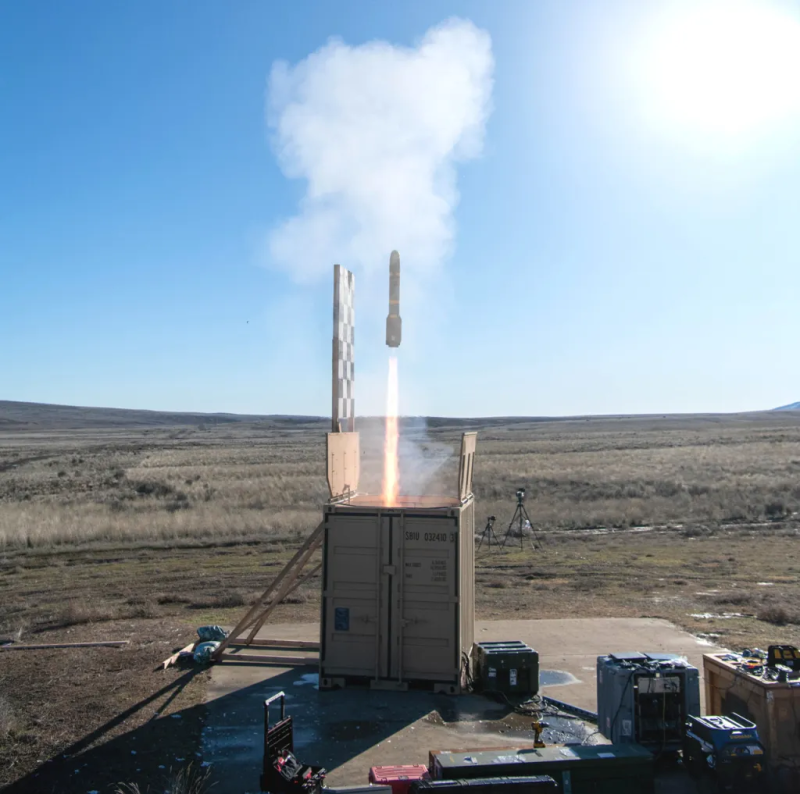
“Grizzly” Launch Container
A vertical launch container of this type, the “Grizzly” (which can simply be bolted to the deck), was demonstrated by Lockheed Martin in March 2026. However, this is not the only possible solution. When discussing the armament of the future FF(X)-class frigates, U.S. admirals suggested, as one possibility, a containerized launcher the size of a standard 40-foot shipping container, designed to hold 48 Hellfire Longbow missiles.
According to official reports, the destroyer USS “The Sullivans” (DDG 68) participated in tests of anti-drone systems, including Hellfire Longbow missiles, in the summer of 2025. It is not known exactly what type of launcher was used for this purpose—but the Navy definitely considered the test results a success. With a cost of about $150,000 per missile, it remains a fairly effective solution against medium-sized drones capable of reaching a ship on the open sea.
Finally, third, the U.S. Navy successfully tested the LOCUST palletized laser from aboard a nuclear-powered supercarrier:
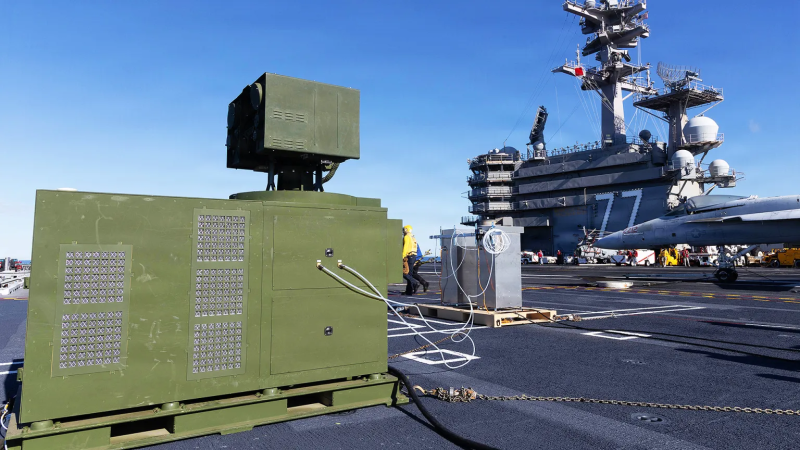
The LOCUST laser system (Laser Operable Counter-UAS System) from AeroVironment, also known as the “palletized laser” — that is, one that fits on a standard forklift pallet — was originally developed for the Marine Corps. According to available data, the system successfully passed field tests in Iraq (including live-fire exercises against small drones operated by Iraqi insurgents) and is currently being used in the United States to secure the border with Mexico.
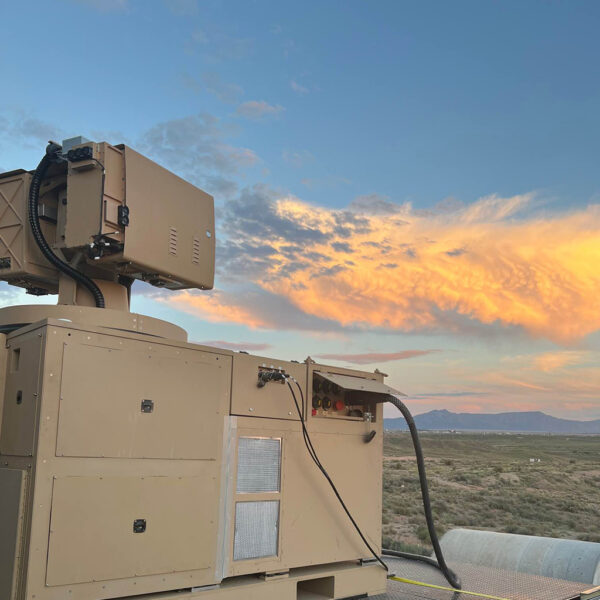
The laser’s compact size and relative durability apparently caught the Navy’s attention as a weapon that could be easily installed on existing warships. In October 2025, one of the production-model lasers was successfully tested aboard the nuclear-powered supercarrier USS George H.W. Bush (CVN-77) during exercises off the coast of California. The laser system was simply mounted on the aircraft carrier’s deck; the giant ship’s stability is more than sufficient to prevent the laser from encountering any problems.
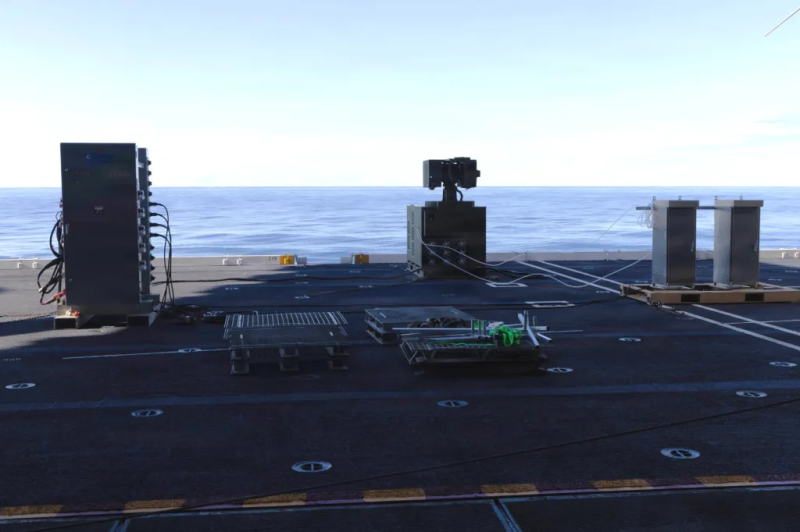
The LOCUST laser is an infrared fiber-optic laser with a power output of approximately 25 kilowatts (depending on the model). The laser generator is integrated into a single system with a remotely controlled turret equipped with an optoelectronic system for detecting and tracking the target. The laser is designed to be externally powered and target-guided; it can be powered by any power source of sufficient capacity (including field generators or shipboard power systems) and can receive target designation from a wide range of radar, detector, and optoelectronic stations.
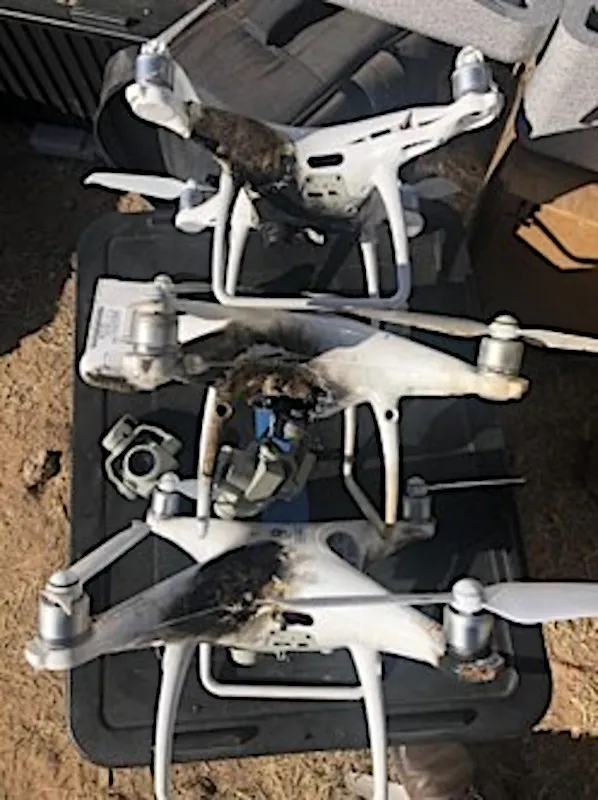
Quadcopters disabled by a LOCUST-series laser in Iraq
What makes the LOCUST particularly attractive, of course, is its “bolt-on” design; the laser can be mounted on virtually any combat vessel without the need for retrofitting. The laser is also the only weapon whose cost per shot is unquestionably lower than the cost of the drone it targets. And although a 25-kilowatt laser has long since ceased to be a significant figure in the field of energy weapons (the U.S. Army and Navy are unanimous in their view that the tactical minimum is a 150-kilowatt laser capable of engaging heavy jet-powered drones and cruise missiles).
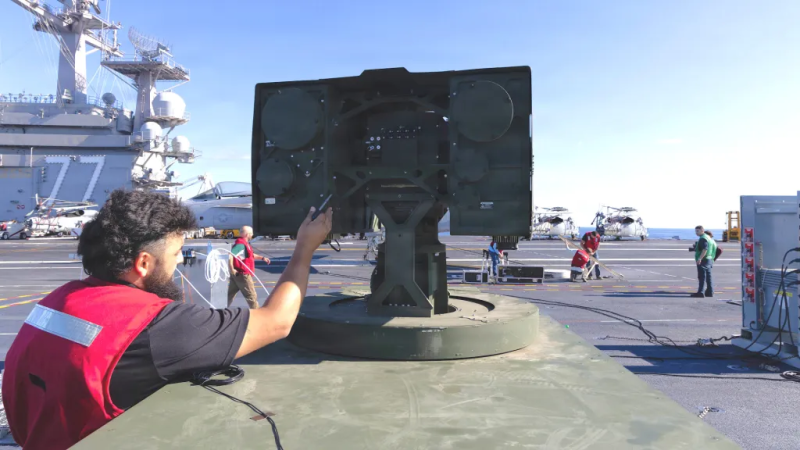
According to available data, during tests aboard the USS George H.W. Bush, the laser successfully detected, tracked, and engaged 17 unmanned targets, including during simulated group attacks from various directions. There is no precise information yet on exactly which drones were used. However, according to its specifications, LOCUST is designed to neutralize Class 1–3 drones according to the U.S. classification system for unmanned aerial vehicles. In other words, the largest drones in the experiment were likely piston-powered unmanned aerial vehicles with a takeoff weight of up to 600 kilograms.