An article by Vladimir Nagirnyak from the WARSPOT website, dated July 21, 2016.
During the Battle of the Atlantic, there were numerous skirmishes between submarines and anti-submarine ships that demonstrated the full brutality and ruthlessness of submarine warfare. However, one such incident stands out in particular. This refers to the longest and most ruthless hunt ever waged by a group of British frigates against a German submarine. The enemy was destroyed, but the hunters also paid a heavy price for it.
1st British Escort Group
In 1943, the British Navy began receiving new American “Buckley”-class escort destroyers (USS Buckley) and “Evarts” (USS Evarts) under the Lend-Lease program to form new escort groups for convoys. The British classified these American ships according to their own system and incorporated them into the Royal Navy as “Captain-class” frigates. In total, the Americans transferred 78 such ships to the British Navy.
The 1st Escort Group was formed in January 1944 and was initially manned by six “Captains.” The frigates “Garlies” (HMS Garlies), HMS Affleck, and HMS Gould were transferred to the British in September 1943; a month later, they received three more ships: HMS Balfour, HMS Bentley, and HMS Gore.
The new escort group’s first mission was a six-week anti-submarine patrol in the Atlantic to assist convoys on the section of their route west of Ireland. The group tasted its first victory on February 26, 1944, when its frigates sank the submarine U-91.
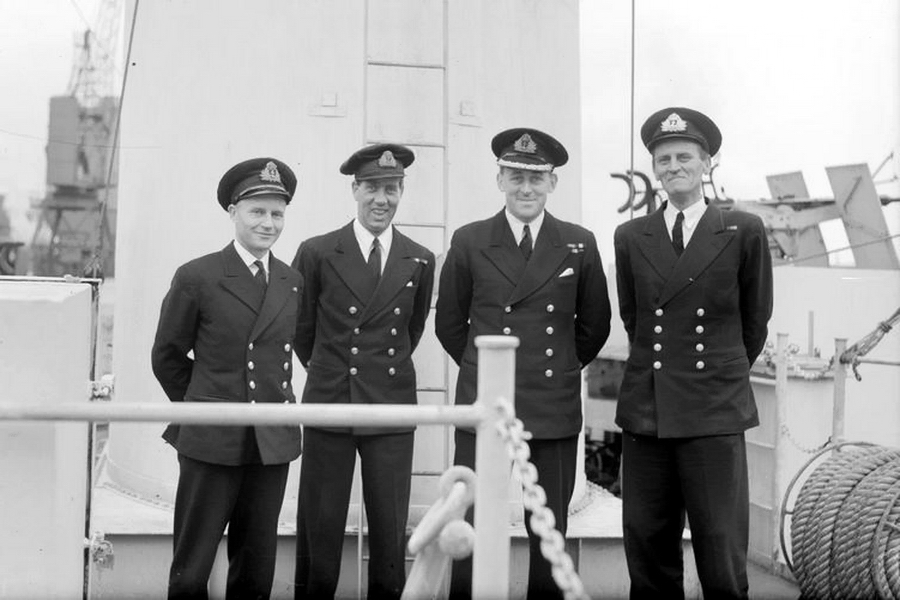
Commanders of the ships of the 1st Escort Group. From left to right: Lieutenant J. Reeves-Brown, commander of the frigate *Gore*; Lieutenant R. Caple, Group Commander and Commander of the frigate *Affleck*, K. Gwinnner, and an unidentified officer. March 30, 1944, Belfast
After the sinking of U-91, Commander Clive Gwinner, the senior officer of the 1st Escort Group, received orders from the Admiralty to take up a position 400 miles southeast of the Azores. It is worth noting that at that time, in addition to the *Affleck*, which was commanded by Gwinner, the group consisted of three frigates: the *Gould*, the *Garlize*, and the *Gore*.
And 358
On February 14, 1944, the German submarine U 358, commanded by Lieutenant Commander Rolf Manke, set sail from Saint-Nazaire. It was a Type VIIc submarine and was part of the famous 7th Submarine Flotilla.
Manke was an experienced commander: he began his career in the Kriegsmarine in 1935. After being promoted to Lieutenant zur See in 1938, Rolf Manke chose to serve in naval aviation and eventually ended up in the Luftwaffe. In August 1941, he transferred back to the navy and began his career as a submariner. After completing the necessary training, Manke became a watch officer on U-576.
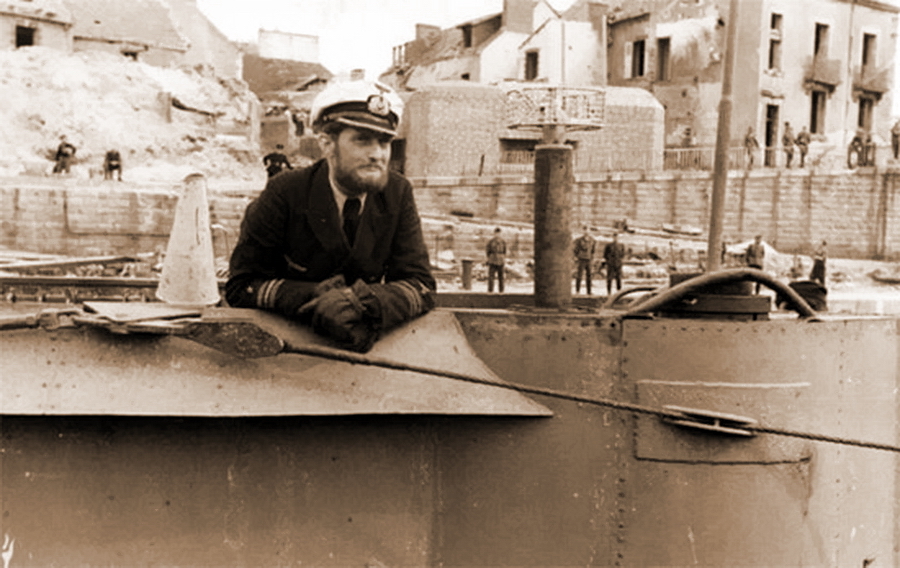
Rolf Manke, commander of U-358, on the bridge of his submarine
Six months later, his qualifications were deemed sufficient to command his own submarine, and in August 1942, Manke was appointed commander of the brand-new U 358. Under his command, the submarine undertook four combat missions to various areas of the Atlantic, sinking four ships with a combined tonnage of 17,753 GRT.
U-358’s fifth mission began smoothly. Manké crossed the Bay of Biscay, spending most of the journey submerged, without ever sounding the alarm due to enemy aircraft or ships. On February 22, Submarine Command ordered U-358 to join the “Preussen” group of submarines, which had been formed on February 19 to attack Convoy ON 225. As American historian Clay Blair wrote, this was the last “wolf pack” formed in the Atlantic to attack Allied North Atlantic convoys.
So, the U 358 continued on to its assigned position, and on the way there, it was destined to encounter the ships of the 1st Escort Group. The adversaries were closing in on each other.
The Longest Hunt in the Atlantic
At first, Gwinner’s ships were in luck. On February 29 at 5:07 a.m., the *Garlize* detected an underwater target with its sonar one and a half kilometers away. The frigate’s commander, Lieutenant Reginald Lacey Caple, ordered that the other ships be notified of the contact and gave the command to attack the target with the “Hedgehog” depth charge launcher. This attempt failed because of a technical malfunction—the bomb launcher did not fire. Gwinnner’s ship then attempted the attack; nearly fifty minutes after the “Garlize” had detected the target, it fired a salvo from its “Hedgehog” at the contact.
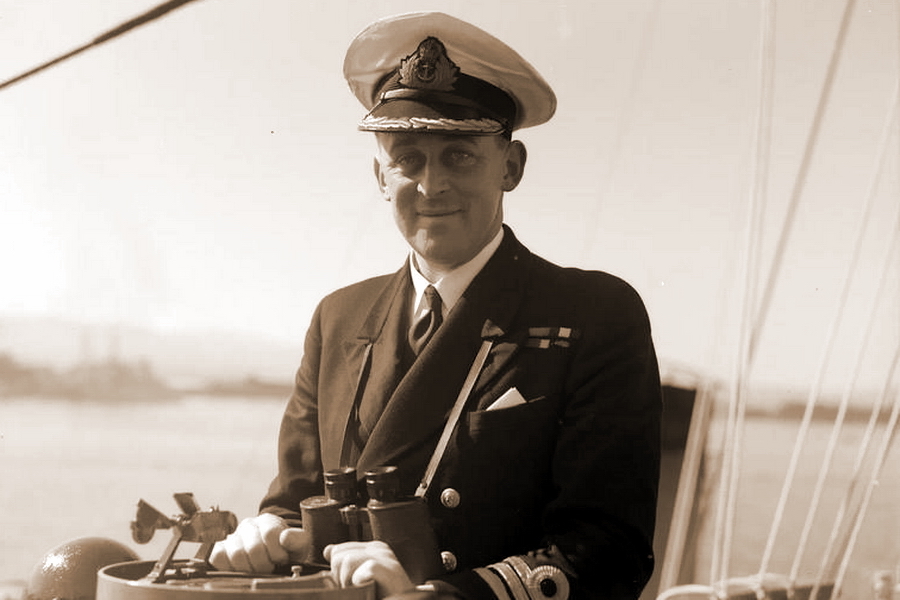
Commander K. Gwinner, Commander of the 1st Escort Group
This anti-submarine weapon differed from ordinary depth charges in that it could fire 24 small depth charges—each equipped with contact fuses—along the ship’s course. They covered a small area after being fired, but did not detonate upon reaching a preset depth; instead, they exploded only immediately upon hitting the target. In addition, one advantage of the “Hedgehog” was that the detonation of a single depth charge could trigger the simultaneous detonation of the rest, which inevitably led to the submarine’s destruction.
After the salvo, the *Affleck* expected to hear an explosion, but the only response was silence. The opportunity had been missed, and the submarine had escaped. Gwinner was furious and lashed out at the ASD operators, accusing them of being unable to maintain contact with the target and accurately determine its location. But his complaints were unfair. As the rest of the day showed, the failed attack was not the fault of the sonar operators. American researcher Donald Collingwood notes the following in his work on this subject:
“Sea conditions had a noticeable impact on the operation of the ‘ASDIC.’ The presence of [different] temperature layers at various depths created problems not only in the Arctic. Such conditions can occur virtually anywhere in the ocean, and they were quite evident in this region of the Atlantic during the search conducted by the 1st Escort Group.”
After describing what was happening on the ocean’s surface, it is worth noting what was happening in its depths. The frigates’ sonar systems did indeed detect Rolf Manke’s U 358, which was at that moment at a depth of about 30 meters. Manke had submerged to carry out repairs in the central compartment and was taken by surprise by the sudden attack. Soon, the sonar operator reported to Manke that there were at least three destroyers nearby. The sound of their propellers could be clearly heard on the submarine. The commander of U-358 ordered the submarine to dive deeper, taking advantage of the lull that followed the “Affleck”’s attack.
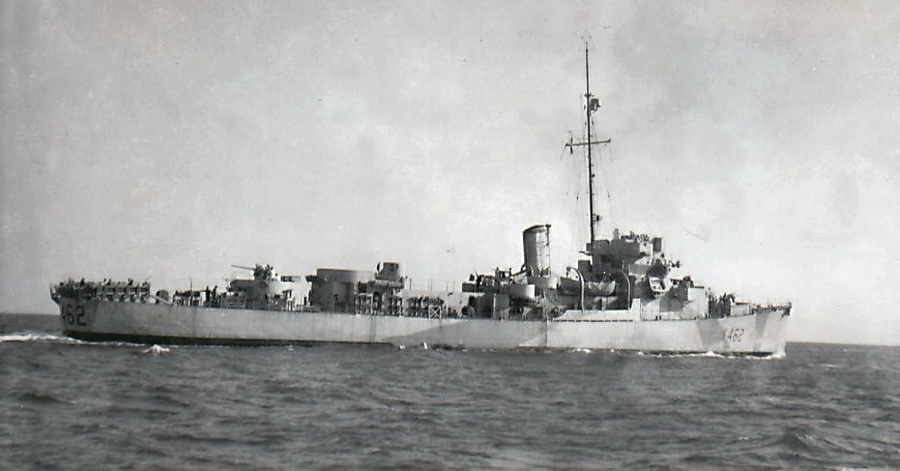
The Frigate “Affleck”
At 06:12, the frigates finally established steady contact with the submarine and launched another attack. This time, Gwinner changed tactics and employed the so-called “creeping attack,” a tactic devised by the famous British anti-submarine ace Frederic John Walker. The essence of this tactic was that a pair of ships operated in sync in “search-and-attack” mode. One ship used an “ASDIC” to maintain constant contact with the submarine, while the second, running at low propeller speed, would slowly creep up to the location indicated by the first and drop depth charges, which were usually fatal to the submarine. The submarine could not hear the second ship approaching and had no time to evade the attack.
The *Affleck* maintained contact with U 358, while the *Gould* slowly crept toward the designated bombing site. It seemed as though the Germans’ end was imminent, but the capricious goddess of fortune stubbornly continued to favor Mank. As soon as the *Gould* began dropping a series of 28 conventional depth charges to blanket the submarine with a deadly carpet of explosions, the frigate’s electrical system failed: the ship’s hull was shaken by the explosion of the first bombs, which blew out the fuses. As a result, the “Gould” lost power, and the attack came to a halt.
The bombs that the British did manage to drop hit their targets very effectively. The explosions caused the lights on the submarine to go out, and it suddenly accelerated downward; control over the submarine was not regained until it reached a depth of 200 meters. What followed was a standoff between the two sides: one hoped to wear down the submarine, while the other hoped that the ships would exhaust their supply of depth charges quickly enough.
The hunt continued. Throughout the day, the ships in the group tried to locate the “steel shark” underwater. However, conditions for the sonar operators had deteriorated significantly, and they were able to maintain a steady contact with the target only a few times and for brief periods. Fortunately for the British, this was enough to keep track of Manké’s maneuvers, so Gwinner’s ships remained in the same area as the submarine. The frigates periodically dropped depth charges based on the “ASDIC” readings, but the British were relying more on the fact that, eventually, the enemy’s batteries would run down and its air supply would run out.
Meanwhile, the following was happening underwater. Manké remained at a depth of 180–200 meters for 12 hours while the frigates bombarded him. From 5:50 a.m. to 5:32 p.m., the British carried out 15 attacks in an attempt to destroy the submarine, but at that depth, it remained out of their reach. However, leaks developed in the stern of the submarine, and U-358 began to list aft. This forced Manke to send all off-duty crew members to the bow to right the submarine.
At first, the submariners’ morale was high. The British depth charges had not caused the submarine much damage, and the Germans expected that the enemy would soon exhaust its entire ammunition supply in these fruitless attacks. But the bombing continued relentlessly, and although the explosions did not damage U-358, it was clear that the British knew the submarine’s location. This fact caused Manké and his crew’s optimism to wane.
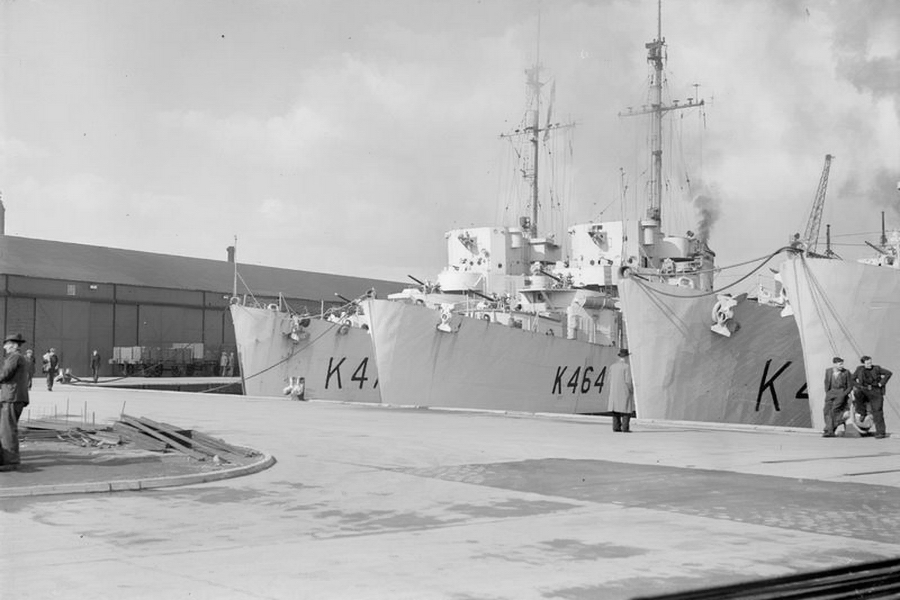
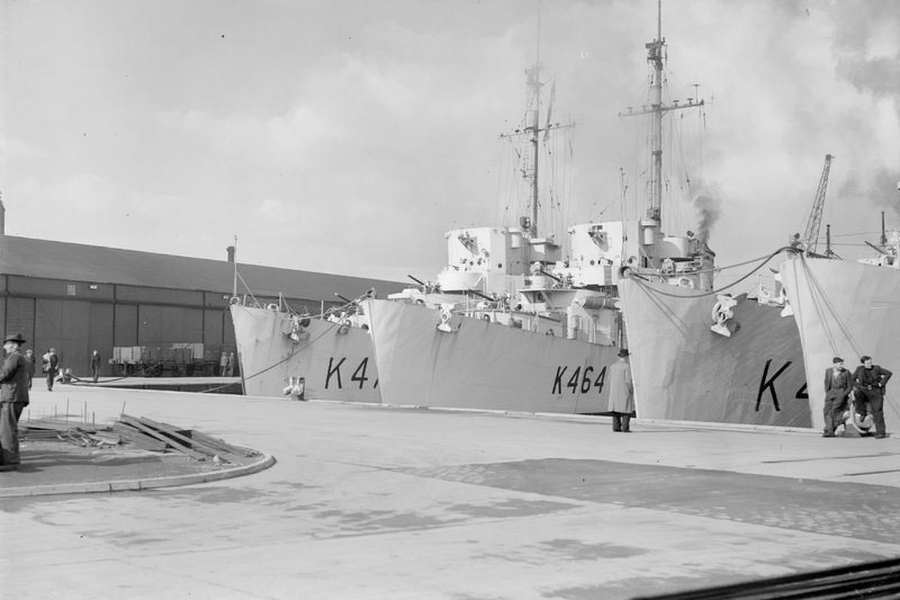
The frigates *Gor*, *Balfour*, *Garlize*, and *Affleck* at anchor. March 30, 1944, Belfast
After 5:32 p.m., Gwinner decided to conserve his bombs and ordered a halt to the attacks. He reasoned that, after 12 hours underwater, the submarine would eventually have to surface to recharge its batteries and ventilate its compartments. Radar operators and visual watch crews were ordered to be as vigilant as possible so as not to miss a surfacing submarine. But no enemy was sighted throughout the night.
In the morning, the game of “cat and mouse” continued. The *Affleck* and the *Gould* detected the submarine more clearly than they had over the past 24 hours. Both frigates dropped depth charges based on data received from the ASDIC, but there was no confirmation that the attack had succeeded. No debris or oil slicks were detected on the sea’s surface, which might have indicated that the submarine had been damaged or destroyed.
In the afternoon of March 1, the situation changed somewhat. Gwinner received orders from the Admiralty to send the *Gore* and the *Garlize* to Gibraltar and to continue the pursuit of the submarine with the two remaining frigates. For Mank, the fact that the number of enemies had been cut in half was of little consequence: the *Affleck* and the *Gould* stubbornly continued their search for the submarine, trying to wear it down.
By that point, the situation on U 358 had already become catastrophic. The air inside the submarine was barely breathable, although the potash cartridges had kept carbon dioxide levels in check for a long time. When they failed, the mechanical engineer began feeding high-pressure air—intended for purging the ballast tanks—into the compartments. The submariners held on, even though the atmosphere inside U-358 had already become unbearable. It is worth noting that the crew owed part of their physical endurance to their commander’s strictness. A few days earlier, as punishment for some misconduct, Manke had banned smoking breaks while surfaced, which may have affected the submariners’ lung condition.
“The Shark” Shows Its Teeth
The turning point came on the evening of March 1, when the submarine’s commander realized that his men had reached the limit of their endurance in that hellish environment, and that if U-358 did not surface now, it would become a steel coffin for the entire crew. However, even after making that decision, the physically and mentally exhausted Manke had no intention of giving up and resolved to give the British one last fight.
When the submarine surfaced, it immediately found itself in the midst of a brewing storm. Due to the poor weather conditions, the frigates did not spot it right away, even though U-358 had surfaced just 300–400 meters from one of the ships. Taking advantage of this, Manke managed to launch a preemptive strike. It seems unbelievable, but after 30 hours in hellish conditions, the exhausted crew of U-358 continued to carry out their duties with precision.
At 7:20 p.m., the torpedo fired by Manke struck the *Gould*. The explosion split the frigate in two, after which the stern sank rapidly. The bow remained afloat for another 25 minutes, after which it listed to starboard and sank. Thus, Manke’s boat was left alone against Gwinner’s ship.
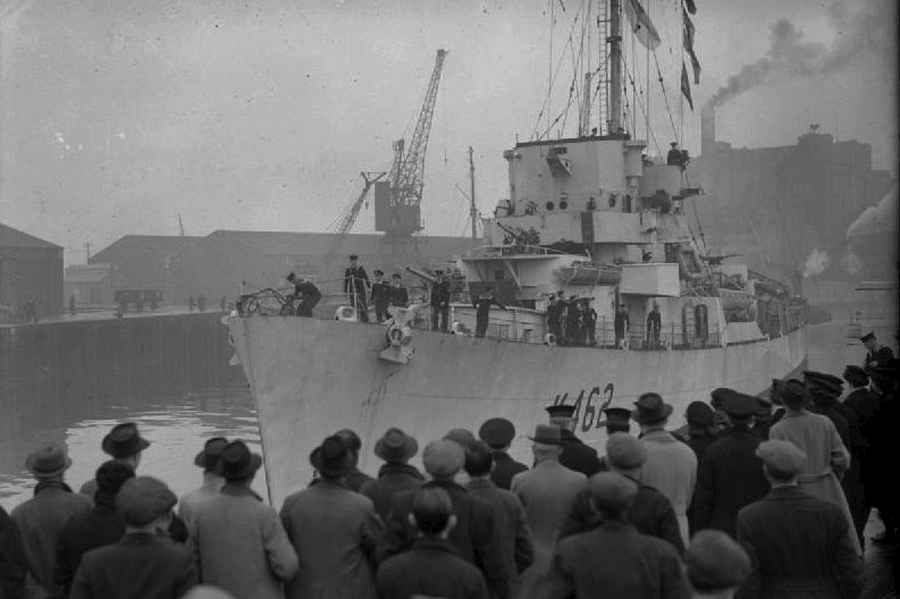
The frigate “Affleck” in Belfast Harbor, March 30, 1944
But the “Gould’s” troubles did not end there. As Donald Collingwood writes, due to poor visibility, the gunners on the “Affleck” mistook one of the sections of the torpedoed frigate for a submarine and opened fire on it. However, the crew of the *Affleck* soon realized their mistake and opened fire on U-358, which had been spotted at a distance of only about 1,300 meters. Gwinner rushed in pursuit, opening fire with the “Erlikon” guns.
Seeing that the situation was becoming hopeless, Manke ordered the crew to abandon the ship, while he himself went up to the bridge carrying a piece of white cloth, intending to signal to the enemy that he intended to surrender. The commander of U-358 did not have time to do so, and a few seconds later he was struck down by a burst of machine-gun fire. The white “flag” was spotted on the *Affleck* just as the wounded Manke let go of the cloth, and the wind carried it away from the conning tower. Gwinner ordered two shots to be fired at the boat from the starboard bomb tubes, and the bombs sent the boat to the bottom. The submarine sank at 7:50 p.m., nearly half an hour after it had surfaced.
After the battle ended, the *Affleck* returned to the site where the *Gould* had sunk to pick up the survivors, for whom things were looking grim. While Gwinner’s ship was engaged in battle with the Germans, a fire broke out in the bow section, which was still afloat. The people there were forced to abandon ship, as there was no way to fight the fire. Unfortunately for the sailors of the *Gould*, most of the lifesaving equipment was located at the stern, which had already sunk. Once in the rough seas, the men could not withstand the elements for long and quickly drowned. As a result, out of the frigate’s 158 crew members, only three officers and 33 enlisted men were rescued, one of whom died on the way to Gibraltar. A total of 123 people perished, including the frigate’s commander, Lieutenant Daniel William Ungoed.
The Germans were even less fortunate: Gwinner did not return to search for them until he had finished rescuing the crew of the *Guld* from the water. As a result, out of 50 submariners, only one survived—20-year-old Seaman Second Class Alfons Eckert (Alfons Eckert), from whom the British learned what had happened on U-358 during its pursuit and sinking. Eckert survived the war in captivity and passed away at the age of 80 in July 2003.
Thus ended the longest hunt for the “steel shark” in the Atlantic during World War II. About 39 hours elapsed from the time the submarine was detected until its destruction, 36 of which the submarine spent underwater. It should be noted that there is no definitive clarity regarding this last fact, as there are reports of the submarine possibly surfacing briefly on the night of February 29–March 1.
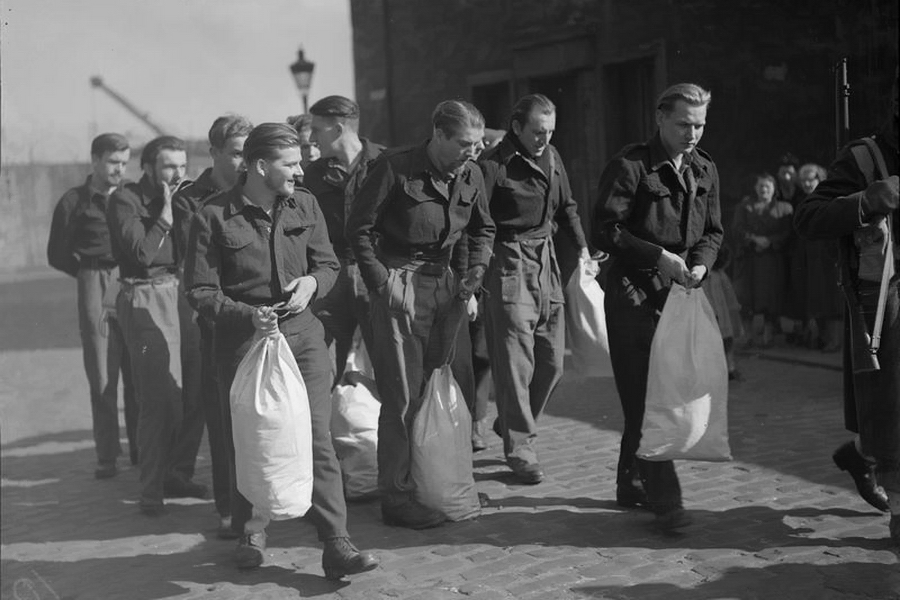
Captured German submariners from the sunk submarines U 91 and U 358. Many of the prisoners are wearing British uniforms. March 16, 1944, Grinok
The aforementioned Collingwood states that “contrary to all expectations, U-358 remained submerged all night,” but the only surviving witness on the German side, Alfons Eckert, stated during questioning that the submarine managed to elude its pursuers for a short time and surfaced to ventilate its compartments. However, it was quickly spotted by British ships, and U-358 was forced to dive again.
It is worth noting that if the Manké did indeed surface, it likely was unable to take advantage of the opportunity to slip away from the 1st Escort Group. Starting the diesel engines at that moment would have been tantamount to suicide, since the noise they produced would have been heard by the enemy, and the lack of power in the battery prevented her from leaving the danger zone using electric propulsion.
It is also curious that the frigates’ radar systems failed to detect the submarine’s approach. This can be explained by the fact that radars of that era were far from perfect; their operators may have had little experience or may have been inattentive after 12 hours of intense pursuit. Therefore, U 358’s surfacing could indeed have gone unnoticed, but this still does not answer the question of whether Manké surfaced that night or not.
In closing, I would like to say that the hunt for U 358 was merely a small episode in the tragic and brutal battle across the open ocean, commonly referred to as the Battle of the Atlantic. But even this incident serves as a vivid example of how hard-fought the Allies’ victory was, as German submarines remained a formidable enemy until the very end of the war.
Bibliography
-
-
- Wynn K. U-Boat Operations of the Second World War. Vol.1–2 – Annapolis: Naval Institute Press, 1998
- Blair С. Hitler’s U-boat War. The Hunted, 1942–1945 – Random House, 1998
- Collingwood D. The Captain Class Frigates in the Second World War – Annapolis: Naval Institute Press, 1999
- Busch R., Roll H.J. German U-boat Commanders of World War II – Annapolis: Naval Institute Press, 1999
- Niestlé A. German U-Boat Losses During World War II: Details of Destruction – Frontline Books, 2014
- http://historisches-marinearchiv.de
- http://www.uboat.net
- http://uboatarchive.net
- http://www.ubootarchiv.de
- http://www.captainclassfrigates.co.uk
-
Source: http://warspot.ru/6639-dolgaya-ohota-na-stalnuyu-akulu