Here’s a link to the previous article: The American Response to Our “Oreshnik.” The “Dark Eagle” Ballistic Missile
The U.S. is gradually revealing technical details of the promising ground-based hypersonic system, the Long Range Hypersonic Weapon (LRHW)—also known as Dark Eagle—following a recent visit by Secretary (War Secretary) Pete Hegset to Redstone Arsenal in Alabama, where the new U.S. Space Command is now headquartered.

Contents:
Not just a rocket
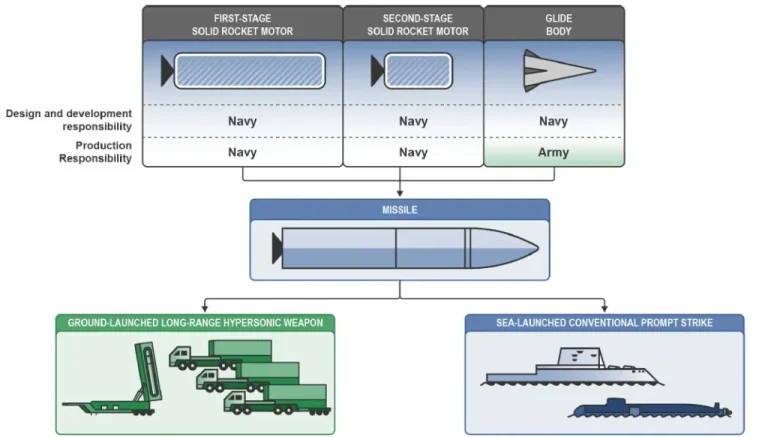
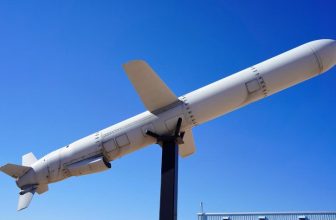
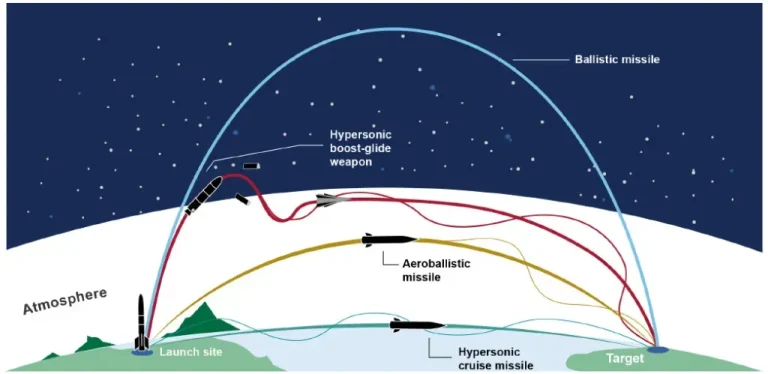
Dark Eagle is not a conventional ballistic system. It is based on a boost-glide configuration: first, a rocket booster propels the warhead to a high altitude and speed, after which it separates and continues its flight through the atmosphere at hypersonic speeds, actively maneuvering.
The key feature is this guided guidance unit. Unlike ballistic warheads, it does not follow a predictable trajectory but is capable of changing course and altitude, making it much more difficult for early-warning and interception systems to deal with.
Speed, Range, and Response Time
According to available data, the Dark Eagle has a range of approximately 3,500 kilometers. This places the system in the category of strategic weapons capable of striking targets deep behind enemy lines—while remaining technically non-nuclear.
Flight time is another critical parameter. At maximum range, it is estimated to be less than 20 minutes. This timeframe leaves the enemy with an extremely limited window to make decisions and deploy defenses.
The flight speed exceeds Mach 5, and on certain sections of the trajectory it may be significantly higher. Combined with evasive maneuvers, this makes interception by existing air defense and missile defense systems an extremely difficult task.
A Small Warhead—A Big Impact
At first glance, the size of the warhead may seem surprising. It weighs only about 14 kilograms, which is disproportionately light for a weapon with such a range. However, the design relies not on a powerful explosion but on kinetic impact.
At hypersonic speeds, even a relatively compact projectile carries an enormous amount of energy. As a result, the strike is precise, rapid, and devastating, especially against fortified or critical targets—command posts, radars, communications nodes, and air defense systems.
Mobility and Deployment
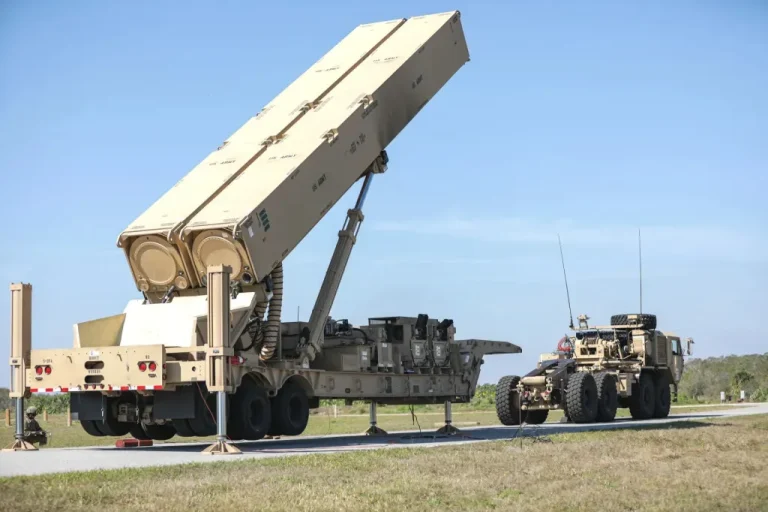
Dark Eagle is designed as a mobile ground-based system. The launchers are mounted on tractor-trailers, which increases the system’s survivability and makes it harder to detect. This configuration allows the systems to be rapidly redeployed and repositioned, reducing their vulnerability to a preemptive strike.
The first launch batteries have already been formed, although the program is not proceeding without difficulties. Testing has been plagued by delays, and production rates remain low—we’re talking about a few dozen missiles per year.
Why Does the U.S. Need Dark Eagle?
In a broader context, the Dark Eagle is a tool for rapid non-nuclear strikes against high-value targets. It fills the gap between cruise missiles and intercontinental ballistic missile systems, offering the speed of a strategic weapon without crossing the nuclear threshold.
In fact, this is an attempt to create a new type of means of pressure and deterrence: one that is rapid, difficult to intercept, and politically less likely to lead to escalation than nuclear forces.
What’s next?
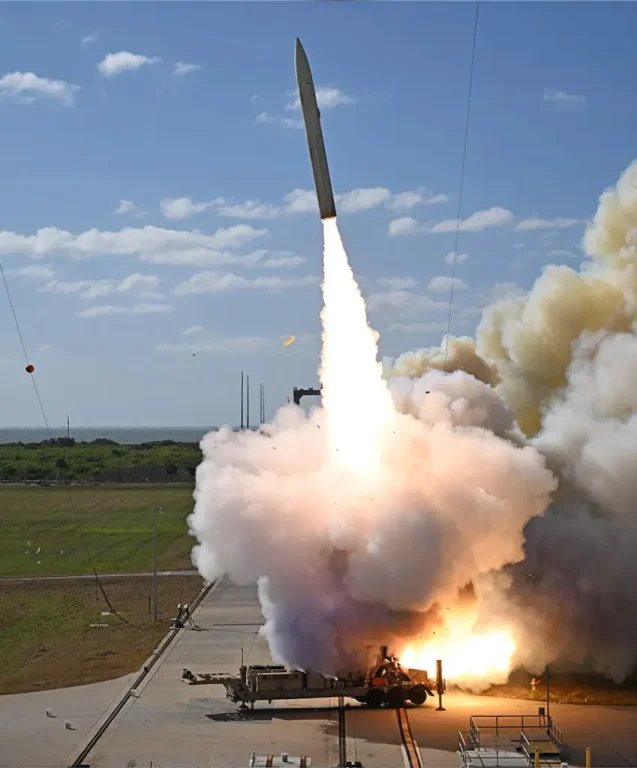
Despite its high-profile status, the Dark Eagle remains a transitional system. It is still far from widespread deployment, and its actual combat capabilities will only become clear after it is fully operational and operational experience has been gained.
Nevertheless, it is already clear that hypersonic weapons are no longer just an experiment and are gradually becoming one of the key elements of future military doctrines.
based on https://www.twz.com/land/new-dark-eagle-hypersonic-weapon-details-emerge