Back in ’22, I posted about the possibility of creating a large club; since then, Uncle Liao has been hard at work, and thanks to his brainchild, it’s now possible to figure out what comes “next.”

So. The AI determines whether it’s possible to assemble the desired object from the available “blocks.”
Let’s start with the launch vehicle. The first stage of the 15Zh55 ICBM serves as the base. It is better known as the Topol-M. Online sources provide the following specifications.
3 stages, launch mass 46,500 kg; the first stage has a thrust of 100 metric metric tons, a mass of 26 metric metric tons (of which the stage mass is 3 metric metric tons), a length of 8.5 m, and an operational duration of 60 seconds. In total, after removing the upper stages, we have 20 metric tons that can be lifted to the top.
The baseline is ODAB-9000. Accordingly, there are two implementation options.
- 1. The OTRK itself, with a range of 500 km
A 12-metric-ton warhead with a negative-drag stage is used. Of the total mass of ~9 metric tons, ~9 metric tons is accounted for by the bomb, and 3 metric tons by a solid-fuel braking engine with a thrust of ~5 MN that operates for ~4 seconds. Deceleration begins at an altitude of 1,000 m and a speed of 1,000 m/s, continuing until the vehicle comes to a complete stop at an altitude of 200 m. The deceleration g-force is approximately 30 g.
The apogee is at an altitude of about 100 km (corresponding to the Iskander’s specifications). The range to the target will be 150–200 km. The warhead’s maximum speed is 2,000 m/s.
- 2. RSD Option
The same warhead is used. However, a second stage is added. The total mass of the new missile is the same as that of the system’s original missile. After the first stage separates, the second stage ignites. After the second stage separates, the warhead travels by inertia along a ballistic trajectory.
-
Launch mass of the rocket: M₀ = 47,000 kg.
-
Payload mass (warhead): M_w = 12,000 kg.
-
Mass of the entire second stage (structure + fuel): M₂₀ = 7,000 kg (calculated earlier: 47 t — 28 t (first stage) — 12 t (payload) = 7 t).
-
Mass of the first-stage boost assembly: M_boost = M₂₀ + M_bch = 7,000 + 12,000 = 19,000 kg.
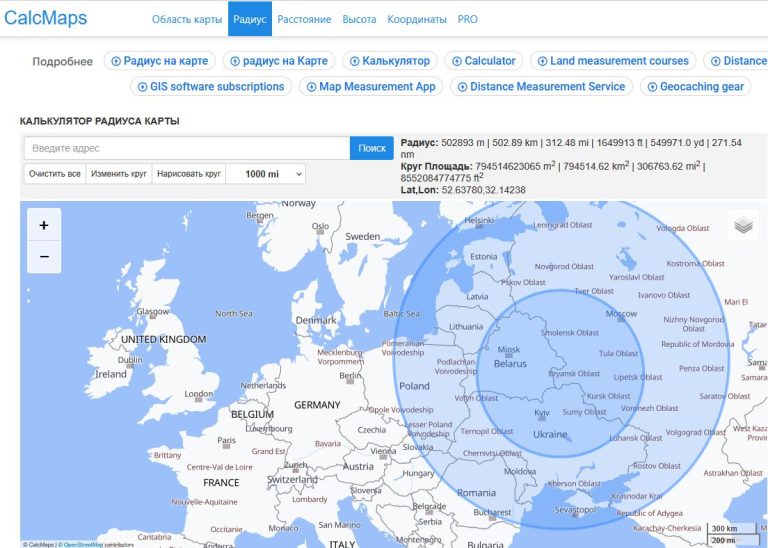
At the moment of second-stage separation, the velocity is 3,300 m/s. The rocket then continues on a ballistic trajectory, reaching an apogee of 200 km. The maximum range is 1,100 km. Flight time is 8–10 minutes. The distance from the highest point to the target is approximately 500 km.
What will it look like from the ground?
-
Speed near the target: On the descent leg, 500–600 km from the target, the speed will be close to 3.0–3.5 km/s (10–12 Mach). By the time it enters the dense layers of the atmosphere (~30 km), it will increase to 4.0–4.5 km/s (13–15 Mach) due to gravity. This is higher than that of conventional OTRs and tactical ballistic missiles.
-
Altitude within the missile defense system’s area of responsibility: At a point 400–500 km from the target, the altitude will be ~150–200 km (immediately after apogee). During the approach phase at 100–200 km, the altitude will decrease to 50–100 km.
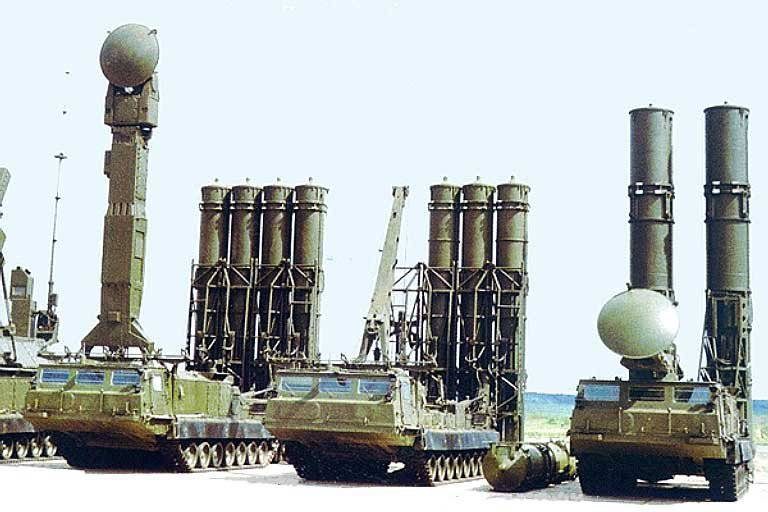
1. Assessment of the Capabilities of the S-300V/V4 (9M83M, 9M82MV Long-Range Missiles)
-
Interception range:
-
9M83M (against ballistic missiles): Up to 40 km in range, 25 km in altitude.
-
9M82MV (against ballistic missiles): Claimed range of up to 100 km and altitude of up to 40 km.
-
-
Target velocity: Up to 3,000 m/s (10–11 Mach).
-
Assessment: Our reconnaissance aircraft will remain at altitudes >40 km practically until it approaches the target.
2. Assessment of the Capabilities of the MIM-104F Patriot PAC-3 MSE (CRI)
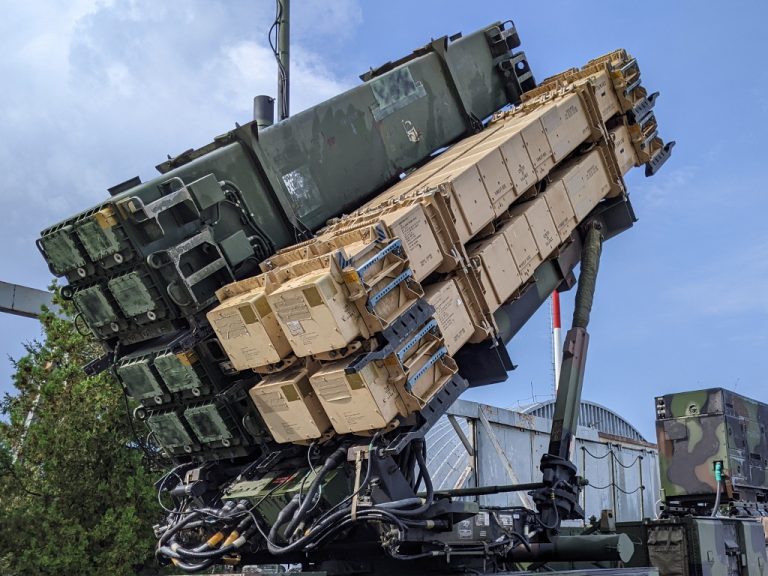
U.S. Army Patriot launching station with two PAC-3 containers and one PAC-3 MSE
-
Interception range: Against ballistic missiles, the stated range is up to 60–80 km in range and up to 40–50 km in altitude (in reality, approximately 35–40 km).
-
Target velocity: Up to ~5,000 m/s (claimed to be effective against ICBMs in their descent phase).
-
Warhead: Kinetic interceptor (hit-to-kill). High accuracy, but low mass (~75 kg) and a small area of effect.
-
Assessment:
-
High-altitude interception (H > 40 km): The PAC-3 MSE is capable of reaching such altitudes, but its control thrusters operate within the atmosphere. At altitudes >40 km, the atmosphere is too thin for effective maneuvering using gas-dynamic control surfaces. Control at altitudes above ~50 km is extremely difficult.
-
Intercept “bottleneck”: The only chance is an intercept at altitudes of 25–40 km, where the PAC-3 MSE can still maneuver and the warhead has already entered sufficiently dense layers of the atmosphere. But here, the target’s speed is at its maximum (4–4.5 km/s), and the time spent in this zone is less than 5–7 seconds.
-
The problem with kinetic interception: A direct hit on a vital component is required. Fragmentation damage from a close detonation (as with the older Patriot systems) does not work here.
- From the moment the 12-metric-ton warhead enters the Patriot PAC-3 MSE engagement zone (altitude ~40 km) until it falls, approximately 11 seconds remain.
From the moment it enters the optimal interception zone (40–15 km), there are about 8–9 seconds remaining.
-
But there is a problem with the PAC-3 MSE because these are lightweight missiles and there are many of them in the warhead loadout. This was evident during the repulsion of the “Kinzhal” attack, when these missiles were fired in salvos.
However, note that in the two-stage version, the speed of the falling warhead is higher, which is not what we want. In other words, during the descent phase, additional deceleration is required to ensure optimal conditions for the warhead’s detonation; otherwise, the braking engine’s thrust will be insufficient. This necessitates reducing speed using aerodynamic methods starting at an altitude of approximately 40 km and below.
This increases the time the warhead spends within the air defense system’s engagement zone, but at the same time, it causes the descent to be non-uniform. The trajectory remains ballistic, but the air defense system’s calculations will diverge from reality. The predicted intercept point will be lower. A kinetic interceptor will not be able to compensate for the miss.