Japanese US-2 Amphibious Seaplanes: Kings of the Ocean in Service with the Maritime Self-Defense Force

In the rest of this post, I’d like to bring the following to your attention:
Japan, a country with thousands of kilometers of coastline and hundreds of islands, has historically developed unique aircraft platforms capable of operating over water and at sea. One such aircraft is the ShinMaywa US-2—a modern amphibious seaplane that combines the capabilities of an aircraft and a seagoing vessel. Today, it plays a key role in search-and-rescue operations and humanitarian missions and can serve as a mainstay in the defense of remote areas of the archipelagos.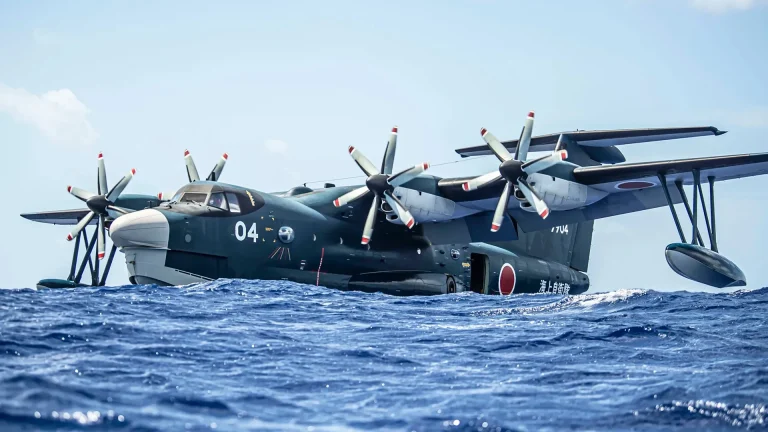
Why Seaplanes Are Important to Japan
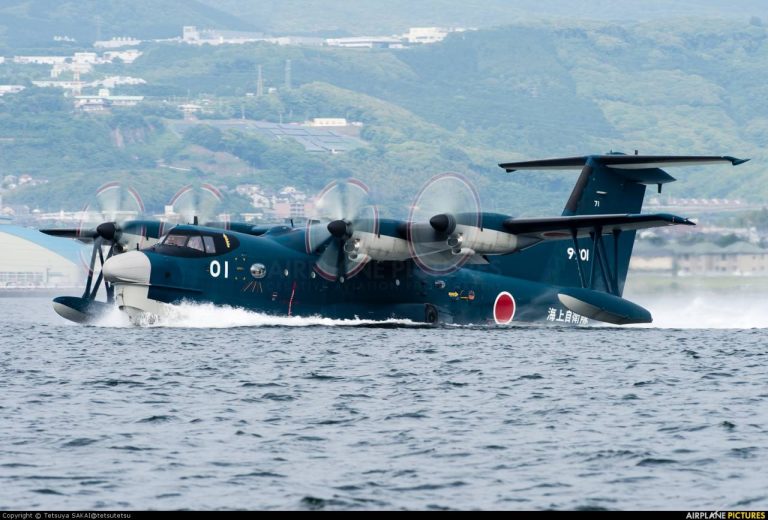
The vast expanse of water along the country’s eastern and southern coasts makes aircraft capable of taking off and landing on water not a luxury, but a necessity. The availability of seaplanes gives Japan unique advantages:
- search and rescue operations on the open sea, even hundreds of kilometers from shore;
- evacuation of victims of natural disasters or accidents;
- delivery of cargo and equipment to remote islands without developed infrastructure;
- to demonstrate its presence and mobility in key areas of the East China Sea and the Philippine Sea.
Unlike conventional airplanes, which require runways, or ships, which move slowly, a seaplane can travel quickly over water, responding to weather forecasts and emergencies.
The History of the US-2’s Development
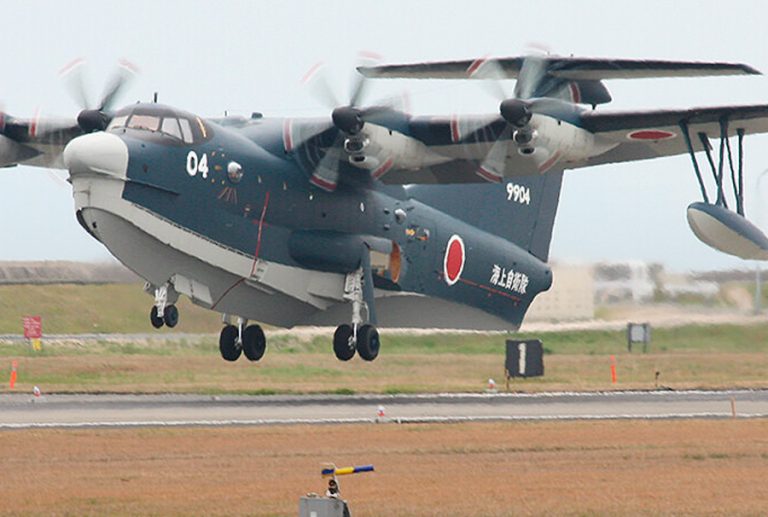
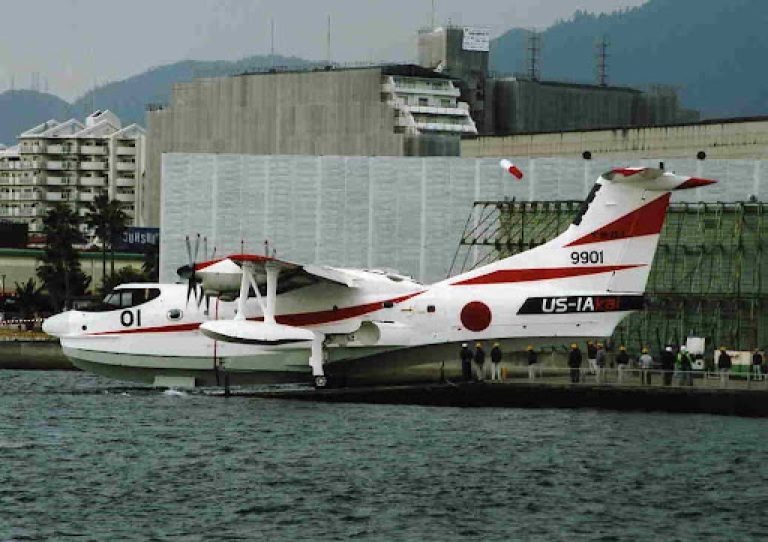
The project’s roots date back to the 1960s, when Japan developed the world’s first seaplane, the PS-1, for anti-submarine warfare. Building on this experience, the US-2’s predecessor, the US-1A, was developed in the 1980s and successfully carried out search-and-rescue and maritime operations.
In the 2000s, development began on an improved version—the US-2. This model was the result of many years of engineering work focused on:
- increased range;
- improved seaworthiness;
- increased speed and load capacity;
- modern sensor and communication systems.
The US-2 made its maiden flight in the mid-2000s, and in the 2010s, the aircraft entered service with the Japan Coast Guard / Maritime Self-Defense Force, where it remains in active service to this day.
Technical and Tactical Specifications of the US-2
The US-2 is a large, four-engine turboprop amphibious seaplane that combines seagoing capabilities with the flexibility of an aircraft:
Key Specifications:
- Length: about 30 meters
- Wingspan: approximately 33 meters
- Height: about 10 meters
- Empty aircraft weight: over 27,000 kg
- Maximum takeoff weight: approximately 47,000–48,000 kg
Flight Characteristics:
- Maximum speed: about 560 km/h
- Cruising speed: ~450–500 km/h
- Practical ceiling: approximately 8,000 meters
- Flight range: up to 4,500 km with fuel reserves
Seaworthiness Characteristics:
- An improved hull with a deep V-shaped keel;
- Good stability in waves up to 3–4 on the Beaufort scale;
- The ability to land and take off in moderate storm conditions.
These specifications make the US-2 one of the most capable and reliable amphibious platforms in the world.
Equipment and Missions
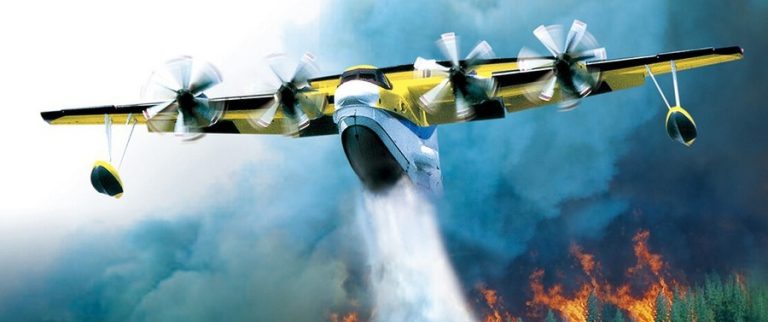
The US-2 performs a wide range of tasks thanks to its versatility:
Search and Rescue Operations
This is the aircraft’s primary and best-known role. The US-2 is equipped with:
- modern radar and optical sensors;
- navigation and communication systems capable of operating over long distances;
- crew cabins with improved visibility;
- the ability to deploy rescue teams and transport medical personnel.
The aircraft can search for victims at sea for longer and over a wider area than conventional patrol planes or helicopters.
Freight and Transportation Problems
The US-2 is capable of transporting cargo and passengers directly onto the water’s surface, including:
- equipment for disaster relief;
- humanitarian aid;
- cargo and personnel to remote islands lacking infrastructure.
This provides Japan with an extremely flexible tool for responding quickly to natural and man-made disasters.
Future and Potential Tasks
Although the vehicle is not a combat platform in the traditional sense, its potential is also being explored in other areas:
- supply of equipment to the military;
- support for surveillance operations;
- integration with marine drones and other reconnaissance assets.
Comparison with Similar Products
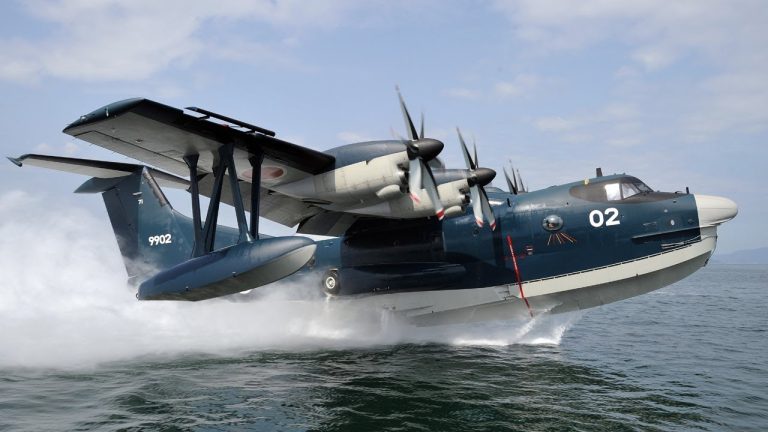
There are only a few similar aircraft left in the world, and the US-2 is considered one of the most advanced:
- It is capable of riding higher waves than most seaplanes;
- It has a longer range and higher speed than many of its competitors;
- It is considered one of the few vessels capable of combining seaworthiness with modern avionics.
Earlier seaplanes were inferior in terms of range and seaworthiness, which made the US-2 unique in its class.
What Does US-2 Mean for Japan and the World?
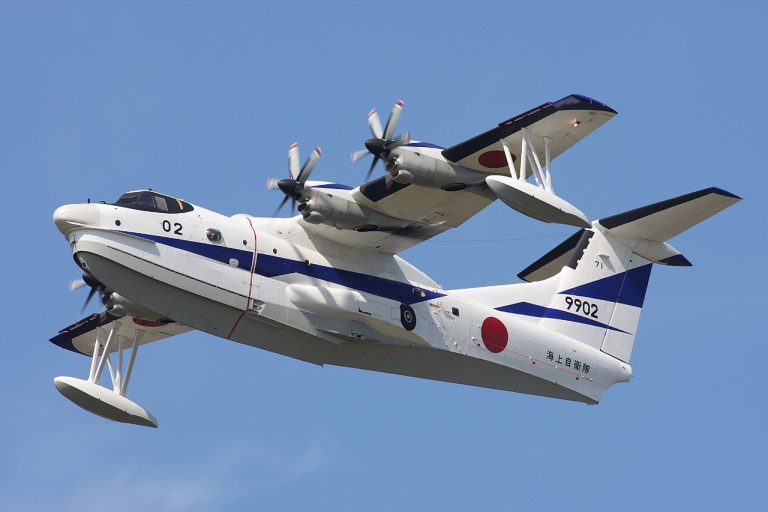
The US-2 is more than just an airplane. It is a symbol of how engineering ingenuity can adapt to geographical and strategic challenges. For Japan, with its multitude of islands and strategically important maritime environment, this aircraft has become a key instrument of national response.
Its ability to operate far from airfields, in harsh weather conditions, and over long distances makes it a vital asset not only for saving lives but also for strengthening Japan’s influence as a country prepared to meet the challenges of the 21st century.