The Plane That Became a Legend: How Hugh Hefner Turned a DC-9 Into a Flying Playboy

In the late 1960s, private aviation looked nothing like it does today. There were no Boeing Business Jets, nor were there any “flying palaces” belonging to Arab sheikhs. If you wanted your own plane, you had to buy a regular airliner and customize it to your liking.
And this is where one of the strangest—and at the same time most iconic—projects in the history of aviation comes into play.
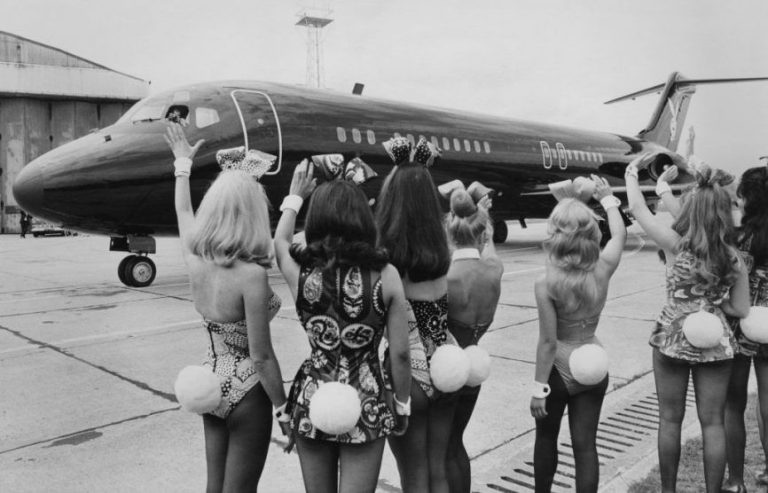
A black DC-9 with the Playboy logo on its tail.
An airplane that looked more like a nightclub than a mode of transportation.
Contents:
When Business Becomes a Way of Life
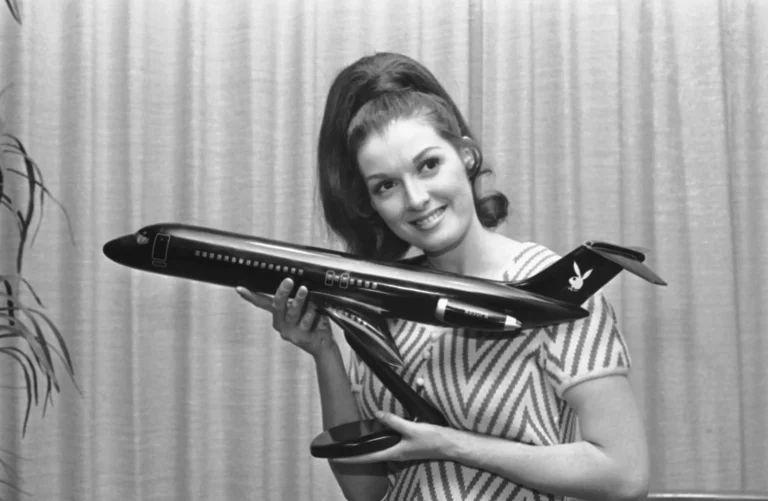
By 1969, Hugh Hefner was more than just a publisher—he was an icon of his time. For him, the idea of owning his own plane was less about logistics and more about image.
Playboy bought a brand-new McDonnell Douglas DC-9-32 straight from the factory for about $5.5 million—a huge sum of money at the time.
But the most interesting part began after the purchase.
The plane wasn’t just refitted.
It has been completely reimagined.
“A Mansion in the Sky”

Inside Big Bunny (as the plane was named), there was no traditional airliner cabin.
It said:
- several lounge areas
- movie theater
- full-size showers
- There is a disco.
- a bedroom with a huge round bed
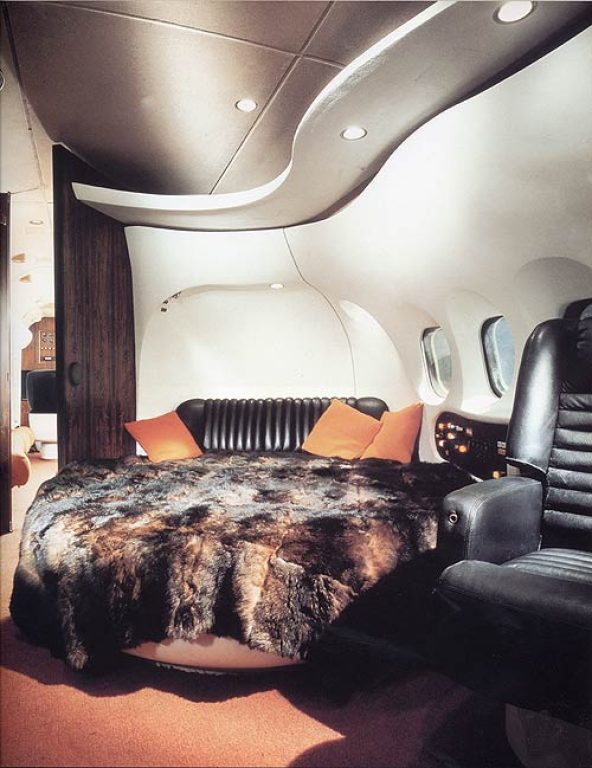
And not just any bed, but a water bed, complete with silk linens and a built-in system for controlling the lighting and appliances.
The whole setting looked like a mix of *2001: A Space Odyssey* and a glossy magazine from the ’70s.
In fact, it wasn’t an airplane.
It was the Playboy Mansion at an altitude of 10 kilometers.
A flying club, not a mode of transportation
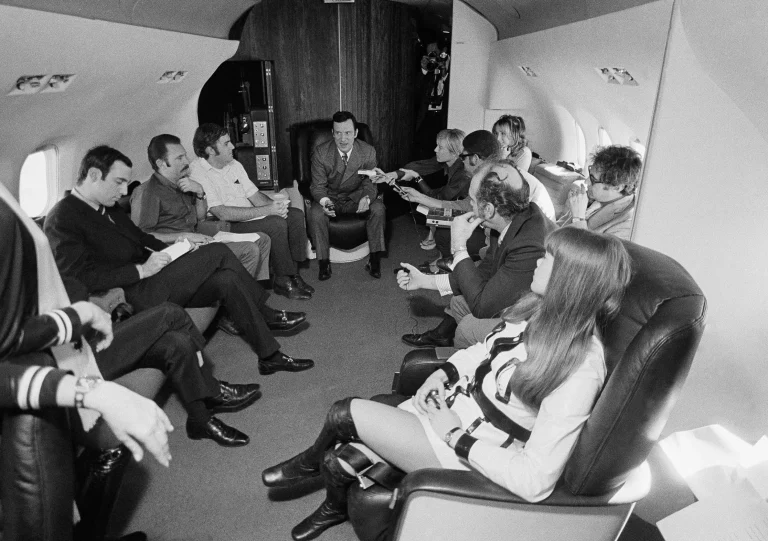
The plane was used for more than just flights.
He was part of the brand.
The following people were regularly on board:
- Elvis Presley
- Frank Sinatra
- Lion
- Roman Polanski
The plane was rented out for tours, used for film shoots and parties, and its arrival in other countries sometimes turned into a major event.
Even the crew was part of the concept.
Flight attendants were called “Jet Bunnies”—they were recruited from Playboy clubs and sent to airlines for comprehensive training.
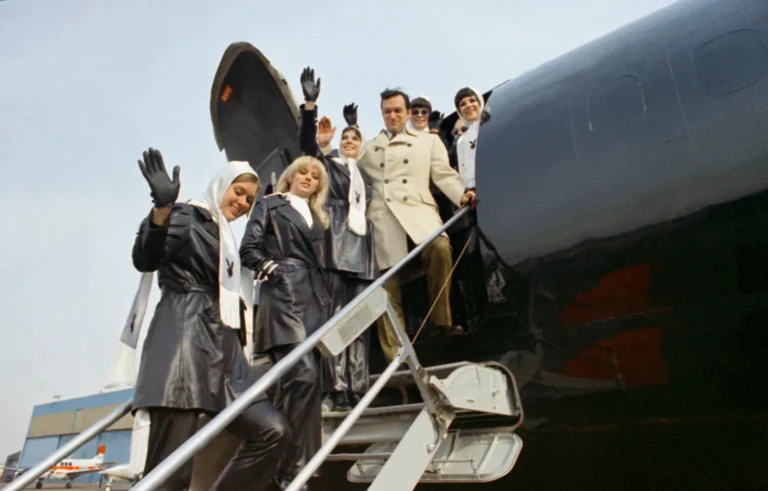
It wasn’t just marketing.
It was an ideology.
Why Did It All End So Quickly?
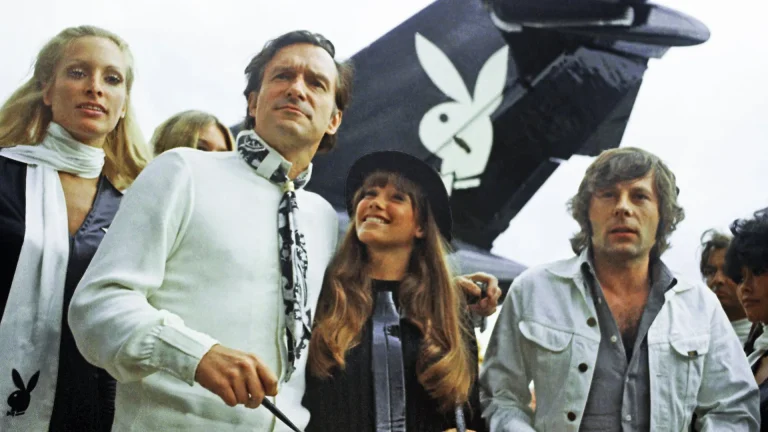
Despite all its glamour, the project turned out to be too expensive.
The costs associated with owning a private jet include:
- crew
- maintenance
- fuel
- infrastructure
And when the Playboy business began to lose momentum in the mid-1970s, it became clear that a private jet was a luxury that was no longer easy to justify.
In 1975, Big Bunny was sold.
After that, it continued to fly for a long time as a regular passenger plane, but was eventually taken out of service and dismantled.
The Airplane That Was Ahead of Its Time
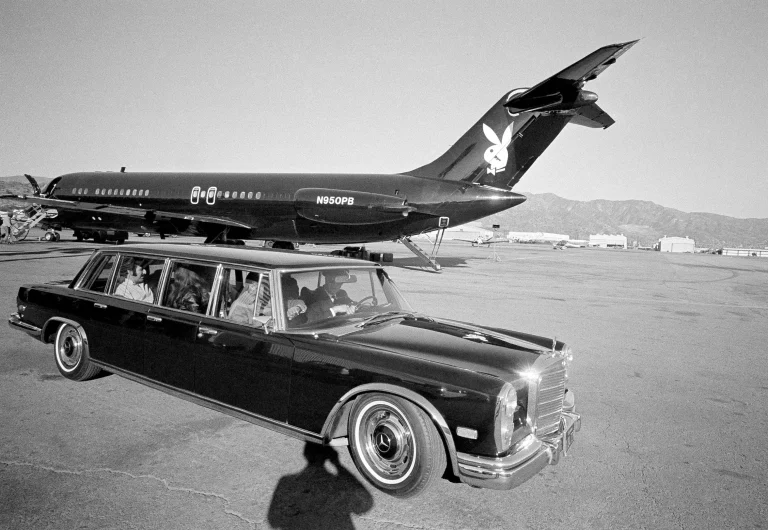
The most interesting thing is that Big Bunny wasn’t just an eccentric toy.
It appeared decades before the VIP aviation industry came into existence.
Today:
- Boeing 747s Are Being Converted Into Private Palaces
- Business jets cost hundreds of millions
- Aircraft interiors—a market of their own
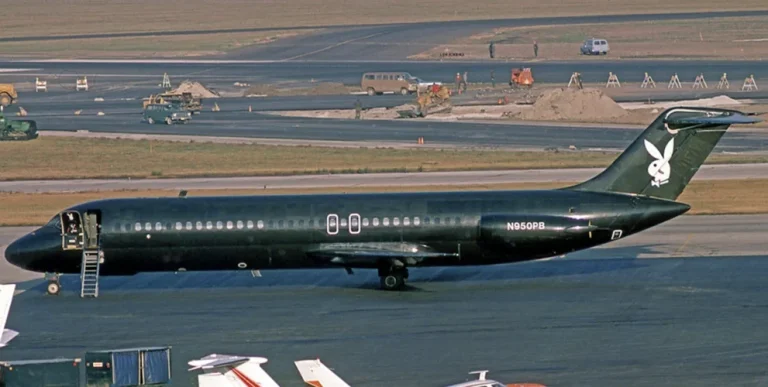
And in 1969, one man did it all.
And not just for the sake of convenience.
Just for the sake of image.
Brief Technical Overview
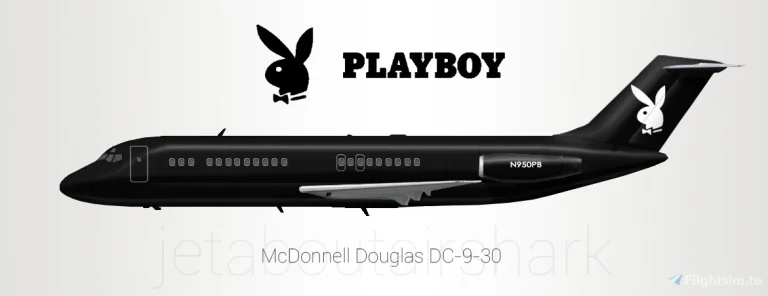
- Type: McDonnell Douglas DC-9-32
- Length: ~38 m
- Wingspan: ~28 m
- Max. takeoff weight: up to ~54 metric tons
- Engines: 2 × JT8D turbojet engines
- Speed: up to ~Mach 0.84
- Range: ~2,400–2,800 km
- Features of the Hefner version:
- VIP configuration (~30–40 people)
- Increased fuel capacity
- Fully custom interior
The Final
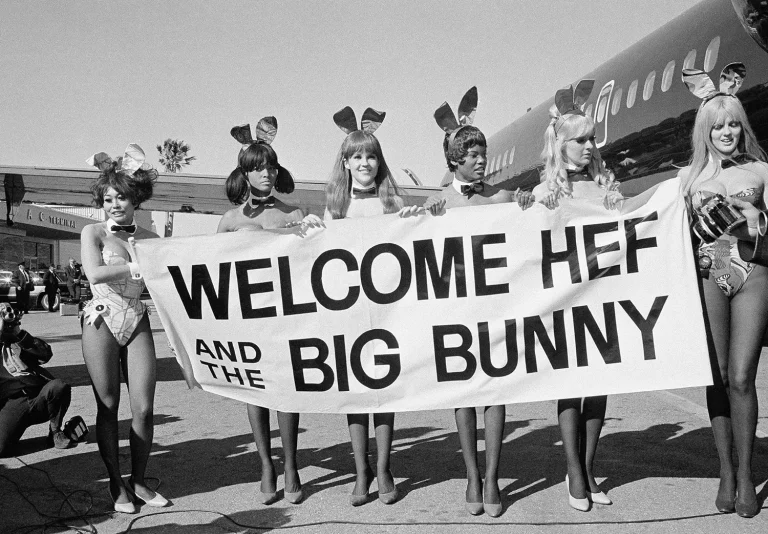
Big Bunny isn’t just an airplane.
This is the moment in history when aviation intersected with pop culture.
When a luxury liner ceased to be merely a means of transportation
and became an extension of its owner’s identity.
Today, planes like these are the norm for billionaires.
But there had already been one truly “crazy” project.
And it was as black as night,
with a white rabbit on its tail.