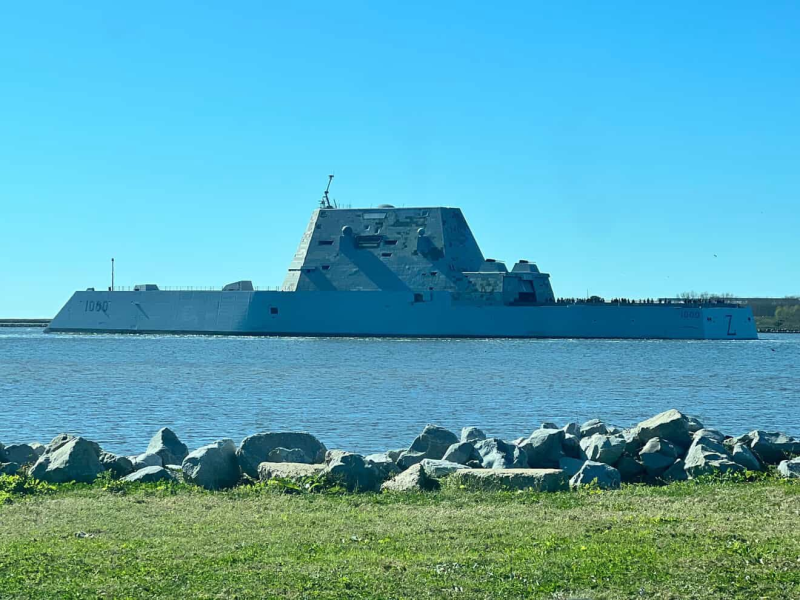
The U.S. Navy’s guided-missile destroyer DDG-1000 “Zumwalt” set sail for sea trials following the completion of a major modernization:
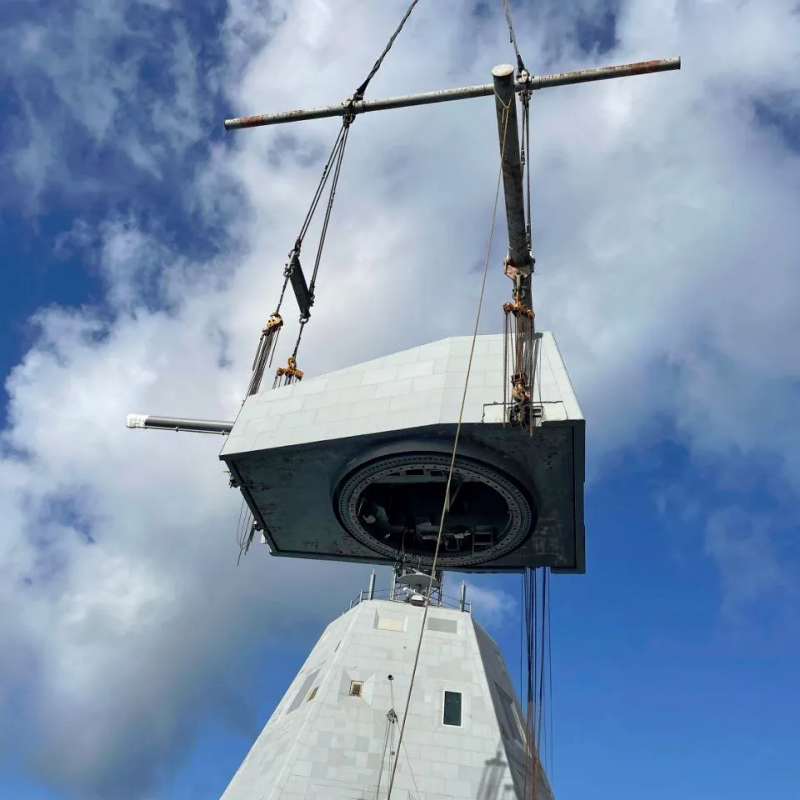
During the modernization, which began on August 1, 2023, both 155-mm Advanced Gun System artillery mounts were removed from the ship (which were effectively inoperable, since the navy refused to purchase compatible ammunition for them, each costing as much as a Tomahawk missile). In place of the forward gun, four CPS (Conventional Prompt Strike) missile silos were built into the hull, each designed to carry three “Dark Eagle” hypersonic missiles:
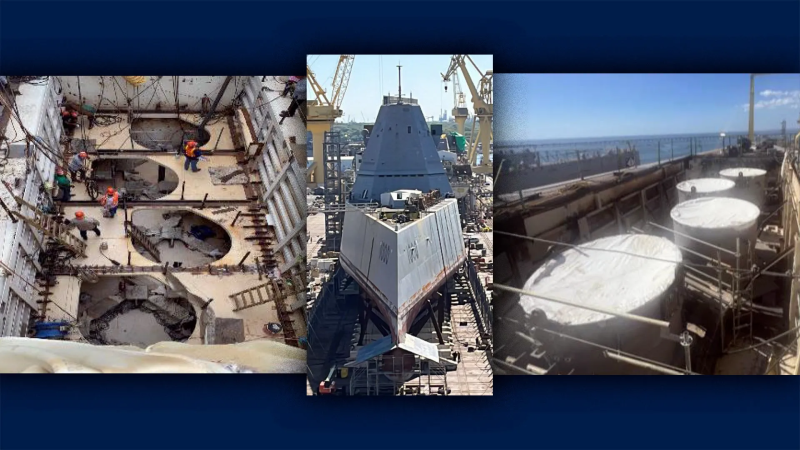
Thus, the destroyer was “reclassified” from a fire support vessel to a means of rapidly delivering strategic strikes against ground targets at ranges of up to 3,500 km. Their primary mission is to provide the fleet with hypersonic strike weapons during the 2020s and 2030s—until Virginia-class nuclear submarines Block VI nuclear submarines, which are equipped similarly, begin to enter service.
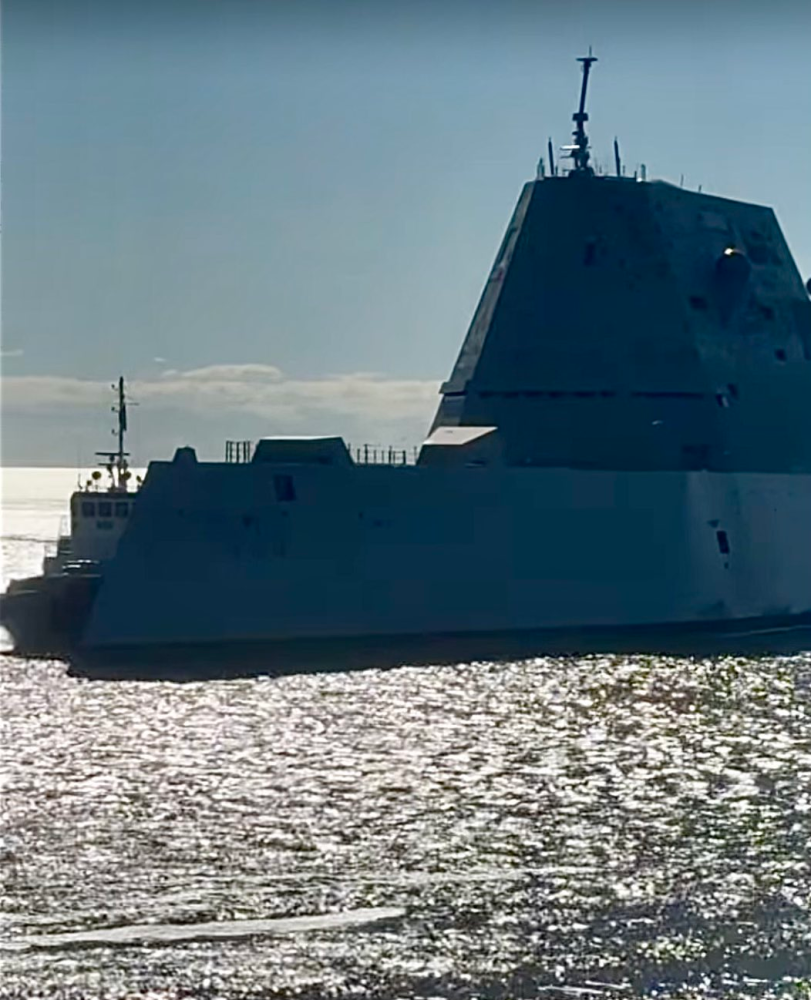
It is interesting to note that although both 155-mm artillery mounts were removed from the ship, the stealth “cowl” covering the rear one (which was supposed to conceal the barrel in the stowed position) was left in place. According to available information, it will be used as a makeshift storage space on deck. No one knows for sure why this was done. My theory is that the shroud was left in place to shift the center of the radar signature forward from the center of the ship’s hull (where the superstructure rises), thereby increasing the likelihood that anti-ship missiles will miss their target.
Two other destroyers of this class—DDG-1001 “Michael Monsoor” and DDG-1002 “Lyndon B. Johnson”—are scheduled to undergo a similar modernization. At the same time, there are reports that on these ships, the second 155-mm gun will be replaced with standard Mk-41 launch cells (not CPS) in order to increase the ships’ ammunition capacity. Currently, Zumwalt-class destroyers carry 80 Mk-57 peripheral launch cells (a variant of the Mk-41 designed to be mounted along the ship’s side rather than near the center of the hull); this ammunition capacity is considered insufficient for 15,500-metric-ton destroyers (the smaller Arleigh Burke-class destroyers carry 96 launch cells).
Overall, the Americans have found a fairly successful new use for these conceptually problematic ships, whose original role—providing fire support for amphibious landings in local conflicts and operating near enemy coastlines — a role that, first, proved unnecessary in the changed geopolitical conditions (the Zumwalt-class ships were designed back when the U.S. Navy’s dominance at sea seemed absolute, before the PLA Navy began its rapid expansion), and second, impractical due to the exorbitant cost of specialized ammunition for the 155-mm guns.