How the American LOCUST laser became the focus of the incident that led to the closure of El Paso's airspace

In February 2026, an unusual event occurred in the skies over El Paso, TX, US: The U.S. Federal Aviation Administration (FAA) closed the airspace near the international airport for several hours due to concerns about the use of laser weapons. This was neither a hoax nor a scene from an action movie—it involved the real LOCUST anti-drone laser weapon, which first came to public attention precisely because of this incident.
Contents:
LOCUST — What Is This System?
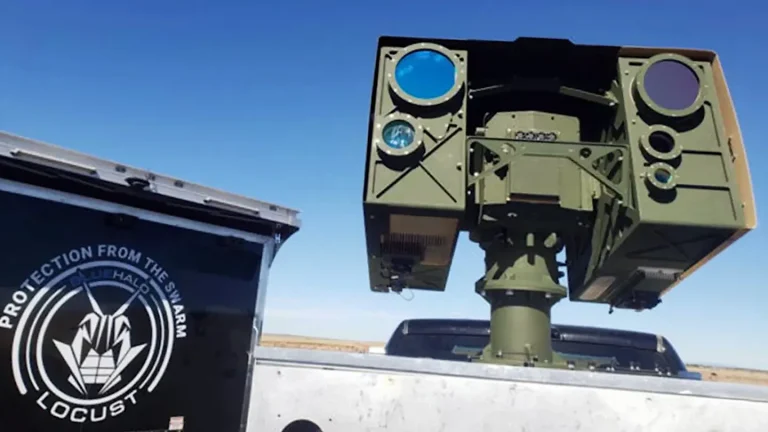
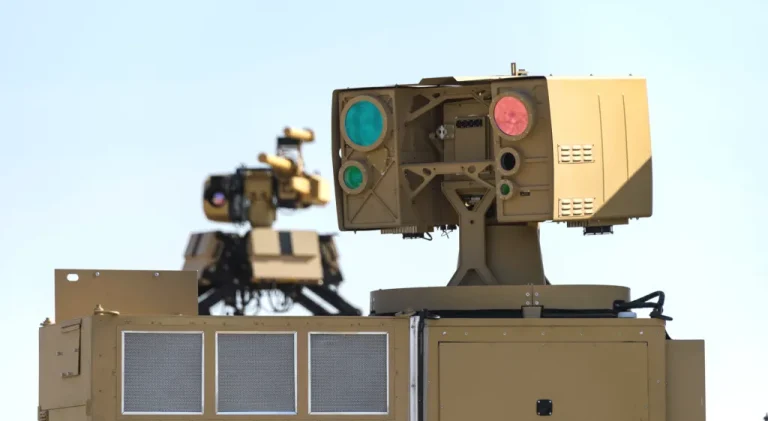
LOCUST is a laser weapon system (directed energy weapon) developed by the American company AeroVironment and adopted by the U.S. Army as part of initiatives to counter unmanned aerial vehicles.
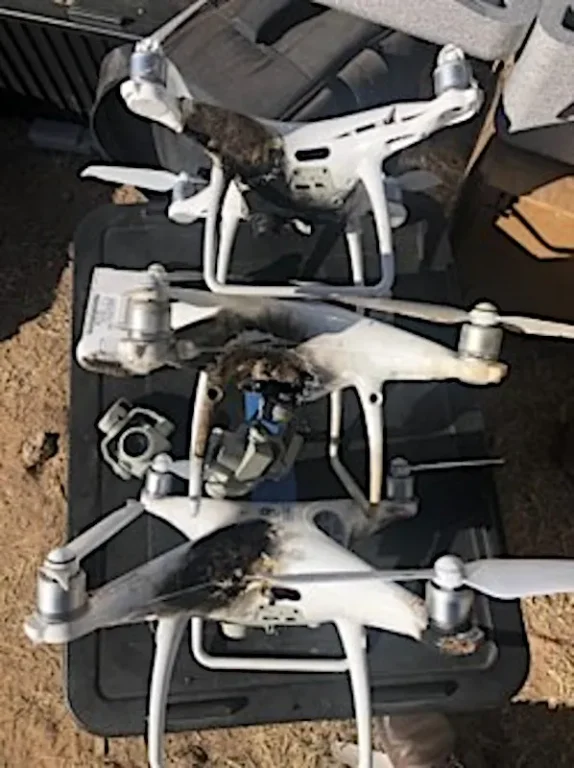
The main concept behind LOCUST is the use of directed energy (a laser) to engage small aerial targets—primarily drones. Instead of launching a traditional missile-based interceptor system, the laser can lock onto a target, increase the energy until the material reaches its melting point, and cause structural failure through thermal effects.
Compared to conventional interceptors, this approach has several key advantages:
- low interception cost—the energy of the source is an order of magnitude cheaper than a single anti-aircraft “shot”;
- virtually instantaneous action—the laser beam travels at the speed of light;
- The disappearance of conventional high-explosive projectiles—a reduction in debris and fragments in the airspace.
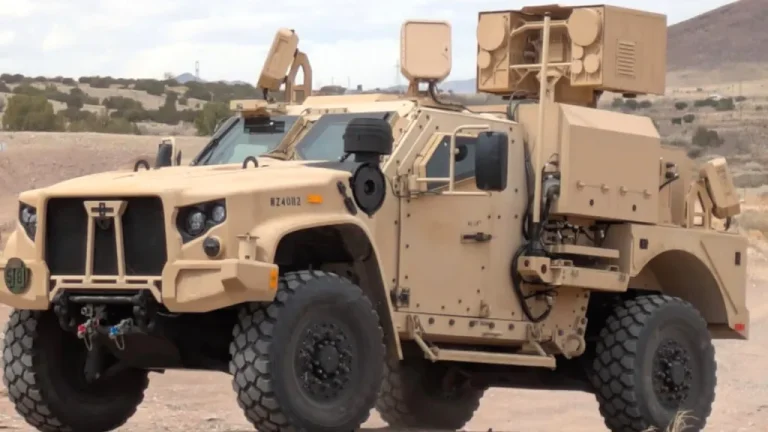
LOCUST is mounted on a mobile platform capable of moving alongside ground forces or government agencies and rapidly deploying to positions to defend against short-range air threats.
How the incident in El Paso Unfolded
The LOCUST system was deployed near Fort Bliss, a large U.S. military complex that borders El Paso Airport. When the system was activated in the area adjacent to the runways, the FAA, which is responsible for civil aviation safety, made the rare decision to close the airspace for more than seven hours to eliminate the risk of the energy beam striking civilian aircraft.
Initially, the restrictions were scheduled to last up to 10 days; however, following discussions between the FAA and the Pentagon, the ban was lifted a few hours later. The reasons why the laser was activated and why it was in such close proximity to a commercial airport remain the subject of official investigations and criticism.
During the incident, local representatives of the Federal Aviation Administration and Congress criticized the lack of coordination among federal agencies—from the Department of Defense to aviation regulators—which led to unexpected consequences for passengers, emergency services, and airport logistics.
LOCUST within the framework of modern anti-drone defense architecture
LOCUST is part of a broader U.S. military strategy to deploy laser and other directed-energy technologies to counter the growing number of unmanned threats. The emergence of affordable commercial drones—which can be used for reconnaissance missions, as part of attack groups, or for illegal activities—has prompted the military to seek less costly interception systems.
The system includes:
- A laser emitter with a power output of about 20 kW is sufficient to effectively engage relatively light targets;
- optoelectronic tracking using cameras and sensors for precise tracking of small targets;
- the ability to integrate with other sensor systems—such as radars, radio-frequency detectors, etc.—to effectively detect targets at a distance;
- Mobility based on off-road or light tactical vehicles.
Currently, LOCUST is viewed as a short-range defense layer within a multi-tiered anti-drone architecture, where more powerful systems can handle large threats, while lasers target smaller devices such as quadcopters and autonomous flying platforms.
Issues and Challenges
Although laser systems such as LOCUST promise low interception costs and a potentially unlimited ammunition supply (limited only by the energy source and cooling), they still face significant technical limitations:
- a relatively short effective range—the farther away the target, the weaker the beam;
- dependence on weather conditions—smoke, dust, and atmospheric disturbances can scatter and weaken the laser beam;
- the need for sophisticated optics and stabilization to track a laser onto a moving target;
- and, as the El Paso incident demonstrated, regulatory risks associated with use near civilian infrastructure.
What the El Paso incident reveals
The incident involving the closure of airspace was not only a curious episode in the history of defense technology, but also a significant sign that advanced directed-energy systems are already being deployed in real-world operational environments, rather than remaining confined to testing grounds or laboratories.
For engineers and military personnel, this is important evidence: laser-based drone defense technologies are moving from theory to practice, and this requires not only technical but also organizational solutions—ranging from safe testing to clear coordination procedures between military and civilian agencies.
Conclusion

The LOCUST system is not science fiction, but one of the first widely discussed examples of the use of laser weapons in real-world scenarios against drones. It demonstrates that laser energy could become one of the standard means of countering modern airborne threats, but it also underscores the importance of carefully integrating such technologies into civilian environments.
The incident in El Paso was not only a technical mishap but also a lesson in how quickly innovations designed for combat conditions can intersect with the lives of ordinary people.
Based on material from https://www.twz.com/news-features/this-is-the-locust-laser-that-reportedly-prompted-closing-el-pasos-airspace