"Black" Tomahawk: An Unusual Variant of the Cruise Missile Spotted for the First Time in Strikes Against Iran

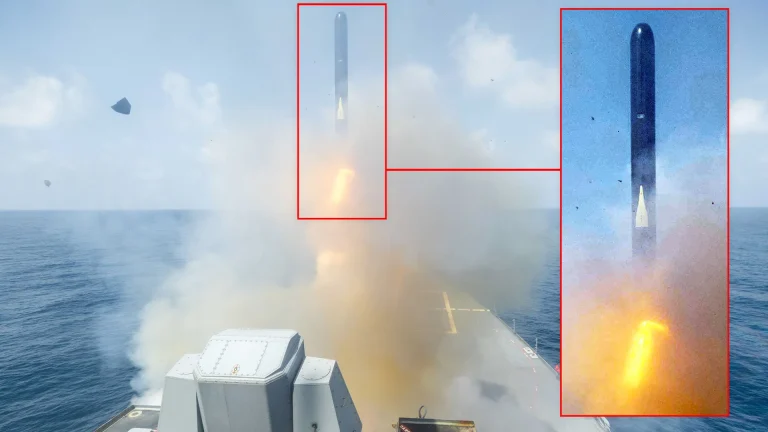
During a large-scale military operation by the U.S. and Israel against targets in Iran, an unusual variant of the American Tomahawk cruise missile was spotted for the first time, distinguished by its dark color scheme and a number of enhanced capabilities. This detail was captured both in video footage and in published photographs of the missiles being launched, sparking lively discussion among military experts.
A New Development on the Battlefield
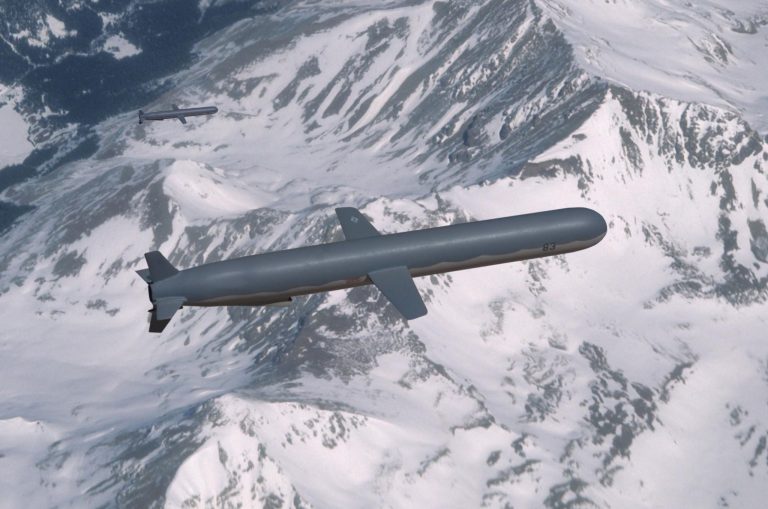
Tomahawk missiles are usually painted in the U.S. Navy’s standard gray, but in recent images, one of the missiles stands out significantly—it has a dark coating that resembles other modern naval missiles designed for enhanced stealth.
Analysts believe this may be a variant known as the Maritime Strike Tomahawk (MST)—a naval strike version of the missile designed not only to engage ground targets but also to combat surface ships. This “black” appearance is likely due to the coating and materials used, which enhance the missile’s stealth capabilities.
What is the Tomahawk cruise missile?
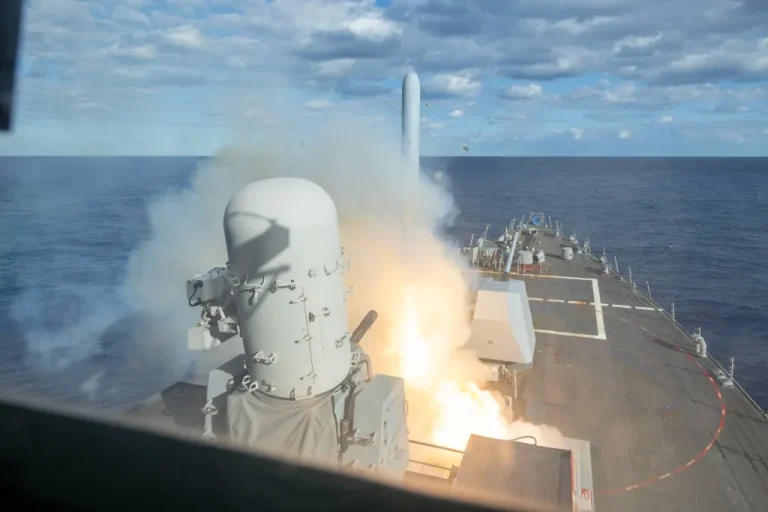
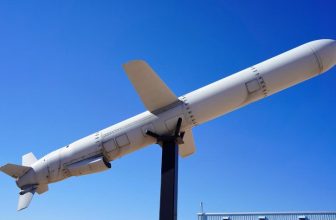
Tomahawk cruise missiles are high-precision, long-range munitions designed to strike strategically important enemy targets from great distances. They were developed for the U.S. Navy and have been in service for several decades, participating in numerous military operations around the world.
Current versions of the missile are capable of:
- fly a distance of about 1,600 km or more;
- to penetrate the enemy’s complex defenses using programmable flight paths and low-altitude flight along the terrain;
- to engage both stationary targets and integrate into networked guidance systems in more advanced versions;
- be launched from surface ships, submarines, or aircraft platforms.
Features of the “black” version
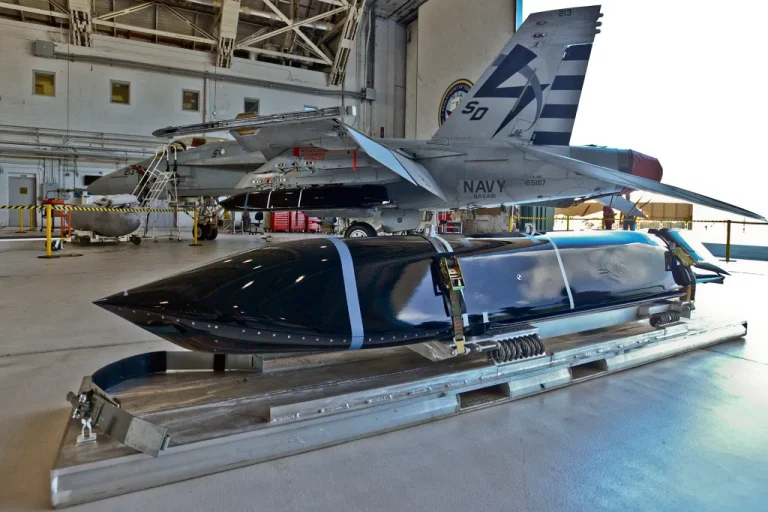
According to military analysts, the dark-coated missile spotted in the current strikes on Iran may be a Maritime Strike Tomahawk (MST)—a subtype of the latest Tomahawk Block V variants. Possible features include:
- a multi-mode guidance system that includes infrared imaging of the target;
- improved maneuvering and target-tracking algorithms made possible by additional sensors;
- enhanced resistance to air defense and electronic warfare;
- Optimized for engaging surface and naval targets, but capable of effectively engaging ground targets as well.
In other words, this isn’t just an ordinary land-attack missile—it represents, step by step, the next stage in the family’s evolution, which has expanded the missile’s range of capabilities through new guidance systems and a “camouflage” coating.
What does this mean in the context of the strikes on Iran?

As part of the operation to strike Iran, Tomahawk missiles were one of the key components of the multi-pronged attack: they were deployed alongside fifth-generation fighter jets, air-launched cruise missiles, and new strike drones designed for precision strikes.
The Tomahawk missiles were launched primarily from Arleigh Burke-class naval vessels and possibly from submarines in the region. These missiles were aimed at key targets and infrastructure within Iran, including air defense systems and command centers.
The appearance of this unusual-looking “black” variant may signal an attempt by the U.S. Navy to deploy a more advanced, high-tech version that combines land- and sea-based strike capabilities.
Technical Specifications
The following are the key specifications for the base version of the Tomahawk Block IV and the upgraded Block V / Maritime Strike Tomahawk.
Comparison Table of Technical Specifications
| Type | Long-range subsonic cruise missile | Multipurpose cruise missile |
| Purpose | Destruction of Ground Targets | Engaging Ground and Sea Targets |
| Length | ~5.56 m | ~5.56 m |
| Housing Diameter | 0.52 m | 0.52 m |
| Wingspan | ~2.67 m | ~2.67 m |
| Mass | ~1,300–1,600 kg | ~1,600 kg |
| Warhead Mass | ~450 kg | ~450 kg |
| Range | ~1,600 km | ~1,600+ km |
| Speed | ~880 km/h | ~880 km/h |
| Engine | Turbojet | Turbojet |
| Navigation | Inertial + Satellite + Terrain-Based Correction | Inertial + satellite + active homing head |
| Ability to retarget | Yes | Yes (advanced) |
| Media | Ships and Submarines | The same platforms |
What’s New in Block V
Key differences of the upgraded missile:
- active radar homing head;
- the capability to engage moving surface targets;
- improved resistance to electronic countermeasures;
- integration into modern networked control systems;
- The potential use of new coatings to reduce visibility.
In other words, Block V transforms the Tomahawk from a “coordinate-guided” missile into a more versatile weapon.
What does this mean in a strategic context?
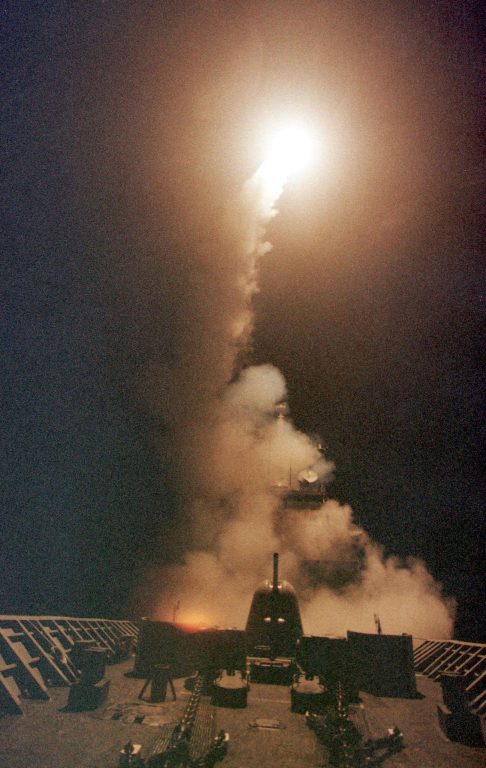
The use of the new version of the Tomahawk during the operation against Iran points to several important trends:
- The U.S. is prepared to use the latest versions of its weapons in an actual conflict.
- Cruise missiles are becoming increasingly versatile.
- Naval and land-based missions are gradually being integrated into a single concept for strike weapons.
If the Maritime Strike version was indeed deployed, this means that the missile is now capable of engaging targets at sea at long ranges, which significantly enhances the fleet’s capabilities.
Conclusion
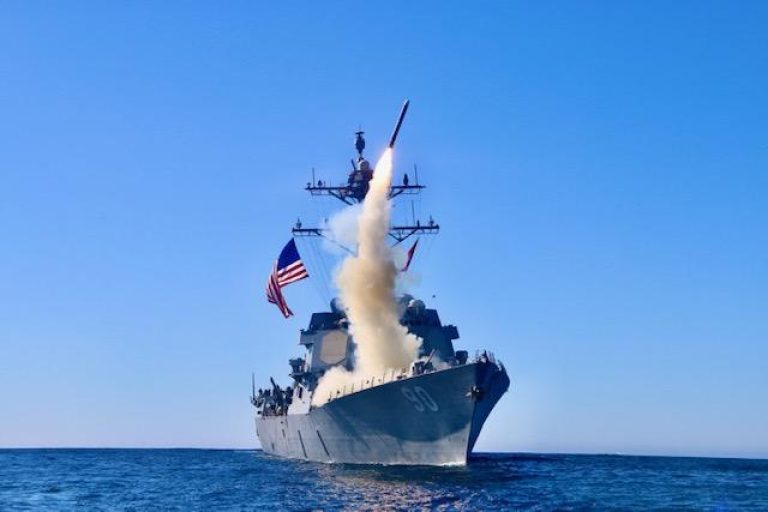
The introduction of the “black” Tomahawk is not merely a visual detail, but a possible sign of a transition to a new generation of naval cruise missiles. While retaining the same dimensions and range, the main advancements lie in the guidance and control systems.
The Tomahawk remains one of the most recognizable missiles of our time, but its latest versions show that even a weapon proven over decades continues to evolve in response to the demands of modern warfare.
based on https://www.twz.com/sea/black-tomahawk-cruise-missile-seen-for-the-first-time-in-strikes-on-iran