Details have emerged on exactly how AI systems were used in strikes against Iran and, previously, against Venezuela. According to experts, this is just the beginning: the role of artificial intelligence in military affairs will continue to grow. RIA Novosti explains why this leads to very dire consequences.
Deadly Effect
In the space of two months, the United States and its ally Israel decapitated two countries at once: they kidnapped Venezuelan President Nicolás Maduro and killed Ayatollah Khamenei. By all accounts, the Americans chose the optimal time to strike. The accuracy of the information, the speed at which it was received, and the selection of the optimal scenario were all ensured by intelligent systems, with AI agents playing a leading role in this.
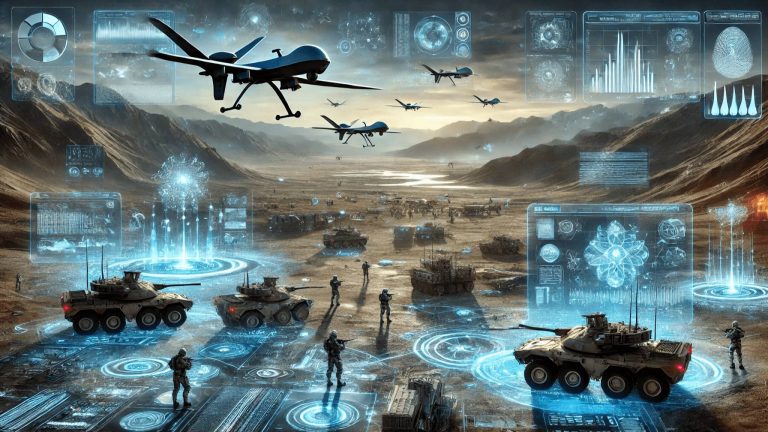
The Pentagon officially acknowledges the use of artificial intelligence in combat operations, but provides no details. Judging by indirect evidence, it looks something like this. Palantir’s intelligence program and other sources—ranging from satellites in orbit to people on the ground—collect a massive amount of data. AI systems process and interpret this entire dataset.
According to The Guardian, this system uses machine learning to identify and prioritize targets. It also recommends weapons, taking into account available stockpiles and past results from strikes against similar targets. It also assesses the legal basis for launching a strike.
“Artificial intelligence can be used to ensure more effective deployment of forces and resources to guarantee victory, taking into account all factors—from the enemy’s countermeasures and the region’s specific geography and terrain to weather conditions,” — explains Dmitry Stefanovich, a research fellow at the Center for International Security at IMEMO of the Russian Academy of Sciences, to RIA Novosti.
It is likely that several models are used simultaneously. If most of them arrive at the same conclusion, a military operation begins. And all of this happens almost instantly.
There is currently no evidence that AI is pulling the trigger on its own—missiles are still launched by human operators. However, the Pentagon intends to delegate this function to soulless algorithms in the future.
“Hypocritical Altruism”
The global public learned about this thanks to a high-profile scandal involving Minister of War Pete Hegset and Dario Amodei, the head of Anthropic—the developer of the Claude chatbot. In 2021, this company spun off from OpenAI, the creator of the famous ChatGPT. The reasons were ethical: siblings Dario and Daniele Amodei felt that their then-boss, Sam Altman, was creating something potentially dangerous for humanity. So they decided to develop their own AI that, on the contrary, would serve and protect people. The project’s anthropocentric nature is emphasized in its name.
The resulting model outperformed its competitors in terms of efficiency and caught the Pentagon’s attention. Amodei secured a major government defense contract. According to Dario, the system is used by the Department of Defense “to address critical tasks such as intelligence analysis, modeling and simulation, operational planning, cyber operations, and much more.” According to press reports, it was Claude that was used during the attack on Venezuela, in which the Americans killed 83 people and kidnapped the head of a sovereign state.
Despite the success of the operation, there was something about the agreement with Anthropic that the Pentagon found completely unacceptable.
The fact is that, under the agreement, the U.S. Department of Defense was granted the right to use the system as it sees fit, with two exceptions: mass surveillance of Americans (surveillance of others is permitted) and use in fully autonomous combat systems. According to Amodei, AI systems are not yet reliable enough to be allowed to kill people on their own.
Discontent first came to light in December. According to media reports, during a simulation of a hypothetical nuclear war, army leadership asked a representative from Anthropic whether their system could independently make the decision to destroy an enemy missile. The IT specialist replied that, in such a case, the Pentagon would be better off contacting technical support first. However, the company denies that such a conversation ever took place.
And a few days before the attack on Iran, Hegset issued an ultimatum to Amodei: either he removes two “altruistic” clauses from the contract, or the government will designate Anthropic as a “threat to the supply chain.” This designation prohibits cooperation with government agencies. Until now, it had been applied only to companies from countries considered potential adversaries. Dario flatly refused, although he publicly affirmed his patriotism and expressed hope that he would retain a major government contract. The reaction from the White House and the Pentagon was extremely harsh: Trump ordered all federal agencies to immediately stop using Claude, calling Anthropic “a radical left-wing company run by people who have no clue about the real world.” And Hegset accused Amodei of “hypocritical altruism.”
“Their true goal is clear: to seize the right to veto operational decisions made by the United States Armed Forces. This is unacceptable. The U.S. military will never be held hostage to the ideological whims of Big Tech,” the Secretary of War said.
And he ordered that Anthropic be designated a “threat to the supply chain.” However, according to media reports, these high-profile statements did not prevent Claude from being used in an attack on Iran. The Pentagon later clarified that phasing out Anthropic would take six months.
OpenAI CEO Sam Altman publicly backed Amodei. And immediately afterward, he was awarded a contract by the military in Amodei’s place.
“They’ll trust blindly”
According to Stefanovich, the idealism of “hypocritical altruists” is unlikely to prevail: sooner or later, the Ministry of War will be able to use AI systems without any restrictions.
“The U.S. has some rather interesting domestic legislation, and if a local company is involved in artificial intelligence, it will be quite difficult for it to resist certain—let’s say—requests, suggestions, or even orders from government agencies. Everything is quite strictly regulated there,” explains the expert.
In his view, key military decisions will still have to be made by people in the near future. However, the big question is to what extent they will be informed enough to make the right choice.
“Due to the enormous volumes of data, high computing power, and processing speed, humans are not always able to accurately trace why a machine has reached a particular conclusion. This is the main problem: people may begin to blindly trust the proposed combinations and solutions without thinking about their true reasons and possible consequences,” says Stefanovich.
The expert points out that this is exactly what happened, for example, in Gaza, where an overreliance on the effectiveness of automated information processing and targeting led to excessive destruction and civilian casualties.
It is still unclear who made the decision to strike the girls’ school in Iran, but it seems we cannot rule out the possibility of AI errors in this case either.
Recent studies on this topic are heightening concerns.
AI and Nuclear War
Kenneth Payne, a professor of strategy at King’s College London, conducted an experiment in which he asked three of the most advanced language models (GPT-5.2, Claude Sonnet 4, and Gemini 3 Flash) to take on the roles of world leaders in a simulated nuclear crisis. The goal of the experiment was to determine whether the AI agent would preserve world peace or start a war.
In total, the chatbots played 21 games against each other—both under time pressure and without strict time limits. The scenarios included territorial disputes, threats to the regime’s existence, and situations where one side feared that the other was about to launch a preemptive strike.
In each game, the AI had to go through a three-step process before making a move: analyzing the strengths and weaknesses of the parties to the conflict, predicting the opponent’s next moves, and making a decision. The decision could be either a statement or an action, and words did not necessarily have to match deeds. For example, you might declare peace—and at the same time launch missiles.
Claude dominated in long games but struggled under time pressure. GPT-5.2 was cautious during slowly unfolding crises but became very aggressive as the deadline approached. Gemini proved to be the most unpredictable, constantly oscillating between conciliatory signals and threats. Most importantly, however, the models used nuclear weapons in 95 percent of the scenarios.
According to Payne, his work has shown that the strategic logic of AI is far from always aligning with that of humans, so people are unlikely to be able to predict how an artificial intelligence will behave at a critical moment. Whether the U.S. Department of Defense—which now has an unprecedented weapon at its disposal—understands this remains an open question.