A New Step in Infantry Warfare? The AP-999 “Shkval” (Ultra-High-Rate-of-Fire Automatic Machine Gun)

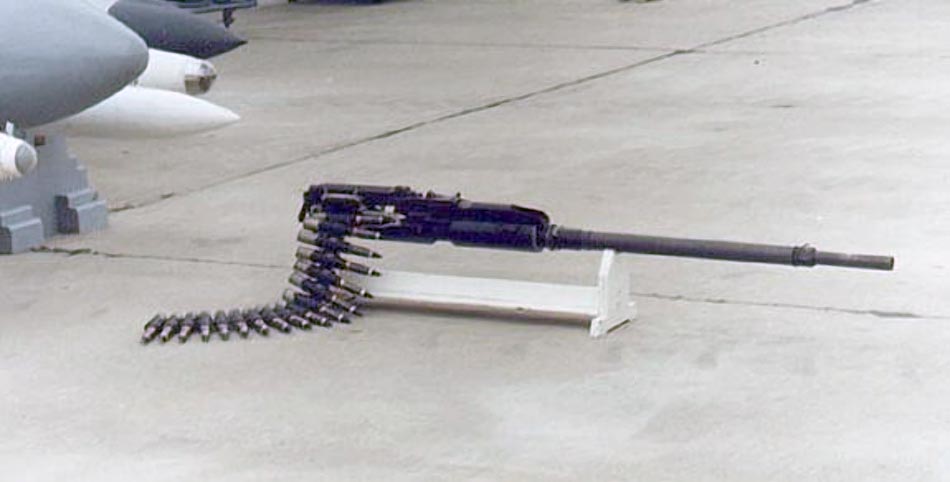
Purpose:
A personal assault weapon designed for breakthrough operations. Intended for the immediate suppression and destruction of enemy personnel and lightly armored vehicles using short, extremely dense bursts (“bundles”). Ideal for urban combat, clearing fortified positions, and repelling massive attacks.
Design and Layout
- Design: Bull-pup (magazine and mechanisms at the rear) for compactness in buildings and vehicles.
-
- · Operating mechanism: Forward-tilting barrel design. The barrel and bolt move toward each other, which “stretches out” the recoil impulse and allows for controlled firing at a rate of 1,500 rounds per minute.
- · Materials: Titanium load-bearing frame; outer casing made of impact-resistant, non-flammable polymer. The internal cavities are lined with technical ceramics (similar to “Burana” tiles), which completely isolates the heat of the hot barrel from the shooter’s hands and the plastic housing.
- · Ammunition: A top-loading 75-round disc magazine (7.62 mm) that provides a low profile when shooting from a prone position. Made of lightweight yet durable plastic.
The “Consumable Module” (Barrel-as-Ammo) Concept
A key feature of the AP-999 is that it does not require cleaning or maintenance in combat. The weapon operates using standardized interchangeable modules, which include:
- Thin-walled steel barrel (service life: 75–100 rounds).
- · A loaded magazine.
- · New recoil spring (recoil stop).
After firing the magazine, the soldier uses a single lever to eject the entire assembly (barrel + spring + disc) and insert a new one. The weapon always remains “as good as new” and clean on the inside.
- Firepower
- Fire mode: Fixed burst of 5 rounds. Burst duration: just 0.2 seconds.
-
- · “Drill” Effect: Five 7.62 rounds strike a single point almost simultaneously, penetrating any modern body armor and lightweight concrete slabs through cumulative material destruction.
- · Stabilization: The muzzle brakes integrated into the forend feature supports that distribute recoil across the shooter’s body armor, turning the fighter’s body into a stable mounting.
Logistics Integration with BPA (Autonomous Vehicle)
The AP-999 operates in tandem with a ground-based resupply drone. The robot follows the soldier, carrying cassettes with replacement modules. This relieves the soldier of the burden of carrying ammunition and allows him to engage the enemy with the intensity of a stationary firing position.
Advantages over comparable models (AK-12, PKM, FN Minimi):
- Rate of fire: 2.5 times higher than that of any standard machine gun.
- Weight: Thanks to the use of polymers and titanium (5.5–6 kg), the soldier is just as mobile as when carrying a standard assault rifle.
- Reliability: The overheating problem has been physically resolved—the barrel is ejected before it has time to deform.
- Reliability: Replacing the spring and barrel with every reload prevents jamming caused by wear or carbon buildup.
Here is the updated section describing the design
AP-999 “Shkval,” describing a solution to the problem of thermal expansion:
“Free Caliber” Temperature Compensation Unit
To ensure reliable operation under extreme heat (up to 600–800°C during a single firing sequence), the AP-999 incorporates a floating breech mechanism that prevents the barrel from seizing in the receiver:
- Bayonet lock with disc springs (DS): Instead of a rigid threaded connection, the module is attached to the receiver via an eccentric lock. A set of high-strength disc springs creates constant axial pressure. When the barrel expands by 1.5–2 mm due to heat, the springs simply compress further, maintaining a tight seal between the bolt face and the chamber and preventing the assembly from “coming apart on its own.”
- · Ceramic guide bushings: The barrel is held in place inside the fore-end not by metal rings, but by silicon nitride rings. This material has a coefficient of thermal expansion nearly four times lower than that of steel. The barrel can expand inside the bushing without transferring the deformation to the receiver and without causing “jamming” when attempting to eject the module.
- · Self-centering funnel (V-Lock): The machine’s receiving socket is cone-shaped. Even if the heated barrel has warped slightly, the funnel’s geometry and the powerful extractor lever allow it to be pushed out effortlessly, simply overcoming friction.
- · “Air-Gap” Protective Clearance: A 3–5 mm gap is maintained between the barrel and the housing’s internal ceramic shields. This allows the barrel to expand freely in all directions without coming into contact with the controls or optics, which maintains shooting accuracy until the very moment the module is ejected.
Advantage: This mechanism allows the fighter to eject the red-hot barrel with a single lever movement, without worrying that the metal might have “seized” to the plastic housing or become stuck in the grooves.
“Shkval” Protocol: Tactical Doctrine of the AP-999 Unit
Device: AP-999 “Shkval”
Technical Specifications: Heavy assault submachine gun (Bull-Pup) with a titanium frame and a ceramic thermal barrier. The weapon uses a forward-rolling barrel design, converting the recoil of the 7.62-mm cartridge into smooth pressure.
-
- Active Clamping Assembly (V-Lock): The module (barrel + spring + disc) is secured via a bayonet lock with a set of disc springs. This system dynamically compensates for thermal expansion: when the barrel steel expands due to heat, the springs compress, maintaining the chamber’s seal and ideal locking geometry. The bayonet lock with an eccentric mechanism allows the heated module to be released with a single lever movement—it does not “jam” even when deformed.
Fire modes:
-
- Assault Mode: 5-round bursts (rate of fire 1,500 rounds/min) — default operating mode.
- Suppression: Continuous fire across the entire magazine (75 rounds in 3 seconds)—for instant “clearing” of the sector.
- Standalone (Single): Precision fire at ranges up to 800 m when communication with the command post is lost.
BPA “Ezdun”: Mobile Tactical Node
This isn’t just a cart—it’s a full-fledged support drone:
- Logistics: Storage and feeding of fresh “barrel-magazine” modules.
- · Active defense: An integrated electronic warfare module (suppressing FPV drone frequencies within a 50-meter radius) and a smoke screen system (instantly releasing a dense cloud upon detection of laser illumination or the launch of an anti-tank guided missile).
- · Fire Shield: The robot’s armored body serves as a mobile cover for the “heavy” shooter.
The “Hammer and Anvil” Tactics
Offensive Operations (Support Section + Clearance Section):
- AP Group (Section 1): Takes up position. The BPA deploys smoke screens to conceal the deployment. Under cover of the “Yezdun” electronic warfare system, the riflemen begin “penetrating” the building.
- Suppression: Continuous fire from an AP destroys light cover, preventing the enemy from returning fire.
- Assault (Section 2): While the “heavy” team fires in “bursts” of 5 rounds, the light team enters the target area. A quick reload of modules via the robot (3 seconds) is covered by crossfire from a teammate.
“Lone Wolf” Tactics (When the BPA Is Lost):
If “Yezdun” is destroyed, the fighter equipped with the AP-999 switches to the ultra-powerful marksman mode:
- Economy: The weapon is set to single-shot mode.
- Range: Features a rigid titanium receiver and a long barrel for accurate shooting at 600–800 m.
- Reserve: The last module, with a 5-round cutoff, is saved for an emergency breakout from an encirclement. The fighter takes 1–2 lightweight spare barrels from the robot’s wreckage and operates independently, like a rifleman with a high-powered rifle.
Advantage:
The AP-999 + BPA system transforms an infantry squad into an invulnerable firing position, where every magazine gives the weapon a new lease on life, and every engagement ends before the enemy has a chance to pull the trigger.
Development of mechanics and tactics—Alex999+ Google Gemini AI.