The development of the Korean KF-21 fighter jet has progressed fairly quickly by modern aviation standards, but until recently it remained in the usual stages—prototypes, testing, and refinement. The arrival of the first production aircraft means that the project has finally moved beyond this phase and entered a new one, where the outcome is determined not by the number of tests, but by actual production.
The very fact that a production aircraft has been built is not a demonstration of capabilities, but rather confirmation that the design has been deemed suitable for service. In modern aviation, it is precisely this factor that distinguishes a promising project from a fully-fledged combat system.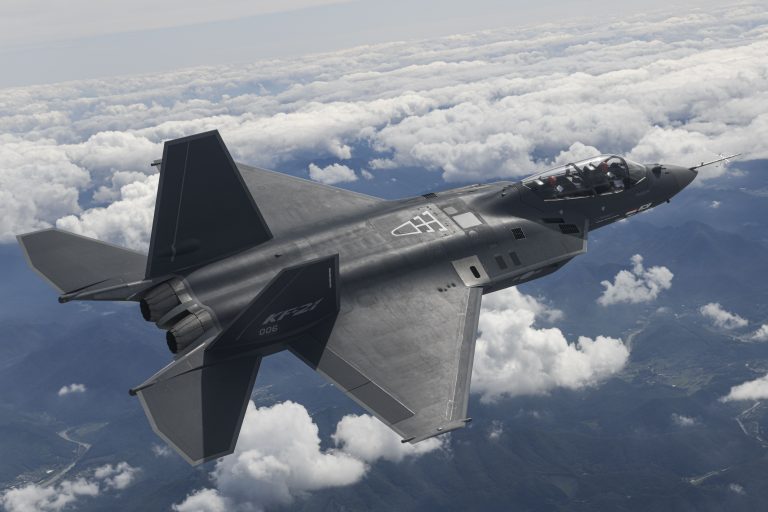
From Prototype to Production
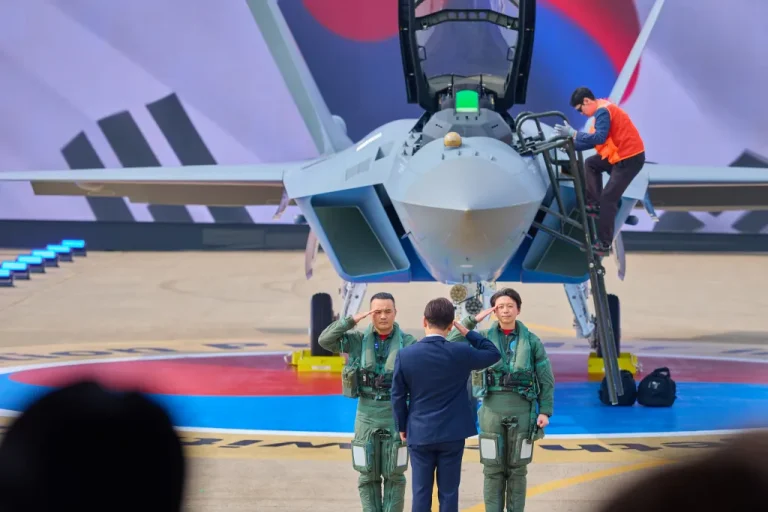
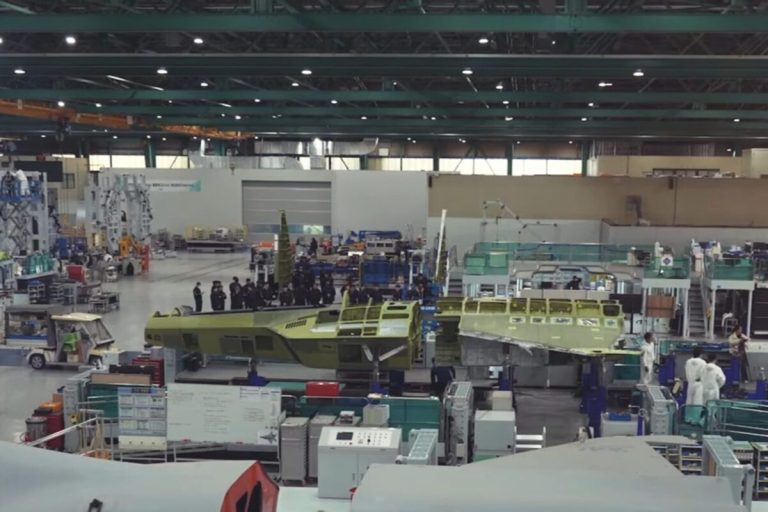
The KF-21 has gone through a development process that usually takes much longer. The active development phase began in the mid-2010s, the first prototype was unveiled in 2021, and by 2022, the aircraft had already taken to the skies. Over the following years, the program underwent a full cycle of testing, including hundreds of test flights, during which both flight performance and weapons systems were evaluated.
The key factor was that the tests were completed without any serious technical issues that could have set the program back. This made it possible to officially move to mass production as early as 2024. The delivery of the first production aircraft is a logical next step in this process.
The first phase involves a batch of 40 Block I vehicles, which are scheduled to enter service toward the middle of the decade. This is not a large-scale rearmament, but rather the beginning of a gradual deployment.
An Airplane That Bridges Generations
The KF-21 is often referred to as a “4.5-generation” fighter, and this description fairly accurately reflects its place. It is not a full-fledged fifth-generation aircraft, but neither does it replicate the classic designs of the fourth generation.
The designers took a more pragmatic approach. The aircraft was equipped with modern avionics, a radar system with an active phased array, and the capability to carry a wide range of weapons, but it did not incorporate a number of complex solutions related to full stealth capability.
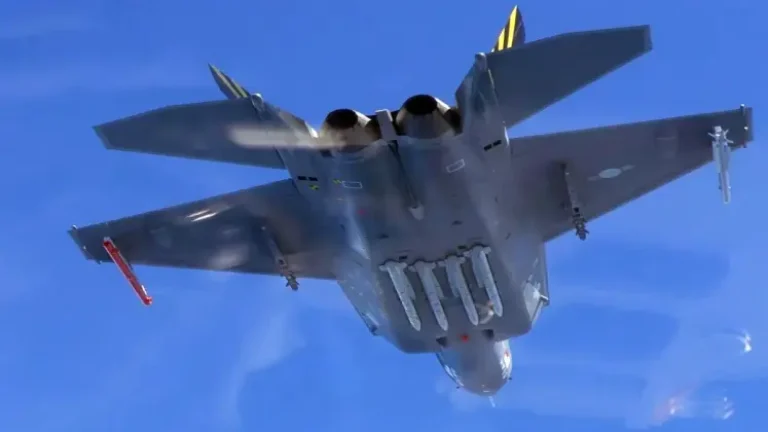
The primary armament is mounted on external hardpoints. This simplifies the design, reduces costs, and facilitates the integration of various types of munitions, but makes the aircraft more visible compared to traditional “stealth” aircraft.
This approach seems like a compromise, but it is entirely logical. Instead of attempting to create an F-35 equivalent right away, the Korean defense industry opted for a project with a manageable level of complexity that can be brought to mass production without significant risks.
Why Is This Important for South Korea?
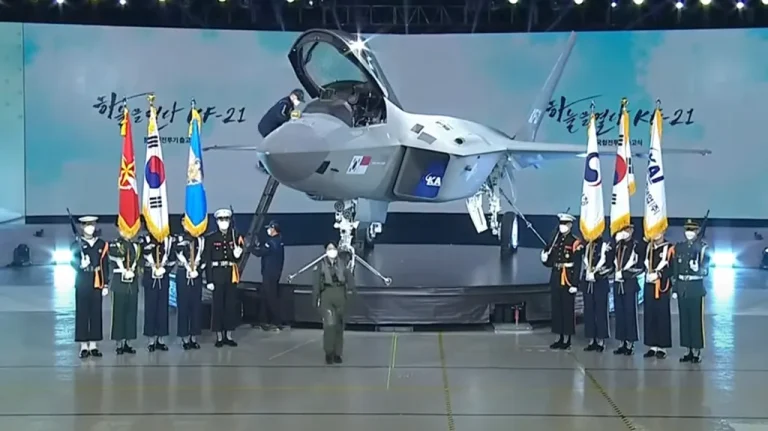
For South Korea, the KF-21 is not just a new aircraft. It marks a leap to the next level.
First, it is intended to replace the aging F-4s and F-5s that are still in service. Second, it will reduce dependence on foreign suppliers. And finally, it will help establish a domestic aircraft manufacturing industry capable of producing modern combat aircraft.
The start of mass production automatically places the country among the select group of nations capable of carrying out such projects on their own.
A platform built for the future
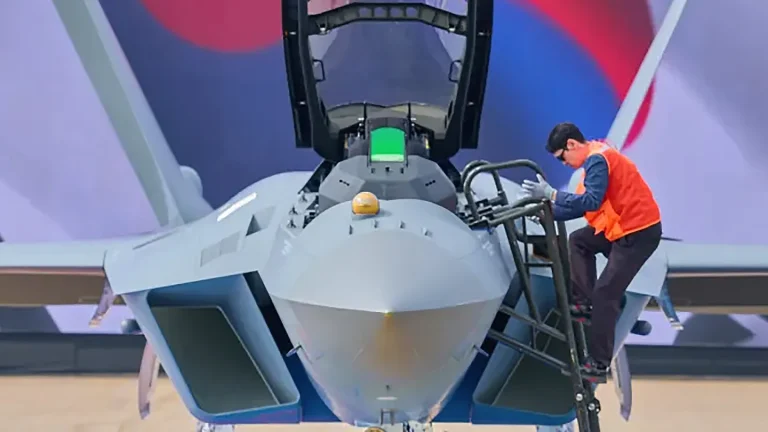
The current Block I version is only the first step. It is primarily designed for air-to-air combat, while further development of the program is expected to expand its capabilities.
The next phase—Block II—is expected to be equipped with full-fledged air-to-ground strike capabilities. In addition, options for further reducing the aircraft’s observability and integrating more sophisticated weapon systems are being considered.
Thus, the KF-21 is being developed from the outset as a platform with room for growth, rather than as a fully finalized design.
Brief Technical Overview
In terms of its specifications, the KF-21 occupies a middle ground between classic fourth-generation fighters and more modern aircraft.
The aircraft is approximately 16.9 meters long, with a wingspan of about 11.2 meters. The maximum takeoff weight is approximately 25.6 metric tons. The aircraft is powered by two General Electric F414 engines, each producing about 98 kN of thrust, which enables a maximum speed of up to Mach 1.8.
Its combat radius is estimated to be between 1,000 and 1,300 kilometers, and its ferry range is up to 2,900 kilometers, which meets modern requirements for multi-role fighters.
The aircraft is equipped with an active phased-array radar, a state-of-the-art digital cockpit, and a domestically produced electronic warfare system. This forms the basis for the platform’s further development.
At this stage, the armament includes AIM-120 AMRAAM air-to-air missiles, with plans to integrate European systems such as the Meteor in the future. A total of up to 10 hardpoints are provided, with a total combat load of up to approximately 7.7 metric tons.
However, one important point remains: all weaponry is mounted on external pylons, which simplifies operation but limits stealth. The possibility of moving to internal bays is already being considered for future versions.
The Final
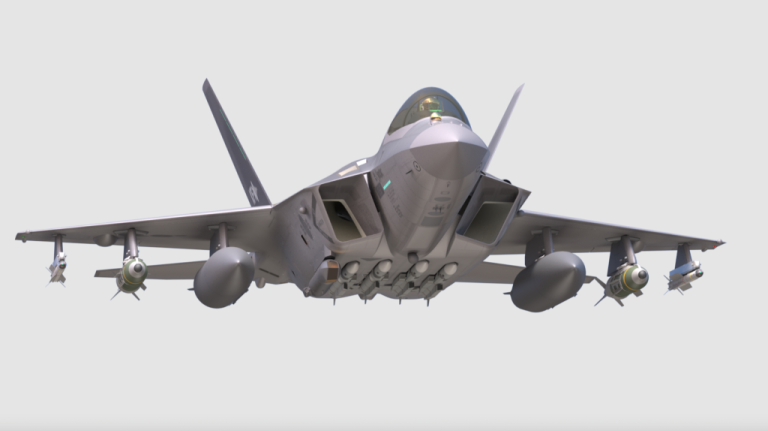
The debut of the first production KF-21 marks the moment when the project finally ceases to be merely a concept and becomes a reality.
The aircraft will continue to undergo refinements, be equipped with new systems, and undergo configuration changes. But the key milestone has already been reached.
It went into production.
And in modern aviation, this means much more than any successful test flight.
по материалам: https://www.twz.com/air/first-series-produced-kf-21-fighter-rolled-out-in-south-korea