An Algorithm to Combat Shortages: Why Didn't the USSR Decide to Hand Over Power to a Neural Network?

The history of Soviet computers is a chronicle of missed opportunities, office wars, and brilliant insights that were ahead of their time. But while in our reality, Academician Glushkov’s OGAS (All-Union Automated System) remained nothing more than a pile of dusty folders, in an alternative 1964 it became the very “asymmetric response” that permanently resolved the issues of toilet paper shortages and the country’s collapse.
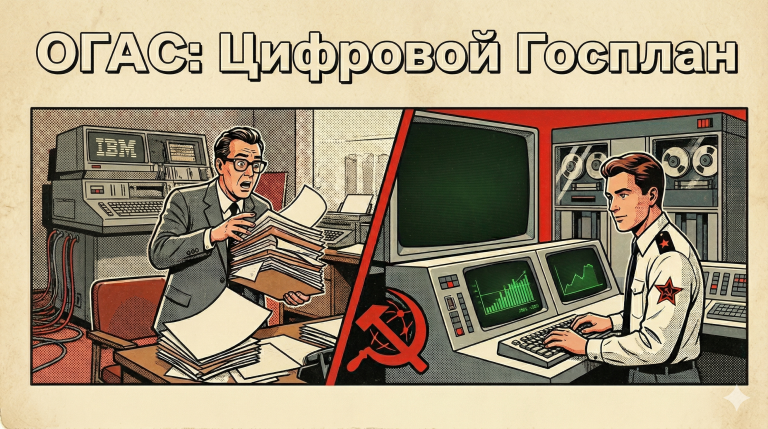
From “Cybernetics—the Corrupted Girl” to Digital Dictatorship
By the mid-1960s, the Soviet economy had come to resemble a massive tank whose control levers were connected to the tracks through three intermediaries, while the driver—blindfolded—listened to the political officer’s advice. The Lieberman–Kosygin reforms proposed adding a “dash of market oil,” but Glushkov suggested something more drastic: cutting out the intermediaries and putting an onboard computer in charge.
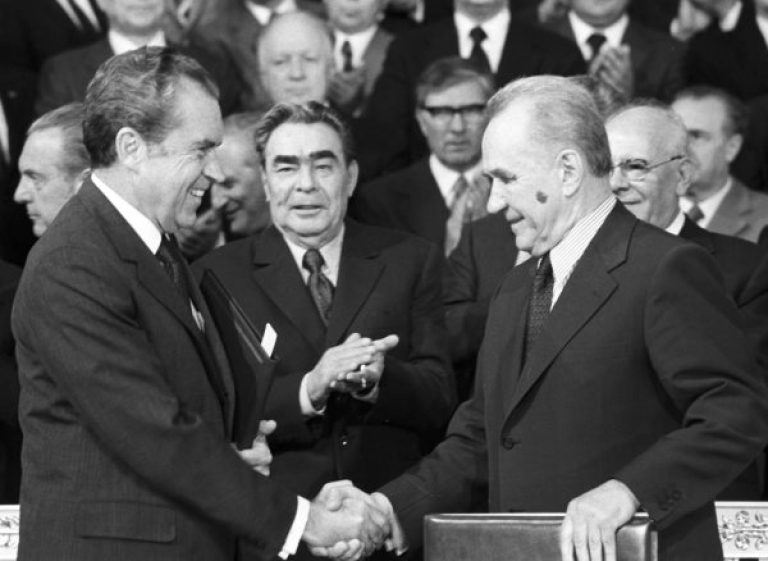
The turning point came at the October 1964 Plenum. Instead of “sidelining” Glushkov, the country’s new leadership—frightened by the prospect of a food crisis—granted the project the status of “Top Priority No. 1.”
Technical Infrastructure: «Ural,» «BESM,» and the Early Days of Neural Networks
Unlike Western networks, which were built around email exchange, OGAS was originally designed as a “combat command-and-control system” for the economy. Architecturally, it took the form of a three-tiered pyramid.
The backbone of the system was made up of OZODs (Core Data Processing Centers). Initially, modernized BESM-6 computers, operating in a single network, served as the “brains” of the system.
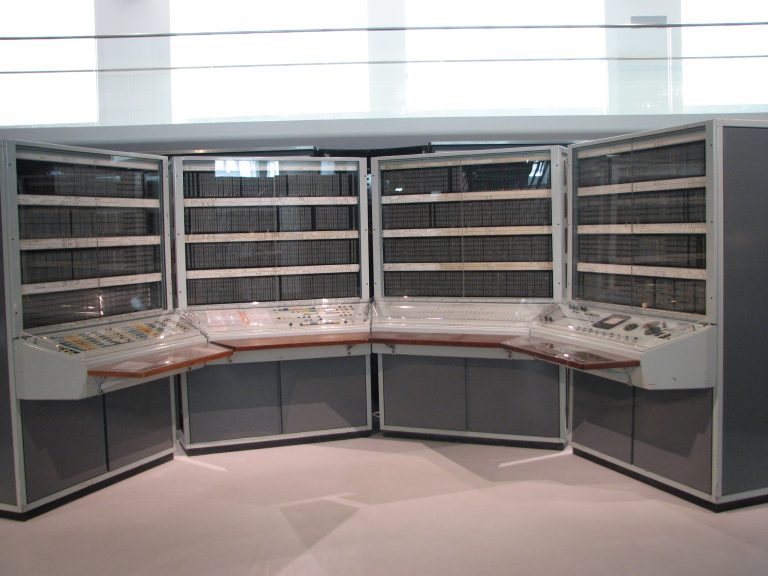
There’s an interesting point regarding “neural networks.” Of course, in 1966, no one was training GPT. However, Glushkov implemented a system of “algorithmic demand forecasting.” It was a primitive perceptron that analyzed not only how many nails were produced, but also how many were purchased at agricultural stores near Zhytomyr. The system was self-learning based on planning errors: if there was a surplus of galoshes in one quarter, the algorithm would automatically reallocate production capacity to the production of scarce transistors for the next period.
The Battle for «Iron» and «Meat»
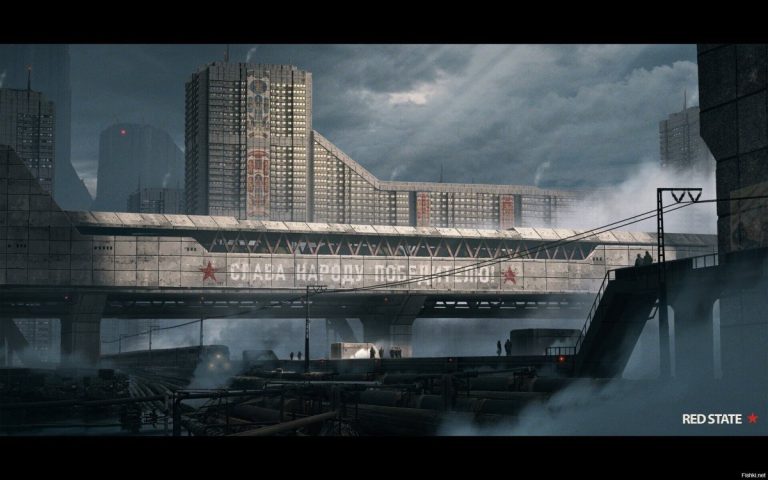
The main enemy of OGAS was not American spies, but Soviet bureaucrats. For the average ministry official, the implementation of OGAS meant political death. The computer didn’t understand “a call from a friend”; it couldn’t be “fed” through a special distributor, and most importantly—it detected falsified entries.
In this reality, Glushkov enlisted the KGB as his ally. The logic was simple: digital transparency was the best way to combat “shop floor bosses” and corruption. By 1972, the system had been implemented in more than 10,000 enterprises.
Why did it work?
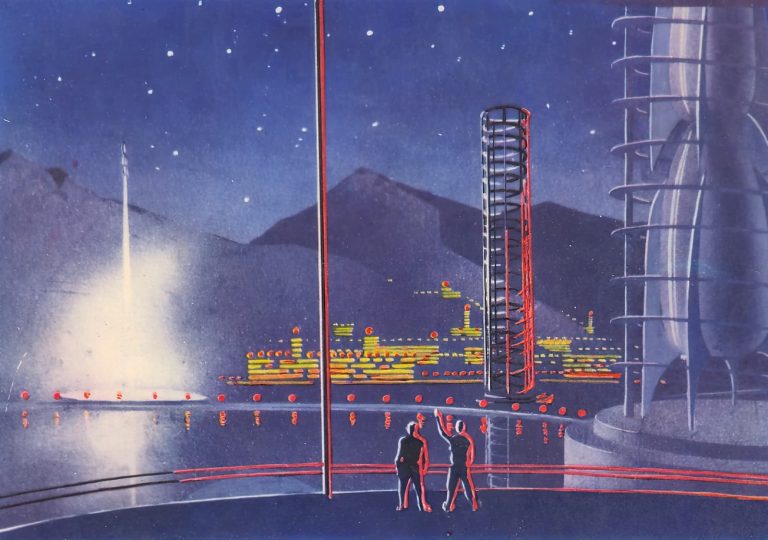
- A Victory Over Logistical Nightmare. OGAS solved the problem of “round-trip shipments,” where bricks were transported from Kyiv to Tashkent and back from Tashkent to Kyiv. By optimizing transportation alone, the USSR saved billions of rubles in the very first year.
- Dynamic pricing. Instead of prices set by the State Planning Committee 10 years in advance, the system began adjusting the cost of goods based on inventory levels. Stagnant inventory automatically became cheaper, while scarce goods signaled the need to expand production.
- The End of Shortages. By 1980, the concept of “getting hold of” had disappeared from the lexicon. Goods were simply “there,” because the system had anticipated the need for them six months before the average person had even thought about it.
Results
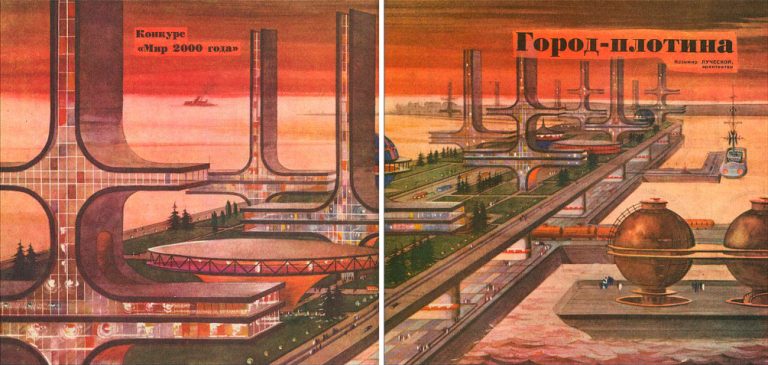
Could a neural network (even if stored on magnetic tapes) have saved the Soviet Union? Technically, yes. The main achievement of OGAS would have been that it transformed the ideological planned economy into an effective mathematical model.
In this reality, the 1991 Soviet Union is not a country of lines and rallies, but a powerful technocratic bloc. While the U.S. was floundering through the crises of the 1970s, the “Red Internet” was creating a society where everyday life was automated to the utmost. But there was a downside: when the economy runs like clockwork, the question arises—why does this system even need a party? But that’s a whole other story for another time.
Materials:
- V.M. Glushkov’s Archive, File No. 402, “On Predictive Analysis of Commodity Volumes.”
- A.N. Kosygin’s Memoirs, *How We Envisioned the Future*.