It Flies, But It's Not Quite an Airplane: Why the U.S. Is Testing the Squire Drone-Type Ground-Effect Vehicle

Sometimes new systems seem strange not because they are experimental, but because they bring back old ideas in a new form.
That’s exactly what the Squire project looks like—an unmanned vehicle that doesn’t quite fly and doesn’t quite float. It’s what’s known as a craft that uses the ground effect, or, to put it simply, a machine that travels just a few meters above the water.
And now, for the first time, this concept has reached the stage of practical testing.
The First Flight: From Water to “Flight”
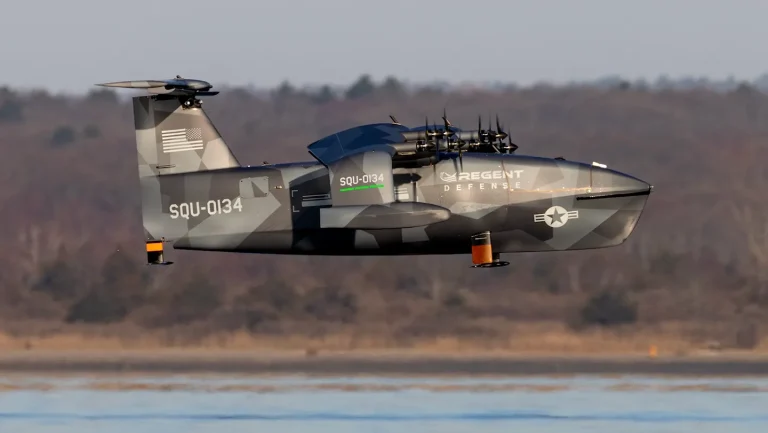
The Squire demonstrator made its first test flight in April 2026 in Narragansett Bay (U.S.).
The movement itself is telling, because this is not a classic takeoff.
The device goes through three stages:
At first, it moves like a boat,
then transitions to hydrofoils,
and only after that does it lift off the water and switch to screen flight mode.
During the tests, the speed reached approximately 40–70 knots, depending on the operating mode.
What on earth is that?
The Squire is an example of a type of vehicle that, in the Soviet tradition, was called an “ekranoplan.”
The physics here is pretty simple.
When a wing flies very close to the surface, an “air cushion” forms beneath it, which:
increases lift,
reduces drag,
and improves propulsion efficiency.
As a result, the vehicle can travel faster than a boat, yet requires less energy than an airplane of the same mass.
These machines don’t fly very high—they “hover” a few meters above the water.
Why did they revisit this idea?
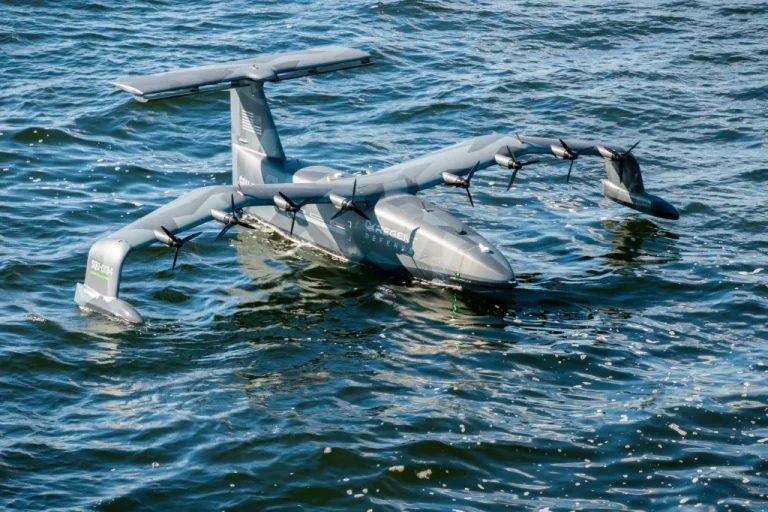
The concept itself is not new. It was actively developed back in the Soviet Union.
But back then, she had some limitations:
difficulty in handling,
limited stability,
lack of modern electronics.
Now the situation has changed.
Squire combines three elements at once:
- autonomous control
- electric or hybrid powertrain
- the very effect of “gliding” over the water
And it is precisely the combination of these technologies that brings this old idea back into the spotlight.
Military Strategy: It’s Not About Speed, but Logistics
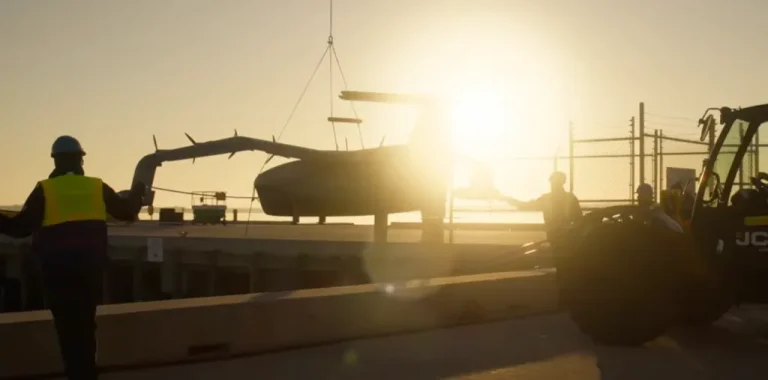
Squire’s main objective isn’t combat missions.
It is considered to be:
transport,
reconnaissance platform,
supply vehicle.
Especially in situations where:
There are no airfields;
large ships are at risk;
cargo must be transported quickly along the coast.
This is directly related to the modern concept of distributed forces—where units operate in small groups and require constant support.
What is known about the specifications
The exact specifications of the demonstrator are limited, but some guidelines are known:
- speed — up to ~70 knots
- range — more than 100 nautical miles
- payload — approximately 20–25 kg
It’s not much, but what’s important is that it’s a technology demonstration.
Full-scale aircraft (such as the Viceroy project) must be significantly larger.
The main advantage is visibility
One of the key benefits of this approach is its low visibility.
Device:
- is flying below the radio horizon
- has a lower thermal signature
- is barely visible against the water
This makes it a potentially difficult target to detect.
But there are also limitations
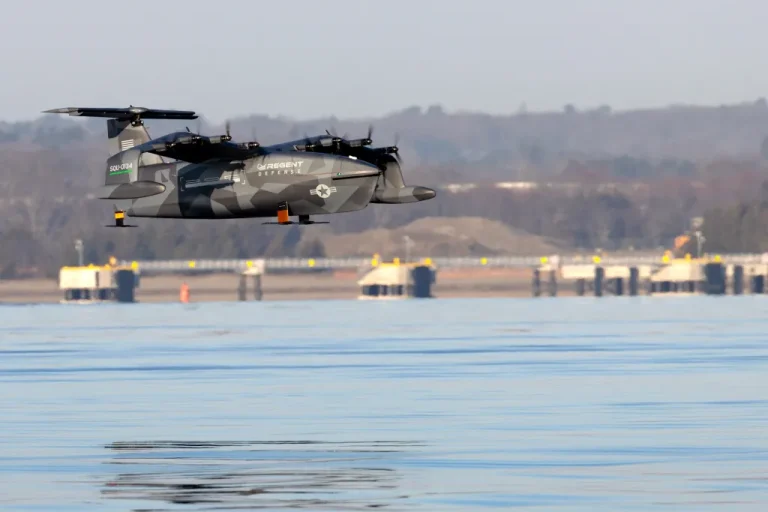
An ekranoplan is always a compromise.
He:
It cannot fly at high altitudes,
is dependent on sea conditions,
and has limited flight routes.
In other words, it’s not a universal platform, but rather a niche tool.
Why Is This Important?
Squire isn’t just another drone.
This is an attempt to revitalize a class of vehicles that has long been considered a dead end.
And now it is returning—not as an experiment, but as a component of actual military logistics.
Conclusion
The Squire project illustrates an interesting point.
Sometimes technologies don’t disappear—they’re just waiting for the right moment when an environment emerges in which they can function.
Ekranoplans were too complex for their time.
But with the advent of automation and new control systems, they are once again becoming relevant.
And this time—in the form of unmanned systems.
Based on https://www.twz.com/air/regent-squire-wing-in-ground-effect-drone-demonstrator-makes-first-flight